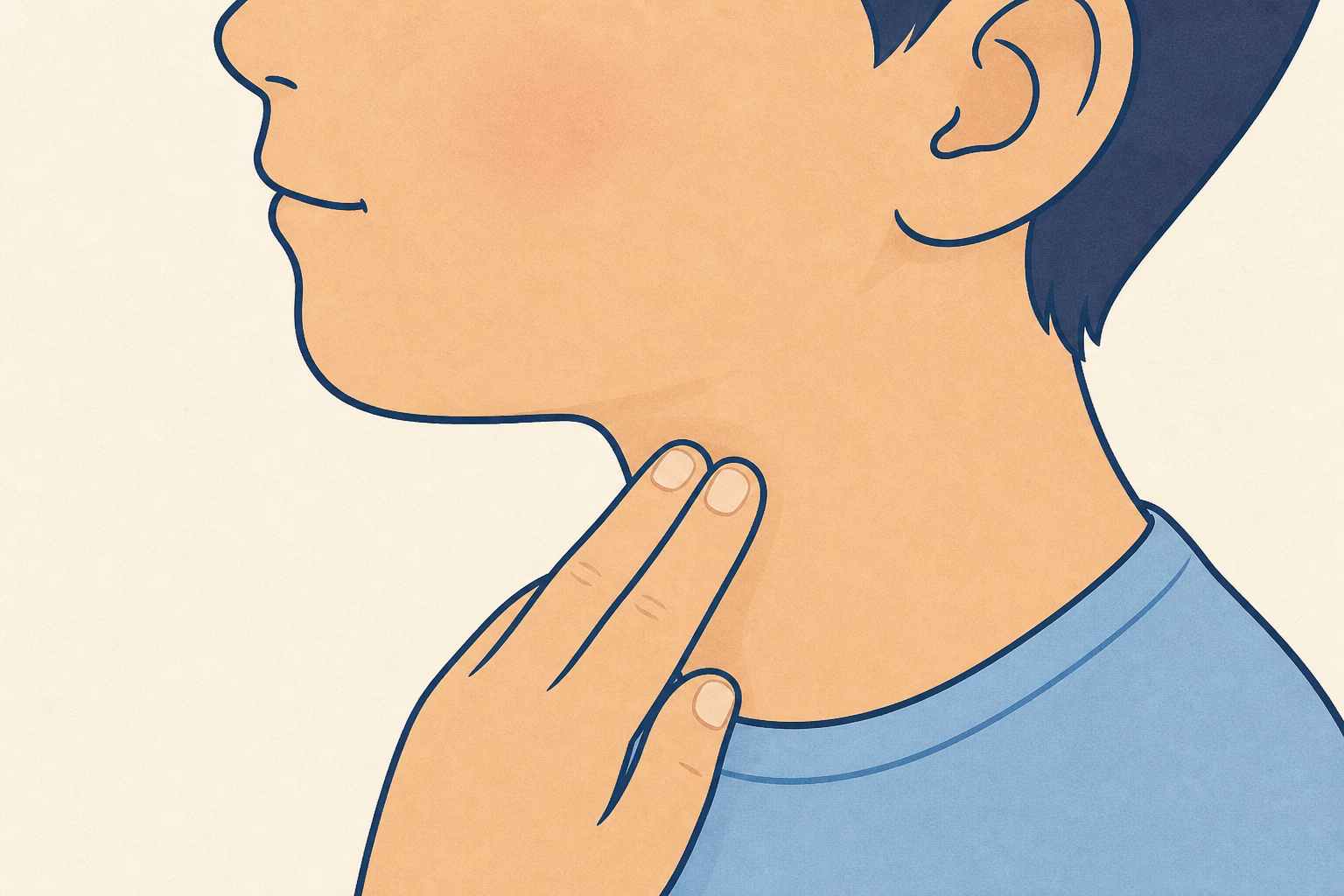
Put your fingers gently on your throat and hum a quiet tune. What do you feel under your fingers?
Today we will find out what sound really is, and we will see the wobble that makes it.
Keep this light: one curiosity beat only. Invite every child to hum softly with two fingers on their own throat (model first). Do not hand out drums, rice or rulers yet.
Key question: What is happening in your throat when you make a sound?
What to expect: many will say it buzzes, tickles or shakes. Accept all notices. Hold back the word vibration until the next step if you can, so the feeling comes first.
Have the drum, rice and one ruler ready out of sight for the investigation step. Keep one pre-stretched salt tub ready for a short teacher demo later if time allows.
That buzz in your throat is a vibration: a quick back-and-forth wobble.
If sound starts with a wobble, how could we make that wobble something we can see, not only feel?
Board stays short: only the word vibration and the everyday word wobble. Do not put sound or source on the board yet. Name those after the class has seen the rice or ruler move.
Use the table below for yourself; do not project it. Vibration and source are the two load-bearing terms. Treat sound as everyday language once children have seen a real wobble.
| Concept | Why it matters | Example |
|---|---|---|
| Vibration — a quick back-and-forth wobble of something | Every sound we hear starts with something wobbling, even if the wobble is too small to spot at first | Rice jumping on a drum skin when you tap the drum |
| Source — the thing that is vibrating and making the sound | Gives us somewhere to look and point when we hunt for sounds around school | A plastic ruler buzzing on the edge of a desk |
| Sound (everyday word) — what we hear when a vibration reaches our ears | Helps us link what we feel and see to what we hear, instead of treating sound as magic | Hearing the drum boom as the skin wobbles and the rice jumps |
Misconception to head off: children often think sound is only "noise in the air" with nothing moving. Keep linking back to a real object that is wobbling.
Teacher aside (keep light): today's first model is a wobble travelling through the air to our ears. Later, when you tap a table, note that a solid can carry a wobble too. Do not load that onto the board yet.
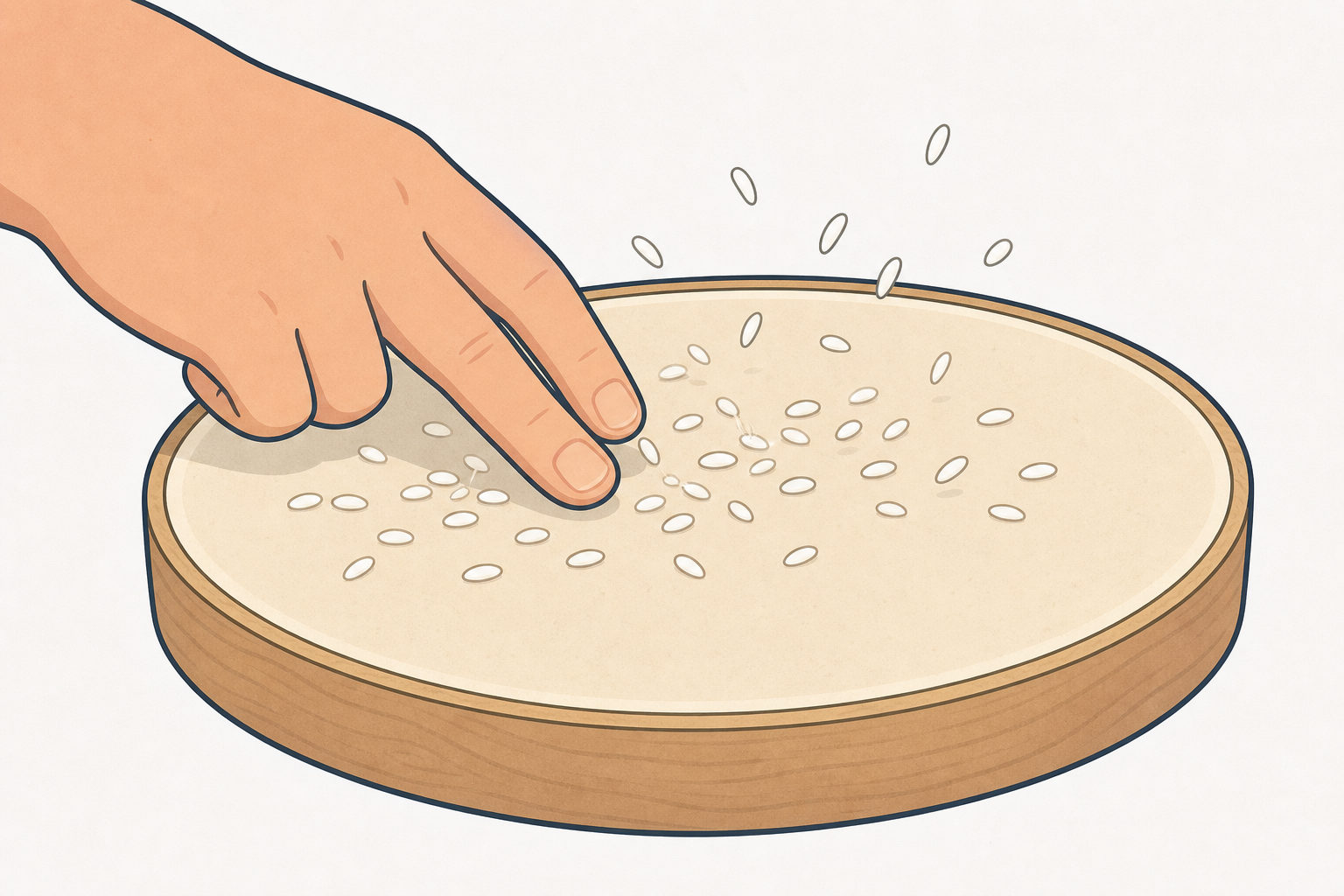
Worked model (say the beats, do not script them on the board): I wonder if the drum skin is moving when I hear the drum. I predict the rice will jump if the skin wobbles. I tap gently once. I observe the rice bounce and I feel the skin buzz under my hand. I think the sound comes from the skin vibrating.
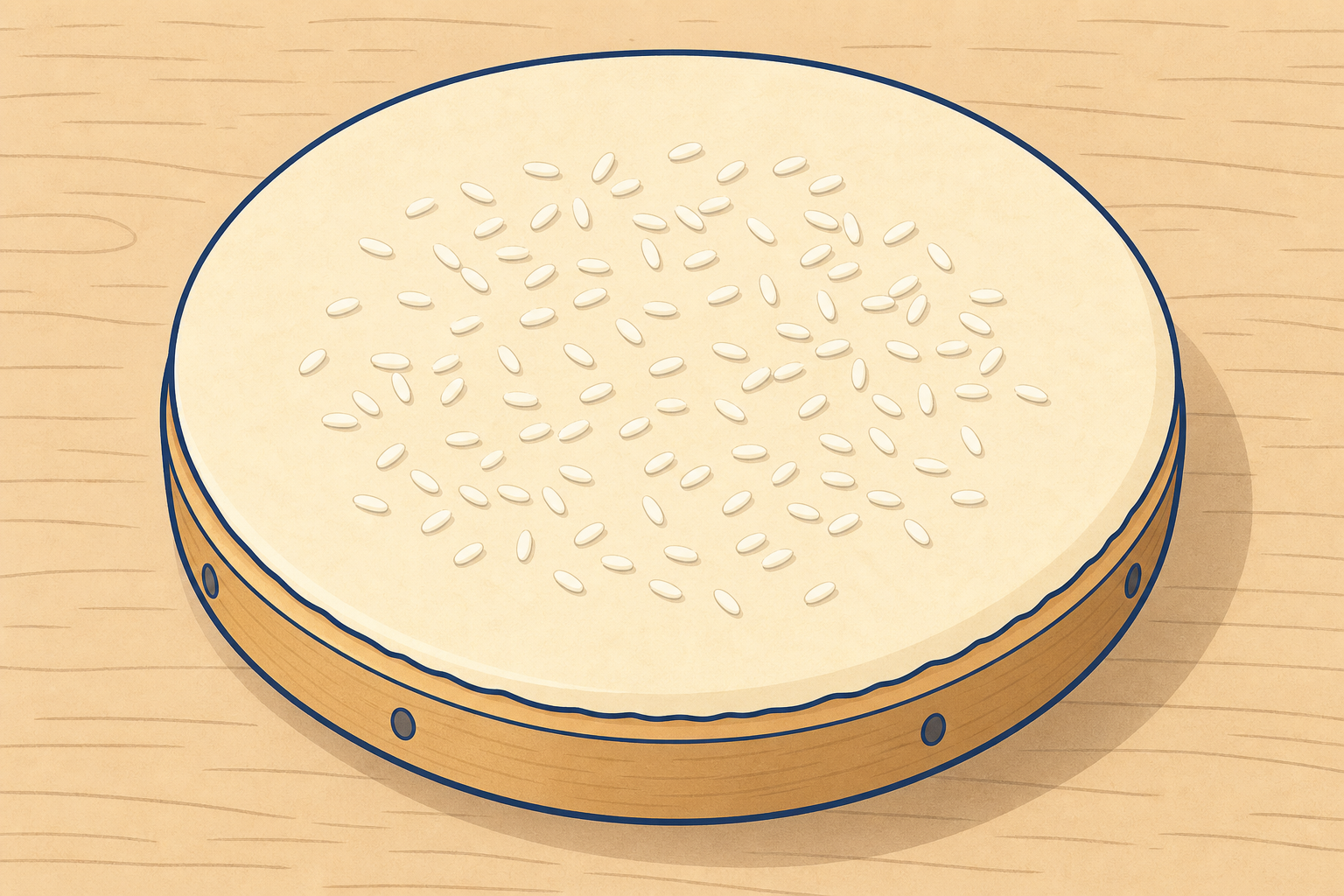
We will use a drum with a little dry rice on top.
Talk with a partner. What do you think will happen to the rice when we tap the drum? Why?
Talk structure: whole-class focus question first, then quick partner talk, then share back. Keep apparatus covered so the prediction stays honest.
On the board, show only the drum-and-rice setup and the one focus question. Do not name or show the ruler or salt yet.
Capture two or three predictions on the board in the children's words (e.g. "the rice will jump", "nothing will move", "it will roll off").
Spoken follow-up only (after drum predictions, still no apparatus shown): What might a ruler do if we twang the bit sticking out over the desk? Keep this light and brief; do not put a second setup on the board.
Salt demo: do not mention it in this step. Introduce it only if and when you run the optional teacher demo later.
Predictions are never wrong; they start the science. Link back to the throat hum from the hook.
First, Station 1 with your group. Station 2 comes next.
Station 1: drum and rice
Sprinkle a little dry rice on the drum. Tap once gently, then a little more firmly. Watch the rice. Feel the top of the drum with one finger after a tap.
Say what wobbled and what you saw or felt. You will draw one station later.
While you model and while groups do Station 1, keep only the Station 1 card on the IWB (the pupil description above). Do not show Station 2 instructions yet, and do not leave a "try two stations" group-start line on screen during the model.
Station 2 board card (switch the board to this only when you release Station 2):
Station 2: buzzing ruler
Hold a ruler flat on the desk so most of it sticks out over the edge. Press the desk end firmly. Twang the bit sticking out gently. Watch and listen. Try with less sticking out.
Say what wobbled and what you saw or felt.
What to expect:
If something fails: rice stuck together (use dry rice), film too loose (re-stretch before the demo), ruler too long and hitting legs (use less sticking out).
Safety: twang and tap away from faces and eyes; no shouting into ears; one firm finger on the drum after tapping, not while someone else strikes it.
After Station 1, you can name source in talk: the drum skin is the thing that wobbled and made the sound. Keep formal board definitions for the next step.
Look at the drum on the board. The picture shows the wobble you could feel on the real drum, and how that wobble spreads out toward an ear.
The drum skin is the source: the thing that is wobbling and making the sound.
Sound is what we hear when that wobble reaches our ears.
What is the drum skin doing when we hear a sound?
Drive the interactive on the IWB in display mode only. Nothing is dragged. Narrate what the class already felt: a bigger hit makes a bigger wobble and a louder sound.
On screen they should see a drum scene with a clear, large wobble (strength set high) and rings spreading toward an ear.
Two short naming beats (pause between them):
Ask: Is the sound coming from the air by itself, or from the skin moving? Link back to rice jumping and throats humming.
Optional: press Hear it if the room can manage a short tone; switch it off if the class needs quiet.
You're previewing this lesson. Get full access to this lesson and hundreds more — each one ready to teach, with interactive activities, printable resources and pupil progress tracking built in.