Put one hand where you think your heart is. Now point to where you think your brain is. After lunch, where do you feel the food sitting?
Today we will find out the names of five main organs, where each one sits, and the job each one does.
Keep this beat light and playful. Ask the three location questions and quickly scan the room: most hands will land near the left chest for the heart and on the head for the brain. Do not correct wrong placements yet; curiosity is the point.
Key question: If we could gently see inside, what important parts would we find, and where?
Have the organ cut-out cards face down and the lining paper rolled nearby, but do not lay out the body map yet. That belongs to the exploration step.
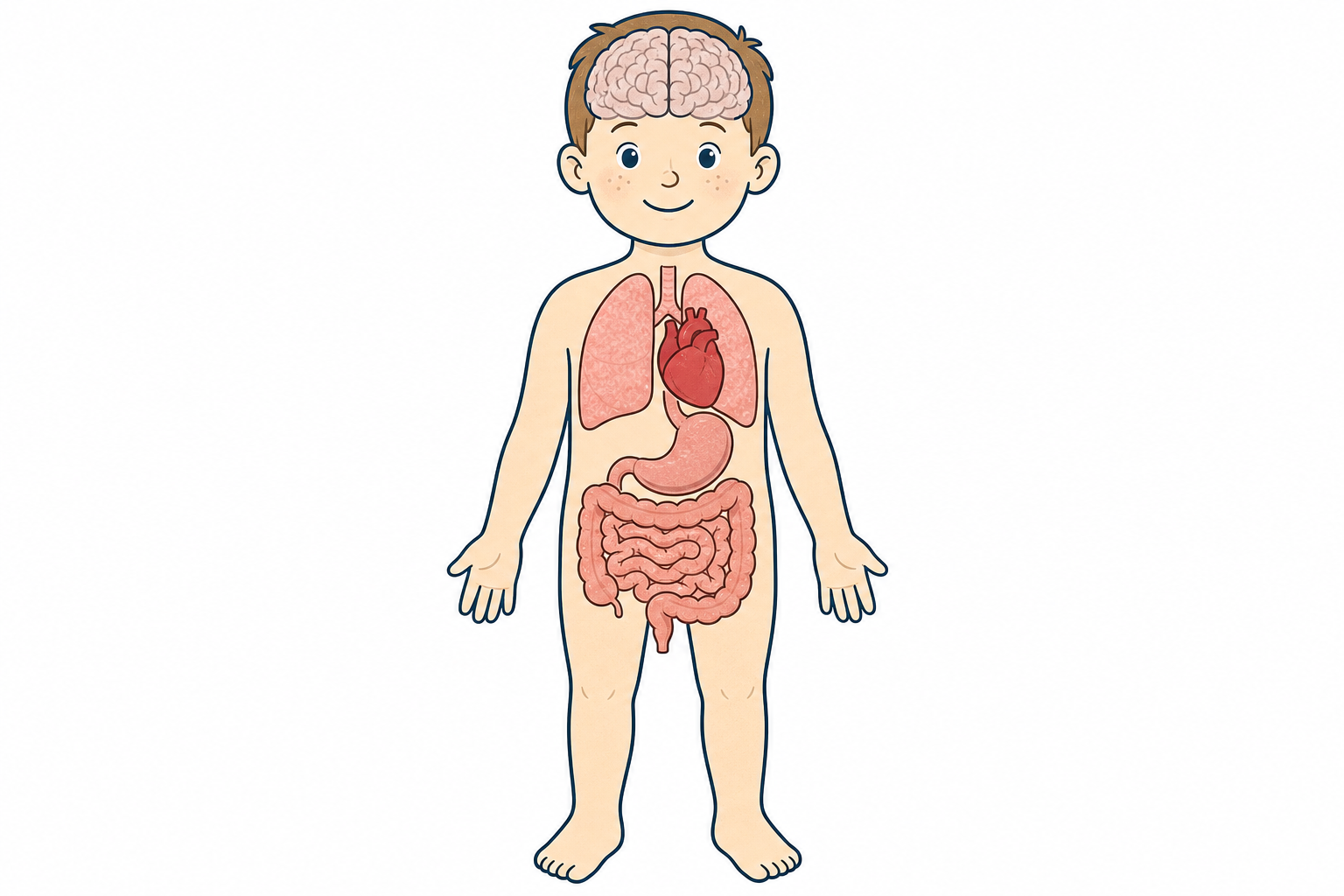
Point with me, one organ at a time.
Brain — point to your head. Job: the control centre that thinks and tells your body what to do.
Heart — hand on your chest, a little to the left. Job: the pump that moves blood around.
Lungs — both hands on your chest. Job: two soft, spongy organs that fill and empty when you breathe.
Stomach — hand on your upper tummy. Job: the stretchy bag that holds food.
Intestines — hand on your lower tummy. Job: long tubes that finish the food job.
Which organ do you think sits highest in the body?
Teach each organ as a short point-and-say beat on the children's own bodies: name, point, one job phrase, then the next. Do not read all five as one block. Keep language gentle: pumps, bags and tubes, never wounds or surgery detail. Stress name and place first; the job phrase is a short chorus the class repeats with you, not independent memorising of five definitions yet.
| Concept | Why it matters | Example |
|---|---|---|
| Organ — a body part with its own special job | Knowing the main organs helps us talk about how the body stays well | The heart, lungs and brain are organs; a fingernail is not |
| Brain — the control centre inside the head | It thinks, remembers and sends messages so the body can move and feel | Point to your head: that is where the brain sits, protected by the skull |
| Heart — a fist-sized pump in the chest, a little to the left | It keeps blood moving so every part of the body gets what it needs | Two fingers on the side of the neck or the wrist can feel the beat |
| Lungs — two soft organs in the chest that take in air | They pass oxygen from the air into the blood when we breathe | Watch a partner's chest rise and fall: the lungs are filling and emptying |
| Stomach — a stretchy bag in the upper tummy | It holds food after we eat and starts to break it down | After a big lunch the upper tummy can feel full: that is the stomach |
| Intestines — long coiled tubes in the lower tummy | They finish breaking down food and take in the goodness the body needs | Food travels from the stomach down into the intestines |
Misconception to head off: children often put the heart in the exact centre of the chest, or draw the stomach as the whole tummy. Nudge gently: heart a little to the left; stomach upper tummy; intestines lower down and coiled.
Pronunciation: intestines — in-TESS-tins.
After all five beats, ask: which organ sits highest? (Brain.) Which two organs share the chest? (Heart and lungs.)
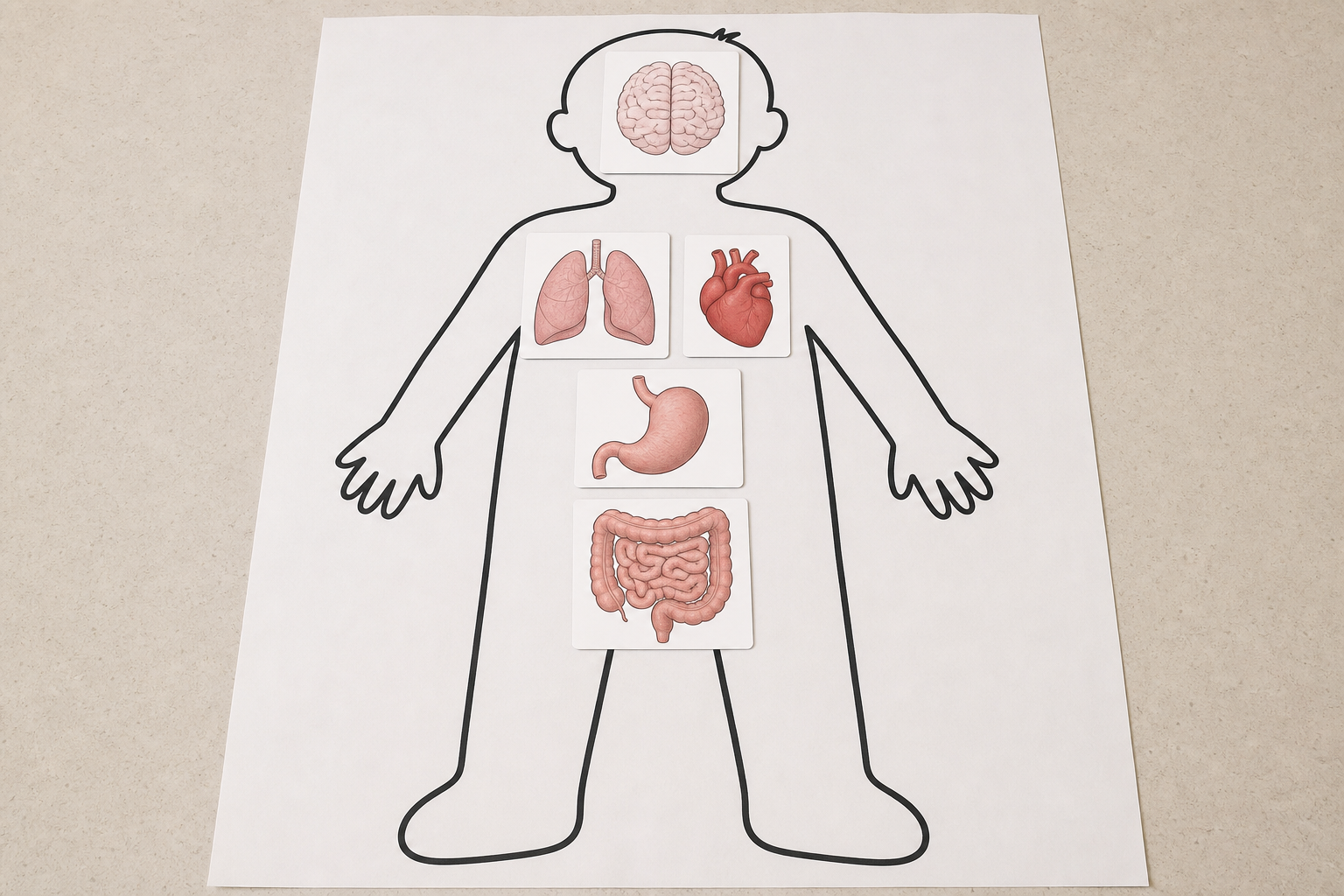
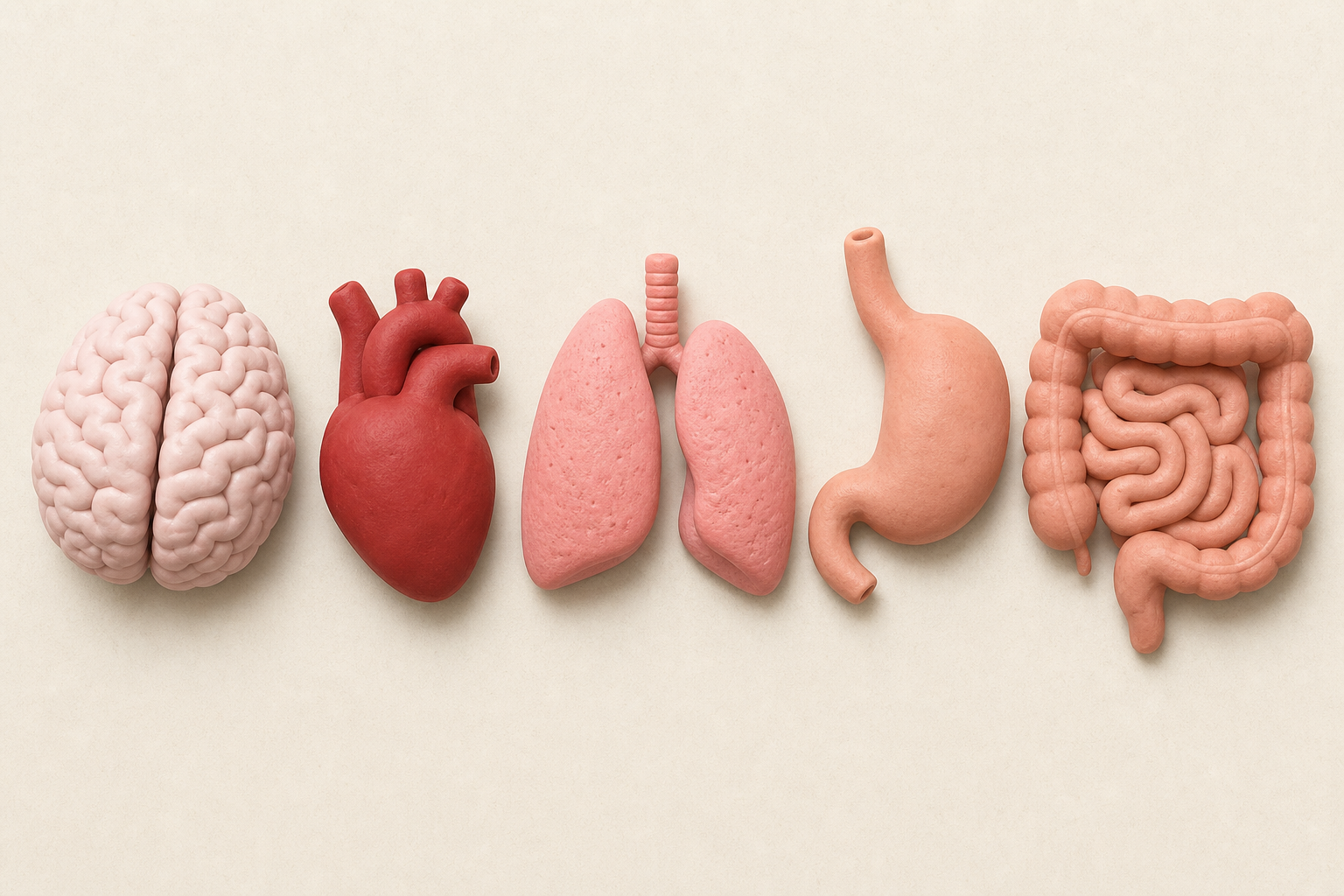
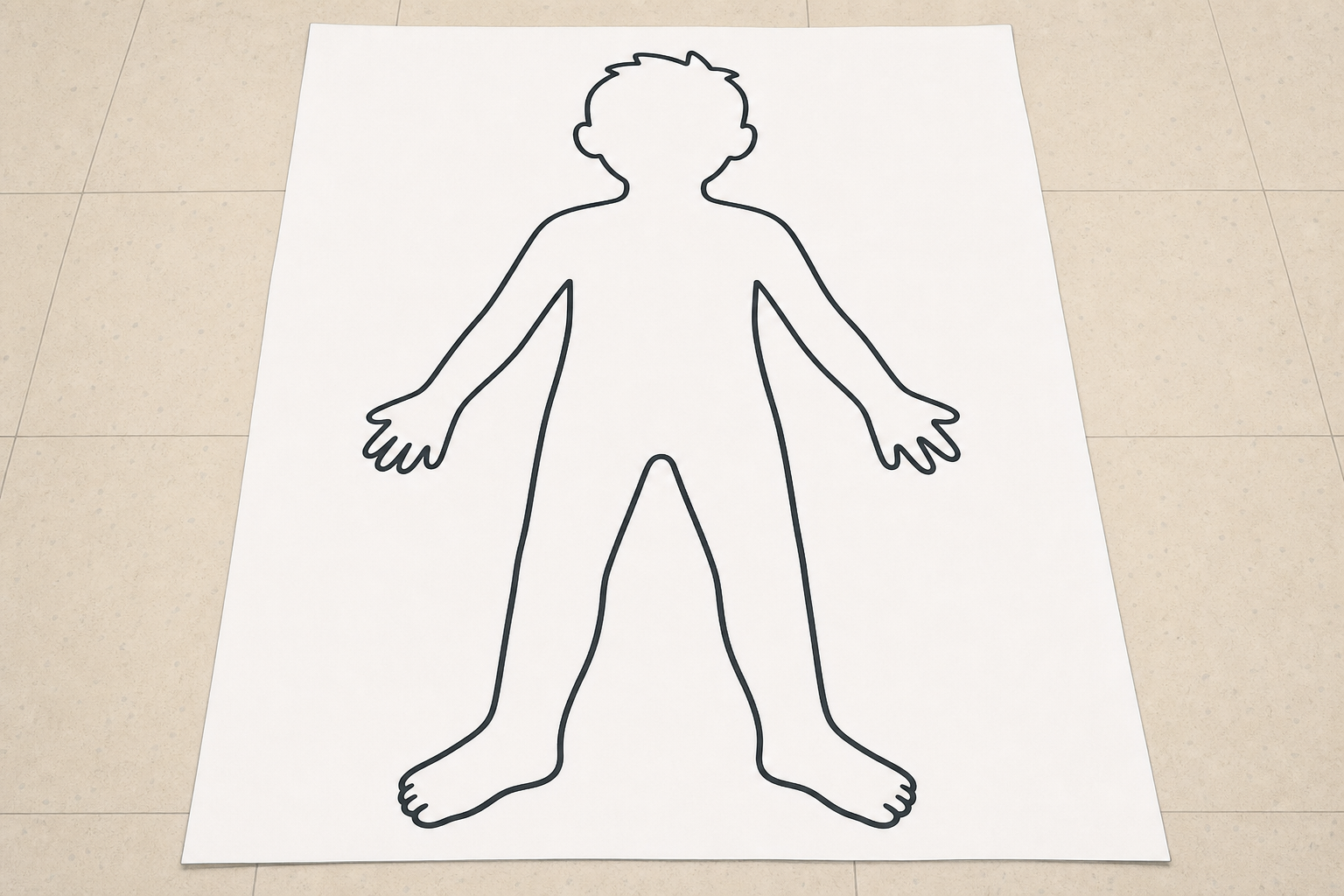
We will draw carefully around one volunteer on the big paper to make a life-size body outline. Then a few pairs will place the five organ cards — brain, heart, lungs, stomach, intestines — where each organ really sits.
Everyone else is on the investigation team too: watch each placement, say if you agree or would move it, and help say the organ's job when the card goes down. Are the chest organs higher than the tummy organs?
Clear a floor space. Unroll the lining paper. Print one set of the provided organ cut-out cards (texts below). Markers ready.
Card A — Brain: Soft and wrinkly-looking. Sits inside the head. Job: thinks, remembers and tells the body what to do.
Card B — Heart: About the size of a fist. Sits in the chest, a little to the left. Job: pumps blood around the body.
Card C — Lungs: Two soft bags. Sit in the chest on either side of the heart. Job: take in air and pass oxygen into the blood.
Card D — Stomach: A stretchy bag. Sits in the upper tummy. Job: holds food and starts to break it down.
Card E — Intestines: Long and coiled. Sit in the lower tummy below the stomach. Job: finish breaking down food and take in the goodness.
1. Choose a willing volunteer (or use a staff member). They lie still on the paper in a star shape while two pupils carefully draw around them. The volunteer stands up; the outline stays on the floor.
2. Model one organ fully before handing cards out. Hold up the heart card and think aloud: I wonder where the heart sits. I predict a little to the left in the chest, not dead centre. I am placing it here. I think its job is to pump blood. Invite the class to agree or adjust.
3. Invite pairs to place the remaining cards one at a time. After each placement, read the job line on the card aloud and ask the watchers: Are they right? What would you move? What job does this organ do? Make it plain that judging and saying the job is the watchers' real job — they are not waiting for a turn that never comes.
4. When all five are down, do a quick walk-the-body: head (brain), chest (heart and lungs), upper tummy (stomach), lower tummy (intestines). Name and place are the priority; jobs can stay as short phrases read from the cards.
If you have no lining paper: draw the outline in chalk on the yard, tape large newspaper sheets together, or carefully place the cards on a volunteer lying still on a clean mat (consent first; shoes off the paper or mat).
Differentiation: less confident pupils hold the card and name the organ; more confident pupils also say the job without reading. Fast finishers hunt one more real-world link (a stethoscope listens to heart and lungs; a bike helmet protects the brain).
Safety: calm floor work only; markers on paper, not skin or jumper; keep walking feet away from the outline.
On the board is a body picture of the chest and tummy with four labels: heart, lungs, stomach, intestines. Help drag each label to the matching part. (We already placed the brain on our floor map in the head.)
Which label goes to the pump a little to the left of centre? Which two labels share the chest?
Open the diagram-labeller interactive on the IWB in guided mode with the human-torso diagram. This is a short whole-class check of the chest and tummy organs only — not a full second placement of all five. The four labels on screen are exactly: heart, lungs, stomach, intestines. The brain has no head target on a torso diagram, so keep brain on the floor body map and the journal outline only; say that aloud once so pupils are not looking for a missing fifth label.
Drive the dragging yourself or invite pupils one at a time for the contested spots (heart vs centre; stomach vs intestines). After each label lands, ask the class to chorus the short job phrase from the card (heart: pump; lungs: take in air; stomach: holds food; intestines: finish the food job).
Use the prompt: Which organ is the pump that moves blood around the body? Keep the floor body map visible so pupils can check the board against the real-size layout.
What to expect: lungs and heart may be swapped at first; intestines may be stuck up near the stomach. Revisit upper tummy versus lower tummy.
No scoring: wrong placements are useful talk, not mistakes to hide.
On your Investigation Journal page, draw a simple body outline and put the five organs in roughly the right places. Label each one: brain, heart, lungs, stomach, intestines (the words are on the board to copy).
For at least two organs, write or say one short job. You may whisper a job to your teacher instead of writing every one.
Pupils record on the Investigation Journal page. Keep the load realistic for 8–9-year-olds:
Leave the five organ words and short job phrases on the board for copying. Do not invent extra boxes or a special table layout on the journal page; the page is generated from the lesson. Circulate and prompt: Is the heart a little to the left? Are the intestines below the stomach?
Support: provide a pre-drawn outline; pair a slower writer with a partner who says the job while they label. Stretch: write a job for all five, or add a tiny arrow from mouth toward stomach and intestines to show the food path (no need for a full system diagram).
Allow about twelve minutes; unfinished job lines can be completed orally in the plenary.
You're previewing this lesson. Get full access to this lesson and hundreds more — each one ready to teach, with interactive activities, printable resources and pupil progress tracking built in.