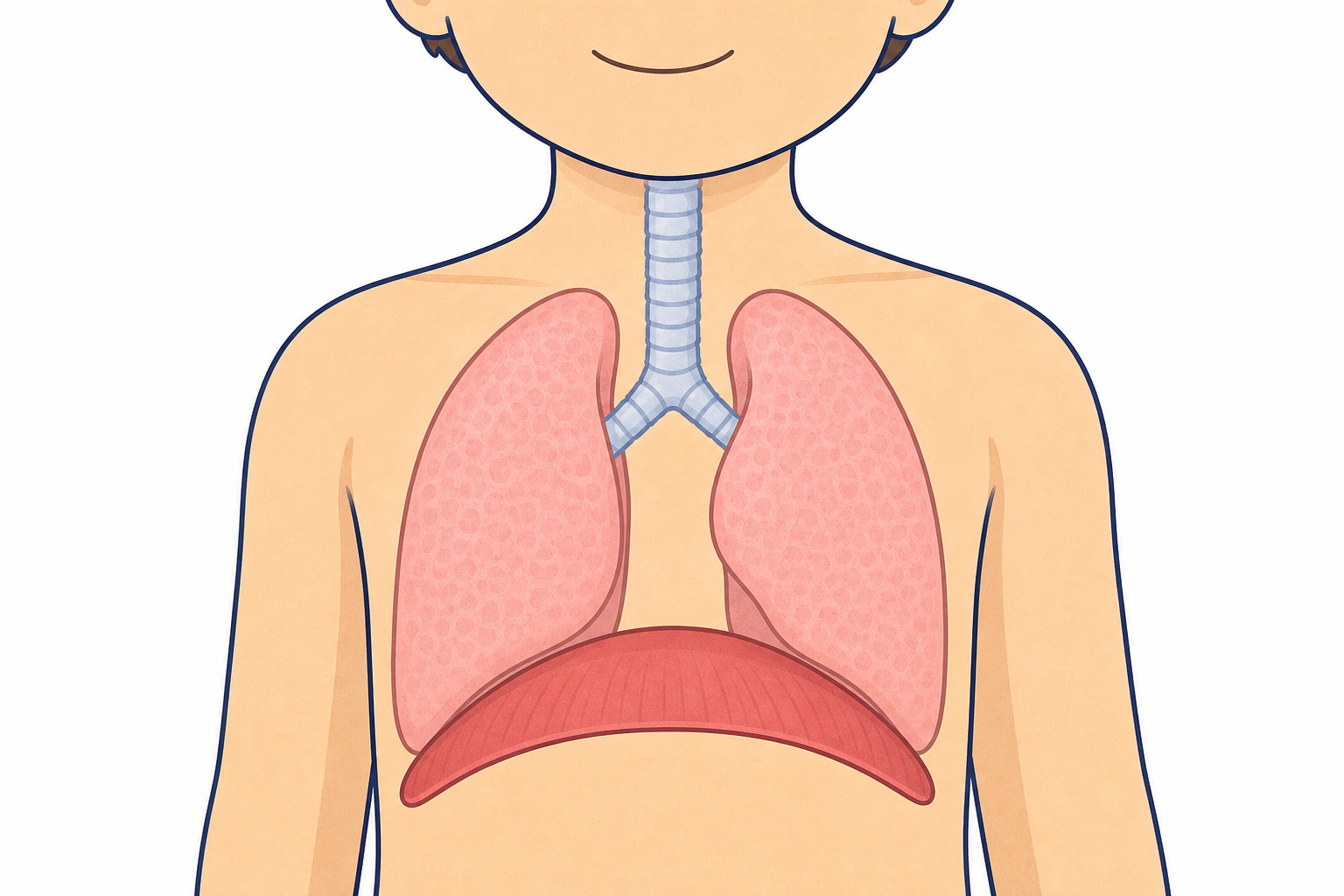
 Put one hand gently on your chest and the other on your tummy. Breathe in slowly, then out. What moves? Today we will build a model that shows how air gets into our lungs, and then count how breathing changes when we move.
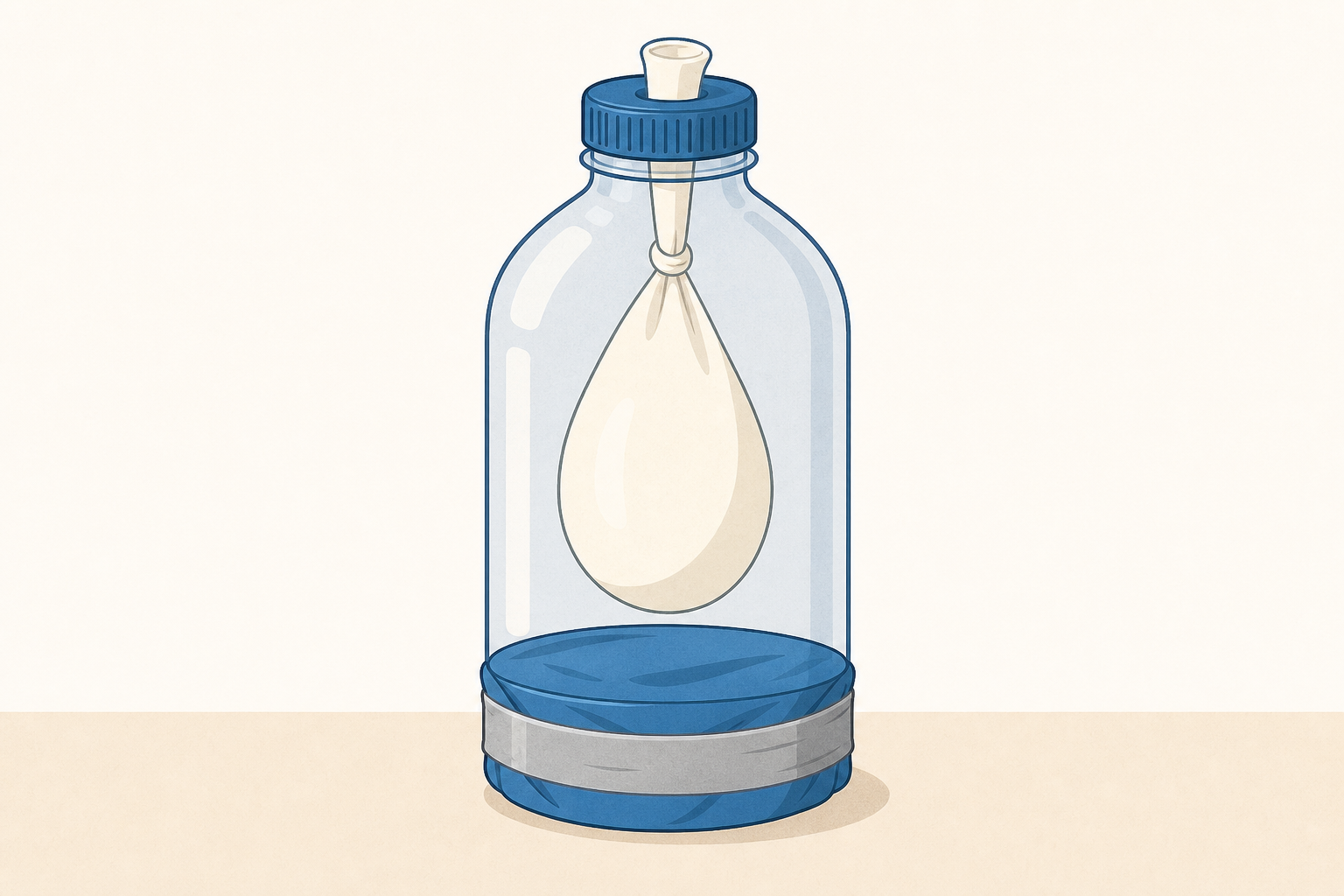 Every breath you just took used a muscle you rarely notice. Watch this finished bottle model. Inside is a balloon like a lung. Across the base is a stretchy sheet like that muscle under your lungs.
What do you think happens to the balloon when I pull the base sheet? Watch as I pull gently, then push the sheet gently back up.
Your lungs are the soft, spongy parts in your chest that fill and empty with air. Under them is a sheet of muscle called the diaphragm (say: DY-uh-fram). When the diaphragm pulls down, space in the chest gets bigger and air goes in.
In pairs, finish your lung model. Most pairs get a kit with the lung balloon already fixed in the lid. Follow these three steps, then wait for the seal check. Do not free-test the pull on your own.
- Check the lung balloon hangs inside the bottle from the prepared lid.
- Stretch the base sheet tightly over the open bottom and tape all around so it is sealed.
- Hands up when your base looks sealed. Wait for my quick seal check, then hands off until the class signal in the next step.
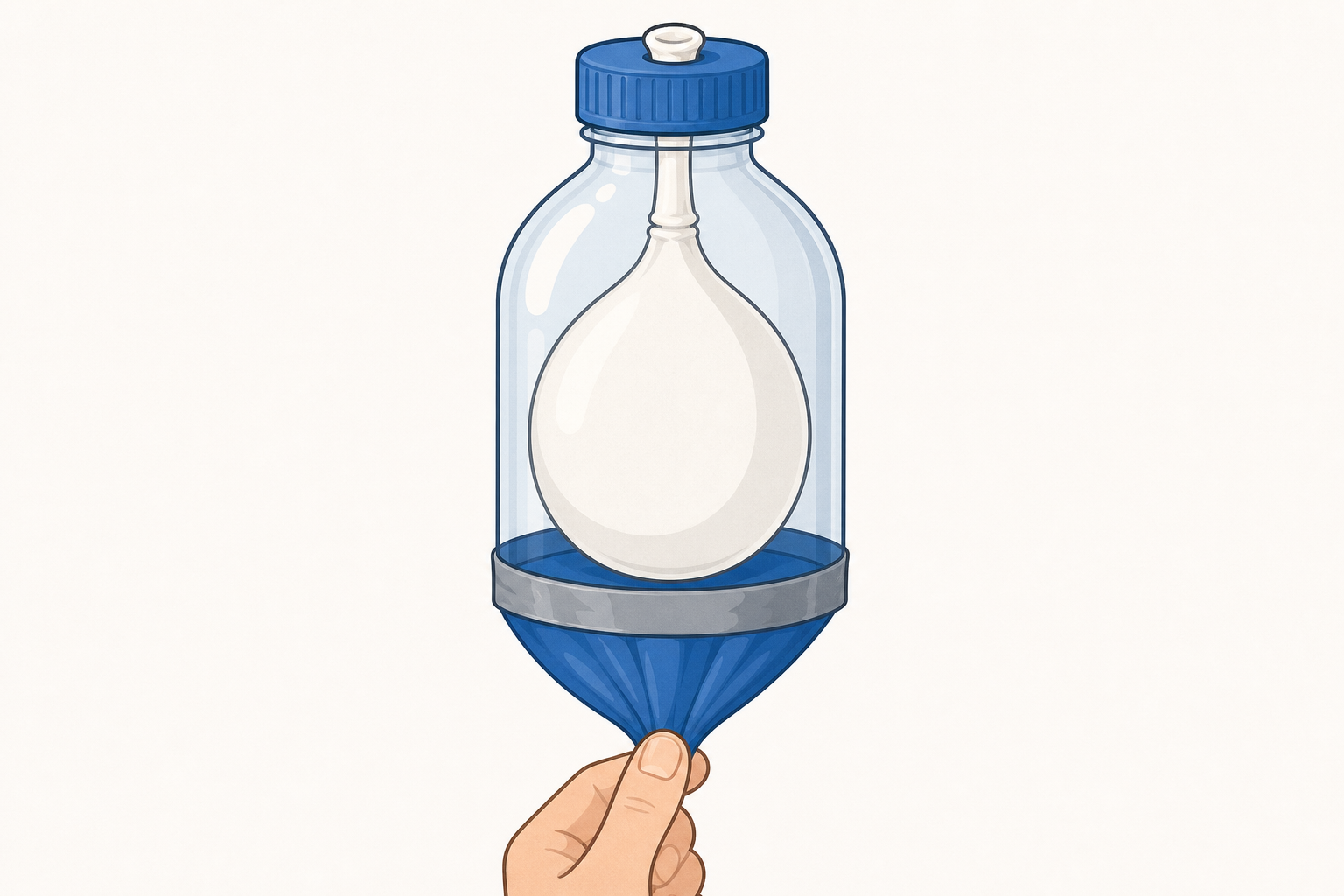
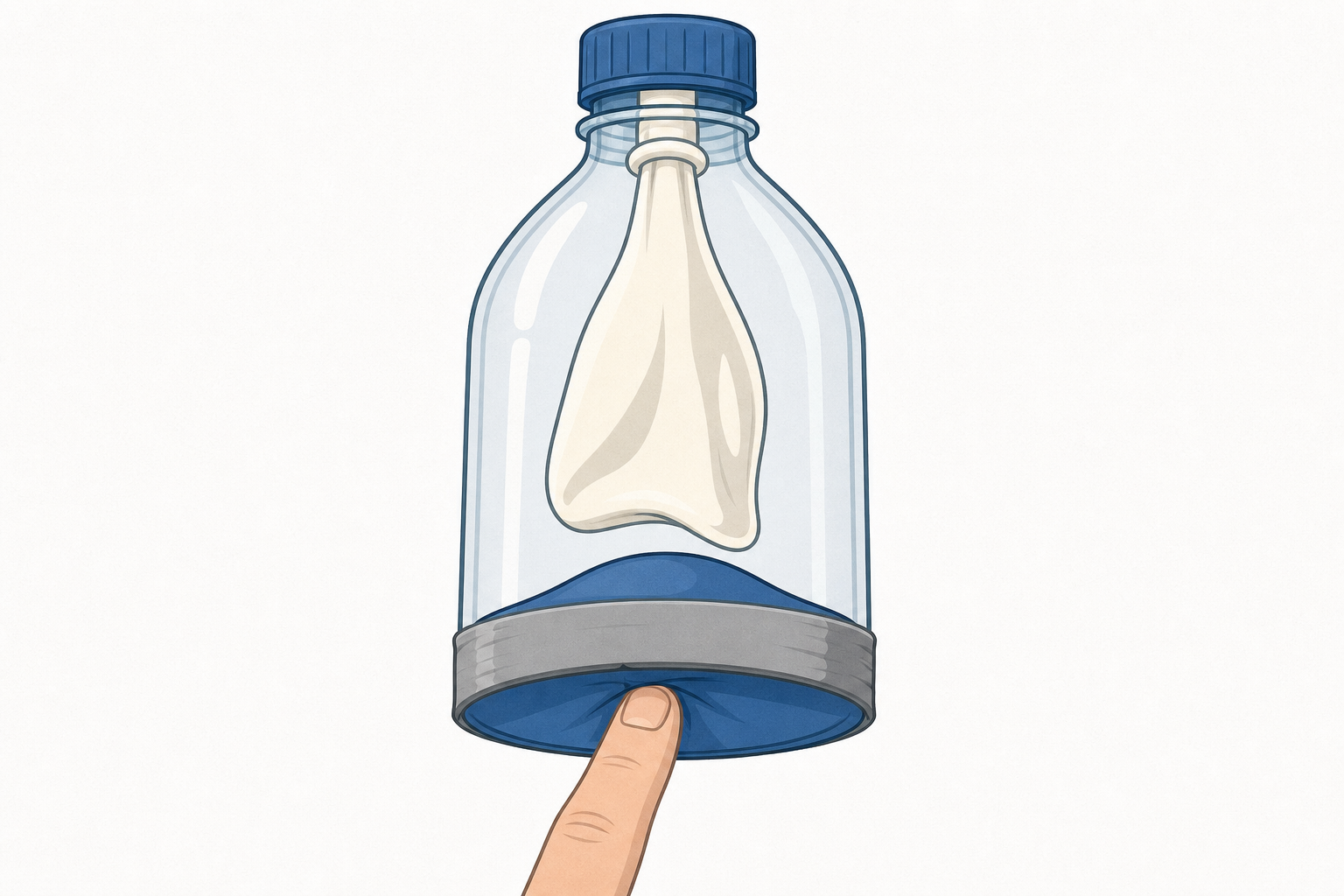 On the class signal, pull the diaphragm sheet gently downward. What happens to the lung balloon? Now push the sheet gently back up. What happens now?
In the model we push the sheet up. In your body the diaphragm mostly relaxes and moves back up on its own. Be ready to tell the class one thing you noticed.
Your breathing rate is how many breaths you take in a set time. We will compare it at rest and after moving. One breath means one breathe-in and one breathe-out counted together. Air has a gas called oxygen that your muscles use when you run and play.
We will do one job at a time. Wait for my start and stop each time.
First: write your prediction on your Investigation Journal page. Use this stem: I think my breaths will ___ because ___.
Next: sit still. When I say start, count how many breaths you take in 30 seconds. Write that number when I say stop.
Then: do gentle star jumps for one minute (or march on the spot). I will time you.
After that: sit. When I say start, count breaths for 30 seconds again and write the new number when I say stop.
Last: look at both numbers. Did your breathing speed up?
Unlock the full learning experience
You're previewing this lesson. Get full access to this lesson and hundreds more — each one ready to teach, with interactive activities, printable resources and pupil progress tracking built in.
This lesson is copyright of Coding Ireland 2017 - 2025. Unauthorised use, copying or distribution is not allowed.