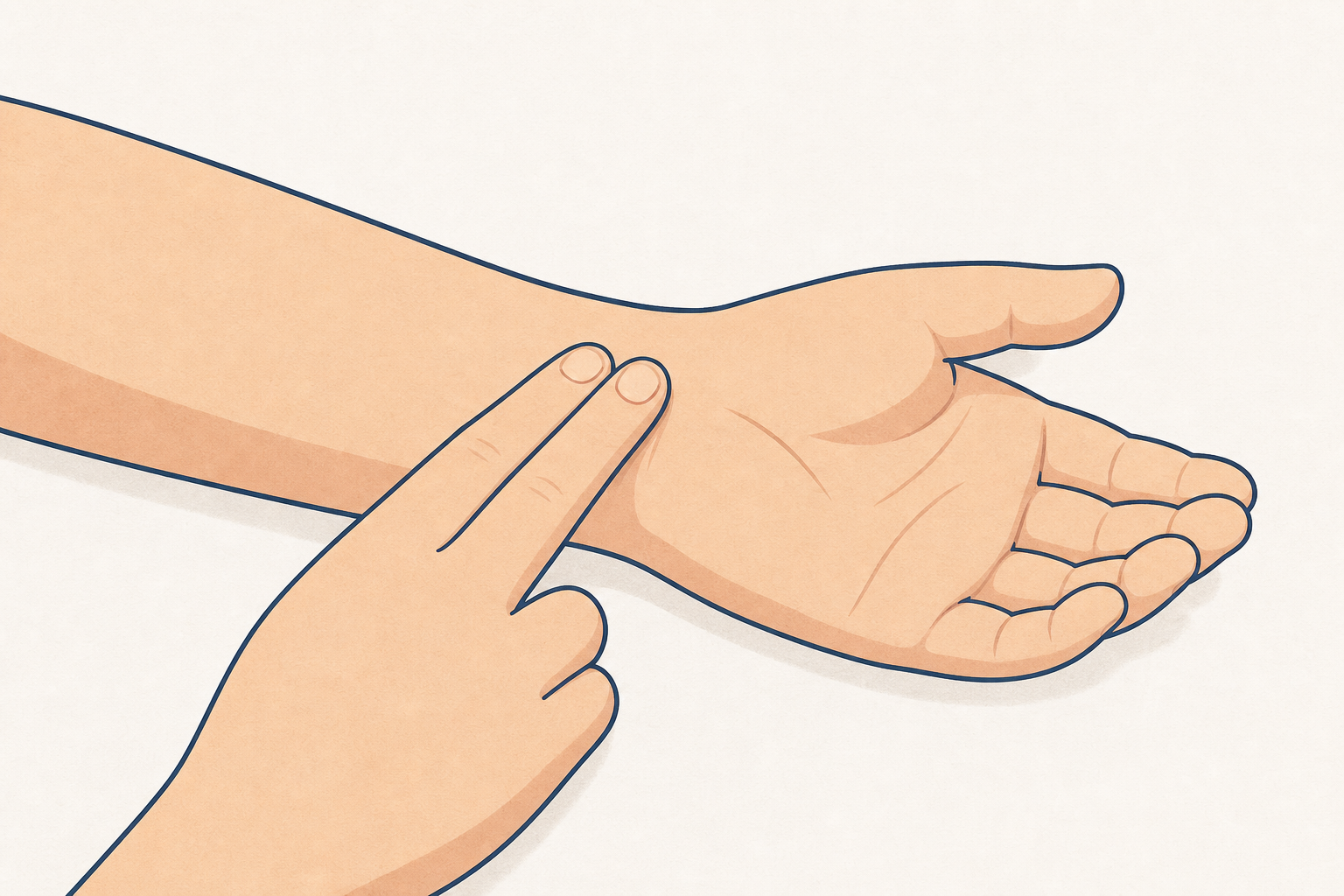
Place two fingers gently on the side of your neck or on the inside of your wrist. Can you feel a soft thump? That is your pulse: your heart beating.
Now notice your breathing. Quiet or busy? Here is today's wonder: does exercise change our pulse and our breathing?
Keep this light. Ask every pupil to find their own pulse for about ten seconds. If some cannot find it, help them on the side of the neck (carotid) or the wrist (radial). Do not start measuring yet.
Key question: What do you think happens to your heart and lungs when you run or jump?
Before the lesson: push desks back so pairs have floor space for the one-minute activity; print the Investigation Journal page; open the fair-test-timer and data-recorder on the IWB.
Today's words: pulse (the beat you feel each time your heart pumps). Breathing rate (how many breaths you take in one minute). Oxygen-delivery team (heart and lungs working together to move oxygen round the body).
When you move hard, your muscles need more oxygen. What do you think the heart and lungs do about that?
| Concept | Why it matters | Example |
|---|---|---|
| Pulse — the beat you feel in your wrist or neck each time your heart pumps blood | Measuring pulse tells us how hard the heart is working without looking inside the body | At rest you might count about 18 beats in 15 seconds, which is 72 beats per minute |
| Breathing rate — how many breaths you take in one minute | Faster breathing means the lungs are taking in more oxygen for the body | After a minute of step-ups most pupils take more breaths per minute than when they were sitting still |
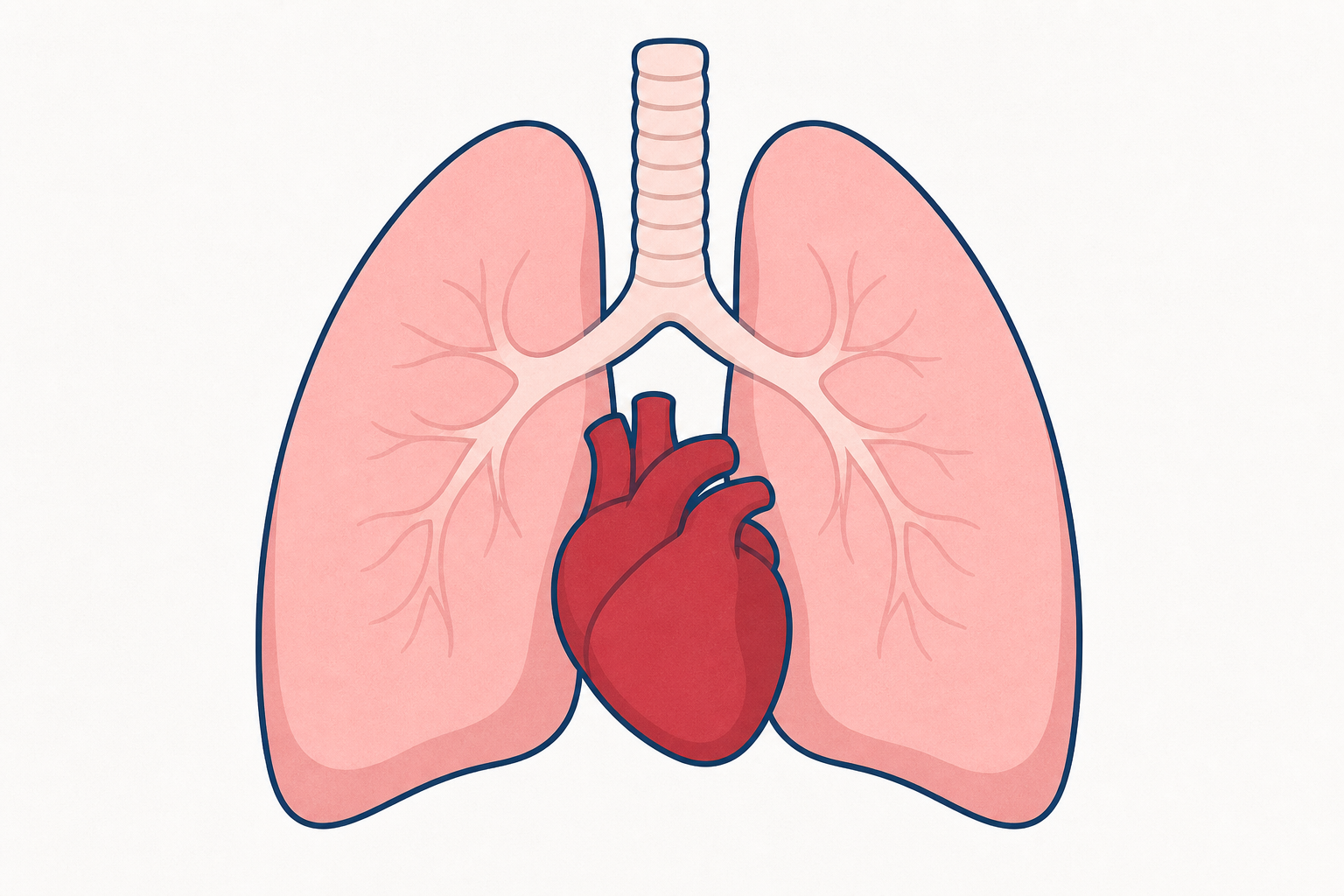
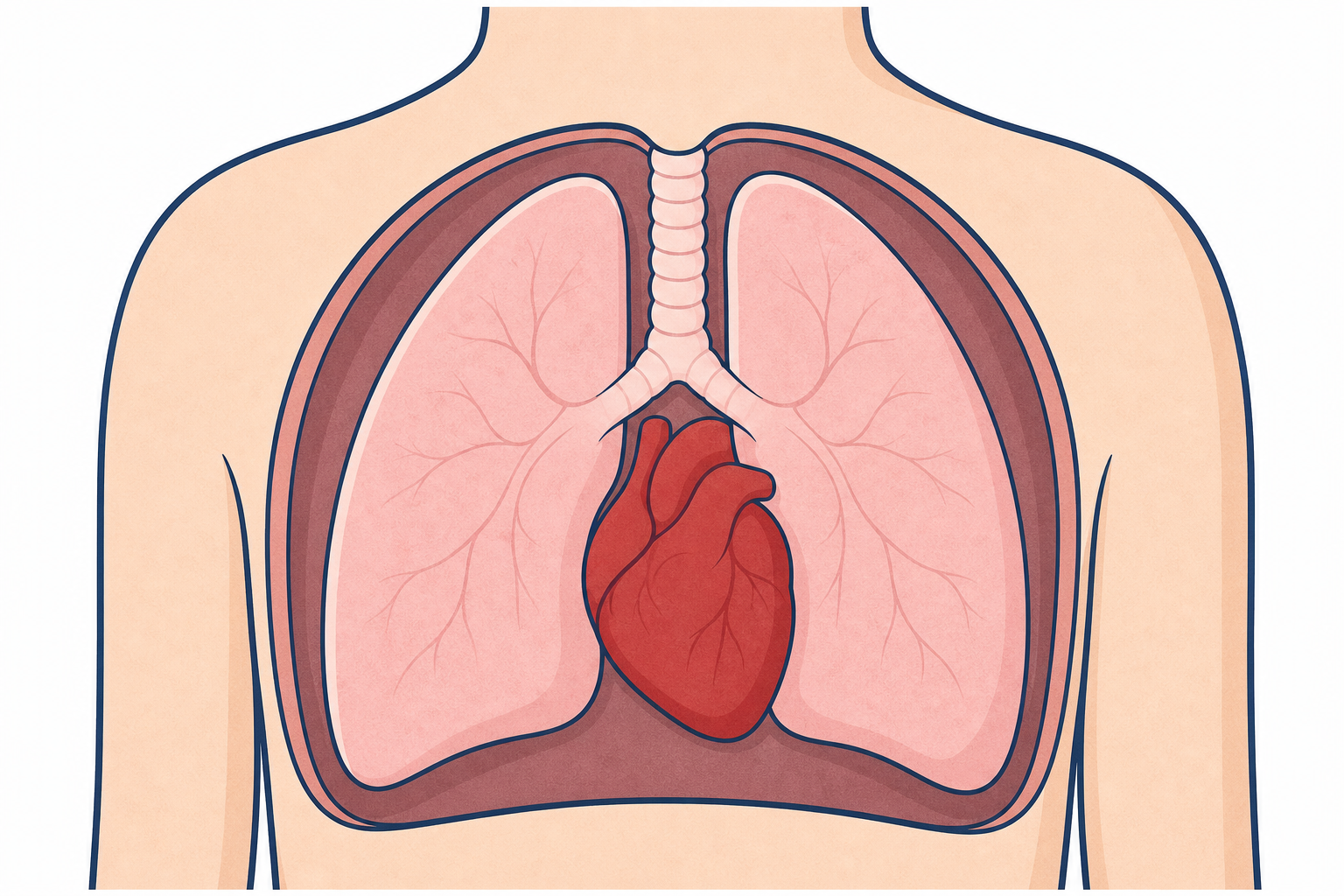
| Oxygen-delivery team — the heart and lungs working together to get oxygen into the blood and round the body | They are one team: lungs take oxygen in, heart pumps it to the muscles | When you run, both your heart and lungs speed up so your leg muscles get the oxygen they need |
Misconception to head off: some pupils think the heart and lungs work separately. Stress that they are one oxygen-delivery team: lungs fill the blood with oxygen, the heart delivers it.
Nature of STEM: biologists and doctors measure pulse and breathing to find out how the body keeps us healthy. Today we work the same way: we ask a question we can test with numbers.
Our wonder is whether exercise changes our pulse and breathing. In pairs, choose the one-minute activity you will test: steady step-ups, high-knee marches, or star jumps.
On your Investigation Journal page, write your testable question in this shape: Does one minute of [our activity] change our pulse and breathing rate per minute?
Then write what you think will happen to both numbers after the activity, and why.
This is the first time the class turns an "I wonder" into a testable question. Keep the theme teacher-set (exercise and the body) but give pairs a real design choice of activity. Model the shape out loud: I wonder if exercise changes our pulse and breathing. So we will measure both before and after the same one-minute activity, in beats and breaths per minute.
Offer three safe options only: steady step-ups on a low step or PE bench, high-knee marches on the spot, or star jumps. Pairs write the activity name into the question stem so the question is theirs.
Pin the unit once: every count is for a full 15 seconds, then multiply by 4 to get the rate per minute. Every number pupils write, and every column on the data-recorder, uses per minute, never a raw 15-second count under a per-minute label.
Predictions are never wrong. Accept both "both will go up" and more cautious ideas. Ask a few pairs to share their activity choice and why.
Worked example to model (say aloud before groups measure):
Watch how we time and count. We count pulse beats for 15 seconds, then multiply by 4 to get beats per minute. We do the same for breaths. We take each reading twice and use the average.
The timer on the board will help us keep every count fair.
Open the fair-test-timer on the IWB in stopwatch mode. Practise finding a pulse on a volunteer (or yourself) so the class sees finger placement.
What "average" means here: two readings, add them, divide by 2. Never say "the middle of two" — that phrase does not make sense for two numbers.
Common pitfalls: counting for roughly 15 seconds instead of exactly; forgetting to multiply by 4; writing the raw 15-second count as if it were per minute; pressing too hard on the neck.
Pupils who should not do the one-minute activity become timers and recorders for their pair — still full scientists in the investigation.
Work in pairs. You each measure your own pulse and breathing. Your partner helps watch the timer and check the multiply-by-4 step.
Who is measured: every number you write is for you (the person whose body you are testing). If you should not exercise, you time and record for your partner only.
1. Sit still. Measure your resting pulse twice (15 seconds × 4 each time) and write the average beats per minute.
2. Measure your resting breathing twice the same way. Write the average breaths per minute.
3. When the class timer starts, everyone who can exercises together for one full minute, each pair doing the activity they chose (step-ups, high-knee marches, or star jumps) at a steady pace.
4. Straight away, measure your own pulse twice and breathing twice again. Average each pair of readings.
Record every per-minute average on your Investigation Journal page.
There is one whole-class one-minute round on the IWB timer. During that minute every pupil who can exercise does their pair's chosen activity at the same time. Partners do not take turns doing two full rest–activity–remeasure cycles; that will not fit the slot.
If only one pupil in a pair can exercise, that pupil is the only data subject; the other is timer and recorder throughout and still counts as a full scientist.
Pairs spread out. Step-ups: low step or bottom of a PE bench. High-knee marches or star jumps: clear floor space. Keep the pace steady, not a race. Different pairs may use different activities; the fair factor is the shared one-minute duration on the class timer.
What to expect: resting pulse often sits roughly 70–100 beats per minute for this age; after the activity it commonly rises. Breathing rate also rises. Exact numbers vary — that is fine. The pattern (both go up) is the learning.
If a reading looks impossible (e.g. 20 or 200 beats per minute), ask the pair to re-count once calmly. Do not shame the first attempt.
Safety in the moment: anyone dizzy or uncomfortable sits out the activity and keeps the timer role. No competition for fastest moves.
You're previewing this lesson. Get full access to this lesson and hundreds more — each one ready to teach, with interactive activities, printable resources and pupil progress tracking built in.