Have you ever walked from a dim corridor into bright sunlight and felt your eyes take a moment to settle? Or blinked when something came near your face even though you did not mean to?
Today we will look carefully at how the eye reacts to light and to a sudden sound nearby, and we will find out which of those reactions we choose and which the body does on its own.
Keep this beat light and curious. Do not set out the plastic sheets or start pairing yet. Surface two or three everyday examples from the class (sunlight after a corridor, blinking at a fly, eyes watering in wind) and park them for later.
Key questions: What do your eyes do when the light suddenly changes? Have you ever blinked without meaning to?
Misconception to park, not correct yet: some children think we decide every blink. Hold that thought for the investigation.
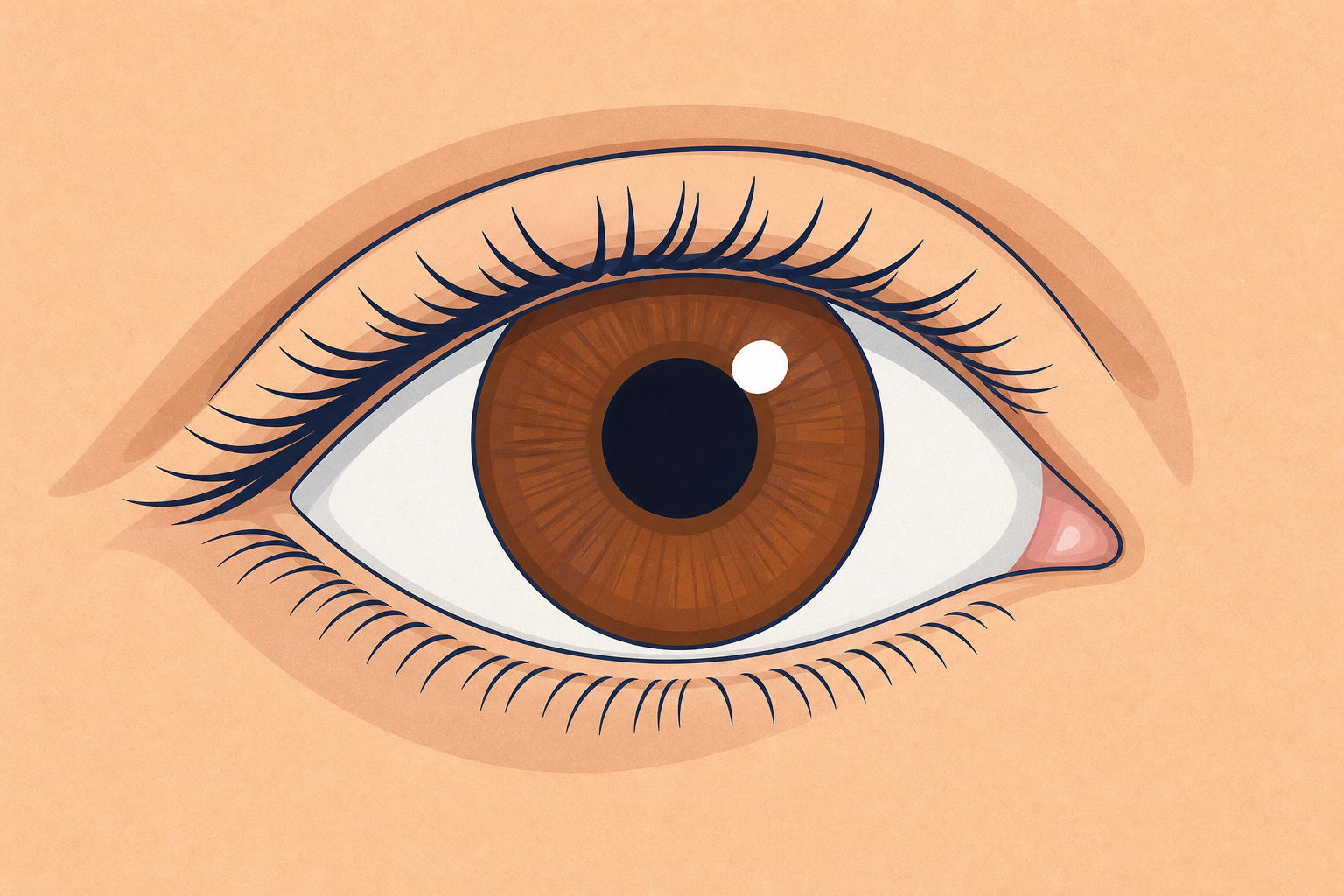
Look at the dark circle in the middle of the eye on the board. That dark circle is the pupil. It lets light into the eye.
What do you think the dark circle does when bright light hits it?
Later we will also watch a blink. Some body actions happen quickly without us deciding. We will find out more when we test that together.
Project only the short board text with the eye image. Introduce ideas one at a time: first pupil (point to the dark circle on the board image, then briefly to your own eye without touching it), then a light preview that some actions happen without deciding. Keep the word stimulus as your revoicing language until after both practicals in the share-out. Do not put the full table on the board.
| Concept | Why it matters | Example |
|---|---|---|
| Pupil — the dark circle in the middle of the eye that lets light in | It gets smaller in bright light and larger in shade so a helpful amount of light reaches the eye | When you step from a dim corridor into a sunny yard, your pupils get smaller |
| Stimulus — something around us that the body notices, such as light, sound or a sudden movement | Naming the stimulus helps us say what the body is reacting to | Bright light is a stimulus for the pupil; a clap nearby is a stimulus for a blink |
| Automatic response (also called a reflex) — something the body does quickly without us deciding | It helps keep us safe before we have time to think | Blinking at a sudden clap nearby can happen before you choose to blink |
Misconception to head off: the pupil is not a black spot drawn on the eye. It is an opening that changes size. Children may also think every blink is a choice; keep that open until they see the blink test.
If a child asks what makes the pupil change size (teacher only): the coloured part of the eye (the iris) opens and closes the pupil like a tiny curtain. We are watching the opening, not a painted dot. Do not add iris to the class vocabulary unless a child asks.
Say pupil aloud once while pointing at the board image, then once while pointing to your own eye (without touching it).
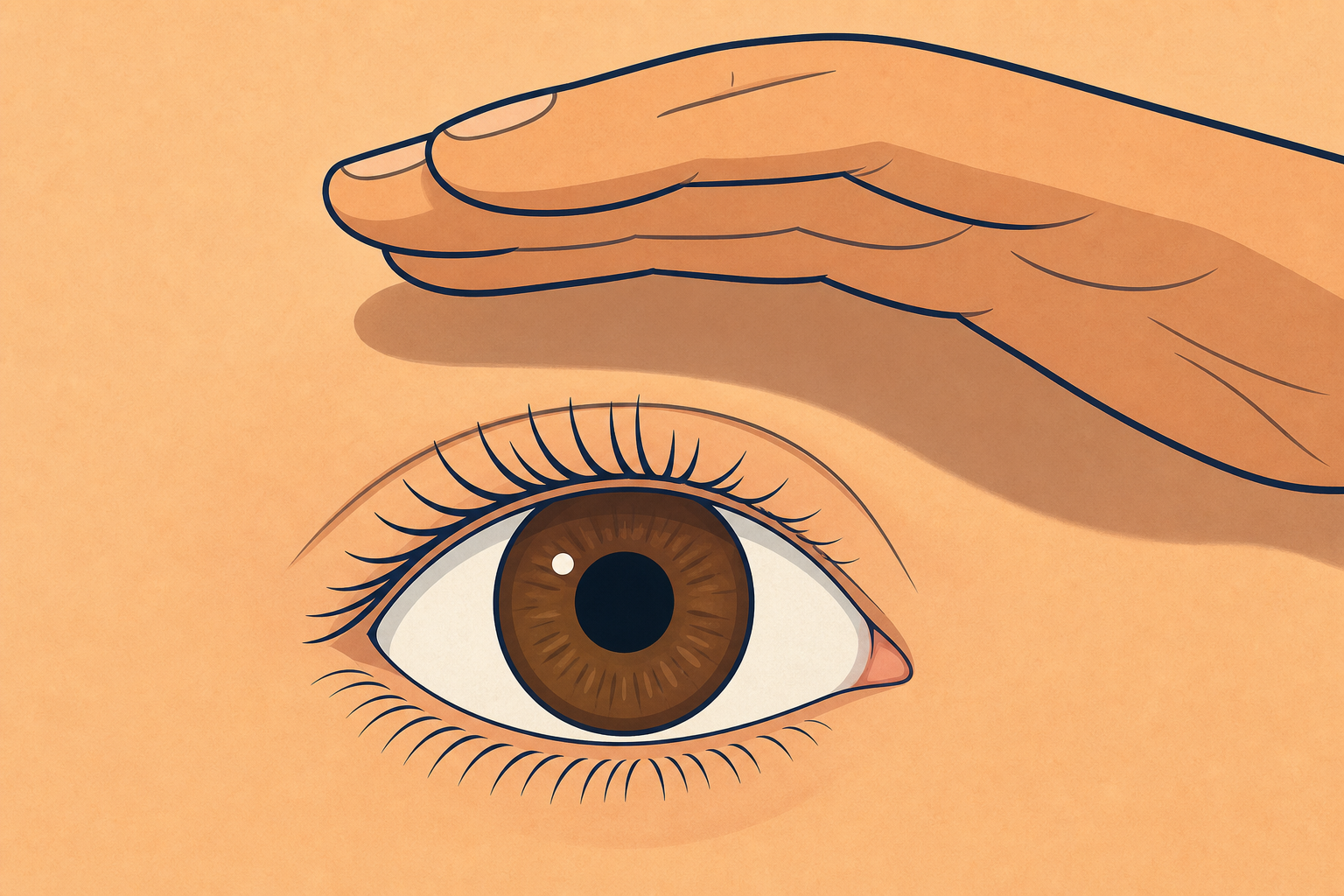
First we will watch a partner's pupil in bright light and then when a hand shades the eye.
Talk with your partner: what do you think the pupil will do in bright light? What about when a hand shades the eye?
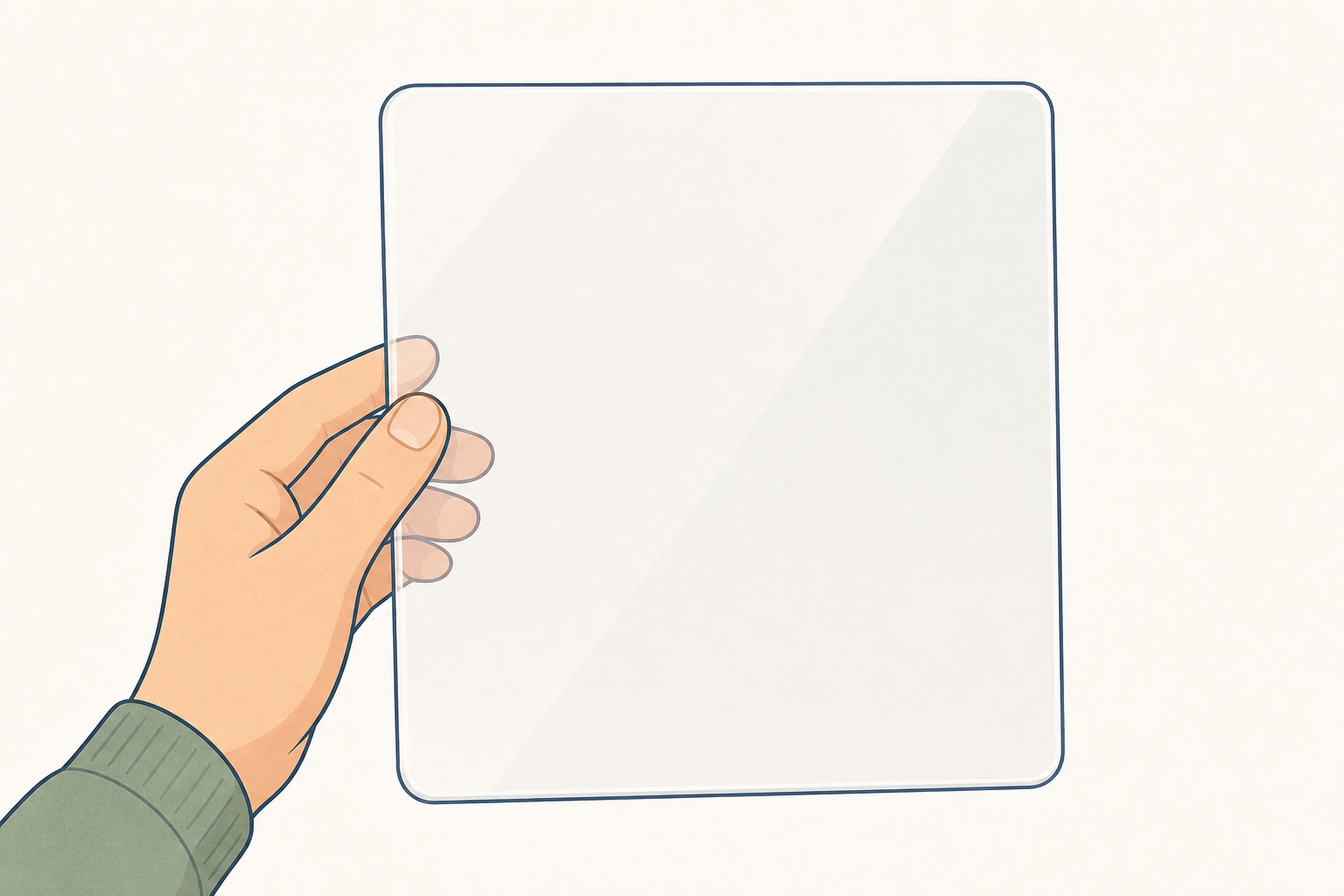
Now look at the clear plastic sheet your teacher is holding. Later we will hold one between partners like a little window and make one gentle clap beside it. Will a person blink at that gentle clap, even if they try not to?
Whole-class think-pair-share in two short beats so pairs are not overloaded.
Beat 1 (pupil only): pairs predict bright light and shade only. Take two or three predictions and note them briefly on the board as words only (e.g. smaller, bigger). Do not show the plastic sheet yet.
Beat 2 (blink): hold up one clear plastic sheet so everyone can see the prop. Add the single blink prediction. Note one or two words (e.g. blinks anyway). Predictions are never wrong; they are the start of the science.
Key questions: Why might the pupil change size? Is blinking always a choice?
Remind the class of the safety rules before anyone looks closely at an eye: no touching eyes, no shining anything into eyes, shade with a hand only, clap beside never at the face, and the clear plastic sheet stays between partners for the blink test.
Work in pairs. Your teacher will point out the bright zones (by the windows or under the bright lights). Some pairs may work there first while others wait for a short turn; waiting pairs stay folded in by watching a nearby pair and jotting what they notice.
One person is the watcher and one is the partner. First the watcher looks carefully at the partner's pupil in the brighter light and jots whether it looks bigger or smaller.
Then the partner shades their own eye with a cupped hand held like a little roof above the eye for about ten seconds. Keep a small gap at the front so the watcher can still see the dark circle while it is shaded. If the hand fully blocks the view, lift it just enough for a peek while the eye stays in shade. Watch whether the pupil looks bigger or smaller than in the brighter light. Jot bright and shade on your Investigation Journal page, then swap roles.
Safety: never touch a partner's eye and never shine anything into an eye. Only the person being watched shades their own eye with their own hand.
Room plan for light contrast: mark two or three bright zones (by windows or under the brightest ceiling lights) and name them aloud so the board line matches the room. Prefer every pair working at once at the brightest spot they can reach, using the hand-roof shade for contrast. Only if window space is truly short, send small groups for a short turn (about three minutes of watching each) while waiting pairs act as second watchers for a nearby active pair: they stand a step back, look at the same pupil when invited, and jot bright-versus-shade on their own journal page. Then rotate so every child is watcher and partner on their own eyes. Do not leave waiters with journals only and no observation role.
Model one full cycle yourself with a willing adult helper or a confident volunteer at the front. Keep the model tight (about two minutes). Think aloud:
Show how to jot bright-versus-shade on the Investigation Journal page straight after watching, so evidence is fresh. Role swap should be quick: each child needs one clear bright-versus-shade look as watcher, not a long second trial.
What to expect: most pupils will notice a clear size change within a few seconds when the shade roof is held steady and the watcher can still see the pupil. If the hand fully blocks the view, coach the small front gap or a brief peek under the shade. If the room is evenly dull, move pairs closer to a window or turn on a brighter ceiling light on one side of the room. If a child wears glasses, they may keep them on; the watcher looks at the pupil through the lenses.
Pair management: watcher and partner swap after one clear contrast each. While you circulate, ask working pairs and second watchers: Is it bigger or smaller now? Can you still see the dark circle under the shade roof? Have you jotted bright and shade on your journal page?
Safety (repeat aloud): hands stay off eyes; no torches or phones shone at faces; only the person being watched shades their own eye with their own hand.
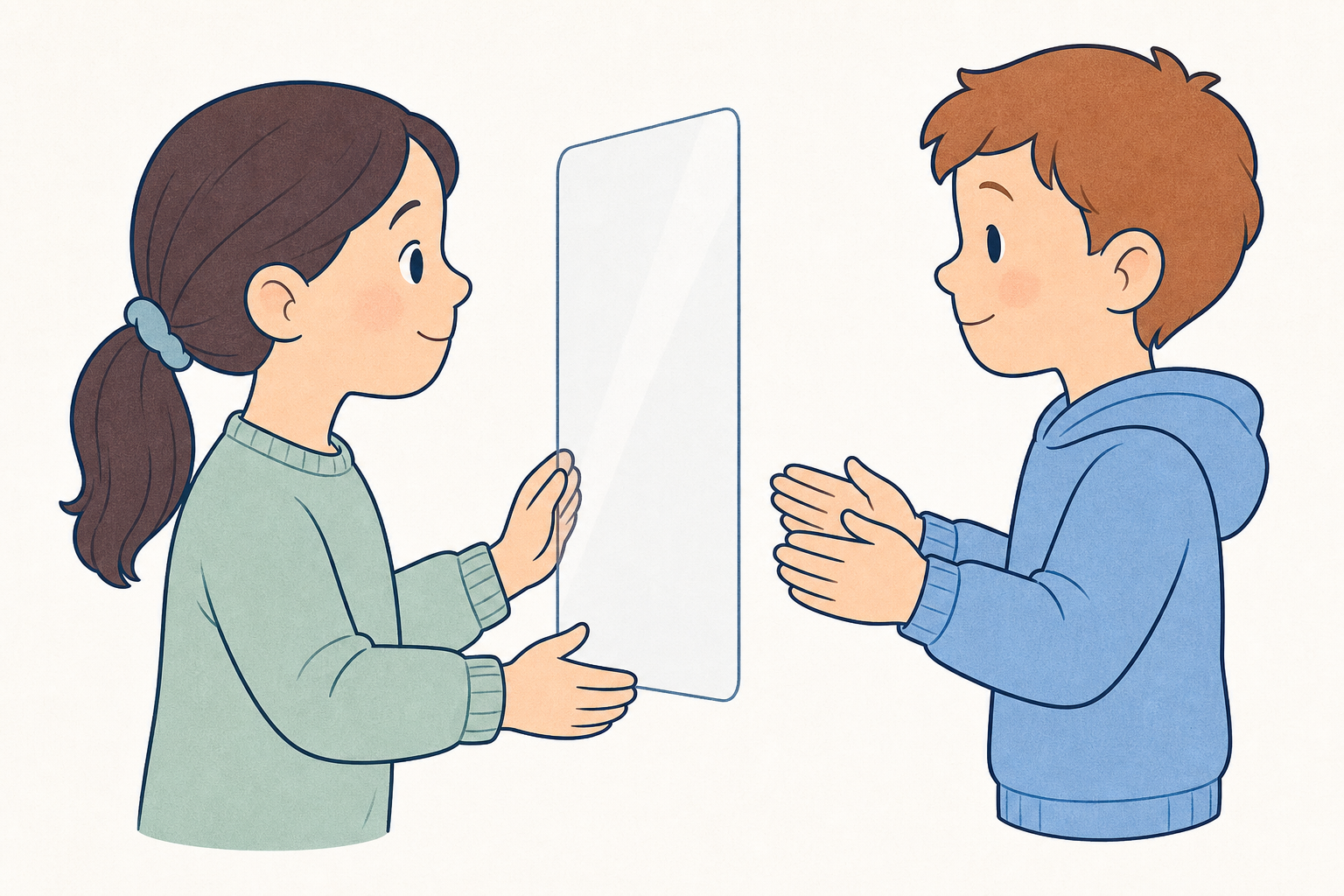
Stay in pairs. Hold the clear plastic sheet upright between you like a little window.
One person watches the partner's eyes. When the teacher signals your table group, the other person makes one gentle clap beside the sheet, never toward the face. Watch whether a blink happens. Note blink or no blink on your Investigation Journal page. Swap roles for one try each on the next signal for your group.
Safety: the sheet stays between you. Clap beside, never at, the face. No touching eyes.
Demonstrate once at the front with the clear sheet held between you and a volunteer (about one minute). Narrate the full cycle:
Staggered routine that fits the slot: do not clap the whole class at once, and do not signal one lonely pair at a time if that will blow the clock. Signal one table group (or a short row of pairs) together so two or three pairs clap once on the same calm signal, still beside the sheet. After that signal, those pairs jot blink or no blink, swap roles, and take one more group signal for the second role. Then move to the next table group. One try per role is enough. This keeps volume and direction under control while every pair still gets a real observation and journal note.
What to expect: almost every child will blink at least once. If someone does not blink on the first try, do not escalate volume or move closer to the face; accept no blink as data. A few children may flinch or laugh; keep the tone calm and scientific.
Common mistake: clapping toward the face or tapping the sheet. Stop the pair, reset the sheet, and model beside-not-at again.
Safety: one controlled signal per table group; no surprise lunges; children who find sudden sounds difficult may watch only and be the timekeeper or note-taker for their pair.
You're previewing this lesson. Get full access to this lesson and hundreds more — each one ready to teach, with interactive activities, printable resources and pupil progress tracking built in.