 Close your eyes for a moment. What sounds can you hear in our classroom right now?
Today we find out what a sound actually is, and how we can make one higher, lower, louder or quieter on purpose.
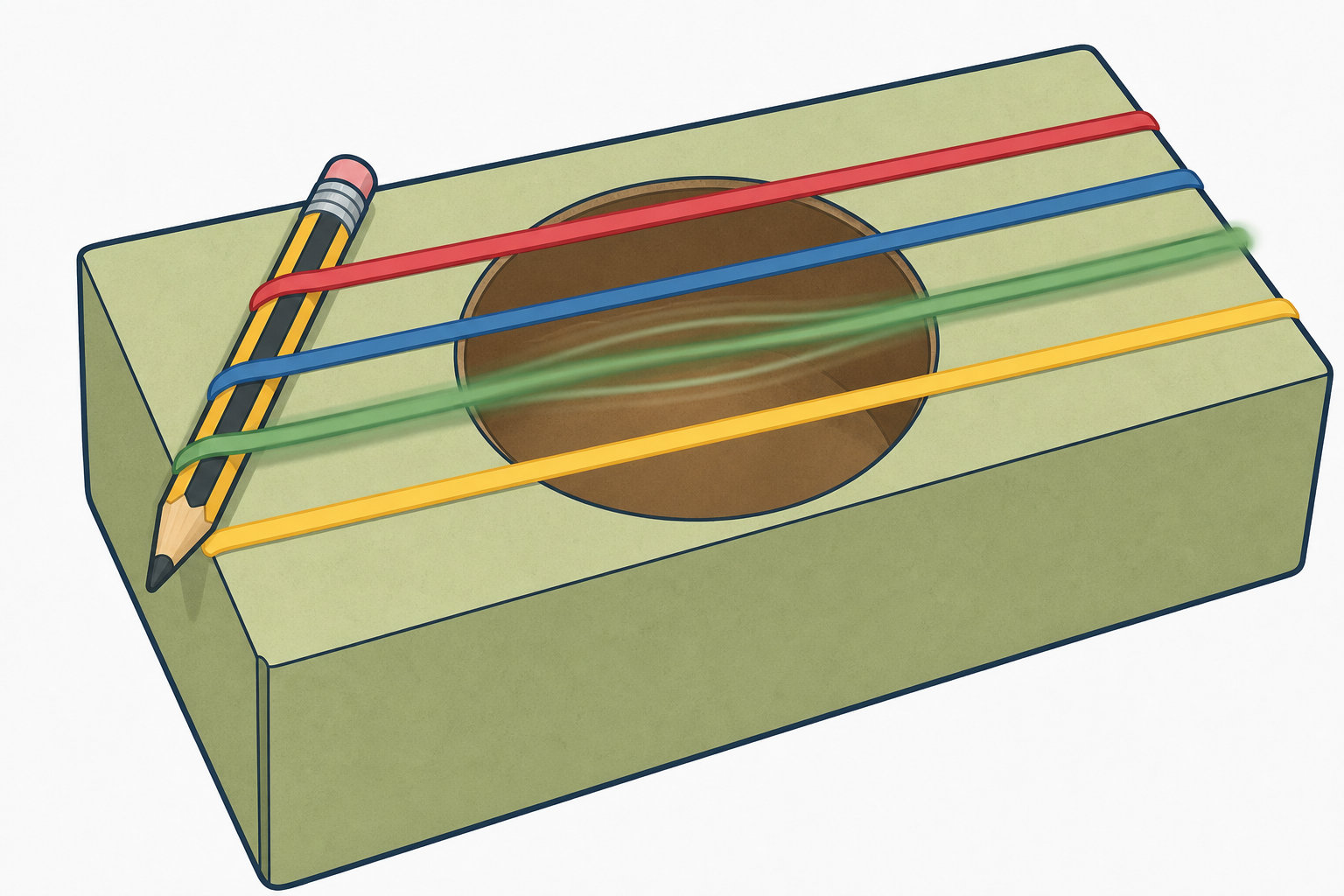 When something wobbles fast enough for our ears to pick it up, we hear a sound. Scientists call that wobble a vibration.
Pitch is how high or low a sound is. Volume is how loud or quiet it is.
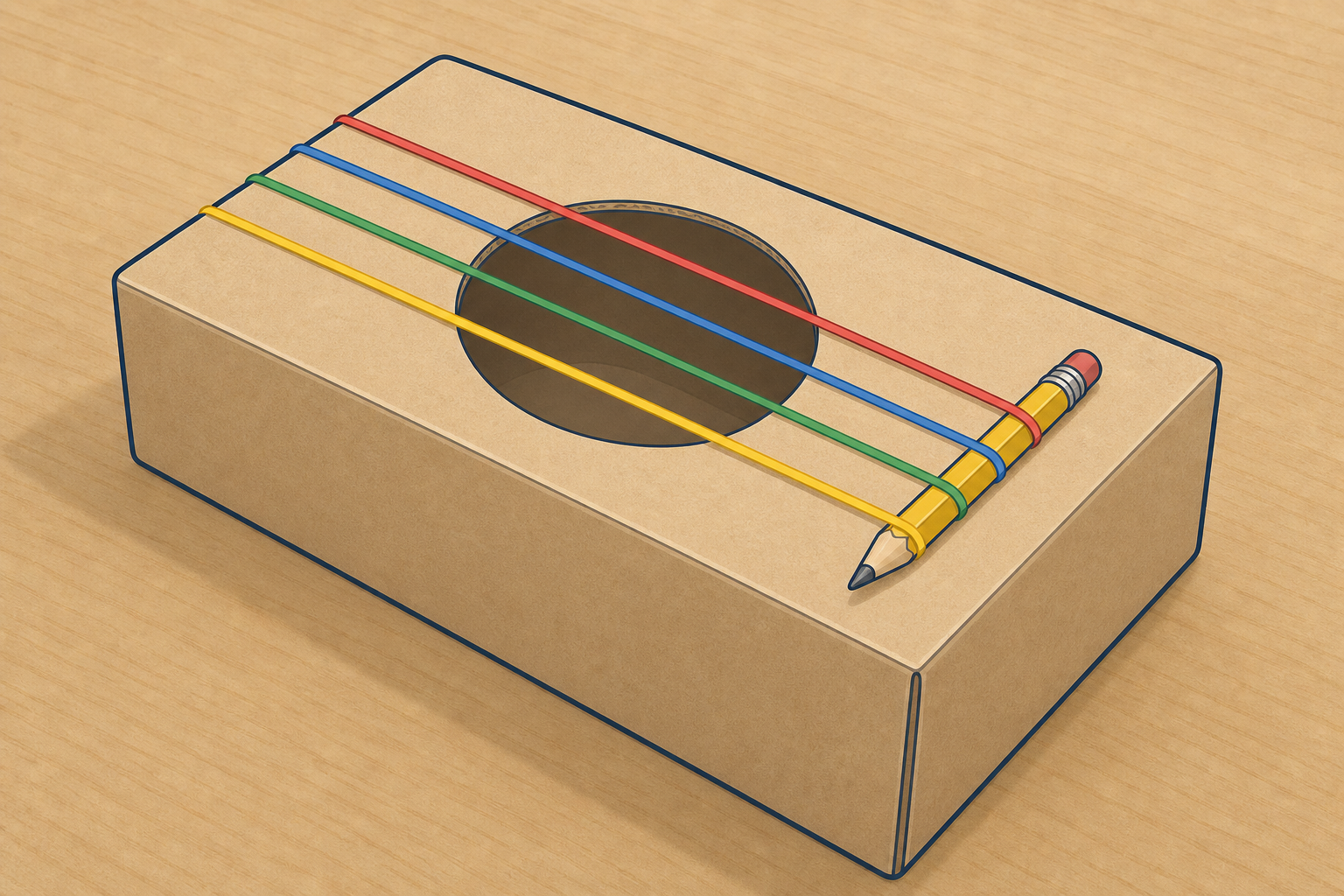
Think about the elastic band on the box we just heard. What could we change on that band to make the note higher or louder?
Before anyone plucks or twangs, write down what you think will happen. Finish these two stems on your Investigation Journal page:
- If less of the ruler hangs over the edge, the twang will be ___ because…
- If I pluck the same band harder, ___ will change because…
Give the reason as well as the answer: the part after because is the important bit.
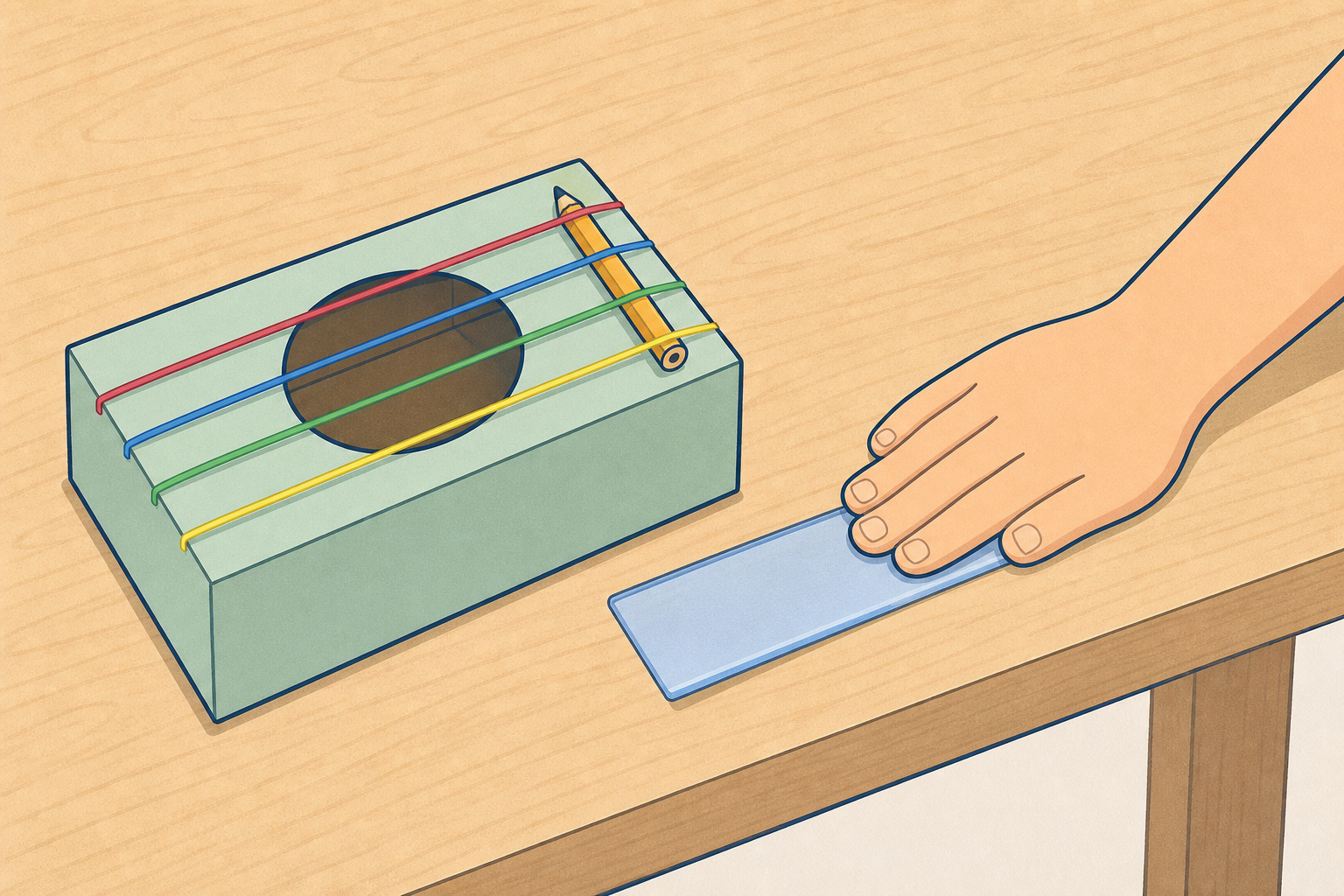 In your group, try the rubber-band guitar and the ruler twang.
Pick one change only each time: how tight the band is, or how much of the ruler hangs over the edge, or how hard you pluck or twang. Then listen and look. Can you see or feel the vibration?
When you hear the freeze signal, stop and listen only: no plucking until the teacher says go again.

 Hands off for a moment. We will run two clean tests only.
One test is about pitch and uses the ruler; the other is about volume and uses one band on the box. Both are set out below, and your group makes the choices inside each test. After each test, jot one line on your Investigation Journal page while it is still fresh.
Watch or feel the vibration as well as listening. Freeze signal still applies between trials.
Unlock the full learning experience
You're previewing this lesson. Get full access to this lesson and hundreds more — each one ready to teach, with interactive activities, printable resources and pupil progress tracking built in.
This lesson is copyright of Coding Ireland 2017 - 2025. Unauthorised use, copying or distribution is not allowed.