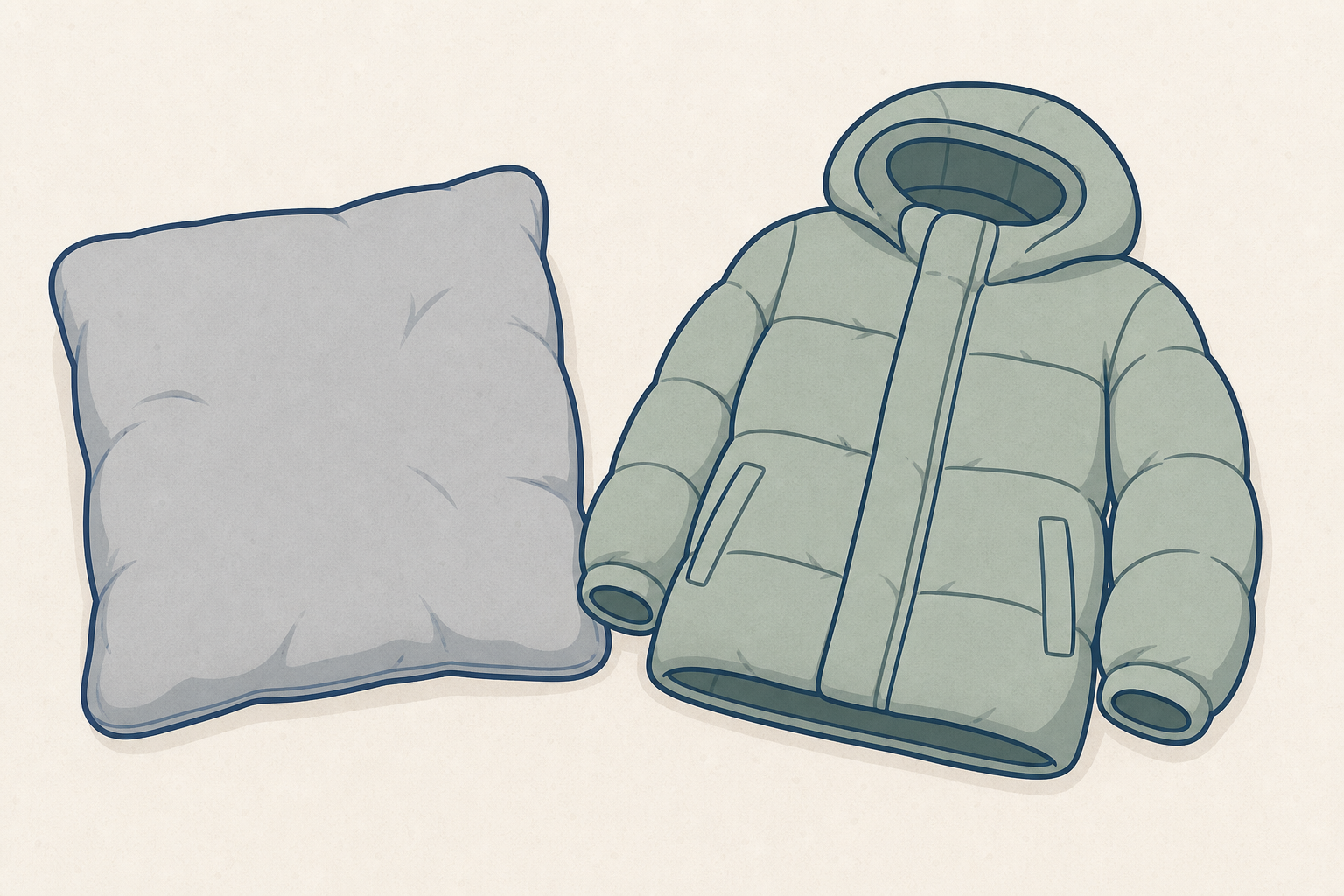
When the classroom door is shut, the corridor sounds quieter. Soft cushions and thick coats can quieten sounds too. What do you think is making the sound quieter?
Keep this beat light: one curiosity question only. Have the bare buzzer or ticking timer ready to give one short beep or tick so the class hears the sound they will work with, then stop it. Do not hand out wrapping materials yet. Aim the question at quietening in everyday life; save "soak up" for soft wraps once pupils are handling foam and cloth.
Key questions: Where do we already notice quieter spaces in school? What things around us might make a sound quieter?
STEM eyes: link to doors, soft furnishings, ear defenders and coats that quieten everyday noise.
Today we will learn two important words. To muffle a sound means to make it quieter by wrapping or covering it.
Soft materials feel squashy or fluffy. Hard materials feel stiff.
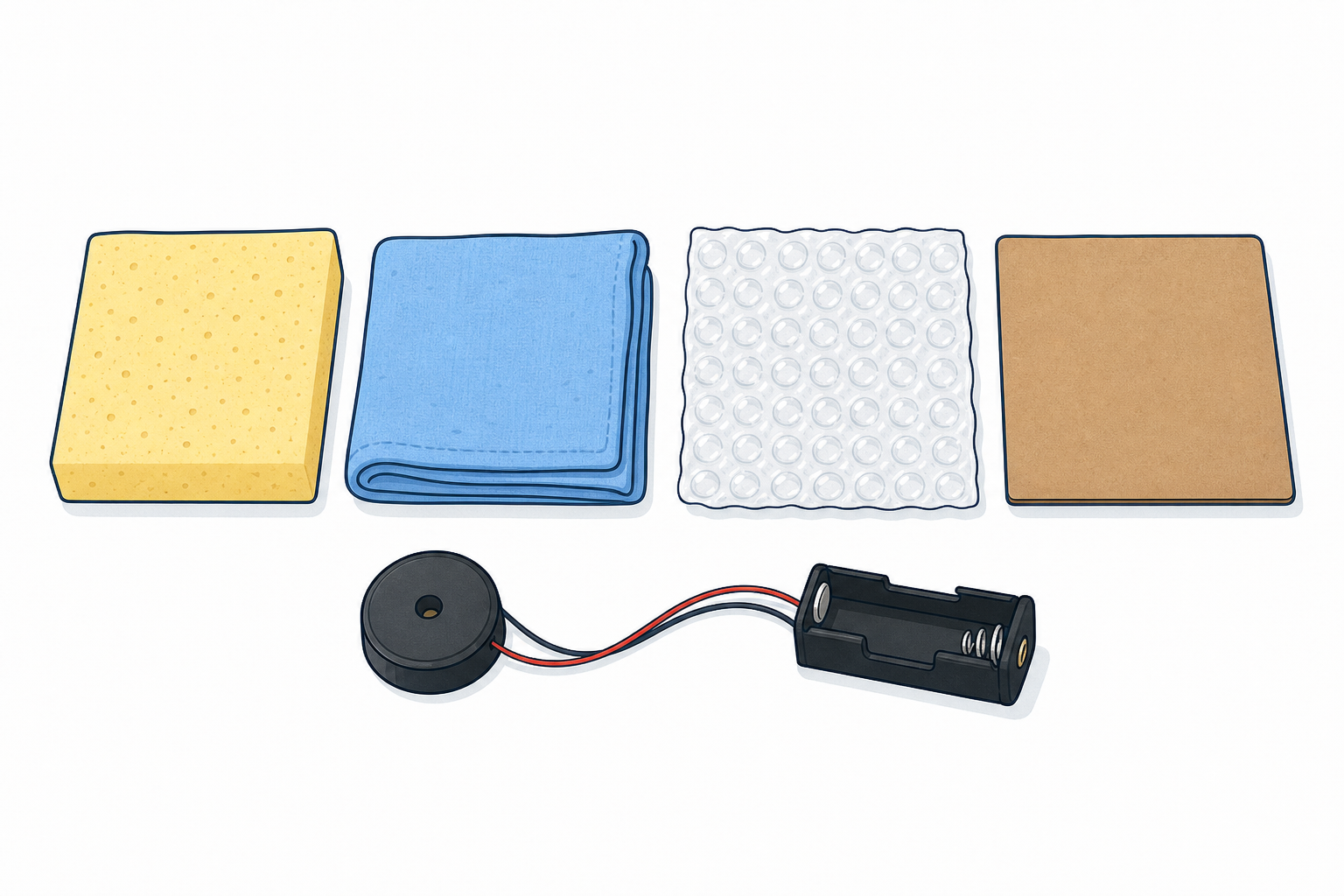
Here are our four wrappings: foam, soft cloth, bubble wrap and stiff card. Which one do you think will make our buzzer hardest to hear?
Board stays short: only muffle and soft/hard feel words for pupils. Hold the four real samples up (or show them clearly) while you name them so the question lands on something they can see. Do not say on the board that soft materials usually muffle better; that claim waits until after listening in the ordering or close. Keep sound insulation as your own label for now; you can name it lightly in the close once they have listened.
| Concept | Why it matters | Example |
|---|---|---|
| Muffle — make a sound quieter by wrapping, covering or blocking it | We muffle sounds when we want less noise, like closing a door during a test | A thick sock over a buzzing phone muffles the ring so it is quieter |
| Soft materials — squashy or fluffy materials (hard materials feel stiff) | After we listen, we can check whether soft wraps quietened the buzzer more than hard ones | Foam, cloth, bubble wrap and stiff card are the four wraps we will compare by ear |
| Sound insulation (teacher label) — using a material so less sound gets through | Soft walls, doors and ear defenders use this idea to keep rooms calmer | Ear defenders at a building site muffle loud drills so workers hear less of the noise |
Misconception to head off: children may think only stopping the buzzer counts as quieter, or that thicker always means quieter without listening. Stress that we judge by careful listening, not by how the wrap looks. Do not steer the prediction with "soft always wins".
Worked cycle to model next (stiff card as try 1 of 4): I wonder which wrap muffles best. I predict stiff card will still sound loud because it is hard. I test: buzzer in the box, card wrap, lid on, listen from the same spot. I observed: still quite loud. I think hard card does not muffle well, so next we will try the other wraps.
Our question: which wrapping material muffles the buzzer best?
Look at foam, soft cloth, bubble wrap and stiff card. Whisper to a partner which you think will be quietest, and why. Predictions are the start of the science, not a test to get right.
On your Investigation Journal page, write your prediction now: which material, and a short because. We have not tested yet.
Print the Investigation Journal page. Set up one shared class kit at the front: buzzer or timer, box with lid, and the four wrapping samples. Mark one listening line on the floor with tape so everyone hears from the same place. Have Quiet / Medium / Loud cards or board icons ready for the listen step. If you have spare kits, keep them for tightly staggered turns later, not for several buzzers at once.
Show the four samples again. Pupils whisper a prediction to a partner, then jot it on the Investigation Journal page before any wrap is tested (material name plus a short because is enough). A few share aloud. Capture one or two reasons on the board without ranking them yet. Offer blank stems only (for example, "I think ___ will be quietest because ___"). Do not read out a "soft materials always win" model answer.
Look-fors:
Do not leave prediction writing until after the tests; that is when original ideas get overwritten.
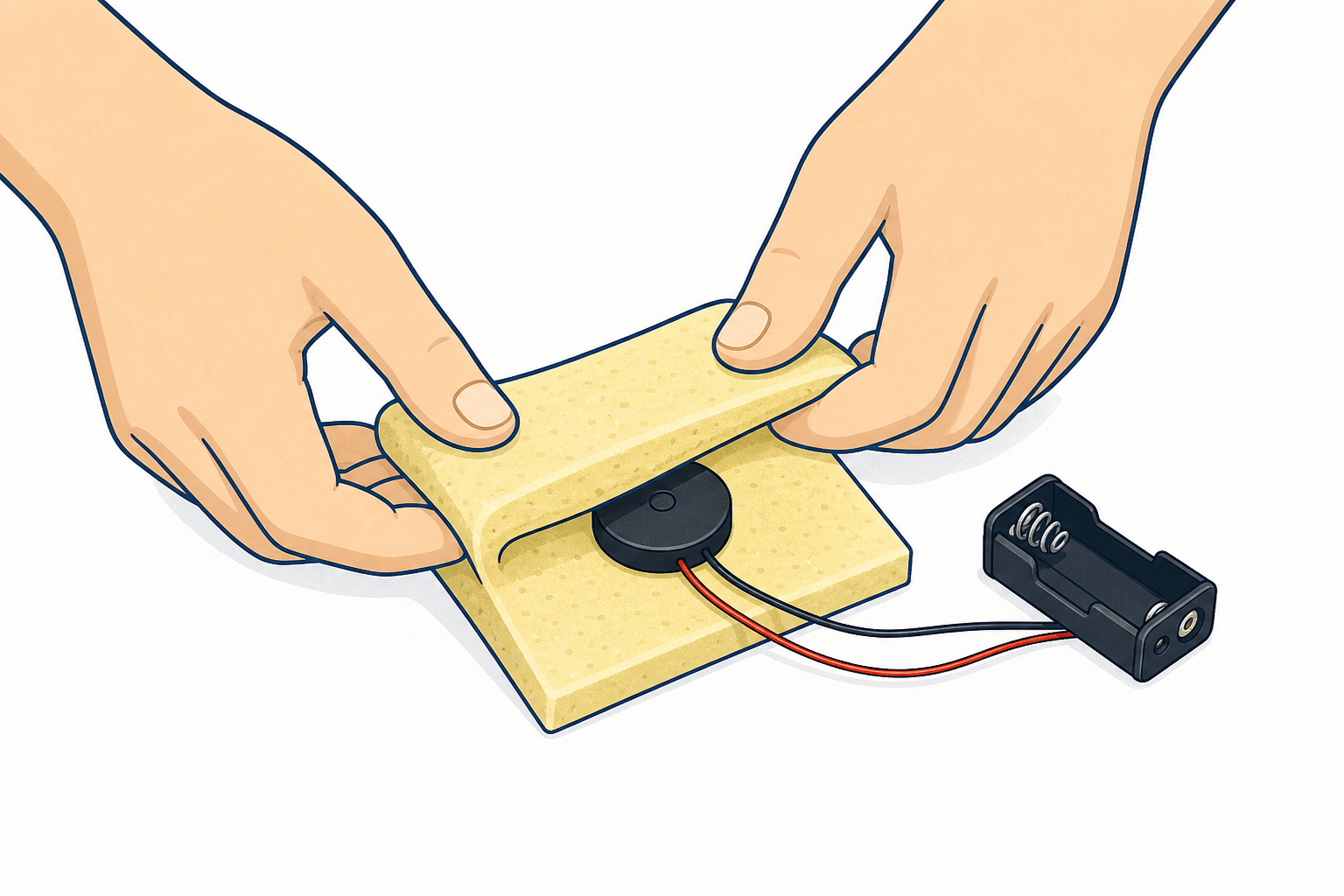
Volunteer pairs wrap the buzzer at the front. Everyone else stays on the listening line and helps decide quiet, medium or loud after each beep.
We try one material at a time: wrap, box, lid on, short beep, same listening spot. We start with stiff card together, then foam, soft cloth and bubble wrap.
Primary delivery: one shared class kit. Run all four tests at the front so the whole class hears the same beeps from the same listening line. Invite pairs of volunteers to wrap and place the buzzer while everyone else listens and rates. Do not run several group buzzers at once; overlapping sound ruins the comparison. If you must use more than one kit, stagger tightly so only one sound plays at a time.
Tight per-try routine (aim to finish all four listens inside 11 minutes): model stiff card as try 1 (about 2–3 minutes for the full predict → test → observe → think cycle). Then foam, soft cloth and bubble wrap at about 2 minutes each: wrap → lid on → one short beep → class rate quiet/medium/loud → unwrap. Keep settle time short; no long chat between tries. That leaves Step 5 free for board scores.
Suggested order: stiff card (teacher model) → foam → soft cloth → bubble wrap.
What to expect: foam and thick cloth usually sound quietest; stiff card and sometimes bubble wrap sound louder. If every wrap sounds the same, move listeners a little closer or use a slightly stronger beep, still at a class-friendly level.
Safety: no buzzer against ears; short beeps only; stop if anyone covers their ears uncomfortably.
Differentiation: less confident pupils point to Quiet / Medium / Loud cards (or the three board icons) after each beep; confident pupils may suggest what two soft layers might do another day (do not add a fifth live try unless you still have spare minutes).
As a class, choose 1 for quiet, 2 for medium or 3 for loud for each wrapping. Your teacher types the scores and shows the chart. Taller bars mean a louder sound.
Look at which bar is shortest and which is tallest.
On your Investigation Journal page, jot what you heard for each wrap (1, 2, 3 or quiet, medium, loud). Add one line for which was quietest and which was loudest. Your prediction is already written from earlier.
Drive the interactive on the IWB. Groups call out 1, 2 or 3 for each wrapping while you type. Pupils do not type. If groups disagree, take a quick hand vote and enter the class choice, or note both and talk about careful listening.
Match the screen to the words: columns are Wrapping and How loud (1 quiet to 3 loud); four rows for foam, soft cloth, bubble wrap and stiff card.
Keep this inside the lesson so Step 6 can use the scores. Do not set the journal as homework. Light page only: prediction already done in Step 3; here four short heard codes plus one quietest/loudest line. Skip long sentences if time is tight.
Suggested flow (about 8 minutes): call out and enter four scores (3 min) → show the bar chart and name shortest/tallest (2 min) → pupils finish short heard notes and quietest/loudest line (3 min).
Typical pattern: foam and cloth near 1; card near 3; bubble wrap often 2. If results differ, treat that as real data and ask what might have changed (lid not shut, different listening distance).
You're previewing this lesson. Get full access to this lesson and hundreds more — each one ready to teach, with interactive activities, printable resources and pupil progress tracking built in.