Think of a dance you know — hop, hop, hop, clap. Which part happens again and again?
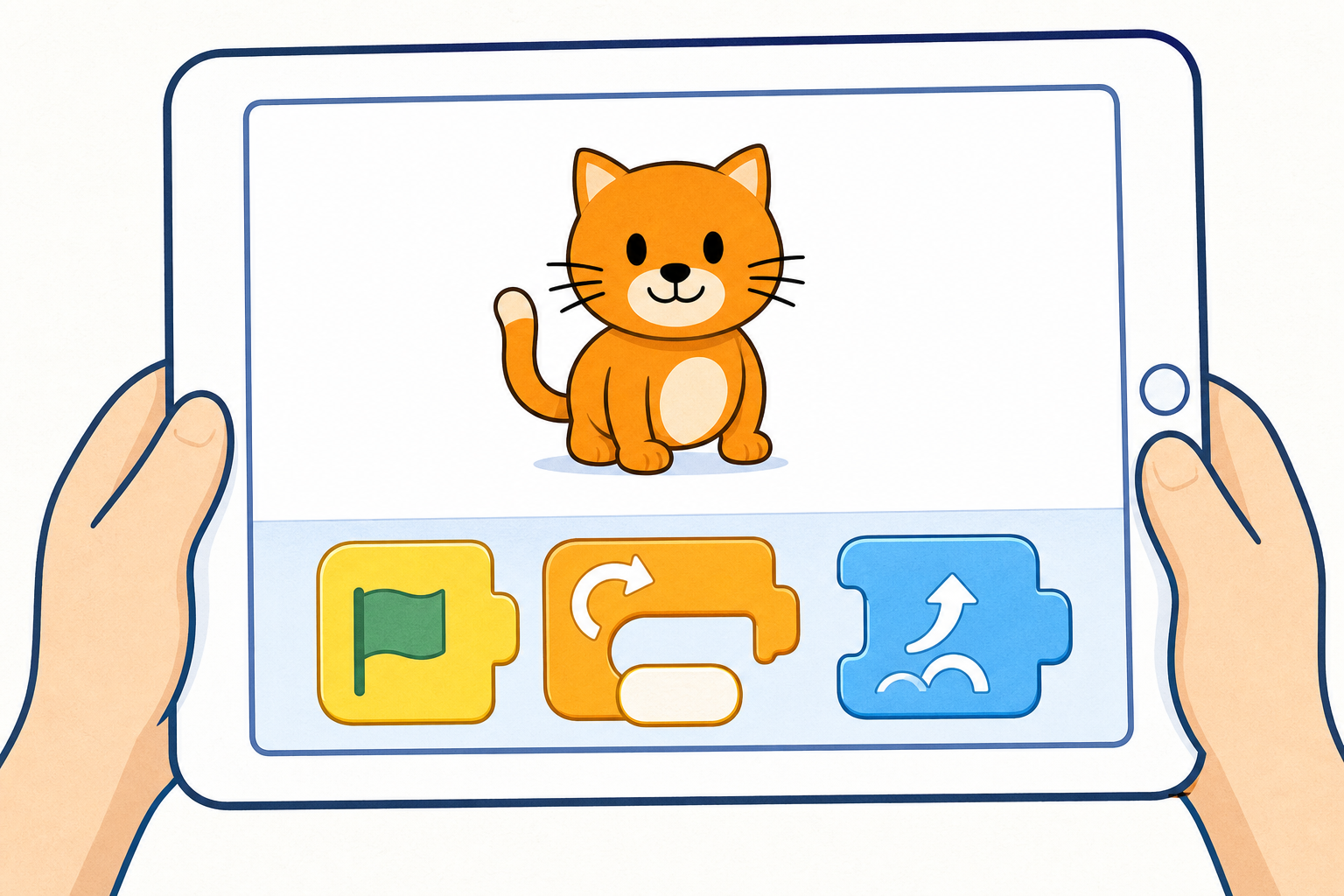
Today we will put that same idea into ScratchJr with a special block called a repeat.
Keep this light. No tablets out yet. Ask for one or two dance or clapping patterns the class already knows. Circle the part that repeats on the board with a simple sketch (e.g. hop–hop–hop). Link briefly: the repeats we spotted in patterns and dances are real blocks we can use in ScratchJr.
Key question: Which bit of that dance happens more than once?
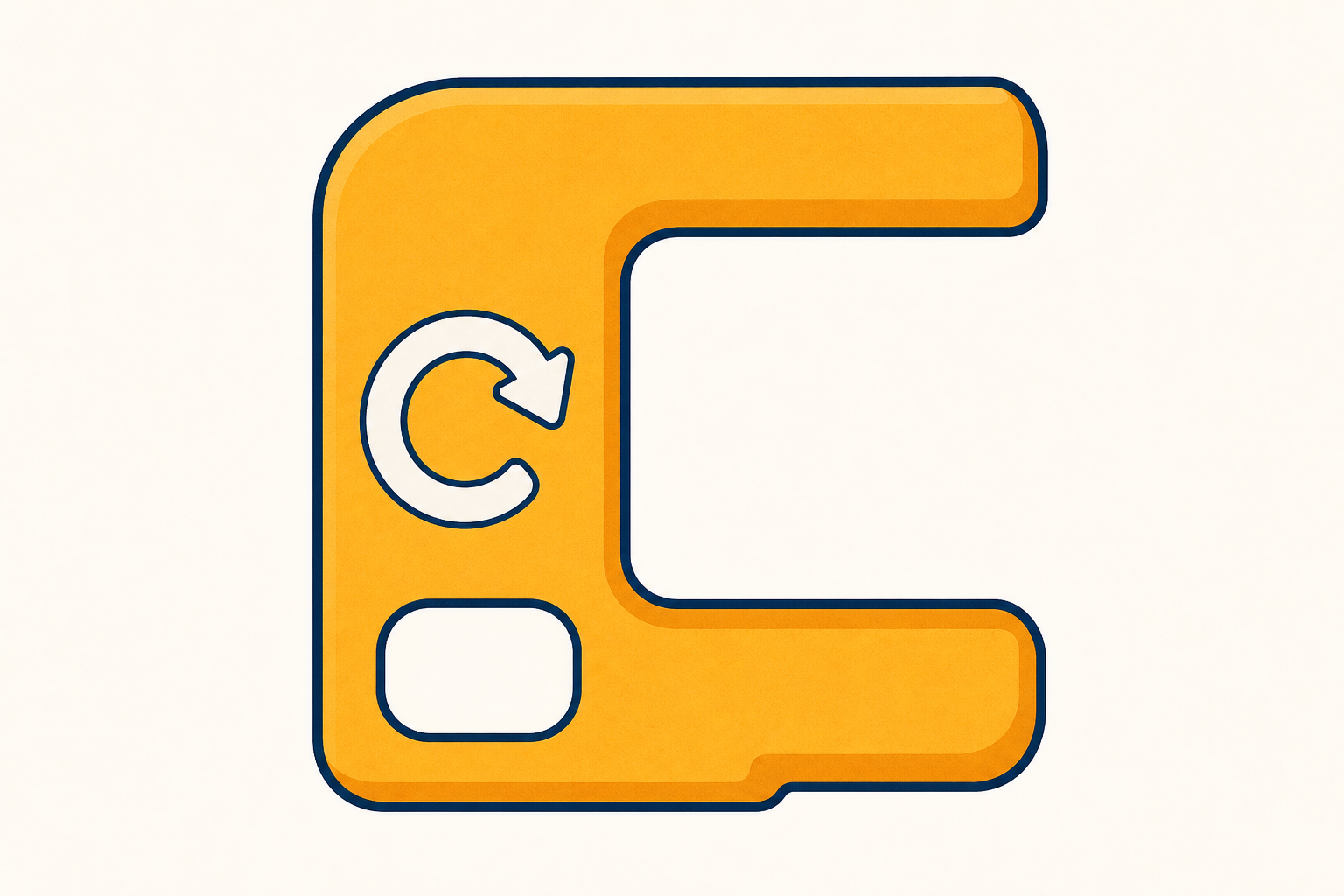
Our star word today is repeat block.
A repeat block runs an action a set number of times. The number on the block tells it how many.
We will also test: run the program and watch what happens.
Keep the board light: one star idea (repeat block) plus a quick mention of testing. If you can, freeze a still frame on the IWB of a repeat block with one hop already in its mouth so pupils can see the shape before the live demo; do not unpack "inside" in full until they watch you drag the block in step 3. Sequence can stay as everyday talk ("steps in order") when you need it later; do not give all three terms equal billing before the demo.
| Concept | Why it matters | Example |
|---|---|---|
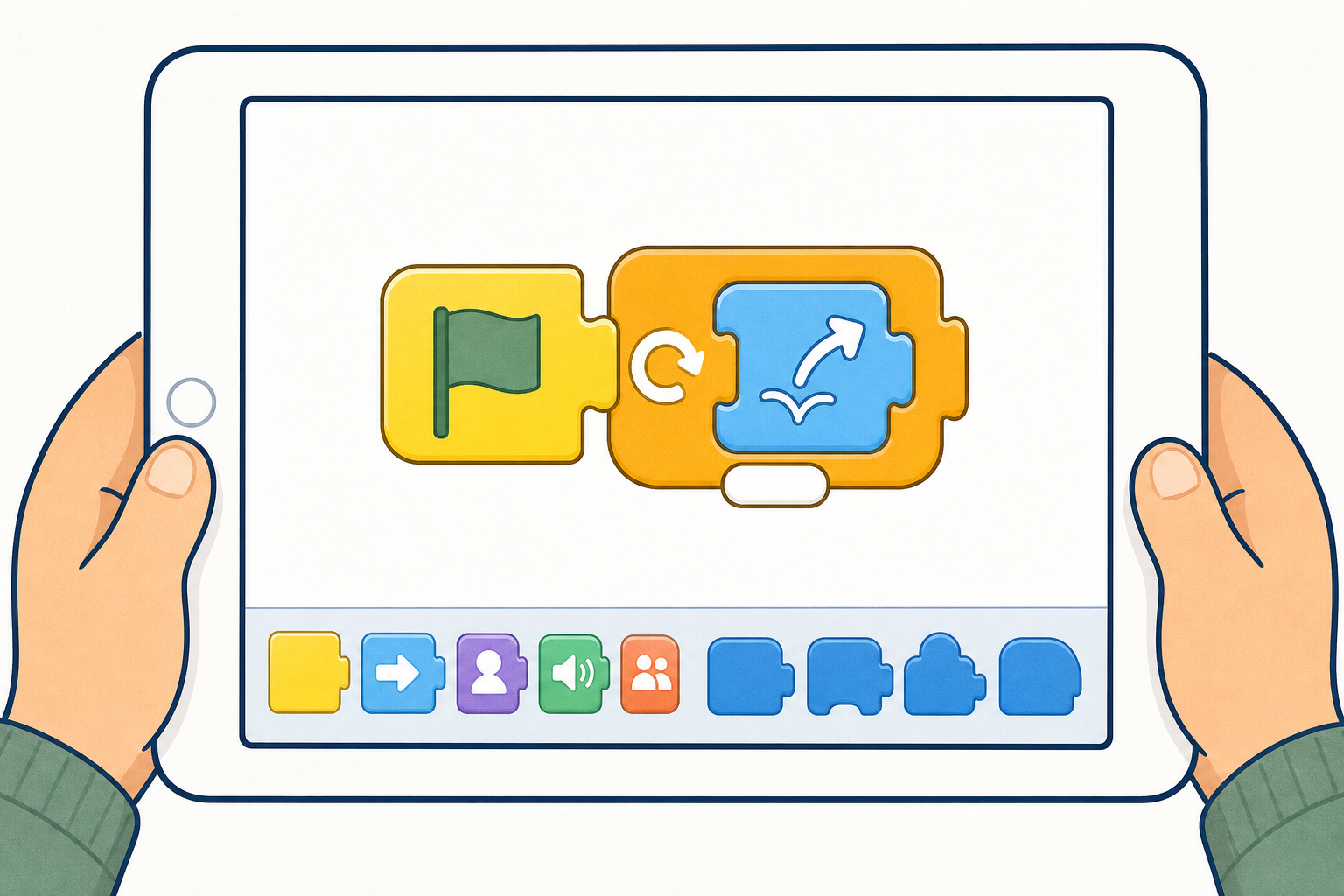
| Repeat block — a ScratchJr block that runs the steps inside it a set number of times | It saves writing the same step again and again, and matches the loops we already notice in dances and patterns | A hop inside a repeat-3 block makes three hops |
| Sequence — steps in order that a character follows one after another | Computers only do what we tell them, in the order we give | Hop, then turn, then hop again — three blocks in a row |
| Test — run the program, watch carefully, then fix anything that went wrong | Almost no program works first time; testing is how we find and fix bugs | Press the green flag, count the hops, change the number if needed |
Misconception to head off (after the demo if needed): some children think the repeat block is decoration. Show that without it you need one hop block per hop; with it, one hop sits inside the loop.
Watch the board. We will build a short hop sequence, then put the hop block inside a repeat block. Predict: how many times will the character hop?
Then we will try a turn inside a repeat too, so you can choose hop or turn later.
Have ScratchJr open on the IWB (or the teacher tablet mirrored). Choose one character and a clear background. Pupil tablets stay closed or face-down on pair desks until the build step timer starts — do not open projects during this demo or the plan talk.
Then change the number to 5 and run again so the class sees the number controls how many times. Ask: What stayed the same? What changed?
Second quick model (30–40 seconds): clear the hop, put one turn block inside the same repeat (still set to 3 or 4), and run once. Name it clearly: "That is hop or turn — both sit inside the repeat the same way." This is the choice pairs will plan next, not a free dance of many blocks.
If ScratchJr is not on the IWB: act it with a child as the character and arrow cards, then show the same idea on one tablet held up.
Fold the watchers in: before each run, hands up for "two hops" / "three hops" / "five hops".
After the demo you can briefly name "sequence" as steps in order if it helps, now that they have seen it.
Sit with the partner your teacher names. Tablets stay closed. Choose together: will your character hop or turn? Decide how many times the repeat should run. Say your plan out loud before anyone touches the tablet.
Pair up first: name pairs (or use your usual partner cards) so every child knows who they work with before the talk starts.
Device rule (same across steps 3–5): tablets stay closed or face-down on the pair desk. Do not wake or open ScratchJr during planning — open-to-blank happens only when the build step timer starts.
Still no free building. Pairs decide: action (hop or turn — both were modelled) and repeat number (suggest 3, 4 or 5 so testing stays quick). One partner says the plan; the other checks it makes sense.
Sentence stem: Our character will ___ inside a repeat set to ___.
Quick hands-up share of two plans so the room hears variety. If a pair is stuck, offer: hop inside repeat 4.
Link to unplugged work: the repeating part of a dance or border pattern is the same idea as the block we are about to use.
Wake your open ScratchJr project with your partner. Build and test like this:
Only now wake the tablets. They should already be on pair desks, charged, and opened to a blank ScratchJr project with a character ready (from before the lesson). One tablet per pair. Partners swap who drives halfway through so both build. If devices are short, keep the IWB turn-taking fallback: pairs come up in turn while the class predicts and counts aloud.
No Investigation Journal pages during the build. Pairs count out loud and remember what they used. Journal recording is the next step only.
Coach with questions: Is the hop or turn inside the repeat mouth? What number is showing? Did you press the green flag?
Fast finishers: add a second action inside the same repeat (e.g. hop then turn), or try a different number and predict before running. Not a second app or a solo device task away from the pair.
You're previewing this lesson. Get full access to this lesson and hundreds more — each one ready to teach, with interactive activities, printable resources and pupil progress tracking built in.