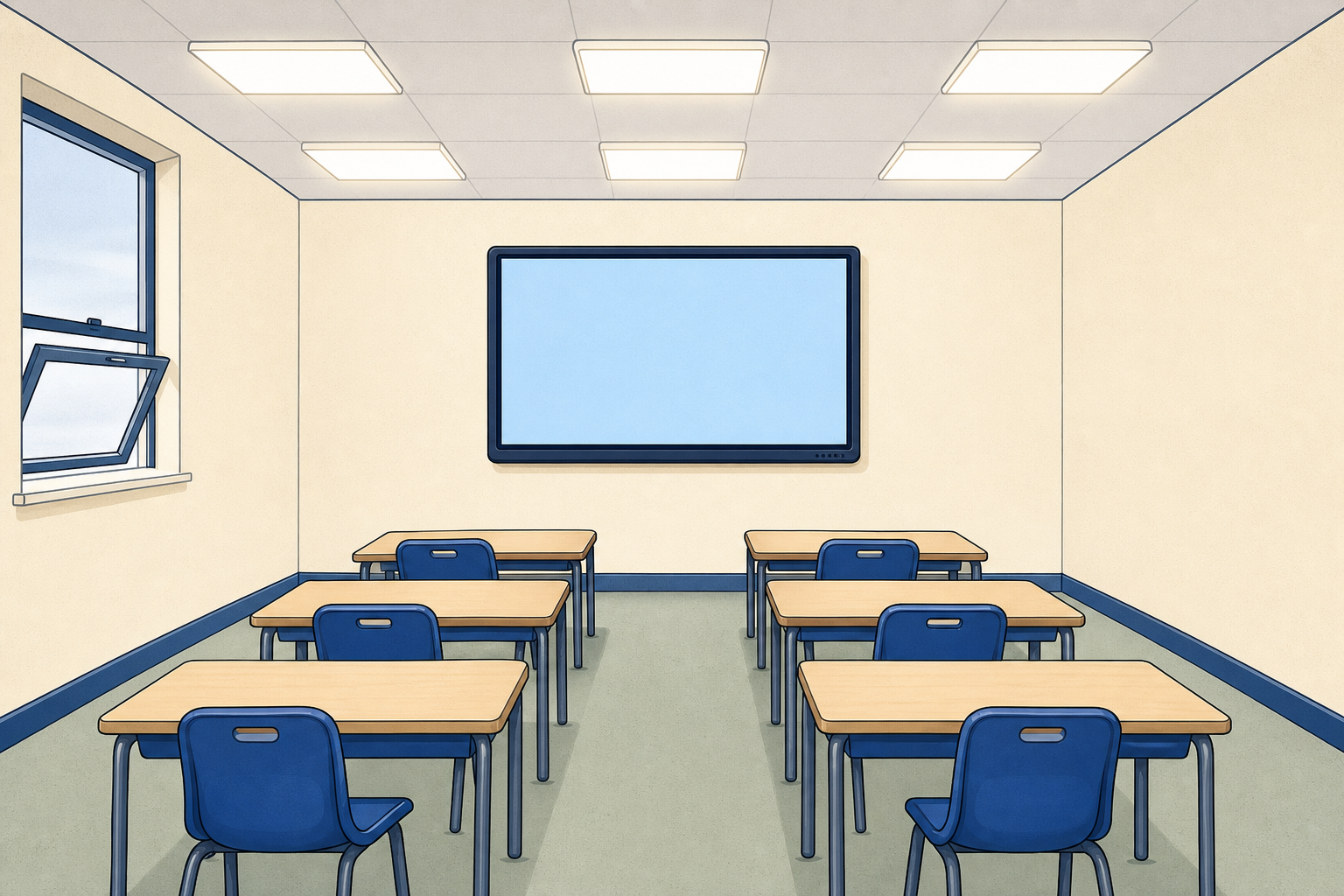
Look at this: the lights are on, but the room is empty. Is energy being used? Is anyone using it?
Where else in our school might energy be wasted right now?
Keep this beat light. Show a photo on the IWB of an empty room with lights on, or simply point to a nearby empty space if the lights are on there. Do not start the walk yet.
Ask for a few quick ideas only. Accept every answer. The goal is curiosity: energy can be used when nobody needs it.
STEM eyes: link to the child's immediate world: school corridors, the hall, home rooms, and play areas.
Energy waste is using energy when nobody needs it, like lights left on in an empty room.
Saving energy means using only what we need, then switching things off when we finish, like turning off the board when we leave for PE.
Where do you think we will find energy waste on our school walk? Hands up your guess.
Teach only these two ideas briefly, then take predictions. Keep the board short: the two child-facing lines above are enough. Do not hand out journals until you return from the walk.
| Concept | Why it matters | Example |
|---|---|---|
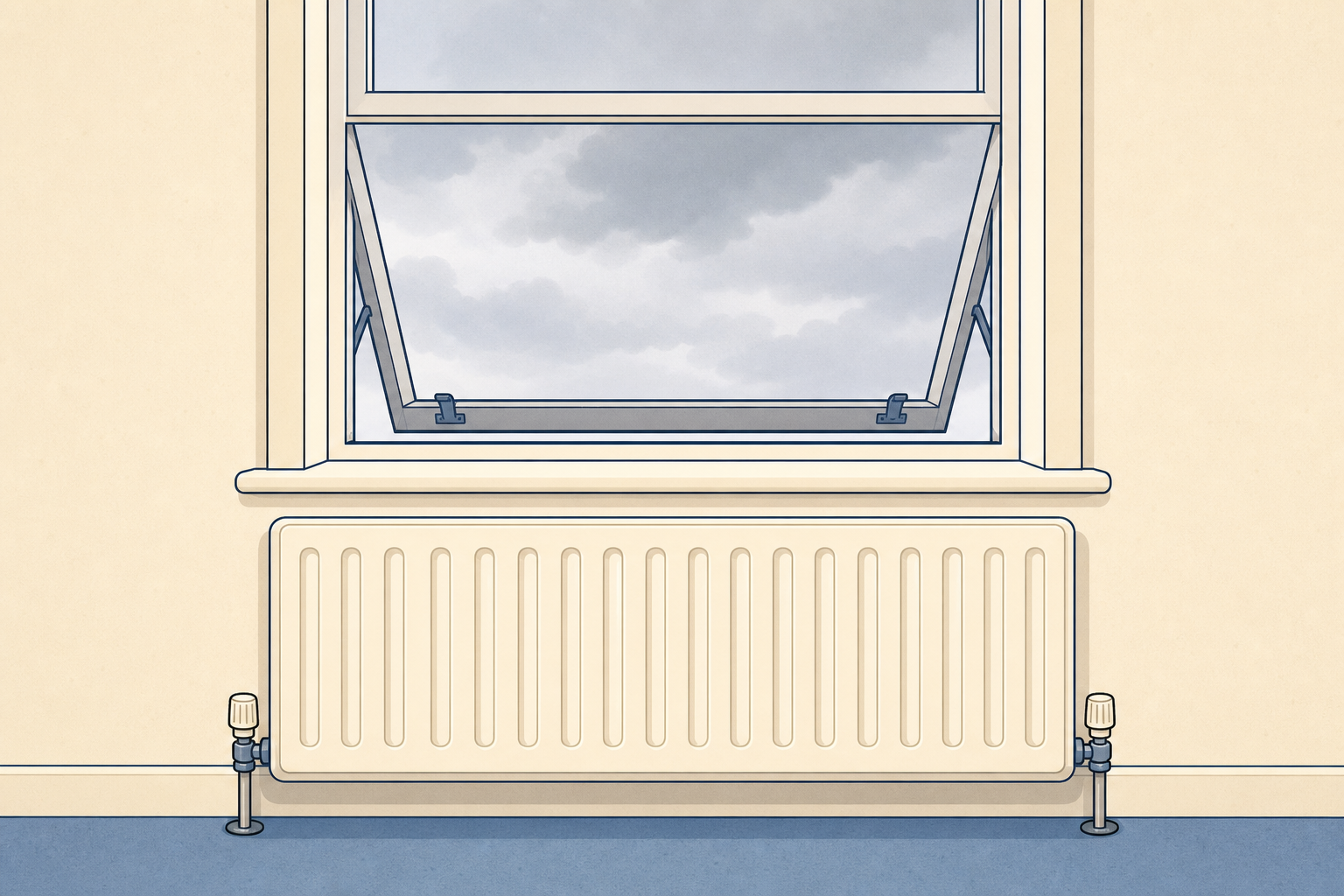
| Energy waste — using energy when nobody needs it | Wasted energy costs money and uses more of the planet's resources than we need | Lights left on in an empty classroom, or a heater on beside an open window |
| Saving energy — using only the energy we need and switching things off when we finish | Small everyday choices add up across a whole school and help look after the planet | Turning off the interactive whiteboard when we leave the room |
Modelled cycle (say this aloud before the walk):
Misconception to head off: children may think saving energy means never using lights or heat. Saving means using what we need, then stopping when we do not need it. Comfort and safety still matter.
Save the phrase energy-saving rule for step 5, when the class is about to agree promises they will keep. It is outcome language, not a third concept to teach here.
Keep the board short. The full table is for you, not for projecting.
We are going on an energy-waste walk around our school. Stay with the class and look carefully.
Spot these three things: lights on in empty rooms, heaters on beside open windows or doors, and classroom boards or screens left on when nobody is using them.
Remember two finds to write about when we get back.
Whole-class, teacher-led. You lead one calm line. Pause at two or three spots so every child can notice something. Prompt with: Is energy being used here? Does anybody need it right now? What could we change?
Keep voices low so other classes can work. At each stop, invite a quick spoken notice (what is wasting energy and why), then move on.
If extra adults are available, you may split into small groups with a helper on the same short route. That is optional enrichment only; do not plan the lesson around spare adults.
What to expect: common finds are corridor lights, interactive whiteboards or classroom screens left on, doors propped open near heaters, and empty rooms still lit. Keep the core look-fors on lights, heat, boards/screens and open doors so the energy idea stays clear. A dripping tap is mainly water waste; if children notice one, you may briefly say that supplying water also uses energy, then move on. If the school is already careful, celebrate that and still name one improvement.
If little waste is visible: ask what might happen at break or after school, or use a prepared photo of a wasteful scene as a talking point so the science still lands.
Keep the walk calm and short. No clipboards or journal pages leave the room; children remember two finds and record fully back in class.
Before you return: at the last stop, restate clearly: Remember two finds to write about when we get back.
Safety: stay together; no running; do not enter rooms without permission; mind wet floors near sinks; an adult opens any outside door if used.
Back in class, we name what we noticed together first. Hands up: what energy waste did you spot?
Now on your Investigation Journal page, record the energy waste you found and one way we could save energy. Draw or write clearly so someone else can understand your idea.
Before any journals open, take about one minute for a whole-class naming beat. Harvest two or three finds on the IWB (lights, heat, boards/screens, doors). This locks working memory after the move-around walk so every child has something real to write.
Then hand out the paper Investigation Journal page and pencils. Pupils record on paper only. Nothing is typed into the platform. This beat stays inside the lesson; do not set it as homework.
Circulate and support with sentence starters said aloud: I found… Energy was being wasted because… We could save energy by…
Look for: at least one real example from the walk, and a saving idea that matches the waste (not a random idea). If a child still blanks, they may record a class find from the shared naming talk.
Differentiation: less confident writers draw the waste and dictate a short idea for you or a partner to scribe key words. Confident pupils add where the idea should be used in the school.
When lights or heat stay on and nobody needs them, our school uses more power than it needs. Using less helps look after the world we share.
Share one energy waste you found. Together we will choose a few clear energy-saving rules: simple promises our class will keep. Why does each rule help?
Whole-class talk with a clear pacing split (about 5 minutes total).
1. Planet reason first (about 1 minute). Point back to something they just saw (for example, lights or heat nobody needed). Read the two short board lines so every child has words for the why. Invite one or two children to echo the idea in their own words before you move on. Stay hopeful and practical, not frightening.
Optional teacher aside (not for the board): Some electricity is already from wind and sun; using less still means we need less generation overall, including from fuels.
2. Harvest and craft three short rules (about 4 minutes). Use the finds already named on the IWB. Do not open a long brainstorm. Steer the class to three simple, already-exemplified promises they can really keep, for example:
This is when you name the phrase energy-saving rule: a simple promise the class keeps so less energy is wasted at school. Keep rules kind and doable. Avoid blame (not "people are careless"). Frame agency: small actions by children help the whole school.
Key question: How does this rule help our school and the world we share? Draw out the board line in children's words: less wasted energy means we use less power and look after the world we share.
Misconception: "Saving energy means we must be cold or sit in the dark." No: we use energy when we need it, and stop when we do not.
Write the three agreed rules large on the board for the sign-making step.
You're previewing this lesson. Get full access to this lesson and hundreds more — each one ready to teach, with interactive activities, printable resources and pupil progress tracking built in.