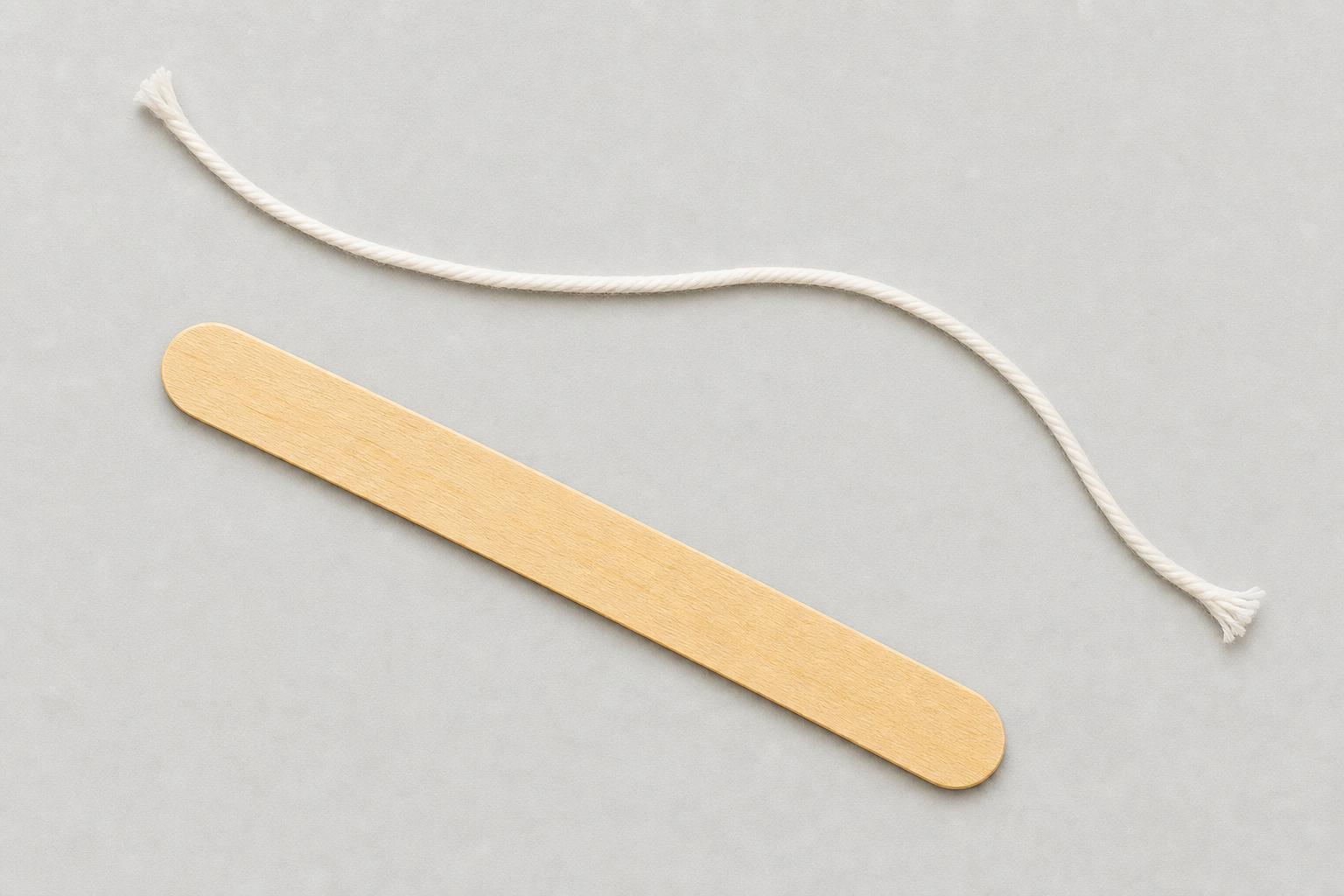
Look at this piece of string and this lolly stick. Which one do you think can push? Which one can only pull? Hands up your guess — we will test it in a moment.
Hold up one length of string and one lolly stick. Take two or three quick guesses; do not demonstrate yet. The investigation step is where the class finds out.
Before the lesson: pre-build one physical demo A-frame from the same kit materials; print the provided structure photo cards (crane, cable-stayed bridge, tent); gather string, lolly sticks and tape or split pins into group kits; clear a flat desk space per group.
Today we will meet three engineering words: tie, strut and A-frame. You will feel what they mean when you build. First, though, we need to find out what string can do and what a stick can do.
Keep this short: name the three words as a tease only. Do not define stretch or squash yet. Full definitions land on the board after pupils load the A-frame in the build step. Move straight into the push-pull tests.
| Concept | Why it matters | Example |
|---|---|---|
| Tie — a part of a structure that is being stretched (pulled tight) under load | Engineers use ties where a part only needs to pull, such as cables on a crane or tent guy-ropes | The string across the bottom of your A-frame goes tight when you press the top |
| Strut — a part of a structure that is being squashed (pushed on) under load | Struts need to be stiff; a floppy part would buckle if you tried to push with it | The two lolly-stick legs of the A-frame press down and out under load |
| A-frame — a simple structure shaped like the letter A | It is a clear place to feel both a tie and two struts working together | Two sticks joined at the top with string tied across the bottom |
Nature of STEM: Note that structural engineers choose ties (cables) above a crane jib and stiff struts below because each part has a different job under load.
Misconception to head off: children may say any thin part is a tie. A tie is named by what the force is doing (stretching it), not by how thin it looks.
In your group, try four quick tests. Hold both ends of the string and try to push a light book, then pull the book toward you. Do the same with a lolly stick: push, then pull. Talk about what each one can do. You will write it down later. For now, just notice and agree as a group. You may jot a two-word note if you need it.
Model one full cycle first (about 2 minutes) before groups try:
Then try the stick: it can push (stays stiff) and pull. Circulate and ask: What happened when you tried to push with the string? Keep the class folded in by questioning watchers: Do you agree? What would you try next?
What to expect: every group should conclude string only pulls; a stick can push and pull. Full writing waits for the journal step after the A-frame; a two-word desk note is fine if a group needs a memory cue.
Build a simple A-frame: join two lolly sticks at the top, then tie string across the bottom so the whole shape looks like the letter A. Stand it up and press gently on the top. Feel which part goes tight (that is the tie) and which parts get squashed and push down and out (those are the struts).
Hold up the physical demo A-frame you pre-built at the front desk so groups can match the shape. This is where the stretch and squash meanings land on the board, after pupils have something under their fingers.
Steps for groups:
If the string stays loose: the legs are too close together or the press is too light — open the base a little and press again.
If the frame collapses sideways: the top join is loose — retape or repin.
Do not stack heavy loads; a gentle finger press is enough to feel the forces. Revoice the words here: the string is the tie (stretched), the sticks are the struts (squashed).
Record on your Investigation Journal page:
Protect about 7 minutes for journal only while the feel is fresh. Keep pupils on the load-bearing ideas above; you do not design the page layout. If a group is stuck, cold-call: What happened when you tried to push with the string? Which part of your A went tight?
Investigation Journal: string vs stick conclusions, which material can only be a tie, and A-frame tie vs struts with how they could tell.
You're previewing this lesson. Get full access to this lesson and hundreds more — each one ready to teach, with interactive activities, printable resources and pupil progress tracking built in.