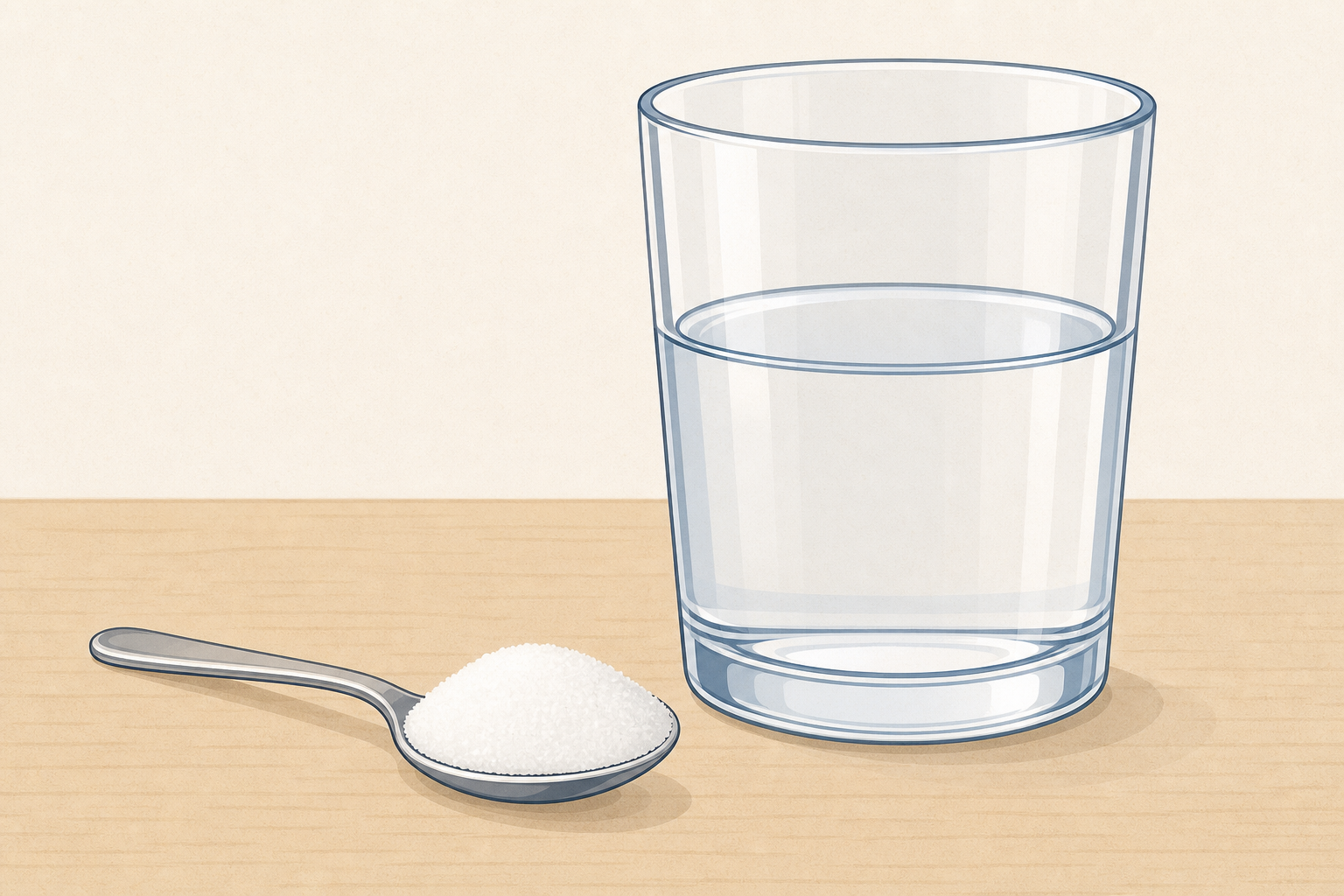
Look at this spoon of sugar and this glass of water. What do you think will happen if we stir them together? Will the sugar still be there, or will something change?
Hold up a spoon of sugar beside a clear cup of hand-cool water. Do not mix them yet. Take three or four quick guesses from the class. Keep the beat light: curiosity only, no apparatus set-up and no vocabulary table.
Key question: What do you think will happen to the sugar?
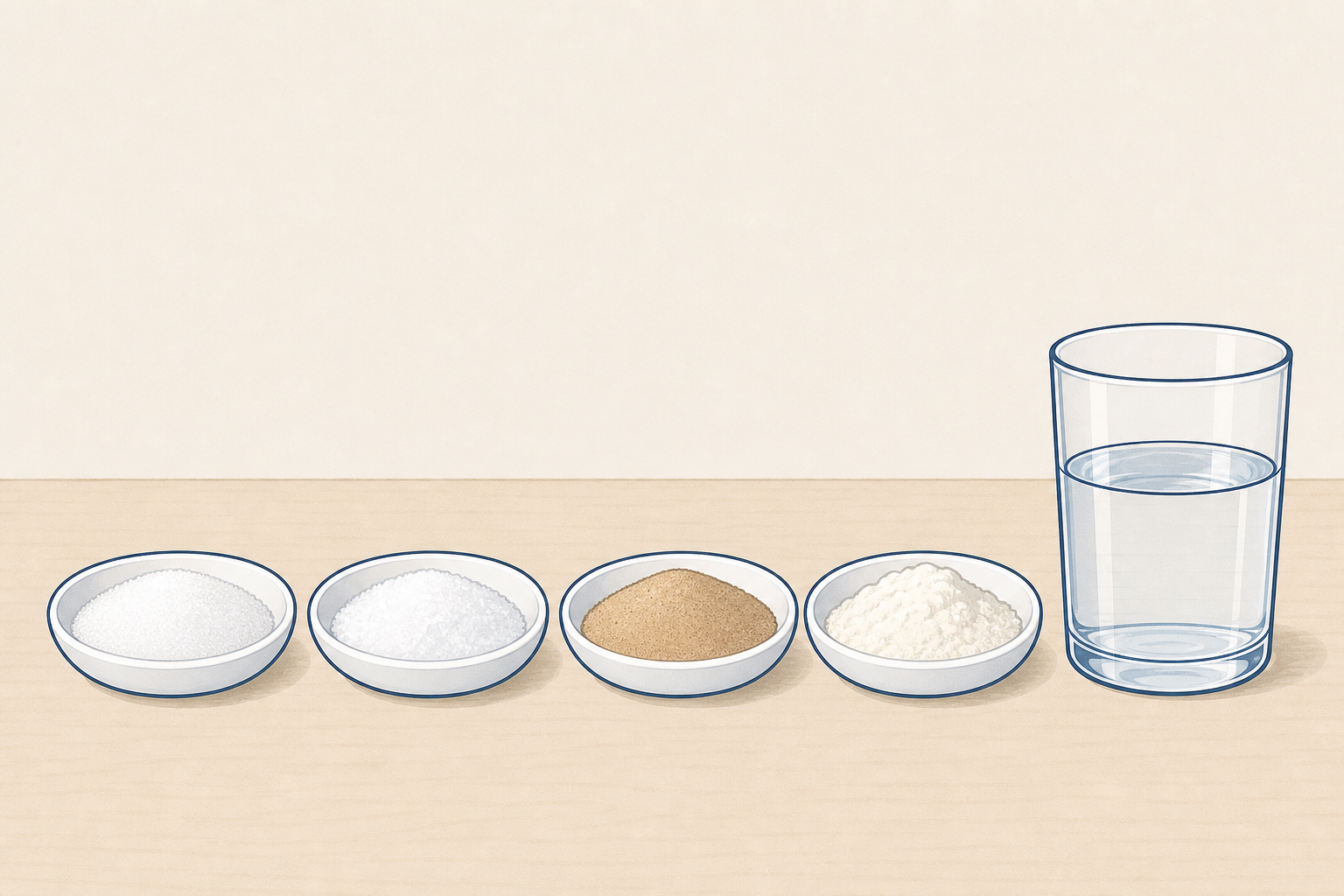
Have the four station materials ready out of sight for the next steps: sugar, salt, sand and flour.
When we stir two things together, we make a mixture. Before we try anything, we predict: we say what we think will happen, and why.
Today we will stir four materials into water: sugar, salt, sand and flour. Which ones do you think will still be easy to see, and which might seem to disappear?
Project only the short board version above. Keep it as talk, not a glossary list. Save the word dissolve for after the sugar model in the next hands-on beat, when pupils have something real to attach it to.
Use the table below for your own reference while you teach.
| Concept | Why it matters | Example |
|---|---|---|
| Mixture — what you get when you stir two or more materials together | Lots of everyday things are mixtures, from squash to baking batter | Sugar stirred into a glass of water is a mixture |
| Dissolve — when a solid seems to disappear into a liquid so you can no longer see the bits | Knowing which materials dissolve helps us cook, clean and make drinks | Salt stirred into water seems to vanish, though the water may look clear |
| Predict — say what you think will happen before you try it, and why | Scientists start by saying what they expect, then check by watching carefully | I predict the sand will still sit at the bottom because I think sand does not mix into water the way sugar does |
Misconception to head off: children often say dissolved materials have "gone" or been destroyed. They have mixed into the water; they have not vanished forever. Do not taste to prove this at Stage 2 — use careful looking only.
About weak reasons: pupils may say sand stays because grains are "big and heavy". Accept that as a starting thought. After observing, gently ask what was alike about the materials that seemed to disappear versus the ones that did not (the kind of material, not only size). Sugar crystals can look a similar size to fine sand.
STEM eyes: link to squash, hot chocolate and baking at home, where solids mix into liquids every day.
We will mix sugar, salt, sand and flour with water. On your Investigation Journal page, make a quick prediction for each one before we stir. Will it seem to disappear, or will we still see it? Then share one idea with a partner.
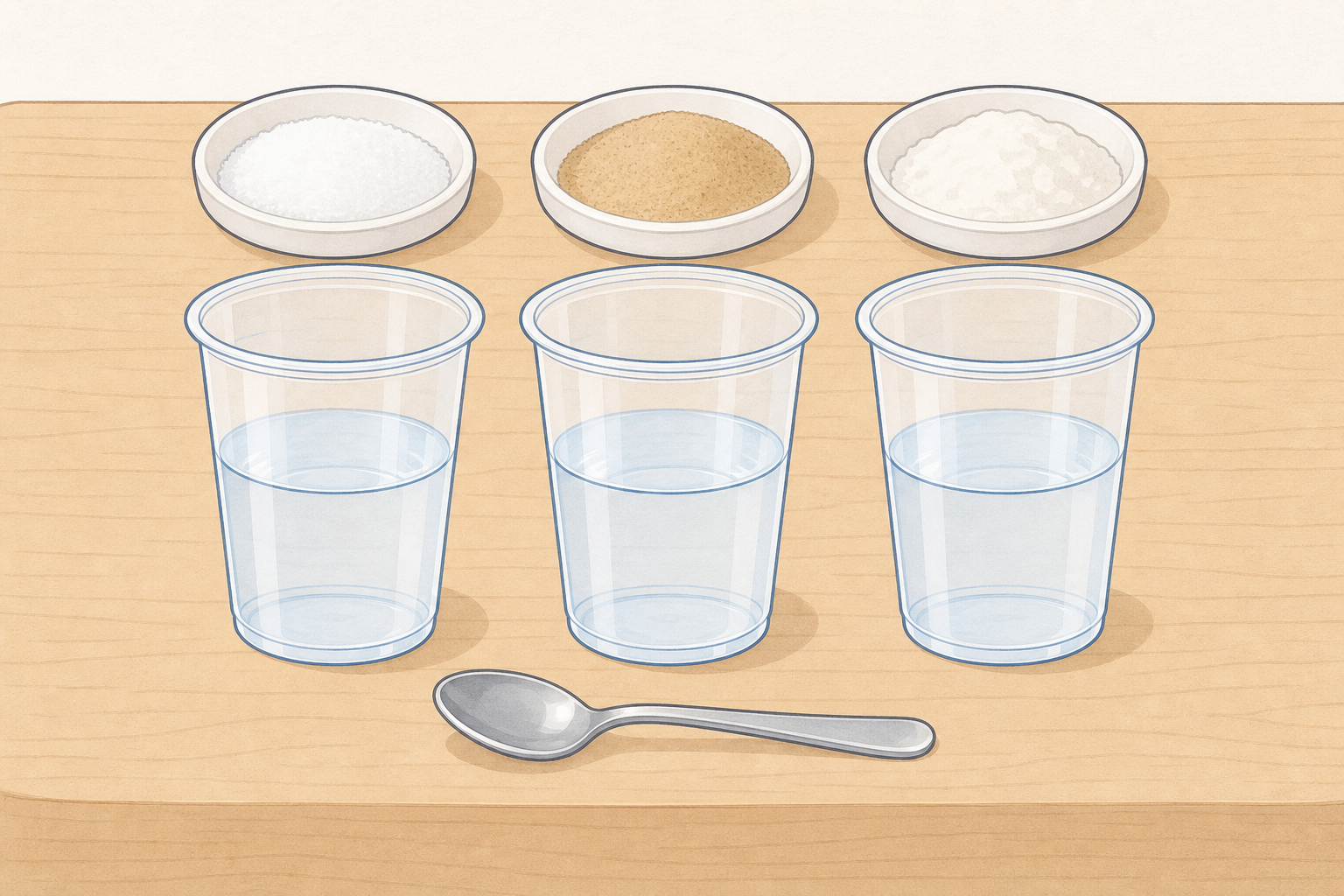
Print the Investigation Journal page. Set four station trays (or one shared tray per group) with labelled pots of sugar, salt, clean play sand and plain flour, clear cups, spoons and a jug of hand-cool water.
Show each material in turn. For each one ask: If we stir this into water, will it seem to disappear or will we still see it? Why do you think that?
Required before any stirring: every pupil marks a quick prediction on their Investigation Journal page for all four materials (a tick, word or simple symbol is enough). Predictions are never wrong; they start the science. You may also capture class ideas on the board so they stay visible, but the personal journal mark is not optional.
Then think-pair-share on one material so talk stays brisk.
What to expect later: sugar and salt usually seem to disappear (dissolve). Sand stays visible and sinks. Flour makes the water cloudy and does not fully disappear.
Watch the sugar mix at the front first. When a solid seems to disappear into the water, we say it dissolves.
At your station, try salt, sand and flour, one material per fresh cup. Put a small spoon of the material into hand-cool water. Stir gently and watch. Leave the sugar cup from the front where everyone can still see it.
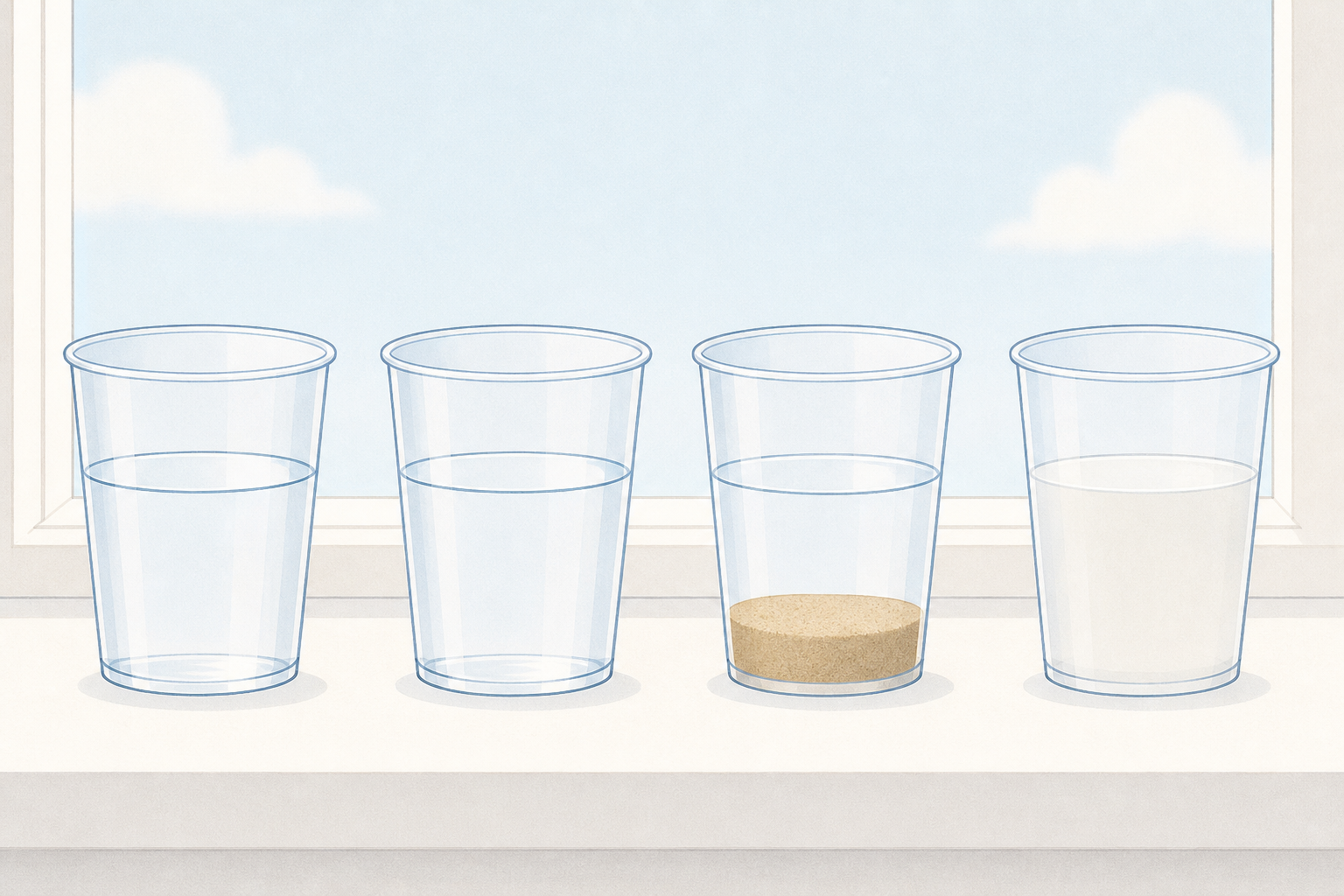
Before groups start, model one full cycle with sugar at the front and leave that cup on display:
Then send groups to try salt, sand and flour only (three materials). One material per cup. Small spoonfuls only. Hand-cool water from the jug — never hot. Everyone still sees all four outcomes because the modelled sugar cup stays at the front.
If a group finishes early: they may also try a tiny spoon of sugar to match the front cup, or watch another group and whisper whether that mixture matches their prediction. No extra kit and no devices.
Safety: no tasting; wipe spills at once; wash hands at the end.
Hold each cup up to the light, including the sugar cup at the front. Look at the water and the bottom. Use careful science words: clear, cloudy, grains at the bottom, bits floating, seems to have disappeared.
While the cups are still on the table, draw or write what you see for each mixture on your Investigation Journal page next to your predictions.
Circulate and push for careful language. Prompt: Is the water still clear? Can you see any bits? Where are they?
Look-fors:
If sugar or salt still shows grains, the spoonful was too big or stirring was too short — model one more gentle stir with a tiny amount.
Recording now: this is the main observe/draw beat. Cups must still be in view. Pupils add observations beside the predictions they already marked. Do not wait for the class chart.
You're previewing this lesson. Get full access to this lesson and hundreds more — each one ready to teach, with interactive activities, printable resources and pupil progress tracking built in.