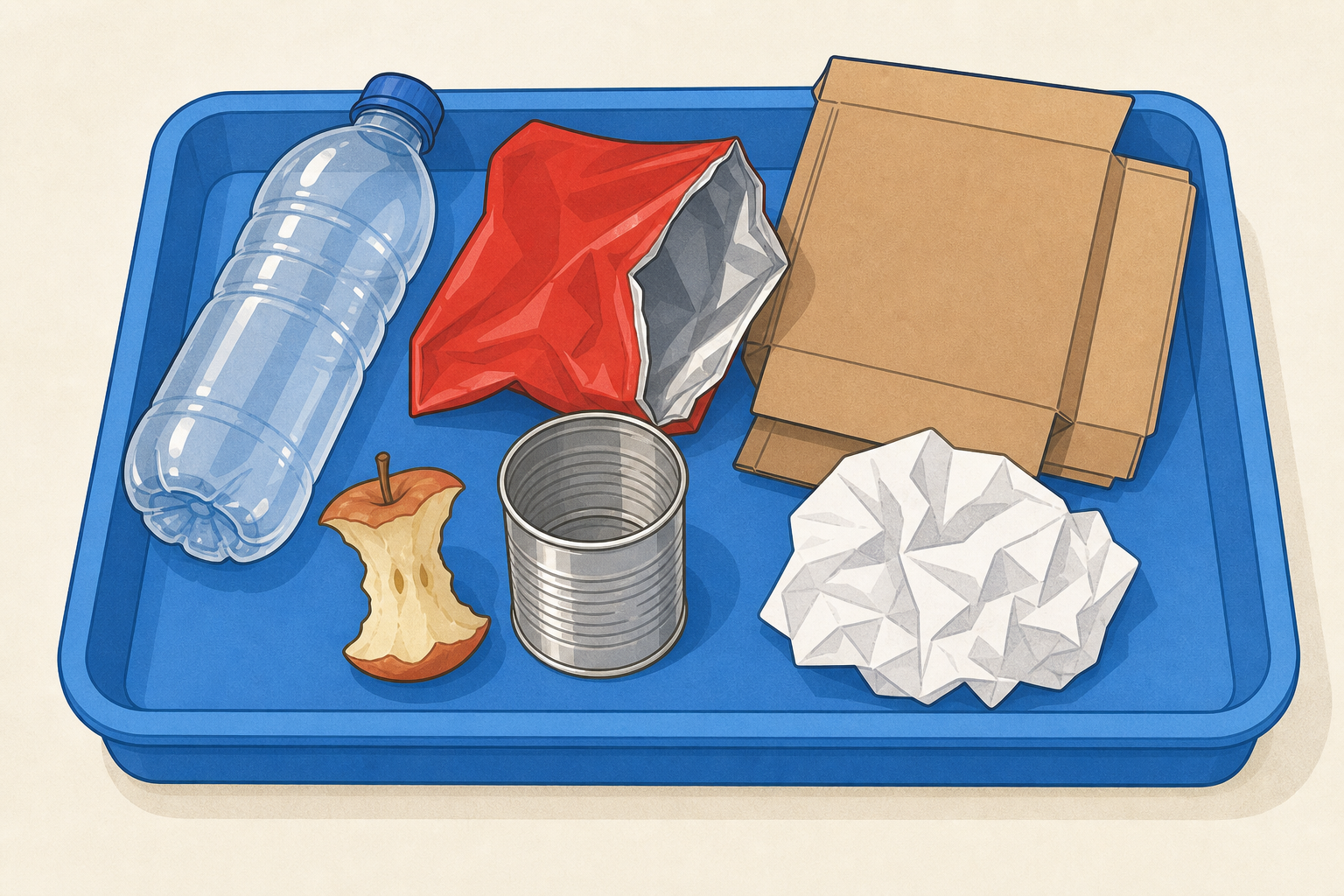
 Your teacher is holding a tray of clean classroom waste. Look carefully at each thing. Where should it go when we are finished with it?
Hands up: which of these do you think could be used again somehow?
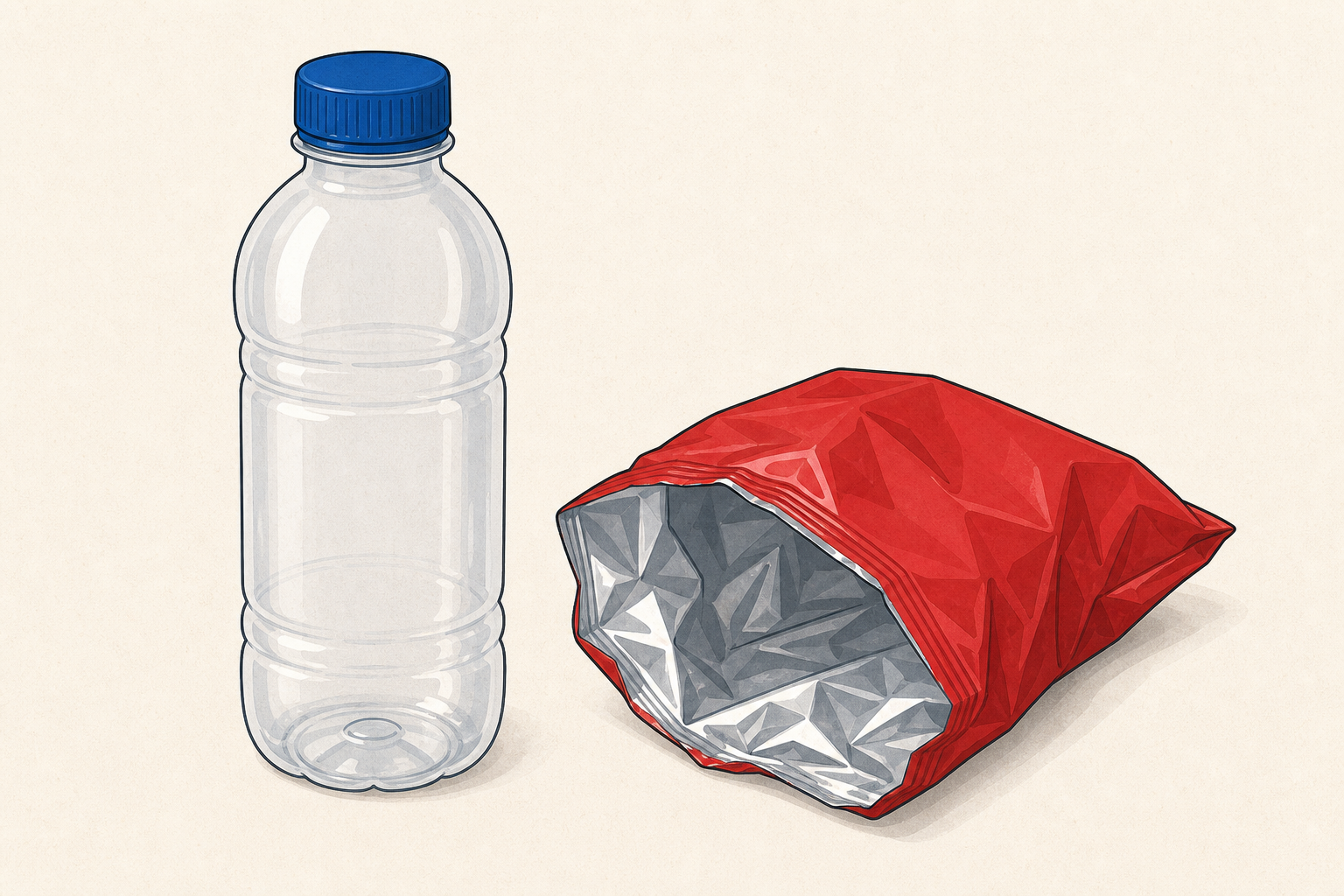 Look at the clean bottle your teacher is holding. Recycle means turn a used material into something new. A clean plastic bottle can often be recycled.
Now look at the crisp packet. Landfill is where rubbish goes when we cannot recycle, compost or reuse it. Many crisp packets still end up there.
Hands up: which place is better for a clean plastic bottle, recycle or landfill? Which place is worst for the environment if we send everything there?
In Ireland, shops charge for plastic bags so people bring bags they can use again. That is reduce and reuse in real life.
Now look at a dry leaf or fruit peel. Plant scraps can go to compost, where they break down into compost that feeds soil.
Look at a clean jar or the blank side of scrap paper. That can be reuse: use it again as it is.
Call out: dry leaf — compost or landfill? Clean jar — reuse or landfill?
In your group, look carefully at each clean waste item on your tray. Talk about what it is made of. Then place it in one of the four places: recycle, compost, reuse or landfill.
If your group disagrees, say why. Be ready to explain one choice to the class.
Your trays are sorted. Now we settle the arguments.
The board holds only the items groups could not agree on. For each one, answer the yes-or-no questions together. Then say whether the board's answer matches what your group decided, and what changed your mind.
The ones we could not agree on
 You already know four places for waste: recycle, compost, reuse and landfill. Here is one new idea for our class action only. It is not a fifth sorting tray.
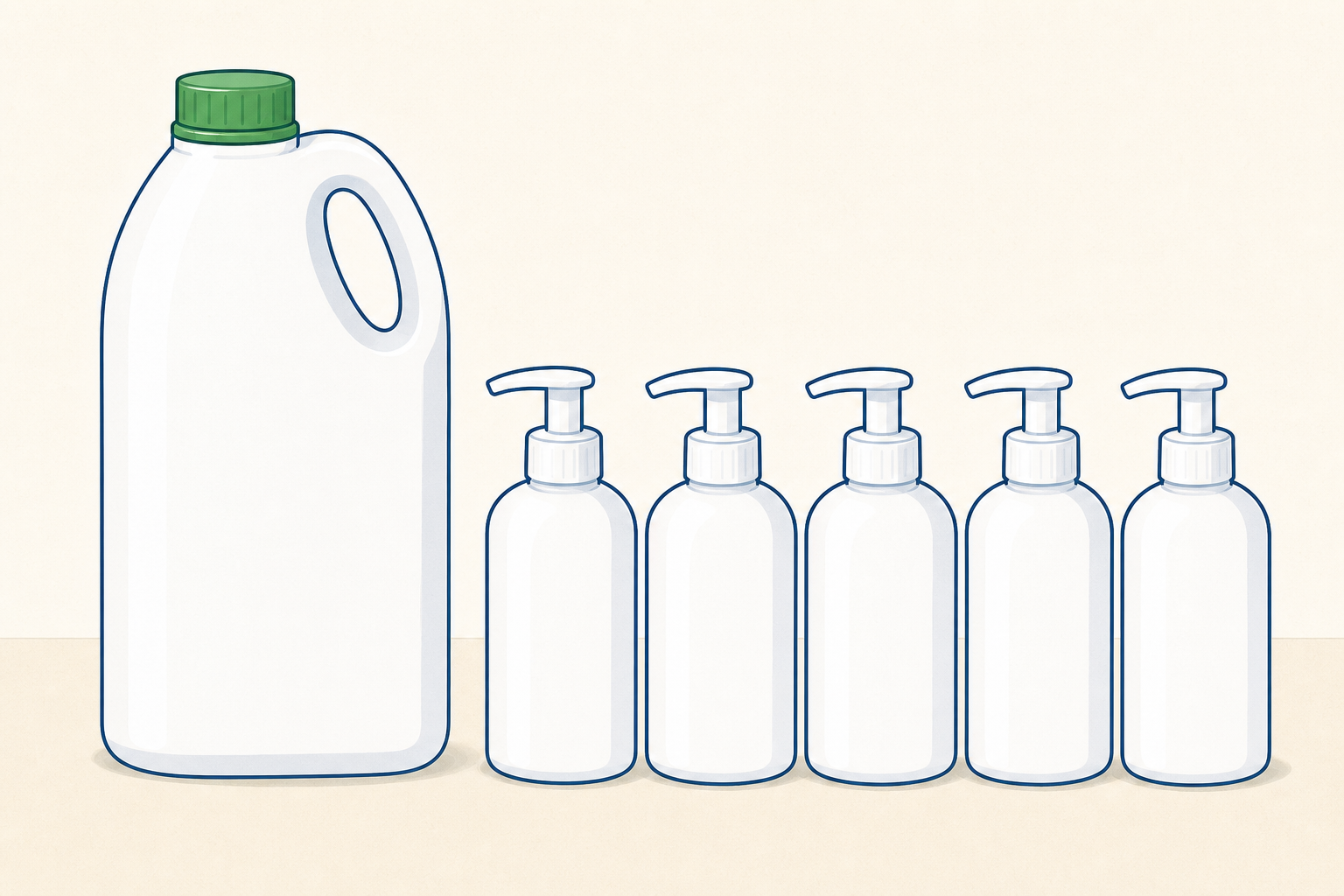
Reduce means using less in the first place, for example sharing one big soap refill instead of many small bottles. Reuse means using something again, like bringing the same water bottle every day so we buy fewer single-use ones.
On your Investigation Journal page, record two or three items your group sorted and which place each went. Write one short reason for one of those choices.
Then write or draw one practical idea that would help our class reduce waste or reuse something we usually throw away.
Unlock the full learning experience
You're previewing this lesson. Get full access to this lesson and hundreds more — each one ready to teach, with interactive activities, printable resources and pupil progress tracking built in.
This lesson is copyright of Coding Ireland 2017 - 2025. Unauthorised use, copying or distribution is not allowed.