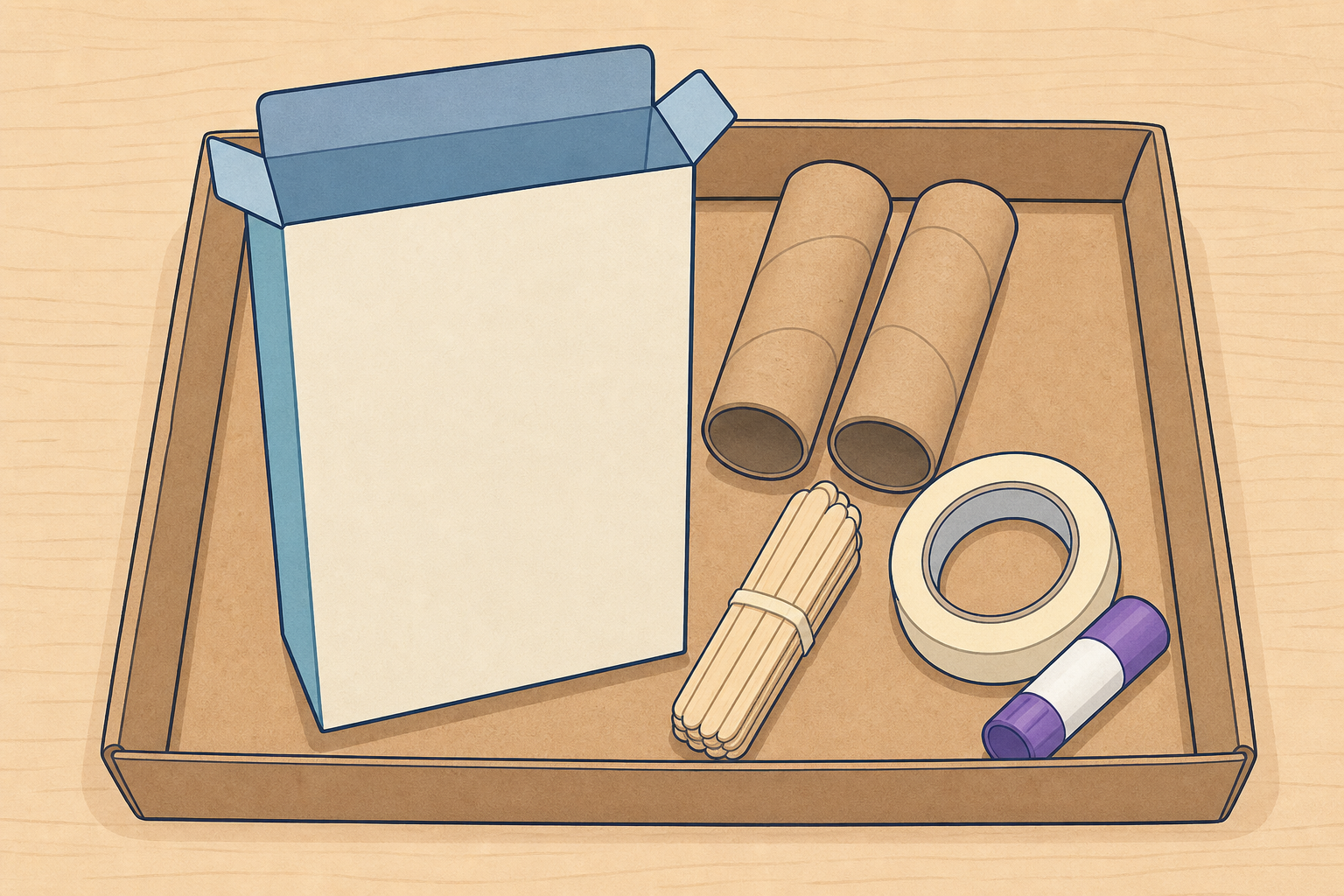
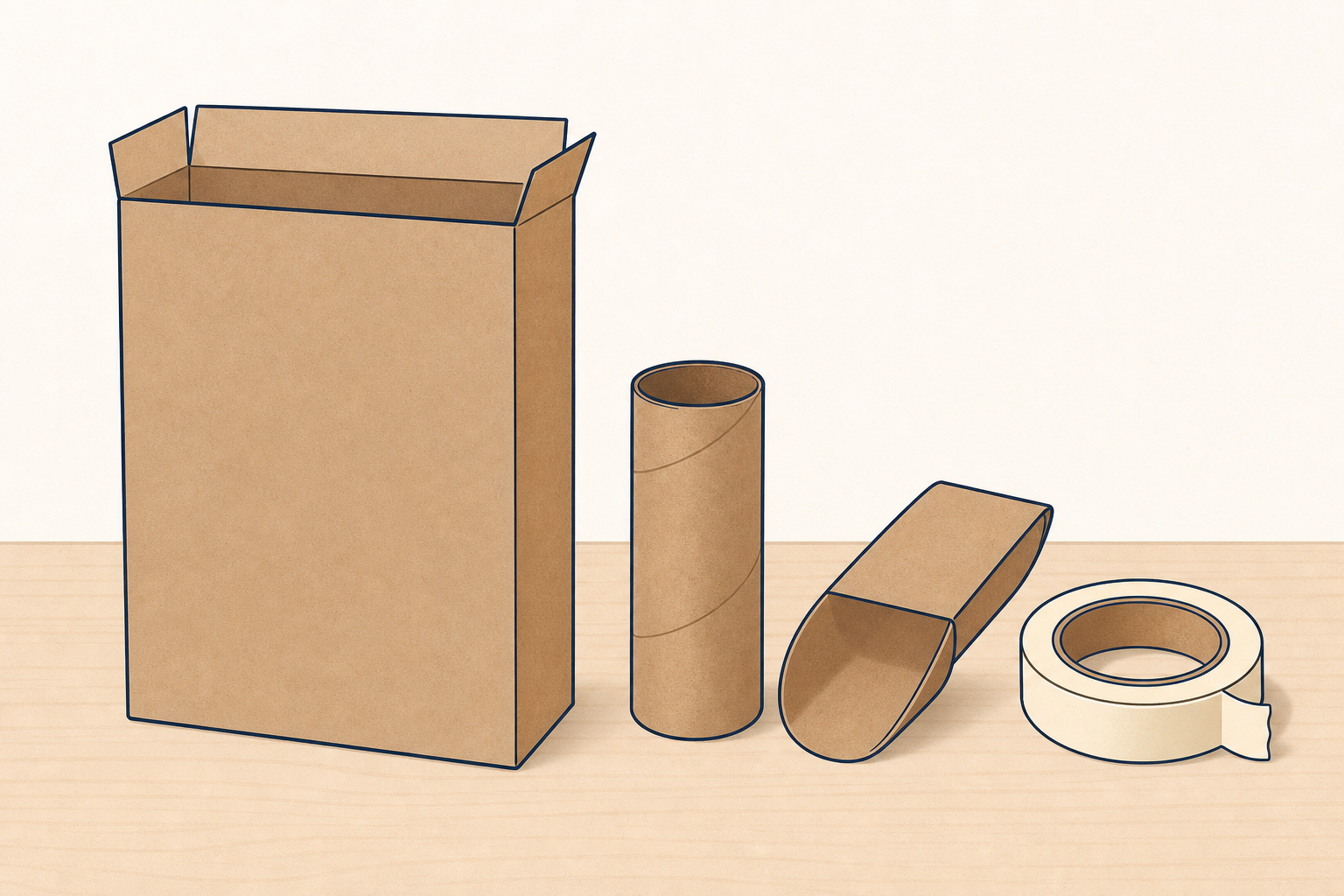
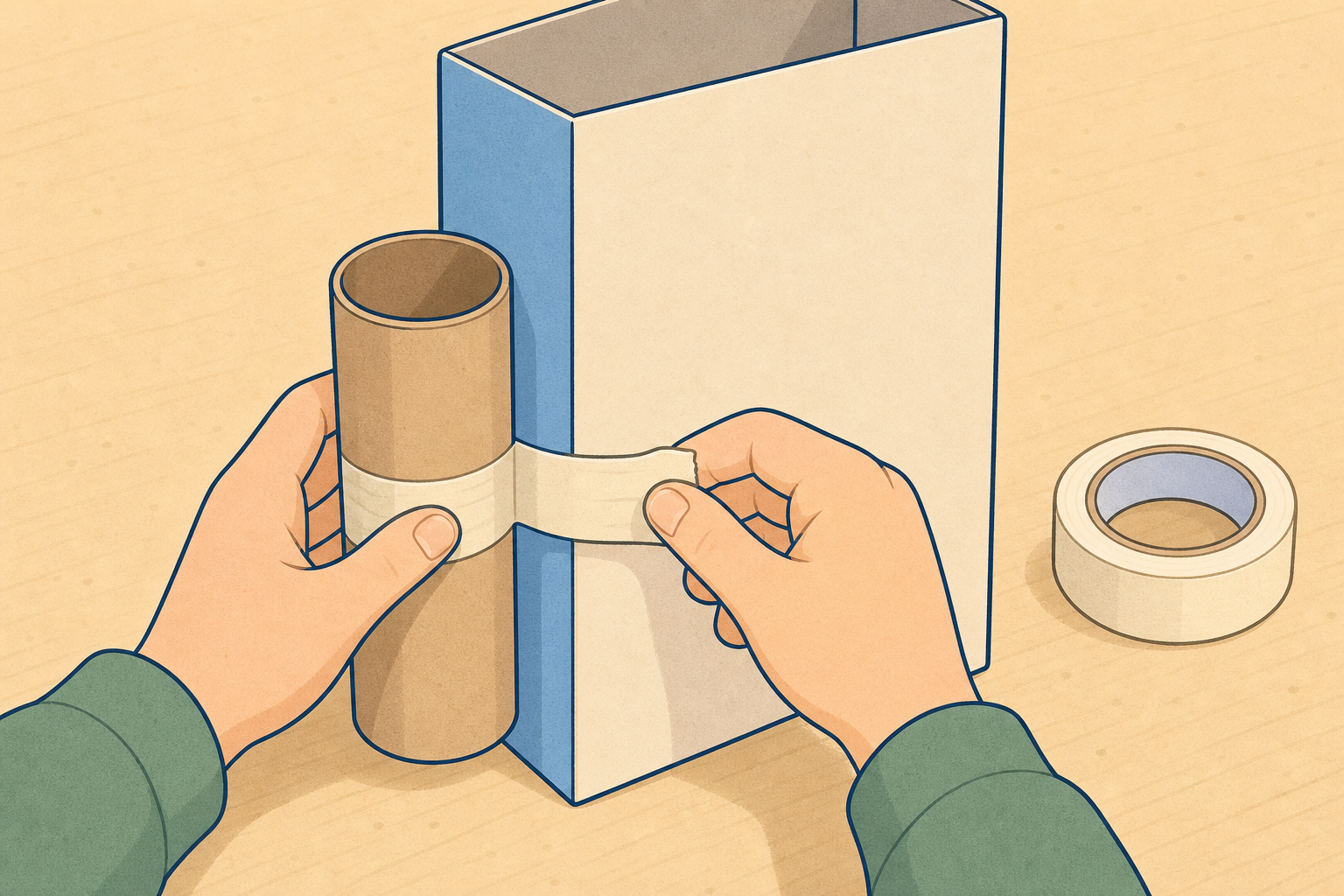
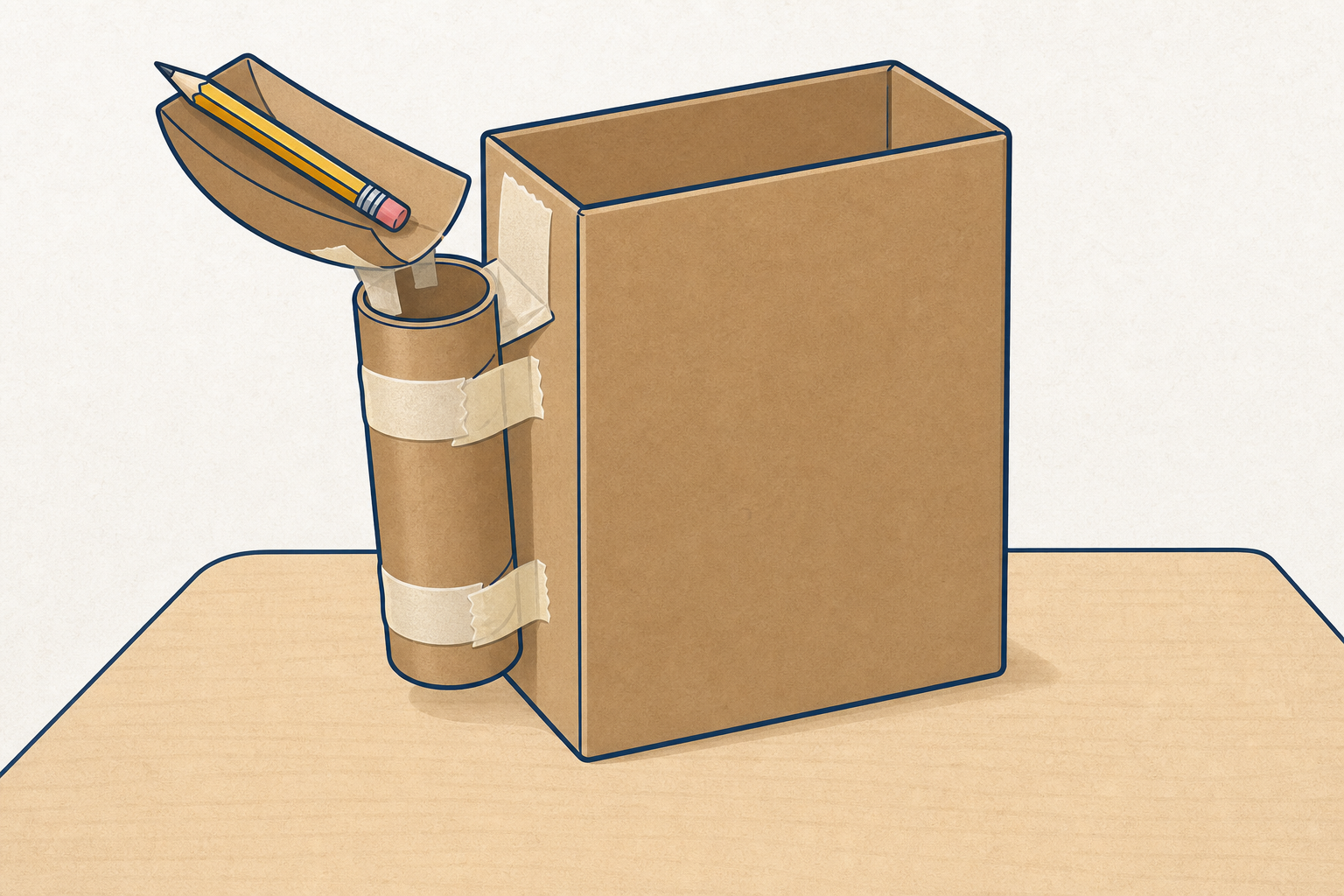
Today we make the helper we planned. Look at your plan. Who is your user, and what one job must your helper do?
Have each group's Design Brief plan from earlier in this project ready to hand back. Keep the build kit closed until the make step.
Users for the share step (plan this before the lesson): agree who will act as users and when they arrive. Best option: a few pupils from a partner class, SNAs, or another adult. Default if visitors cannot come: each group pairs with a neighbour group who acts as the user, using the same empathy frame. Do not wait for external visitors once share time starts.
Ask two quick questions only: Who is your user? and What one job must the helper do? Do not rebuild the design talk from Part 1.
Key ideas for you (not for the board as a full table):
| Concept | Why it matters | Example |
|---|---|---|
| Helper — a simple thing we make that does a real job for a real person | Makers build for someone, not just for fun on its own | A stand that holds a book open for a younger child |
| Feedback — kind words about what works and what could be better | One clear comment helps a maker improve without feeling criticised | I like how steady it is. I wonder if the handle could be bigger. |
| Improve — change one part so the helper works better next time | Makers do not stop at the first try; they listen and tweak | Add tape at a weak join after the user says it wobbles |
Misconception to head off: children may think sharing means showing a perfect finished product. At Stage 2, a clear prototype that does the job is enough. Process and listening matter as much as polish.
Use your plan. Build so your helper can do its one job. Finished enough means one working main join and one simple try of the job — neatness is not needed.
Keep the room calm and practical. Circulate with the same three prompts: What does your plan say comes first? Which join needs to be strongest? Can you try the helper job once now?
Modelled cycle (you do this aloud with one simple demo helper before groups start, tightly capped at about two minutes): I wonder if my card stand will hold this book. I predict the base needs a wide fold. I build the base first, then the back rest. I try it: the book slips. I think I need a deeper shelf, so I fold one more strip. Then send groups straight to their own builds so they keep a protected block of build-and-trial time inside the 16 minutes.
Finished enough to show (say this bar aloud before groups start): the helper roughly matches the plan, has one working main join, and can try the named job once in a simple way. It must be safe to hold. Neatness and extra features are not required. If time is short, require only a working main join and one job trial, not a polished finish. Prompt groups at about halfway: Have you joined the main parts yet? Can you try the job once before share time?
If a group is stuck: ask them to point to one part on the plan and make only that part first. If materials run short, swap between groups rather than starting a new design.
Safety: pupils use round-tip scissors only. An adult makes any tricky cuts. Keep floor clear of offcuts. No running with materials.
Show your helper to your user and the class. Say who it is for, what job it does, and how it works. Listen for one kind comment.
If you are watching, listen for the job the helper does and be ready with one kind comment: I like… or I wonder…
Users: invite them in only if they are ready now. If not, switch straight to the partner-group stand-in so every group still shares inside this slot.
Timing for a typical 2nd Class (about 6–8 groups): keep each share to 45–60 seconds. Model the frame once (about 30 seconds), then run groups tightly. With six groups that is about six minutes of sharing plus a short buffer; with eight groups, run two rounds of four groups sharing at once to a partner user, then take two whole-class samples so every group is heard and gets one kind comment.
Share frame for groups (say this aloud once): Our user is… The problem was… Our helper does… Watch this. Then one quick try of the job.
While one group shares, fold the rest of the class in: What job is this helper doing? What do you notice about the joins? What kind comment could you give? Watching is real participation; do not set a separate desk task.
Peer feedback rule: one kind comment only, using I like… or I wonder… No ranking groups. No scores.
If a group heard no clear feedback in the moment, you supply one kind, specific prompt so they still have something for the next step.
Think about the kind feedback you heard. Then tell a partner: what one thing would you change next time to make your helper even better for your user?
This is a short spoken beat only. Pupils do not write or type here. The only written record is the Investigation Journal page in the next step.
Use a quick think-pair-share: twenty seconds silent think, twenty seconds with a partner, then two or three pairs share aloud.
Sentence stems: The feedback I heard was… and Next time I would change… because…
STEM eyes: makers share their work and improve from feedback. Link briefly to everyday making the children know (fixing a broken toy join, adjusting a school bag strap) without turning it into a lecture.
If a group heard no clear feedback, supply one kind, specific prompt yourself so every group still has something to improve.
At the end of this step, have the Investigation Journal pages ready to hand out so every pupil has a page before recording begins.

You will get your Investigation Journal page now. We said our idea out loud. Now draw or write on your page so you remember it next time you make. Record:
A labelled drawing is enough if writing feels hard.
Hand out first: give every pupil their Investigation Journal page before anyone starts drawing or writing, so the five minutes stay on recording rather than distribution.
Pupils record on the paper Investigation Journal page only. They draw or write in their own words:
Do not invent extra boxes or column names beyond what the journal page already provides. If a pupil struggles with writing, a labelled drawing plus a spoken sentence to you is enough at this age.
Journal-time stretch: early finishers may sketch one second improvement on the back of their journal page, still for the same user.
Collect plans and helpers carefully if you want a short corridor display; otherwise photograph one or two examples for the class wall and send junk models home or recycle cleanly.
You're previewing this lesson. Get full access to this lesson and hundreds more — each one ready to teach, with interactive activities, printable resources and pupil progress tracking built in.