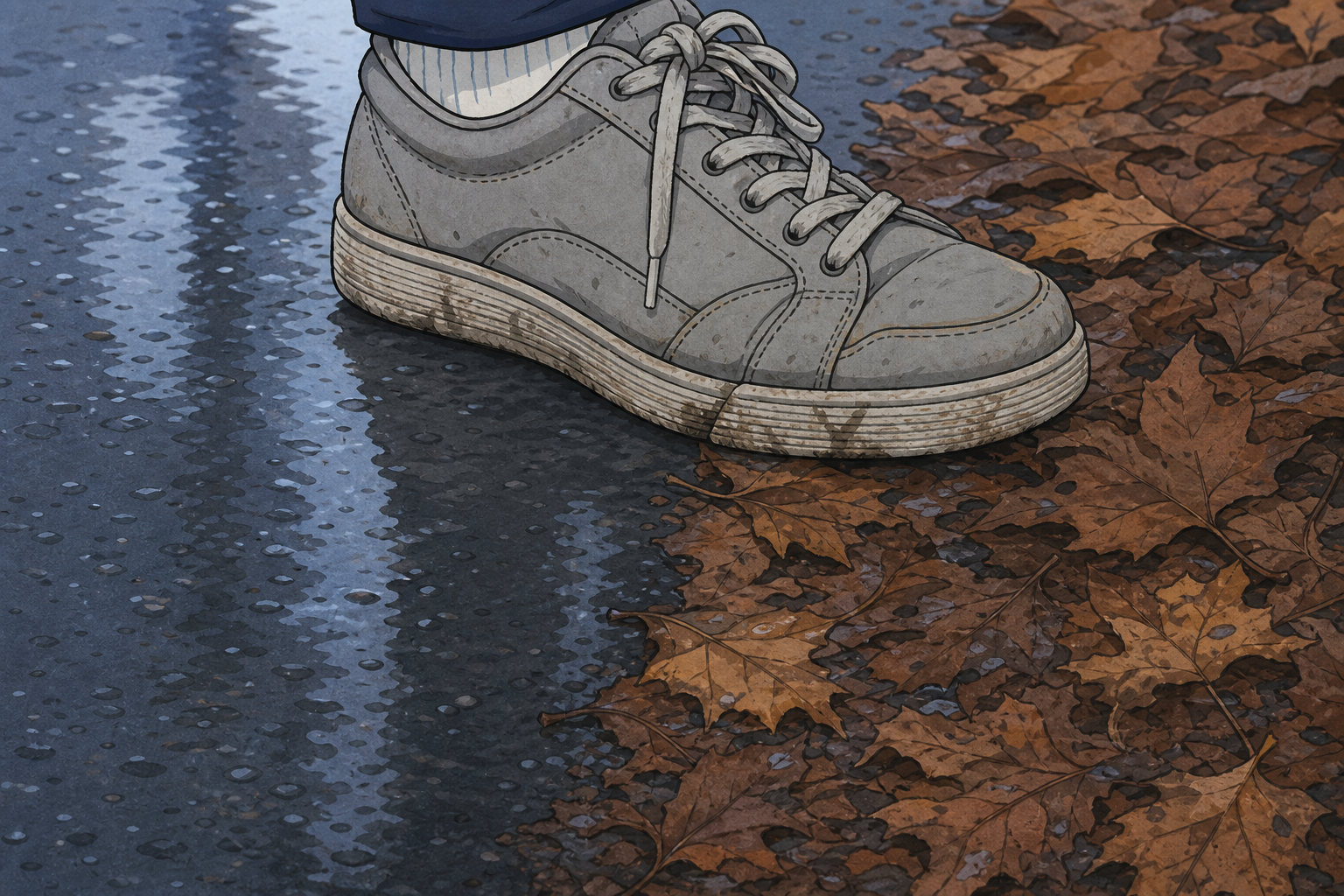
Imagine you are running on the school yard after rain. Which is safer under your feet: dry tarmac or a wet patch of leaves?
Hands up: which surface do you think grips more, and why?
Keep this beat light. Do not lay out the full investigation kit yet. The only prop you need, if you want one, is a dry shoe and a wet cloth to hold up while you ask the question.
Key questions: Where have your feet slipped? Where have they gripped well? Have you noticed GAA boots, wellies or trainers gripping differently?
Surface prior ideas: some pupils may say rough things always grip more, or that heavier things always stick. Note ideas without correcting yet.
Differentiation: invite quieter pupils with a simple choice first (carpet or tiles?) before open reasons.
When two surfaces rub, a force called friction can slow things down. How strongly a surface holds on is its grip.
The same rubbing that makes a shoe hard to start also slows it once it slides. Today we compare grip by how hard it feels to get a loaded shoe started.
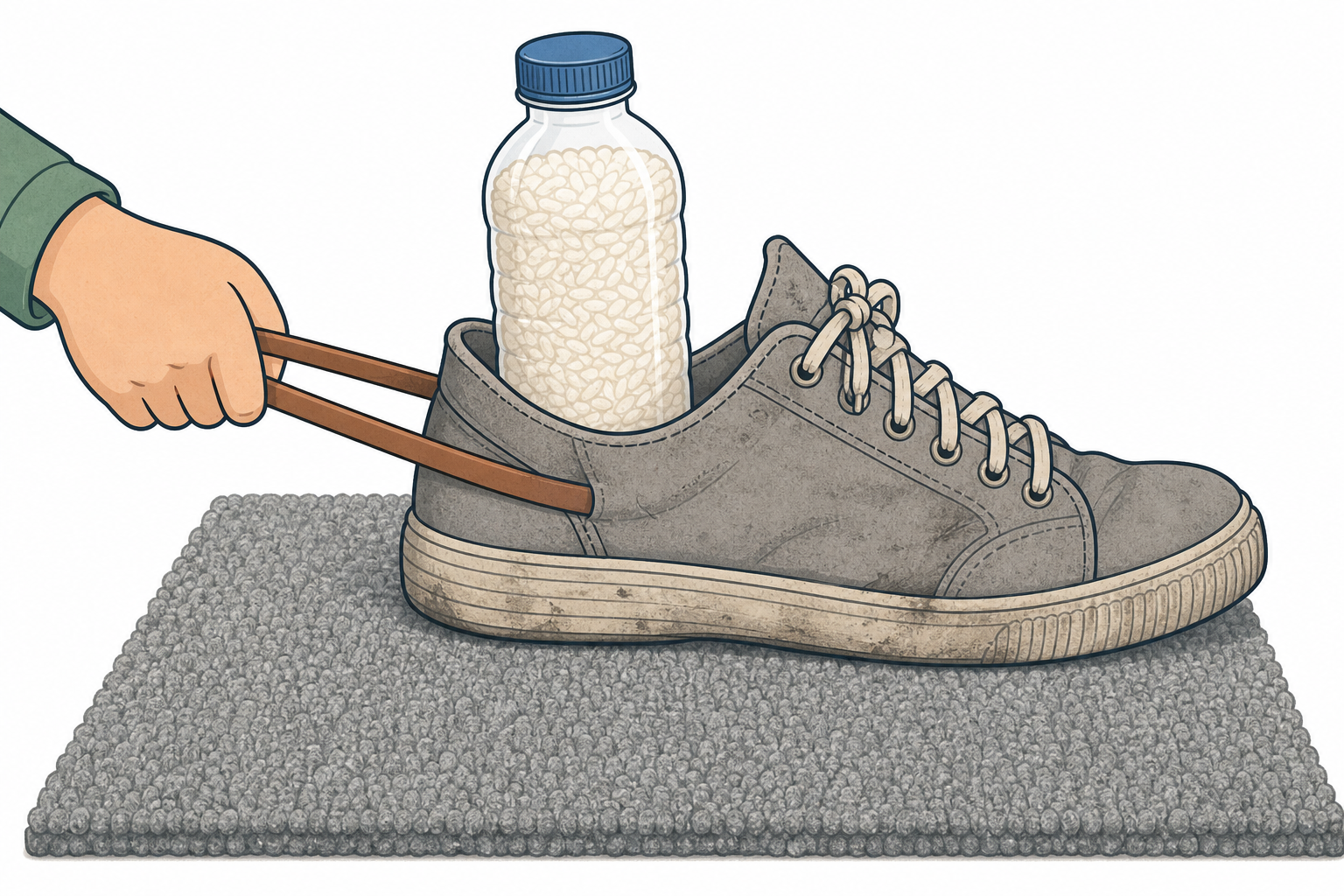
A loaded shoe is an old shoe with a bottle or bag of rice inside so it has a steady weight.
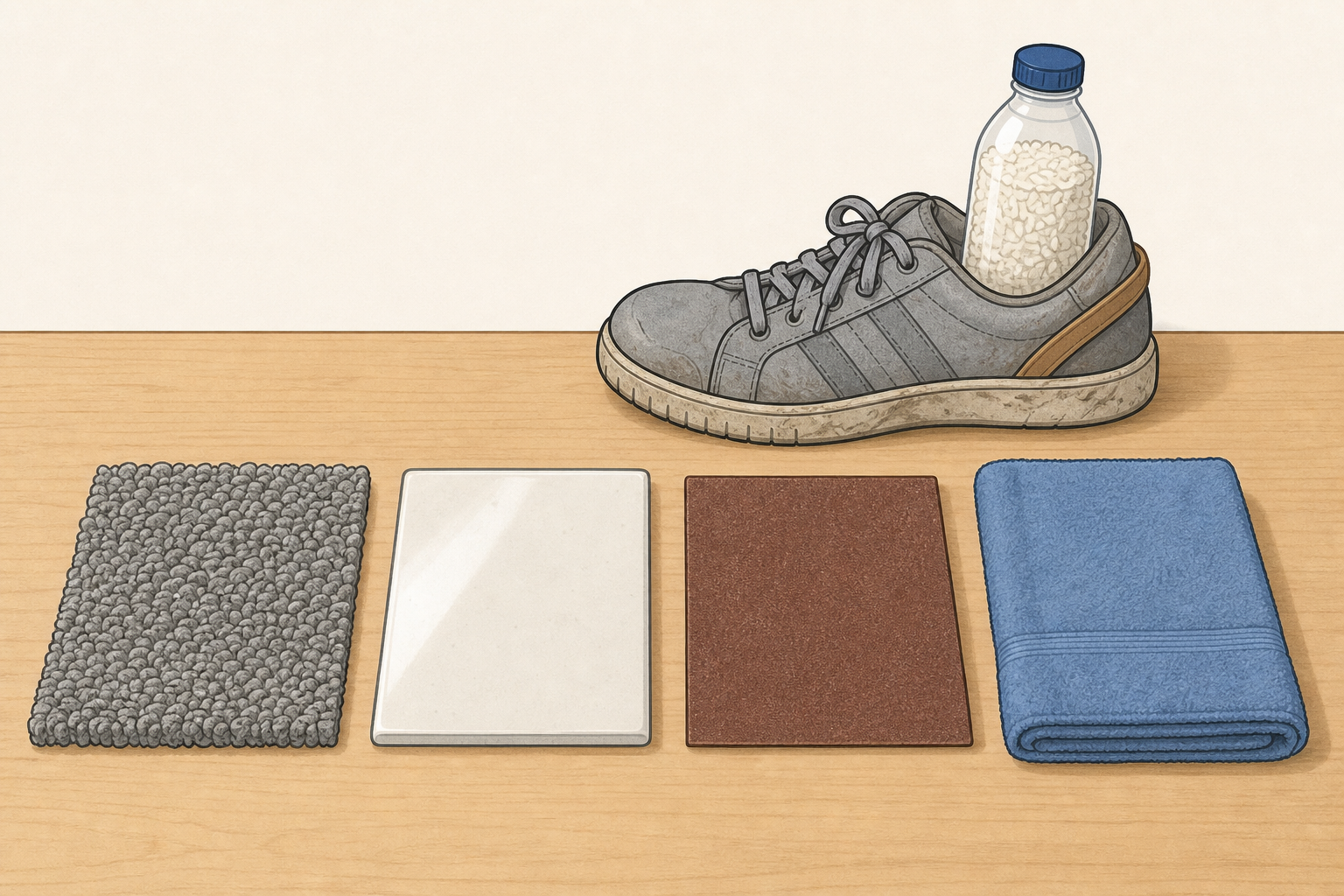
Look at these four surfaces: carpet, tile, sandpaper and a towel. Hands up: which one do you think will grip that loaded shoe most?
Teach friction and grip before the kit comes out. Hold fair comparison until the planner step so it lands with the cards. Project only the short board text. Use the table below for your own reference and for the language you revoice.
While you ask the prediction, hold up one sample of each surface (or point clearly to four samples laid at the front) so the names are real objects, not a word list. Take a quick hands-up vote; do not correct guesses yet.
| Concept | Why it matters | Example |
|---|---|---|
| Friction — a force that slows things down when two surfaces rub against each other | Friction is why a sliding bag stops, and why our feet can push us forward without slipping | A school bag drags more on the classroom carpet than on the smooth hall floor |
| Grip — how much a surface holds on and resists sliding | More grip means more friction, which can keep us safer on wet roads, icy footpaths and sports pitches | GAA boots dig into wet grass so players can turn without sliding |
Bridge for a sharp question: the same rubbing that makes the shoe hard to start also slows it once it is sliding. Today we compare grip by how hard it feels to get the shoe started. The board text already names this; revoice it if a pupil asks why we are not timing a slide.
Misconception to head off: friction is not a magnet or a sticky glue. It is the rubbing between surfaces. Rough surfaces often grip more, but the fair test will let the evidence speak.
Nature of STEM weave: people have always needed grip, long before the word friction was common. Think of hobnail boots on wet Irish roads, studs on GAA boots, and grit put on icy footpaths in winter. Engineers choose surfaces on purpose so things stop or hold when we need them to.
Worked example to model later (full cycle, one surface only): I wonder which surface grips most. I predict the sandpaper will grip most because it feels rough. I test by looping the elastic band around the loaded shoe and pulling steadily on carpet until the shoe just starts to move, feeling how hard that pull is. I observed that on carpet I had to pull quite hard. I think carpet has a fair bit of grip, so next we will compare it with the other surfaces the same way.
We want to find out: which surface grips a loaded shoe most? To compare fairly, we change only one thing.
On the board you will see three places for our cards: Change (what we swap each time), Measure (what we notice or feel — not always a ruler), and Keep the same (what we leave alone so the test stays fair).
Four cards appear: the surface, how hard it feels to pull, the loaded shoe, and how we pull. Call out which card goes in Change, which goes in Measure, and which two stay in Keep the same.
Drive the interactive yourself. Pupils call out placements. First name the three bins in kid language as on the board: Change = what we swap; Measure = what we notice or feel; Keep the same = what we leave alone. Then name the four cards exactly as they appear: the surface, how hard it feels to pull, the loaded shoe, how we pull.
If someone thinks Measure must mean a number or a ruler, revoice: today our measure is the pull we feel — easy, medium or hard.
Target placement to guide toward:
Narrate each keep-the-same aloud. If the weight inside the shoe changed, a harder pull might mean a heavier load, not a grippier surface. If one group yanked and another pulled gently, the ranks would not be fair.
Lock the puller: because the measure is how hard the pull feels, the same pupil must pull on every surface in that group (or each pupil completes all four surfaces and records their own ranks). Do not let different children take different surfaces. Name this when you place how we pull in Keep the same: same person, same slow steady style, every time.
Bounded pupil choice: the class agrees the structure together. Groups later choose the order of surfaces, but not who pulls mid-test and not a brand-new variable. This revisits fair testing with tight scaffolding.
Look-fors: pupils can say in their own words what would make the test unfair (different shoes, different weights, a sudden yank on one surface only, swapping the puller halfway).
Before you pull, agree in your group: which surface do you think will grip most, and why? Write that short prediction on your Investigation Journal page.
In your group, drag the loaded shoe across each surface the same way. One person is the puller for every surface. Loop the elastic band around the shoe and pull steadily until it just starts to move.
Everyone else: watch the pull carefully. After each surface, the whole group agrees aloud — easy pull, medium pull, or hard pull? Write that feel next to the surface name on your journal page straight away so nobody has to remember it later.
Do not rank yet. Just capture easy, medium or hard for carpet, tile, sandpaper and the towel before you leave your floor spot.
Count complete surface sets. Parallel timing needs one full set per group laid side by side on a clear floor patch, plus the loaded shoe and elastic for that group.
If you are short of sets or floor space, switch the plan now — do not discover it mid-lesson:
Shared sandpaper/towel passed around a full class, or one carpet/tile spot for everyone, is not an equivalent full-class parallel activity in 18 minutes.
Hand out the Investigation Journal page at the start of this step (prediction and easy/medium/hard marks go here; ranks come in the next step). Lay the four surfaces side by side at each group's spot when running full parallel sets.
Before any pulling, each group agrees which surface will grip most and why, and writes that short prediction on the journal page. This is the prediction they will check later — not only the whole-class teaser from the board.
Think aloud on one surface only (carpet is ideal):
Then release groups to test all four surfaces.
Circulate and coach steady pulls, not yanks. Remind groups: same shoe, same weight still inside, same elastic, same slow pull, same puller on every surface.
Non-puller job (say this aloud when you release groups): watch the pull, then after each surface the whole group — puller and watchers — agrees easy, medium or hard and writes it beside that surface name before moving on. Every pupil uses that shared call when they rank later.
Watching another group is real science talk: ask nearby watchers, Do you think their pull looks the same each time? What would you predict for the towel?
What to expect: tile usually feels easiest (least grip). Sandpaper or carpet often feels hardest. Towel can surprise pupils if it bunches or grips more than they guessed. Treat surprises as useful data, not mistakes.
Safety: pull away from faces and feet; mind fingers under the shoe; no elastic bands aimed at anyone.
Differentiation: less confident groups use three surfaces only (drop towel). Confident groups may repeat each surface twice and check the feel mark matches.
Use the easy, medium and hard marks you wrote during the pulls — do not try to remember the feels from scratch.
On your Investigation Journal page, write or draw each surface and put them in order from most grip to least grip. When the ranks are down, you may add one short sentence about why you think that order happened.
This is the careful observation and paper record beat. Journals should already be out from the drag step with prediction and easy/medium/hard marks. Pupils turn those marks into a clear rank order (1 = most grip, 4 = least grip, or a simple most-to-least list). Ranks first from the written feels; optional why-sentence only after.
Prompts while they work:
Common issue: groups argue because one person yanked on sandpaper, or because they never wrote the feels down. If marks are missing, invite one calm re-test of the disputed pair with you watching the pull (same puller) and write the feel before ranking. If ranks clash inside a group that did mark, check they all used the same shared call.
Do not describe columns or boxes on the journal page. Say what to record (surface and grip rank from the feel marks), not where the page puts it.
Support: sentence starter on the board for anyone stuck: Most grip: … Least grip: …
You're previewing this lesson. Get full access to this lesson and hundreds more — each one ready to teach, with interactive activities, printable resources and pupil progress tracking built in.