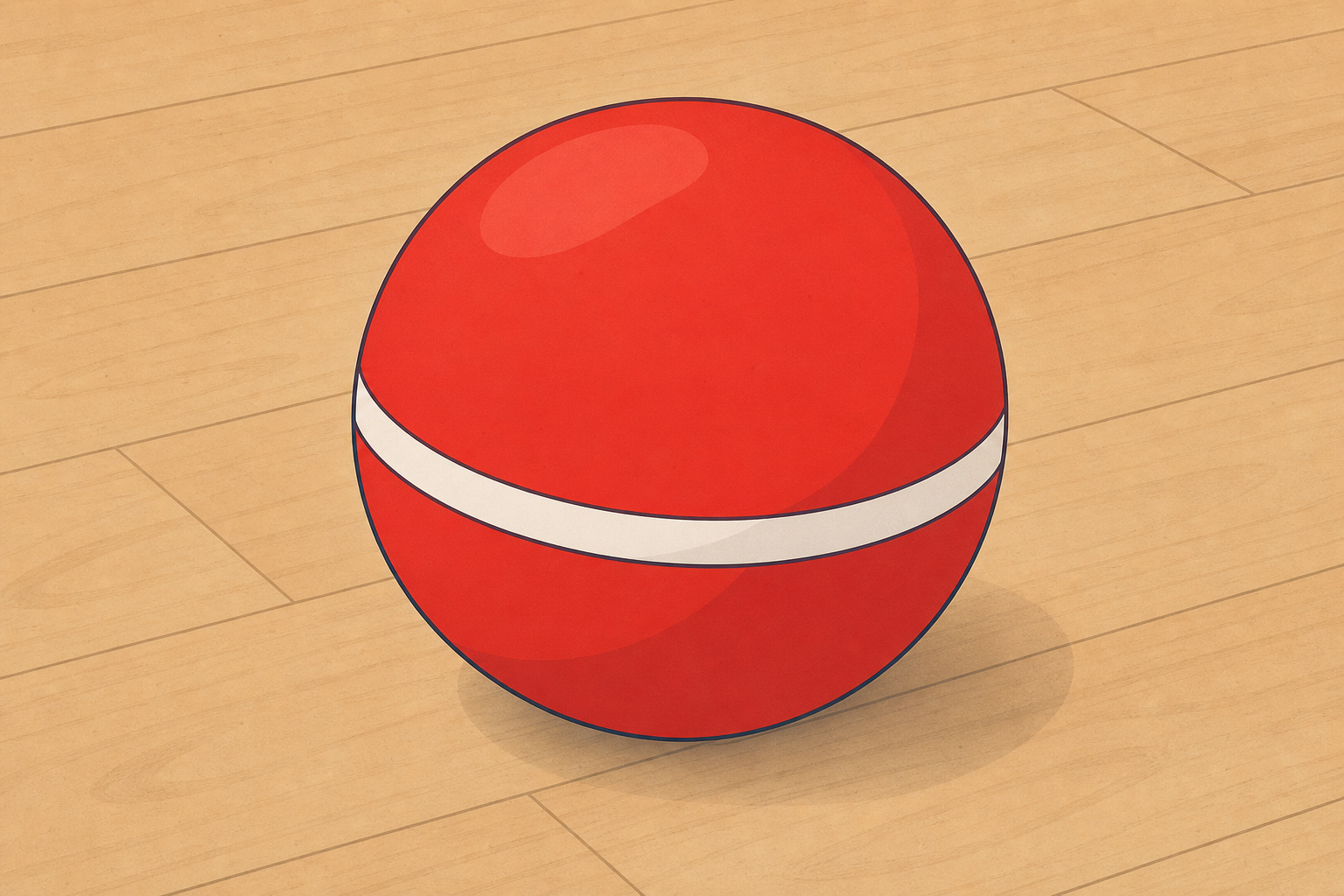
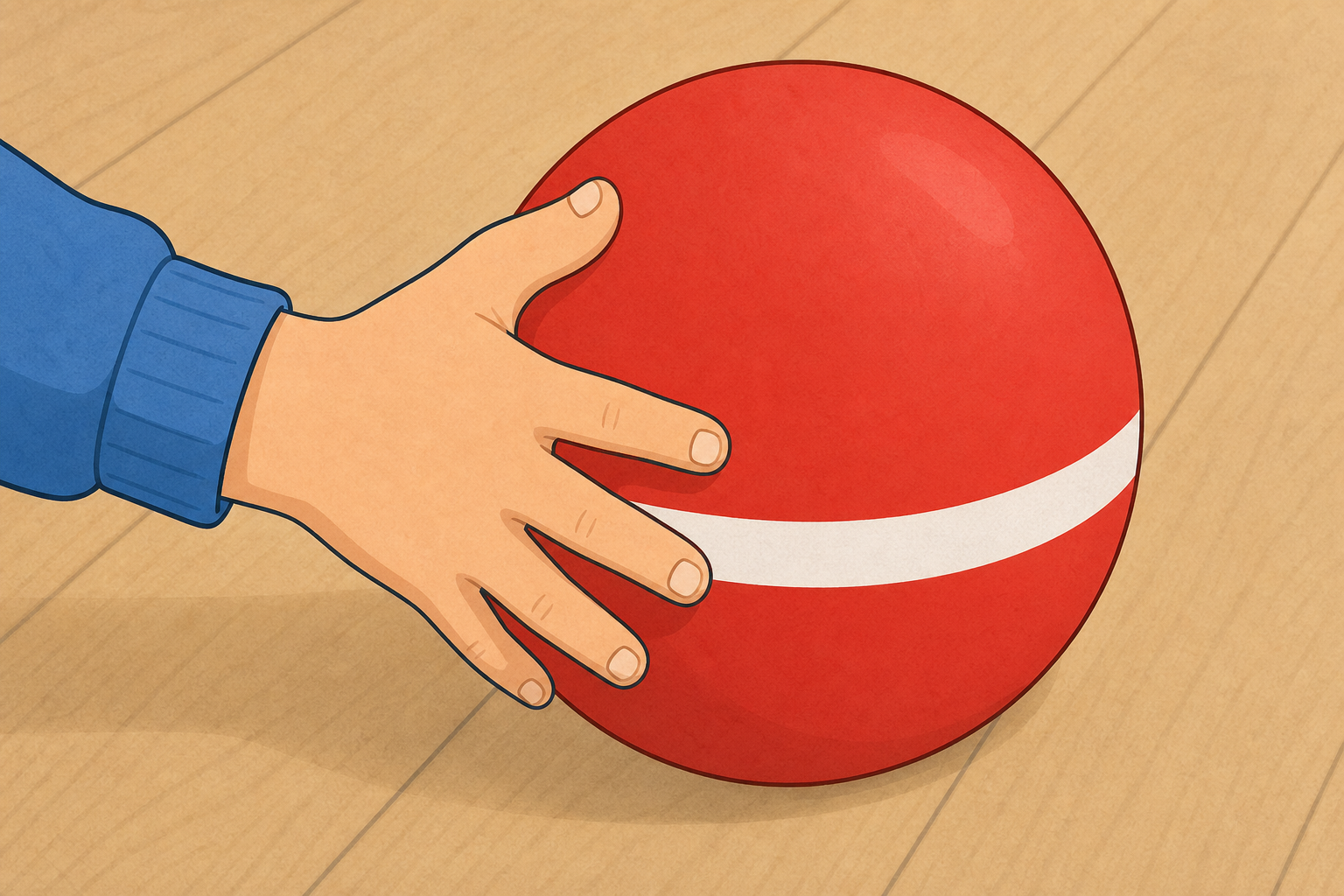
Look at this ball resting on the floor. It is not moving. What could we do to make it start? What could we do to make it stop again?
Share your ideas — hands up.
Hold a soft ball still on the floor (or desk). Do not start the circuit yet. Take three or four quick ideas. Children will often say push, kick, or pick it up. Accept every idea and leave the question open: today we will find out how pushes and pulls change the way things move.
Have ready to show: one soft ball only. Keep the toy car and trolley out of sight until the short Station B and C preview in the next step.
Watch the ball with me.
Today's words: push (away from you), pull (towards you), force (a push or a pull).
What will a gentle push do? What will a hand in its path do?
Keep this step tight (about 5 minutes). Lead with the live ball model. Fold the words in as they appear. End with a 20–30 second gesture preview of Stations B and C only — do not re-teach the full inquiry cycle on those stations.
| Concept | Why it matters | Example |
|---|---|---|
| Force — a push or a pull that can start, stop, speed up, slow down or turn something. A push moves something away from you; a pull brings something towards you. | Forces explain the starts, stops and turns we see in PE, playground games and everyday life | A gentle push starts a ball rolling; a hand stops it |
| What changed (change of motion) — how movement alters when a force acts (start, stop, turn, speed up, slow down) | Naming what changed helps children link what they did to what they saw | A side push turns a toy car around a bend; a gentle pull from behind slows a rolling trolley |
I wonder: what happens if I give this ball a gentle push?
I predict: I think it will start rolling and keep going until something stops it.
I test: give a gentle push along a clear floor lane. Let the class watch. Then place a flat hand in the path so the ball stops against it.
I observed: the push made the ball start. The hand stopped it.
I think: a push is a force that can start something moving, and another force (a push from the hand) can stop it.
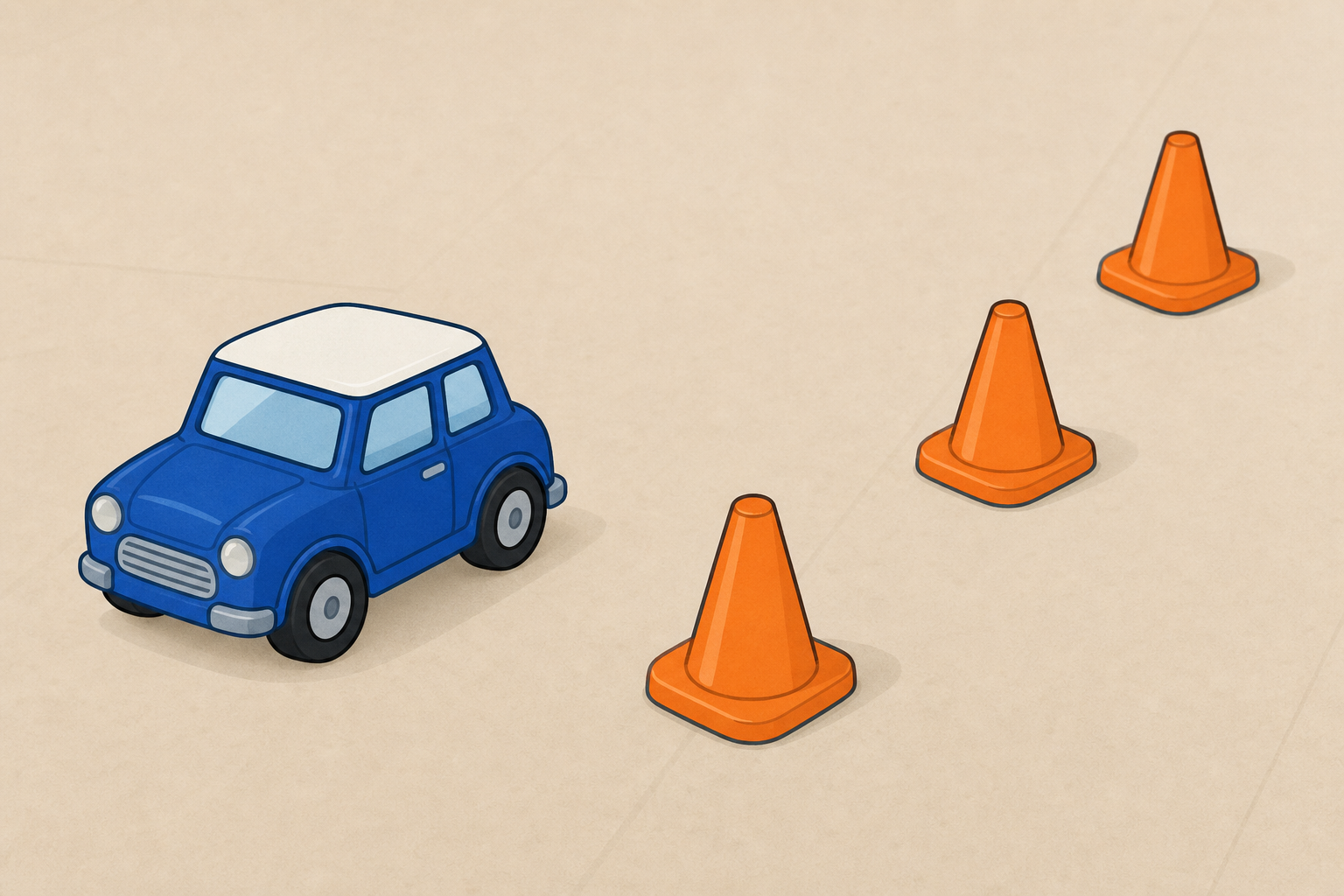
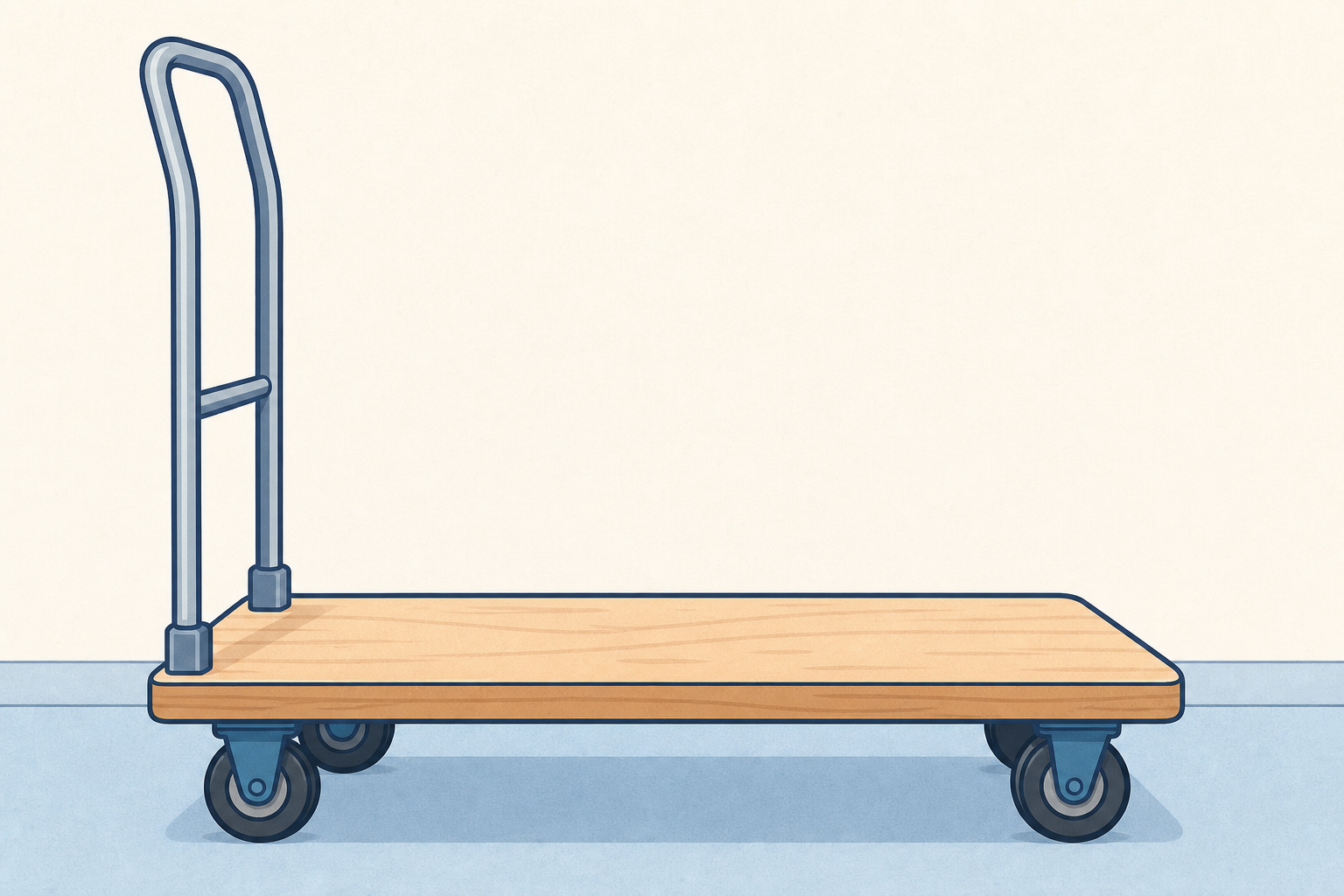
Quick circuit preview (about 30–40 seconds total, teacher only): Bring out the toy car and trolley now (they stayed out of sight in Getting Started).
If time allows only: head off the misconception that things "just stop by themselves" by naming friction with the floor, and ask: if I want the ball to turn left, where should my push come from?
We will visit three stations. At each one, try the move, then say the force and what changed.
Use this stem: The force was a ___. It made it ___.
Word bank: push, pull · start, stop, turn, speed up, slow down
Take turns. Push and pull away from other people and away from toes.
You stay at Station C for the whole circuit. Station C is the highest-risk station (two children, moving trolley, pull that must oppose motion). Stations A and B run with peer Actor / Namer / Watcher roles and clear safety rules; you glance across between Station C turns, but your body stays with C.
If the room is very tight or behaviour needs closer eyes, run only Stations A and B at once while you hold Station C as a short teacher-led turn for each group as they arrive — every group still meets all three force changes.
In a group of eight to ten, only one object moves at a time. Give clear roles so watching stays purposeful:
Rotate roles every turn. Aim for each child to act at least once across the circuit; with large groups and three short rotations, not every child will act at every station. Do not invent a second desk task for watchers; the judging and naming is their job.
Station A (start and stop): Actor gives a gentle push so the ball rolls along the lane, then places a flat hand (or soft cushion) in the path to stop it. Namer names push + start, then push + stop. Optional second try: a stronger push and name speed up.
Station B (turn): Actor places the car at the start of the taped bend and gives a side push (or guides the front) so the car follows the curve. Namer: push + turn.
Station C (slow with a pull) — run in this order so the pull opposes motion:
Look-fors:
If a group finishes early at A or B: try a softer push and a stronger push at the same station and say which went further or faster. Do not invent a second device task.
Safety: roll and push away from feet and faces; keep the lane clear; one object moving at a time per station; no racing into other groups; Station C pulls are gentle only and always from behind against the motion.
Before we write, let's replay the three stations together.
On your Investigation Journal page, record two stations you tried.
For each one write or draw: the force and what changed.
Word bank on the board: push, pull · start, stop, turn, speed up, slow down
Stem: The force was a ___. It made it ___.
Post-circuit oral replay (about 1 minute, whole class, before journals open): stand at each station briefly and re-state the intended force and change so recording checks understanding, not crowded rotation memory.
Hand out the Investigation Journal pages. Children need two clear rows only (not every station if time is tight). Accept a short word plus a simple drawing. Keep the word bank and the same stem visible on the board for the whole recording time: The force was a ___. It made it ___. (Optional fuller frame if a child needs an object slot: The force was a ___. It made the ball/car/trolley ___.)
Circulate and check that force words match what they actually did. If a child writes "the ball stopped by itself", ask them to show the stopping force with their hand and add it.
Differentiation: emerging writers draw the station and tick push/pull and start/stop/turn/speed up/slow down from the board word bank. Confident writers add one extra note (gentle push or strong push).
Think about PE and the playground. Where do we use a push or a pull to start, stop or turn something?
Share one example with a partner, then we will hear a few as a class.
Display-only science talk. No typing. Gather the class on the carpet or at desks facing the board.
Focus question: where do pushes and pulls change motion in playground games and PE?
Ideas to draw out: the push that starts a football pass on the yard; kicking or throwing a ball (push to start); catching or trapping a ball (force to stop); turning a scooter or bike handlebars; pulling a coat zip up after break; pulling a friend up in a tug game (safely named, not played here); slowing down before a wall; a push on a swing.
STEM eyes: forces are not only in science lessons. They are in every game on the yard.
Revoice pupil language into the lesson words: push, pull, start, stop, turn, speed up, slow down.
You're previewing this lesson. Get full access to this lesson and hundreds more — each one ready to teach, with interactive activities, printable resources and pupil progress tracking built in.