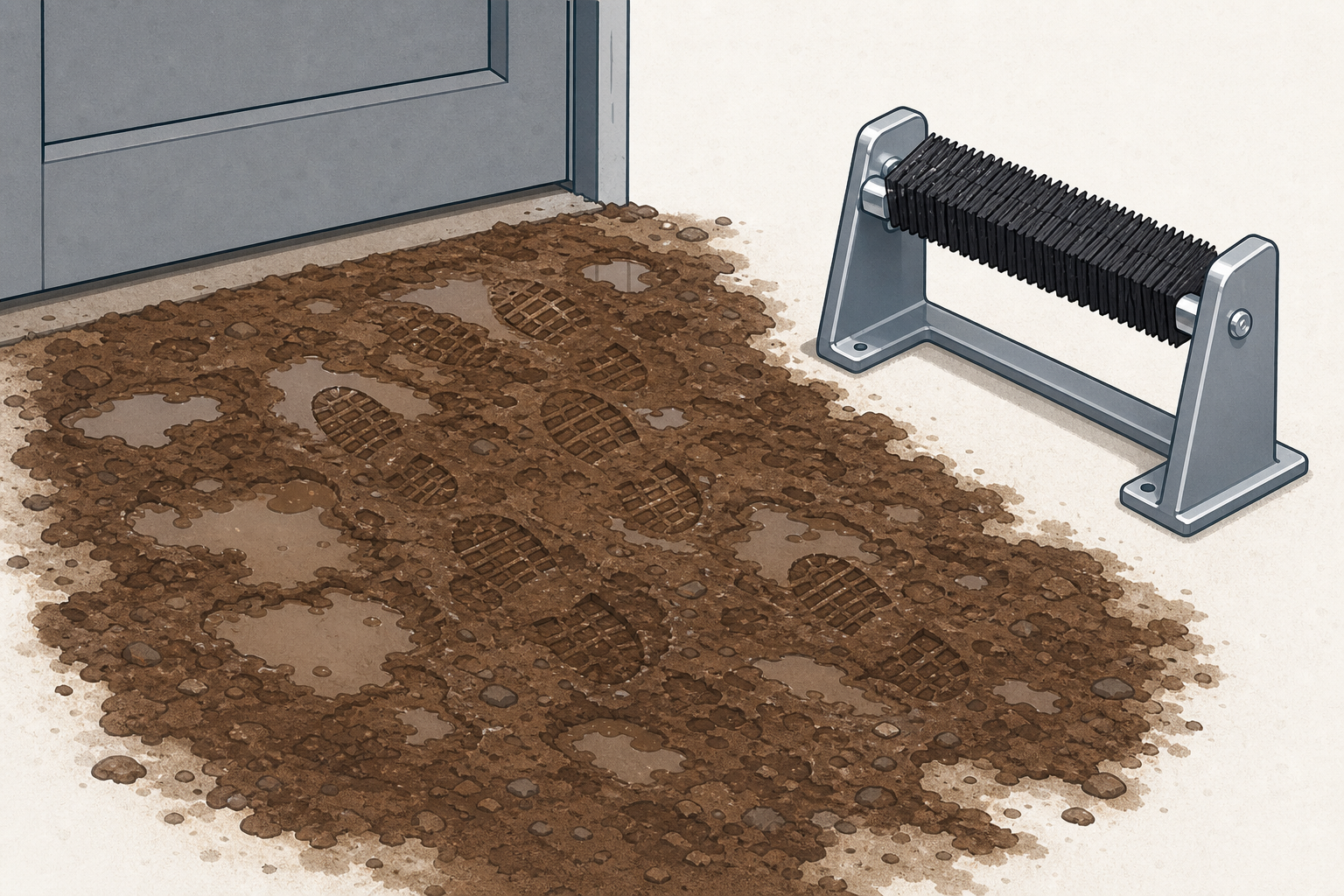
Imagine a muddy patch by the door that soaks everyone's shoes every wet morning. What if someone built a clever fix for the wrong problem, like a fancy boot scraper nobody uses, while the real need was a dry place to stand?
Today we will hunt for a real small problem in our school, for a real person. Engineers say half the job is choosing the right problem before anyone builds anything.
Keep this light: one curiosity question and a short story, not the walk set-up. Have clipboards ready but do not hand them out yet.
Key question: Why might building something before you understand the problem waste everyone's time?
Surface a few pupil ideas quickly. Link gently to how engineers start with people, not with materials. No need to name the full project arc yet; just plant that a good problem is worth finding carefully.
How do we spot a problem worth solving without guessing from the outside?
We start with two ideas. Empathy means watching and listening so you understand how a job feels for someone else. The user is the real person who has the problem.
On our walk we will watch a real user and notice what feels awkward. Later, back inside, we will name what they need and what "fixed" would look like.
Board stays short: only empathy and user now. Hold user need and success criteria until step 4, when pupils must write them on the Investigation Journal page.
| Concept | Why it matters | Example |
|---|---|---|
| Empathy — trying to understand how a job feels for the person doing it, by watching and listening rather than guessing | Guessing from the outside often builds the wrong fix; watching the real job shows what is awkward | Watching a younger pupil stretch for a high coat peg, then asking what makes hanging the coat hard |
| User — the real person who has the problem and who the design is meant to help | A design without a clear user is hard to test; you need to know who it must work for | A teacher whose books slide off a shelf, or a child whose lunch bag tips over on the floor |
| User need — what the user really needs the design to do, said in plain words (introduce in step 4) | The need keeps the group focused when they sketch and build later | The teacher needs the books to stay put when people walk past, so nothing falls on toes and they are not constantly restacking |
| Success criteria — clear checks that show the problem is fixed, so you can test the design later (introduce in step 4 as "what fixed would look like") | Without success checks, a later test is only a guess about whether it worked | The bag stands upright and nothing falls out when it is bumped gently once |
Modelled cycle (say aloud, do not project):
I wonder whether the muddy strip by our door is a real problem for someone. I predict that younger pupils get the wettest shoes because they stop longer in the doorway. I test by standing back and watching three people come in, then asking one what makes the entrance awkward. I notice that bags drag on the wet ground and one child had no dry place to stamp. I think the user need is a dry place to stand and wipe feet, not a fancy gadget. Success might look like: shoes stay drier and bags do not drag in the mud.
Misconception to head off: pupils jump straight to a cool invention ("a robot door!") before naming the person or the need. Pull them back: person first, need second, idea third.
Nature of STEM: defining the problem well is half an engineer's job. Clear problem statements are how design teams share work before anyone cuts or builds.
We are going on a short empathy walk in groups of three or four. Stay with the class: your teacher will lead everyone to each watch point, or we will use indoor stations where classmates show a real job.
Do not invent a fix yet. We fill the Investigation Journal page when we get back inside.
Keep the class together. You lead and announce each watch point or station in turn. Groups do not disperse unsupervised. Model one polite question: What makes this bit awkward for you?
If a planned outdoor job is not happening, move the whole class to the next agreed point or switch to the prepared indoor stations so every group still leaves with a named user and observed awkwardness.
Look-fors:
Differentiation: less confident groups get a short menu of places to watch (cloakroom pegs, bookshelf, door mat). Confident groups may refine their own question after watching.
Safety: stay with the class outdoors; walk, do not run; keep pathways clear for other people; return promptly.
Back inside, turn your walk notes into your Investigation Journal page.
Start with the stems on the board: Our user is… The awkward part is… They need… Success looks like…
Write the user and the need first. As soon as those are down, sketch one first idea and label the main parts. Then add what success would look like (one or two plain checks you could test later).
Keep the sketch simple. The job today is a clear problem, not a finished model.
This is the Ask and early Plan beat of the design process. Pupils complete the Investigation Journal page in this lesson so step 5 has real briefs to share and later project sessions can build from them. Do not set the core brief as homework.
Introduce the two remaining labels now (say aloud):
Protect this order so writing does not block drawing:
Must-finish floor for the share (in the room): named user, plain need, and at least one success check. The sketch is the flexible piece when time is short. About halfway through this step (around 8 minutes), call a quick time check: "If user and need are not down yet, finish those now before adding more to the sketch." Groups that only have user, need and one success check still join the share.
Common slip: a sketch of a wild machine with no link to the need. Ask: Which part of your sketch meets the need you wrote?
Differentiation: keep the four sentence starters visible. Stronger groups add one risk or limit (must be safe in a busy corridor; must use everyday materials). Support: allow drawings plus spoken stems where writing is a barrier.
Do not describe layout boxes on the journal page; just say what to record.
First we will hear a few groups share, then talk about why engineers start with the problem.
Our check on the board: Can you say who it is for and what they need?
Share who your user is, what they need, and what success would look like. Say those first. Only show the sketch if someone asks about a part.
Then talk with your group: why might naming the problem first save time later?
Display-only science talk. No typing.
Before inviting shares (2 minutes): quick teacher scan while pairs whisper-restate each other's user–need–success chain. Skip or coach any vague user ("everyone") or invention-first sketch so the discussion is built on usable briefs. Groups only need the must-finish floor (named user, plain need, at least one success check) to join.
Put the check on the board in pupil words: Can you say who it is for and what they need? After each of three or four shares, ask the class that concrete check before moving on. Only then open the bigger "why problem first" talk as a safe think-together, not a test answer.
Prompts:
Draw out: a clear problem, user, need and success checks make later building, testing and improving fairer and kinder to the user. That is how engineers share work and avoid fixing the wrong thing.
Nature of STEM: problem definition is a professional habit, not a slow start. Irish engineers working on school, road or home designs begin with who is affected and what "better" means before materials are chosen.
Collect or keep Investigation Journal pages safely; groups will need them for the prototype build later in this project.
You're previewing this lesson. Get full access to this lesson and hundreds more — each one ready to teach, with interactive activities, printable resources and pupil progress tracking built in.