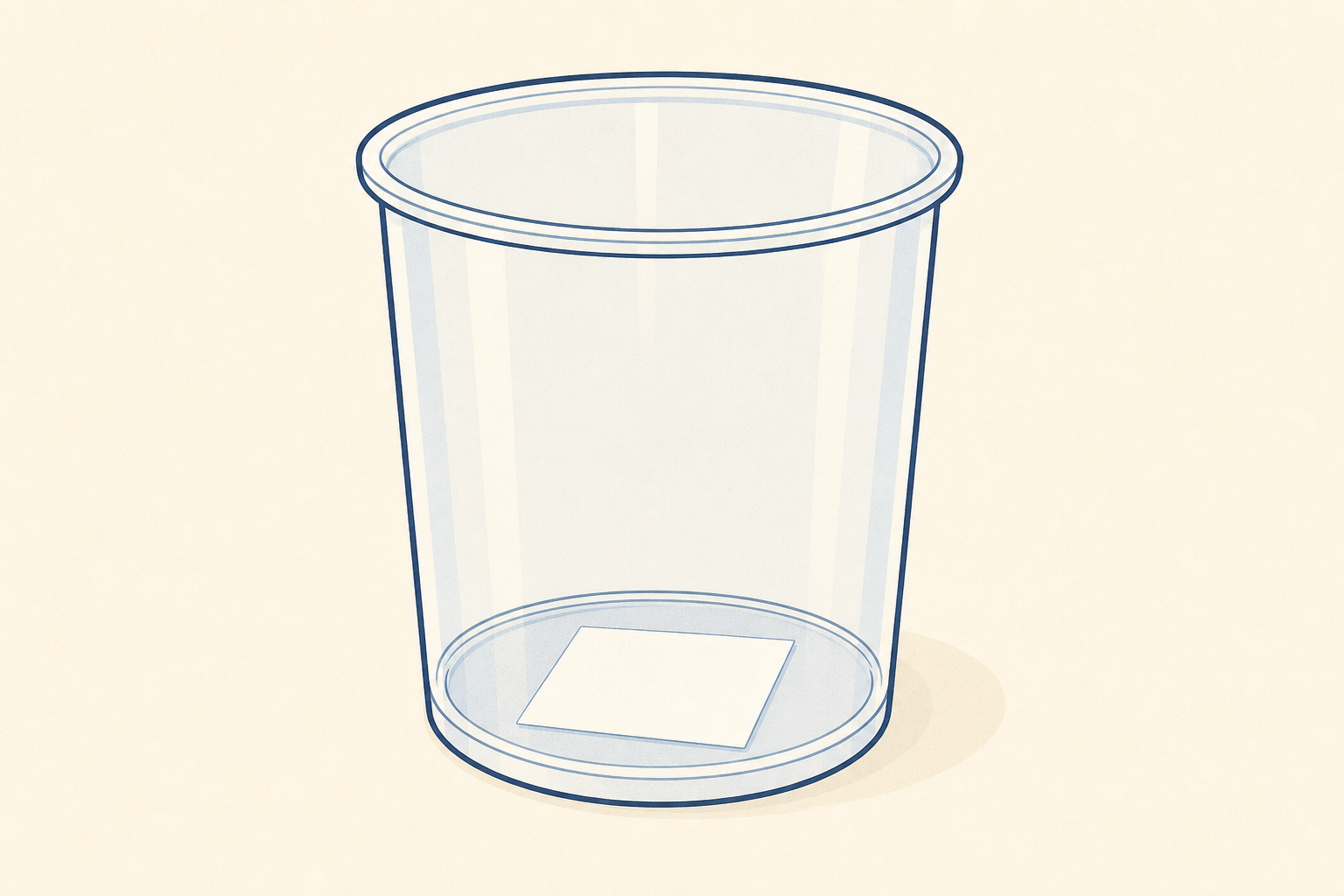
Look at this cup. It looks empty. Is it really empty, or is something invisible inside it?
If air is real stuff, what should we be able to show about it today?
Hold up a clear cup (or a gently inflated sealed sandwich bag) so the whole class can see. Do not tip the apparatus out yet. Keep the hook to this one curiosity beat.
Ask: What do you think is in an empty cup? Collect two or three ideas only. Common answers: nothing, air, dust.
Bridge: Today we will test two claims scientists make about air: it takes up space, and it has mass.
Have the water tubs and cups ready off to the side for the next steps, but do not set the investigation out during the hook.
We have two questions to test.
1. Does air take up space?
2. Does air have mass? Mass means how much stuff something is made of. We can compare it fairly on a balance.
Talk with your partner. What do you predict for each question, and why?
Jot each short prediction on your Investigation Journal page now, before we test anything.
Whole-class then pair talk. Write the two questions on the board exactly as shown. Put the plain mass line on the board too so every pupil meets the word before predicting.
Prediction stems (say aloud, not typed):
Capture before any test: give one quiet minute for pupils to write both predictions on the Investigation Journal page (or a sticky note if journals are not yet out). Step 6 then adds observations and conclusions; it must not reconstruct forgotten predictions.
What to expect: many pupils will say air takes up space (they have felt wind or blown up balloons) but doubt that air has mass. That split is useful: keep both predictions visible and return to them after the evidence.
Misconception to note, not correct yet: "Air is nothing" or "only heavy things have mass." Do not lecture; the investigations will challenge both ideas.
Remind the class that a prediction is the start of the science, never a guess to get right.
In your group, push an upturned cup straight down into the water with a small scrap of paper stuck in the top of the cup. Keep the cup level. Lift it out carefully and check the paper.
Then tip the cup slightly under the water and watch what happens.
Was your prediction right? What does this tell you about air?
One clear tub of water and cups ready per group. Paper scraps dry and small enough to sit inside the cup crown without falling out. Keep cloths within reach so spills do not eat the slot.
At the front, think aloud so pupils hear every beat before they try. Keep the model tight (about three minutes) so groups still have time for a clean run and one retry:
Only after this model do groups run the same test.
Circulate. Look for level cups (tilted cups let air escape and "fail" the dry-paper result). Ask: What is stopping the water? and What changes when you tip?
If the paper gets wet: the cup was tilted on the way down, or the paper sat too low near the rim. Dry a new scrap and try again, pushing straight down. Budget for one quick retry per group inside this step.
Safety: wipe floor spills as they happen; keep tubs away from edges.
Early pack cue (wet gear): as each group finishes their tip-and-bubbles run, one pupil carefully empties the tub into the nearest sink or bucket and stacks cups to dry. Do not leave every tub full until the exit beat.
Chemists and materials scientists treat air as real matter. They ask what it is made of and how it behaves, not whether it "counts" as stuff.
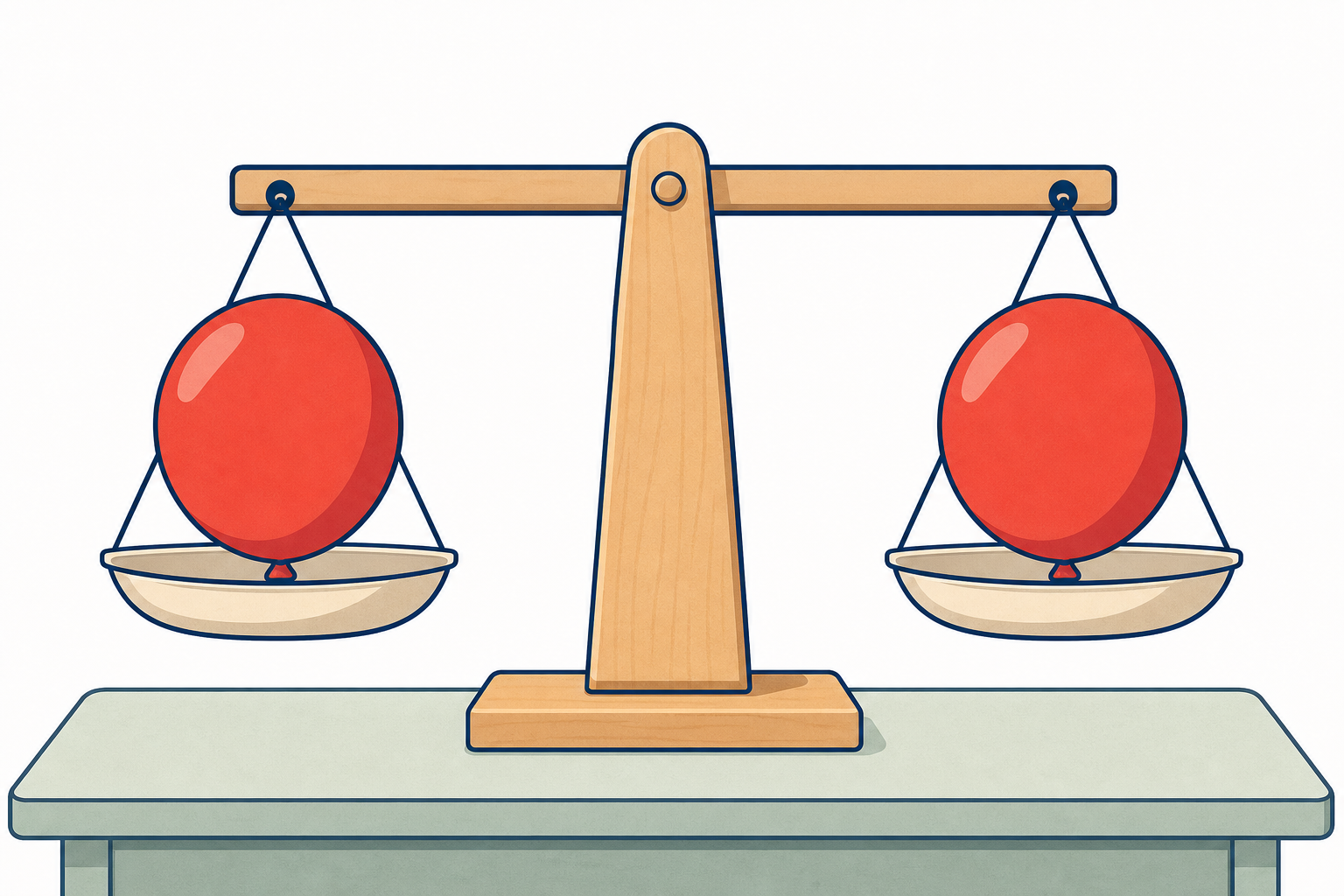
Watch the beam balance carefully. Two balloons start the same. We will change only one thing: the air in one balloon.
Predict first with a clear show of hands. When the air leaves one balloon, will the balance: stay level, tip so the inflated side goes down, or tip so the empty side goes down?
On three, vote with one hand for your choice. Then watch what actually happens.
You must run the full mass comparison once before the lesson and confirm a clear tip from the back of the room. Do not rely on fixing an unclear tip mid-lesson. Prefer balloons if the dry run shows a clean dip; if it does not, switch the primary set-up to two identical sealed sandwich bags inflated equally on the same beam and dry-run that until the tip is obvious.
Build a simple beam balance at the front: a 30 cm ruler balanced on a pivot (pencil, wooden dowel, or triangular block). Hang two identical balloons (or bags) from equal string lengths at equal distances from the pivot so the beam sits level. Inflate both to the same size beforehand and seal them with a knot or clip you can open gently.
Prep check: well-inflated identical pair, low-friction pivot (a round pencil often works better than a flat block edge), equal hanging points, level check from the back of the room. Small tape tabs on the strings help keep hanging points equal. Have a second matching pair of sealed bags ready as the primary fallback on the same beam.
Drive the demonstration card on the IWB. Read the three options aloud. On a count of three, every pupil raises a hand for one choice (or hold up 1, 2 or 3 fingers if that is clearer). Collect a quick scan of the room before you touch either balloon. Do not reveal the outcome in your set-up talk. Fold watchers in: Row at the back, which way are you voting and why?
Emphasise the fair comparison out loud: Same balloons, same strings, same distances from the pivot. The only change is the air in one balloon.
Carefully open one side and let the air out slowly (untie or ease the clip). Do not burst it. Leave the empty balloon or bag hanging. Wait for the beam to settle.
Small group decision (agency beat): after the beam settles, ask pairs: Is the tip clear enough to count as evidence, or should we move the hangers farther out and repeat once? Take a quick class agree/disagree. Pupils help judge the quality of the evidence; they do not redesign the apparatus.
Expected result: the still-inflated side dips (goes down). That side goes down: it has more mass because it still holds the air. We often say it feels heavier. The deflated side rises.
If it will not balance at the start: slide the strings until the beam is level, or swap in a third matching balloon or bag.
If the tip is unclear after deflating (and the class agrees it is unclear): hang both sides slightly farther from the pivot and repeat once. Primary fallback: switch to the sealed sandwich bags on the same beam so the class still sees a fair tip. Only if no beam comparison will show a tip should you carefully pass an inflated and emptied pair for a brief hand feel while you restate what stayed the same and what changed — treat hand feel as last resort, not the main evidence.
If the class wants a pop: refuse politely. Popping tears the rubber, so two things change (air and the balloon). Deflating keeps the comparison fair: only the air leaves.
I observed that the inflated side went down after we let the air out of the other balloon. So I think the air that left had mass. Air is not nothing.
Invite two pupils to restate the fair-test idea: what stayed the same, what changed, what we compared.
Look back at both tests. What did you see when the cup stayed level under water? What did you see on the balance after the air left one balloon?
In your group, agree on one observation that best supports "air takes up space" and one that best supports "air has mass". Share those clear observations with the class. Save explanations for the next steps.
Short whole-class observation share only. No writing in this step; the Investigation Journal comes next. Separate what we saw from what we think it means before the journal and the particle idea.
Group decision (agency beat): before hands go up, give pairs or groups about one minute to choose which observation best supports each claim. They own the evidence choice; they do not invent a new method.
Look-fors (observations):
Push gently if talk jumps to "magic" or "suction": revoice toward matter language: Something was already in the cup that water could not share space with. Something left the balloon that had mass.
Fold the whole class in while a few report: Do you agree with that observation? Did your group see the same?
Wet pack check: any tubs still full should be emptied now by assigned emptiers so tables are clear for journal work. Cloths stay out for a final wipe later.
You're previewing this lesson. Get full access to this lesson and hundreds more — each one ready to teach, with interactive activities, printable resources and pupil progress tracking built in.