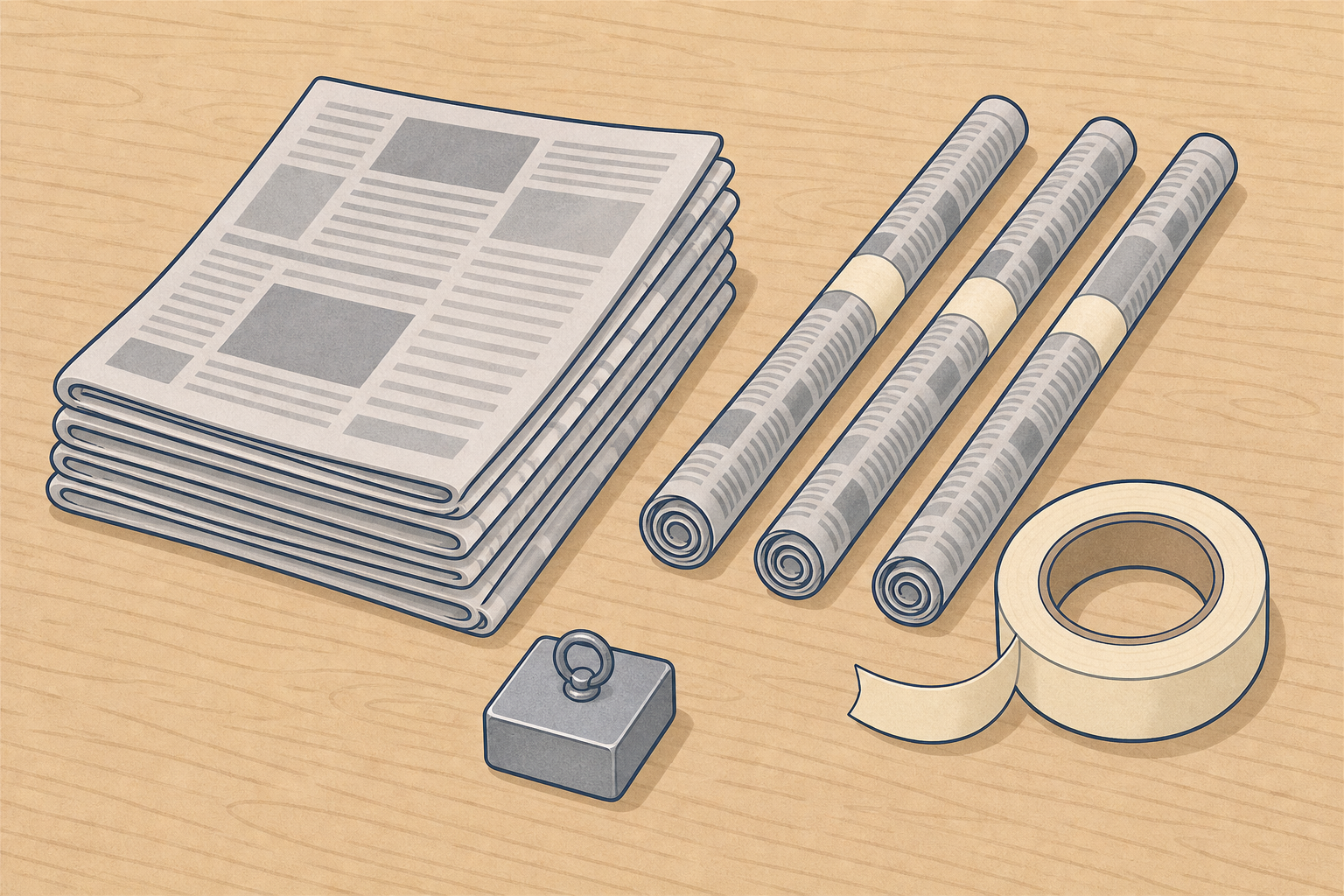
Can you build the tallest tower in the room from only the materials on your table, so it stands on its own and holds a small weight on top?
What do you already know about shapes that stay stiff and do not flop?
Keep this beat light. Hold up one sheet of newspaper and the test weight so the class can see the challenge, but do not hand out kits or start building yet.
Quick show of hands: who thinks height matters most, who thinks the base matters most, who thinks the shapes inside the tower matter most? Do not settle the answer; let the build settle it.
Link to prior learning: pupils already know that a flat sheet of paper flops easily, while the same paper rolled into a tube or folded along an edge feels stiffer. Invite one or two short ideas about that, then move on.
Nature of STEM cue (save for later if time is tight): real structures such as Irish electricity pylons and many railway bridges use wide bases and strong shapes such as triangles and hollow tubes so tall structures stay steady. Return to this in the share.
Two words for today. Free-standing means the tower stands on its own with no hands holding it. Stable means it is hard to tip over. A wide base often helps.
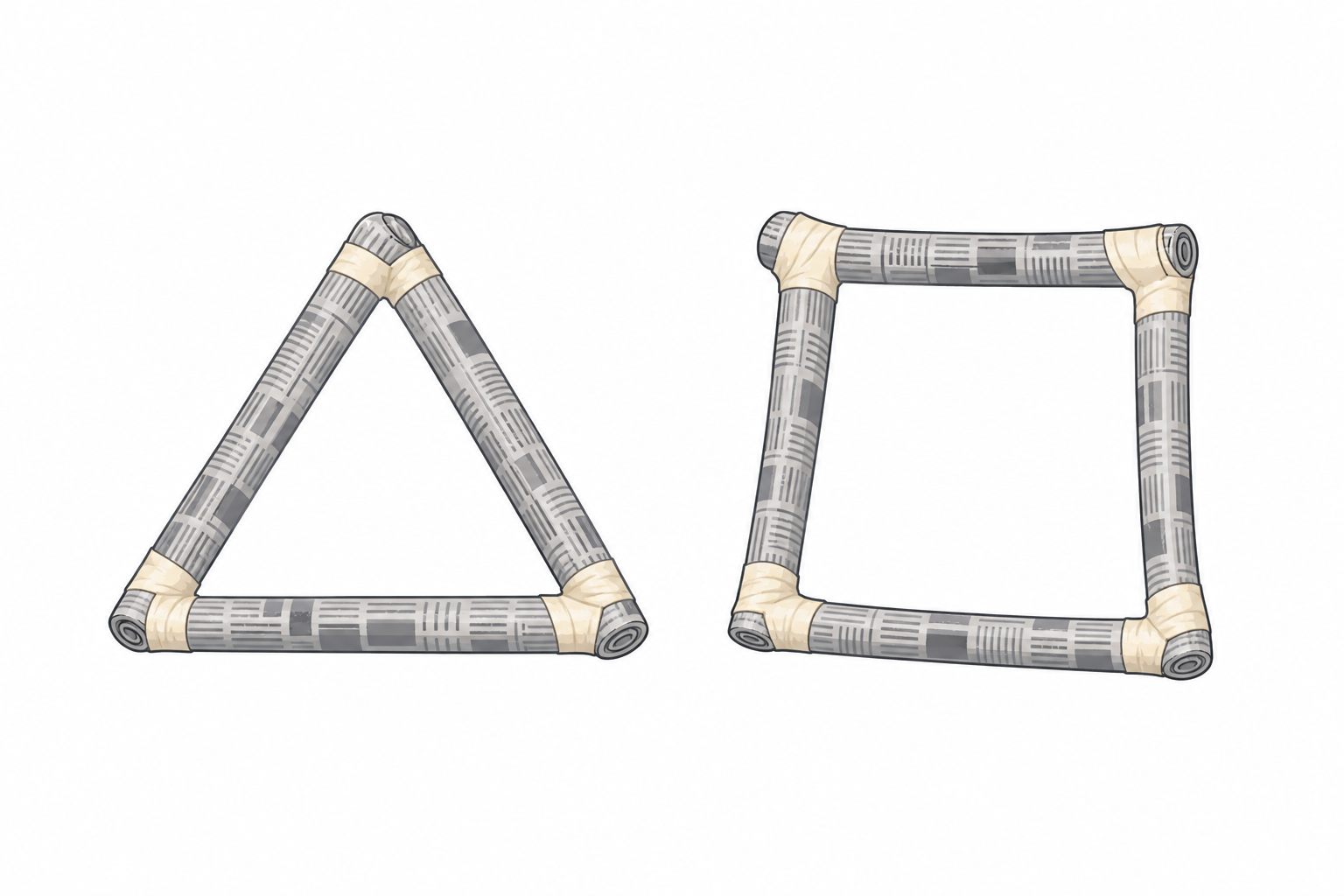
Watch: when hands come off, does it stay up? What shapes and ideas might help a newspaper tower stay tall and steady?
Only put free-standing and stable on the board now. Save prototype and improvement for a one-line reveal just before the test and improve steps.
| Concept | Why it matters | Example |
|---|---|---|
| Free-standing — stands up on its own without being held, taped down, or propped against something | A tower that only works while someone holds it has not really solved the challenge | When you take your hands away and the tower stays upright on the desk, it is free-standing |
| Stable — unlikely to tip or topple; a wide base makes the tower harder to tip | Tall alone is not enough; a skinny tower falls as soon as you add a weight or brush the table | A three-legged stool is steadier than one tall stick because its feet are spread out |
| Strong shapes — tubes, triangles and folded edges resist bending better than flat sheets | The same newspaper can flop or hold, depending on the shape you give it | A rolled paper tube feels much stiffer than the same sheet left flat |
| Prototype and improvement — a first model you test, then change once on purpose | Engineers do not expect the first try to be perfect; the test tells them what to fix | If the tower wobbles, widening the base is one clear improvement based on what you saw |
Quick gesture: hands off a standing pencil or tube. Free-standing? Thumbs up. Tipping? Not stable. Then move to ideas.
Capture class ideas on the board in three short lists: base ideas, middle/shapes, how to hold the weight. Accept every idea; do not rank them yet.
Misconception to head off: more tape always equals a stronger tower. Tape joins pieces; shape and base usually do more of the real work. Also head off "taller no matter what": a tall tower that falls fails the challenge.
Look-fors: pupils naming wide base, triangles, tubes or rolled newspaper, and a flat top or platform for the weight.
In your group of three or four, agree one tower idea. On your Investigation Journal page, sketch the tower you will build. Label the base, the strong shapes you will use, and where the weight will sit.
Success means: free-standing, as tall as you can make it, and able to hold the test weight on top.
Recommended group size: 3–4 pupils per group. Pack kits to match before the lesson.
Hand out one Investigation Journal page per pupil (or one shared group page if that is how you run design lessons). Kits stay closed until sketches are labelled.
This step is plan only. The interactive shows the design brief and constraints; build, test and improve come in later steps.
Success criteria to agree aloud with the class:
Constraints to state clearly: only the materials on the table; no taping the tower to the desk or wall; no holding it up during the test; about 18 minutes to build.
Circulate and push for labels, not pretty pictures. Ask: Where is the wide base? Which parts are tubes or triangles? Where does the weight rest?
If a group cannot agree, give them 30 seconds to pick the idea that uses a wide base and one strong shape, then sketch that.
Build the tower from your plan using only the materials on your table. Test stability gently as you go. If it wobbles, fix the weak part and keep building.
Remember: it must stand on its own, and there must be a place on top for the weight.
Give each group its kit at the same moment. Restate: no taping to furniture; hands off for the later free-standing check; leave a small flat top or platform for the weight.
Circulate with the same three questions: Is the base wider than the top? Which parts are tubes or triangles? Where will the weight sit without sliding off?
What good building looks like: rolled newspaper tubes joined with short tape wraps; a tripod or square base; diagonal braces; a small card platform on top.
Common problems and quick fixes:
Safety: if a tower starts to fall, hands away from eyes and faces; pick up straws and tape scraps as you go so floors stay clear.
Give a five-minute and two-minute warning. Groups that finish early gently check free-standing stability and tidy spare materials rather than starting a second tower.
Your first tower is a prototype: a first model you test so you can improve it.
We test every tower the same fair way:
The official measurer measures height and places the weight. The building group stands well back. Everyone else watches and writes three things on the Investigation Journal page: height in cm, free-standing yes or no, and held the weight yes or no.
While you wait, look at each base and predict: will it stay up and hold the weight?
Use at least one metre stick and one identical test weight per two groups (ideally one of each per group) so two stations can run at once. Same mass and same gentle placement at every station.
Use the same order for every group so comparisons are fair:
Between towers, ask 10-second class questions: Look at that base. Wider or skinnier than the last one? Thumbs: will it hold the weight? Why? Do not set a separate desk task; predicting and comparing is the job of the watching rows.
Twelve minutes is tight for 8–9-year-olds. If stations start to slip:
Protect the 7-minute improve step: stop testing when the timer hits the end of this beat even if one group is still waiting, and note that tower first in the next step.
What to expect: many first towers will be tall but tippy, or steady but short. A few will hold the weight. Collapses are useful data, not failure — name that aloud.
Safety: everyone stands back during the load test; no faces close to the tower; mind fingers if it buckles. Rebuild space stays clear of feet and bags.
If a tower is unsafe to load (already leaning hard), skip the weight and record that it was not stable enough to test under load.
Pool class results on the interactive table (up to 10 groups) or on the board if you prefer paper only.
You're previewing this lesson. Get full access to this lesson and hundreds more — each one ready to teach, with interactive activities, printable resources and pupil progress tracking built in.