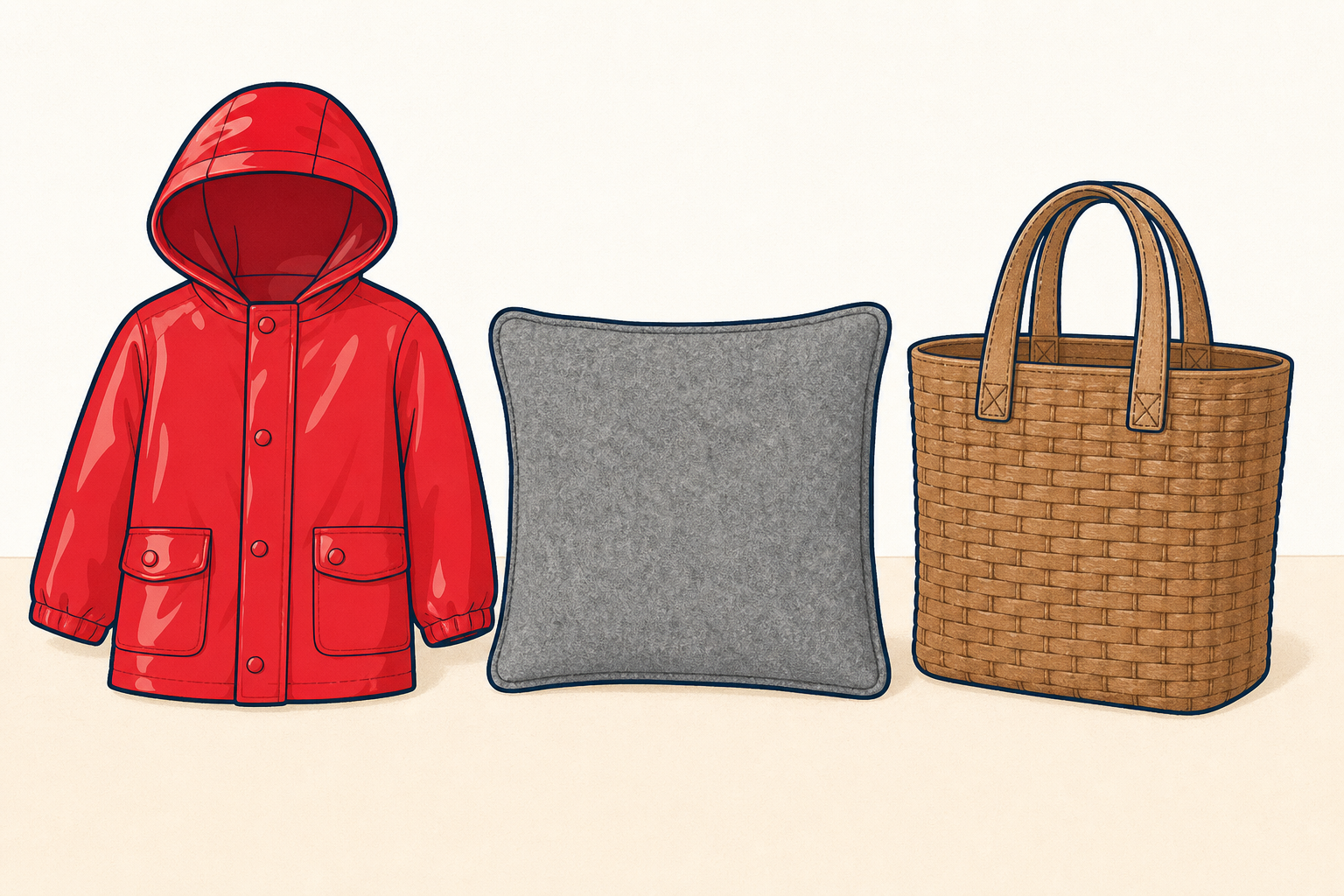
 Look at these everyday things. A raincoat, a cushion, a shopping bag. Why do you think each one is made of the material it is? What job does each material do?
Today you will work in small groups. Each group picks one job to test: keeping a toy dry, finding the cosiest material for a cushion top, or finding the strongest material for a bag handle. Ask a simple question: which material is best for our job?
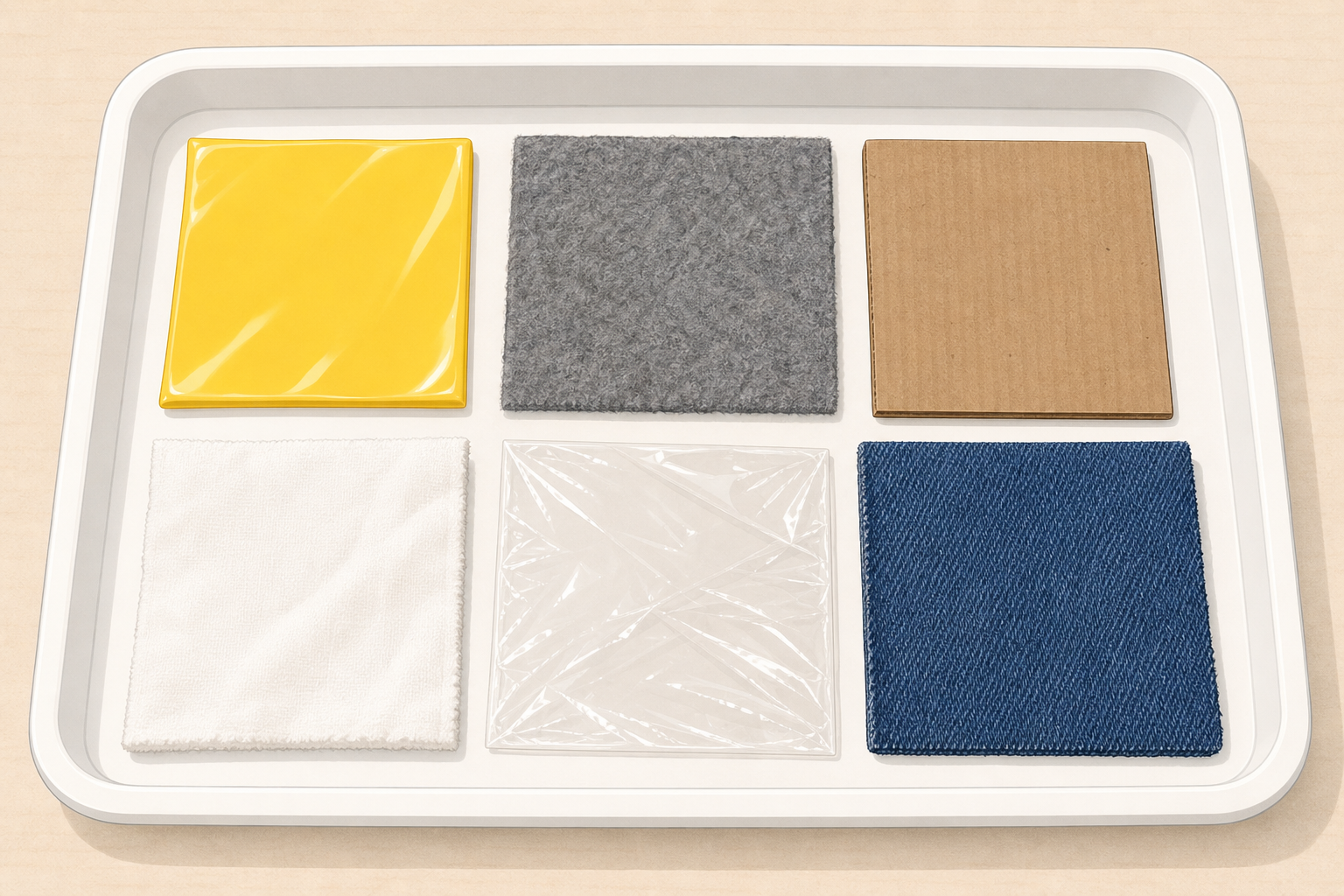 Handle the materials on your tray. Sort them into two groups: might suit our job, and probably will not. Talk about what you notice that matters for your job.
 Look at the materials you sorted. Whisper to your group: which one do you think will work best, and why?
Then try two or three materials. Do each try the same way, so that the only thing that changes is the material and you can compare fairly. Here is the same-each-time way for each job:
- Keep a toy dry: use the same toy every time and cover it the same way. Sprinkle the same few drops of water on top, wait the same short count, then look and feel for dampness.
- Cosiest cushion top: rest your hand on the material the same way for the same short count, then agree which felt softest or least scratchy.
- Strongest bag handle: make each material into a strip about a hand span long. Loop the strip over a chair back or table edge the same way, and ask an adult to hang the same small weight from the free end, low down and clear of everyone's feet, for a count of ten. Look for stretching, slipping or tearing. The stronger handle changes least.
Watch carefully. Which material did the job best? Be ready to say what you saw or felt.
On your Investigation Journal page, record your group's question, the materials you tried, and the best choice. Use the sentence stems on the board. One person can write while the group helps with the words. Add one short reason from what you saw or felt.
Unlock the full learning experience
You're previewing this lesson. Get full access to this lesson and hundreds more — each one ready to teach, with interactive activities, printable resources and pupil progress tracking built in.
This lesson is copyright of Coding Ireland 2017 - 2025. Unauthorised use, copying or distribution is not allowed.