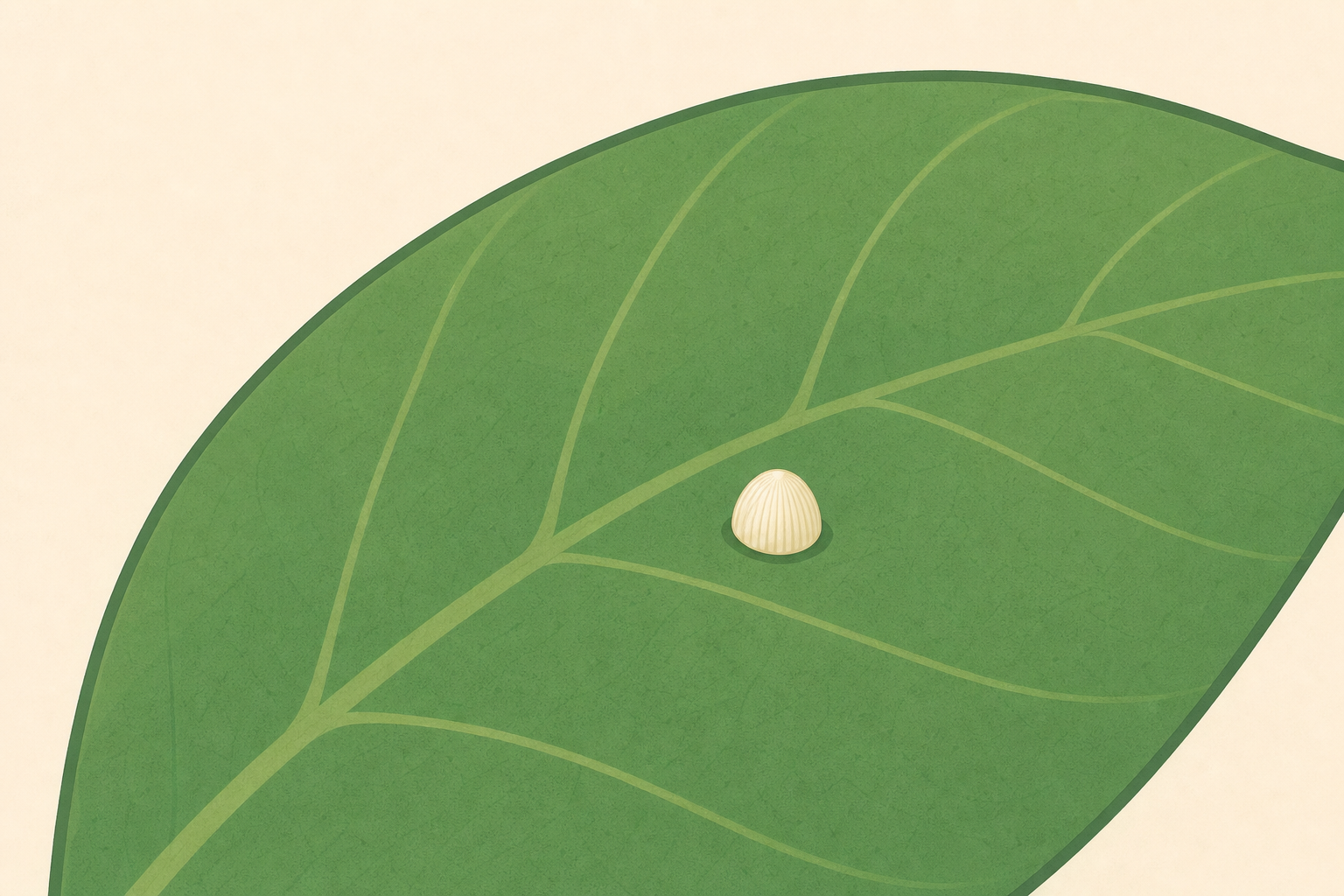
Look at this tiny egg. What do you think it might become? How could something so small end up looking completely different?
Hold up one provided hook picture card (butterfly egg or frogspawn photo). Keep the hook light: one wonder question only. Do not lay out all the stage cards or name the full cycle yet.
If you use the butterfly egg hook, you may name it once as a Small Tortoiseshell egg on a nettle (a butterfly often seen in Irish gardens). Pupil cards stay labelled simply as butterfly stages.
Key questions: What do you already notice about how animals grow? Have you ever seen caterpillars, butterflies, frogspawn or tadpoles in a garden, ditch or school pond?
Capture two or three ideas on the board. STEM eyes: many of these changes happen in our own gardens and school grounds in spring and summer.
Today's words:
Life cycle: the stages an animal goes through as it grows and changes, then starts again.
Stage: one clear part of that story, where the animal looks or lives differently.
A butterfly starts as a tiny egg. What do you wonder about how it grows?
| Concept | Why it matters | Example |
|---|---|---|
| Life cycle — the stages an animal goes through as it grows and changes, then the story starts again with a new generation | It helps us notice that animals do not stay the same shape or home their whole lives | Egg → caterpillar → chrysalis → butterfly → eggs again |
| Stage — one clear part of a life cycle where the animal looks or lives differently | Naming stages lets us put the story in order and spot what has changed | A tadpole lives in water and has a tail; a froglet is growing legs |
Stretch vocabulary (teacher talk only, after pupils see a big change): Some scientists call a big change of body shape metamorphosis (met-uh-MOR-fuh-sis). You may use the word when groups notice the chrysalis or the tadpole-to-froglet change. It is not a required pupil term today.
Modelled thinking (say aloud, do not project as a script): I wonder how a butterfly grows. I predict the egg comes first, then something that crawls. I look at the cards. First comes the egg. Next comes the caterpillar. It eats leaves and grows. Then comes the chrysalis. Inside, its body changes. Last comes the adult butterfly. It flies and can lay eggs. I think the arrow loops back because the adult lays new eggs and the cycle starts again.
Misconception to head off: children may think the chrysalis is "sleeping" or that the caterpillar and butterfly are unrelated animals. Gently: the same animal is changing shape.
Keep language gentle: grow, change, become. No graphic detail.
Start with the butterfly cards only. Put them in a line from egg to adult.
Then do the same with the frog cards. Be ready to show your line.
Print the provided life-cycle cards (one butterfly set and one frog set per group). Cut them apart. Lay out one paper strip or clear table space per group as a start-to-finish line.
Hold up each stage name once so unfamiliar words are heard with a picture: egg, caterpillar, chrysalis, adult butterfly; frogspawn, tadpole, froglet, adult frog. Keep chrysalis supported by the picture on the card and your spoken name; do not expect pupils to decode the word from the board alone. Do not give the full order yet.
Butterfly set:
Frog set:
Correct order: Butterfly: egg → caterpillar → chrysalis → adult butterfly. Frog: frogspawn → tadpole → froglet → adult frog.
All groups begin with butterfly. Only when the butterfly line is stable do they open the frog set. Keep the two sets in separate piles so they do not mix.
Circulate. Ask: What is different about the animal at this stage? Where does this stage live? If a group reverses two cards, ask them to tell the story aloud from the start rather than giving the answer.
Differentiation: Support groups stay with butterfly if time is tight. Challenge: which stage shows the biggest change of body shape?
Help us build the butterfly life cycle on the board. Call out which stage comes next. We will place egg, caterpillar, chrysalis and adult butterfly in order so the arrows make a loop.
Open the interactive activity in explore mode. Do not show a finished cycle first. Four cards appear: egg, caterpillar, chrysalis, adult butterfly. Invite pupils to the board or take class votes for the next card. Build the cycle live from the groups' thinking.
Fold the watchers in: Do you agree with that order? What would happen if we put the butterfly before the chrysalis?
When the loop is complete, pause on the loop arrow: the adult can lay eggs, so the story begins again with a new generation. Ask one pupil to tell the whole story in four short sentences.
Link back to the groups' butterfly strips: Does your butterfly order match the board?
Ask: Which stage crawls? Which stage has wings? Where does the biggest change happen? (Optional stretch word here: metamorphosis.)
Help us build the frog life cycle on the board. Call out which stage comes next: frogspawn, tadpole, froglet, adult frog.
If your group ordered the frog cards, check whether your line matches. If you worked on butterfly only, follow along and help us place each stage.
Open the interactive activity in explore mode (same style as the butterfly build). Do not show a finished frog cycle first. Four cards appear: frogspawn (egg), tadpole, froglet, adult frog. Invite pupils to the board or take class votes for the next card. Build the cycle live.
Support groups who stayed on butterfly only: give them a whole-class follow-along role (call the next stage, agree or disagree with the order). Do not ask those groups whether "their frog line" matches; they have no frog strip.
Groups who ordered frog: quick match check against the board once the loop is complete.
When the loop is complete, pause on the loop arrow: the adult can lay new frogspawn. Ask: Which stage lives only in water? Which stage is growing legs? Where does the biggest change show?
Leave both finished cycles visible (butterfly board cycle and frog board cycle, or both animal strips pinned) for the compare talk later.
You're previewing this lesson. Get full access to this lesson and hundreds more — each one ready to teach, with interactive activities, printable resources and pupil progress tracking built in.