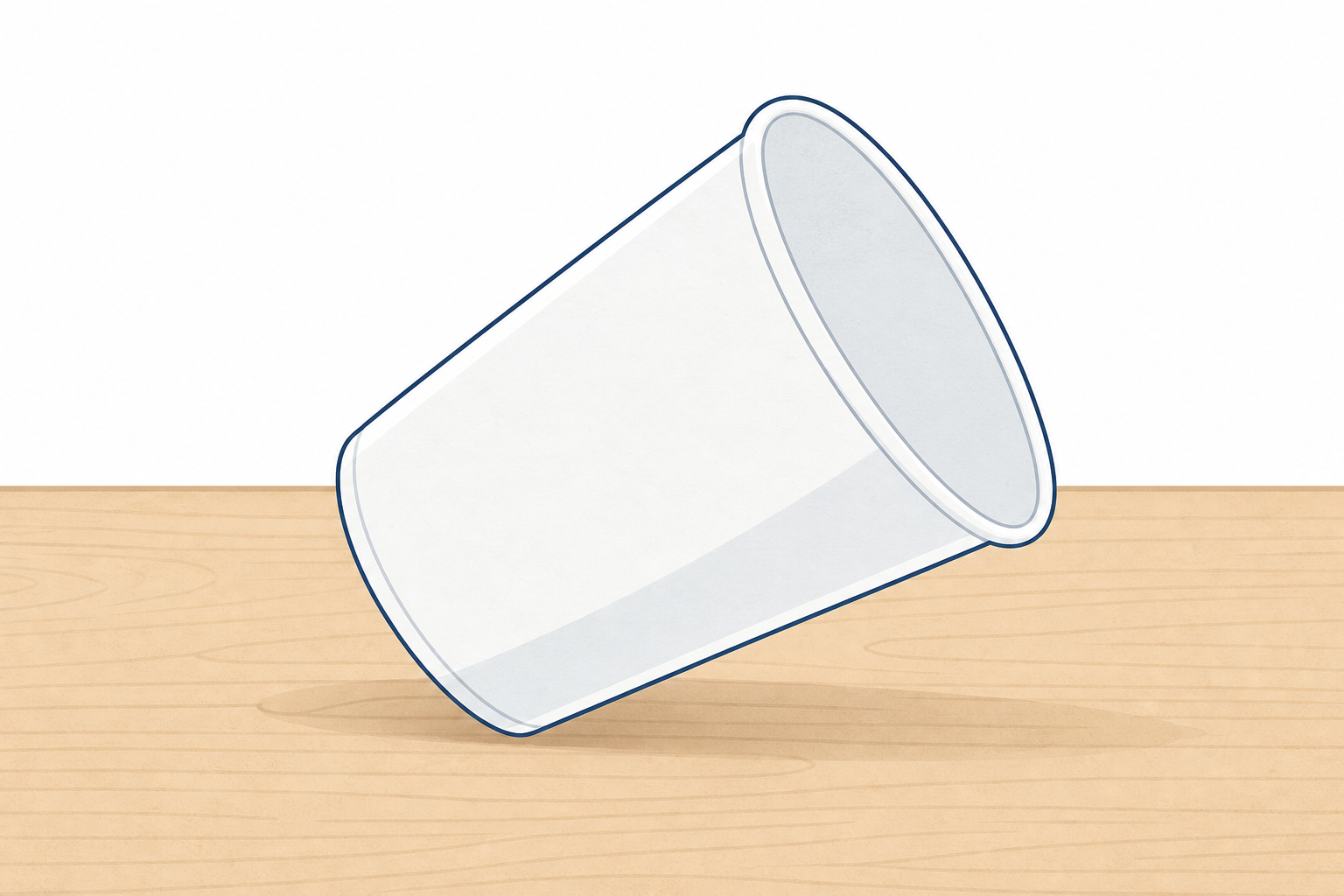
Look! This cup wobbles when I rock it. What do you think helps something stay up when it wobbles?
Keep this light. Hold up one plastic cup or block and rock it gently on your palm so the class sees it wobble. Name only what they can see right now: the cup (or block) in your hand. Do not mention the tray or the nudge test yet, and do not hand out the full build kit.
Ask for a few quick guesses only: wide bottom, sticky tape, being short. Accept every idea kindly. Guesses are the start of the fun, never wrong.
Who helps us: builders and engineers make towers, signs and ladders that must not fall over. We will find out one clever trick they use.
Today's big idea: wide feet.
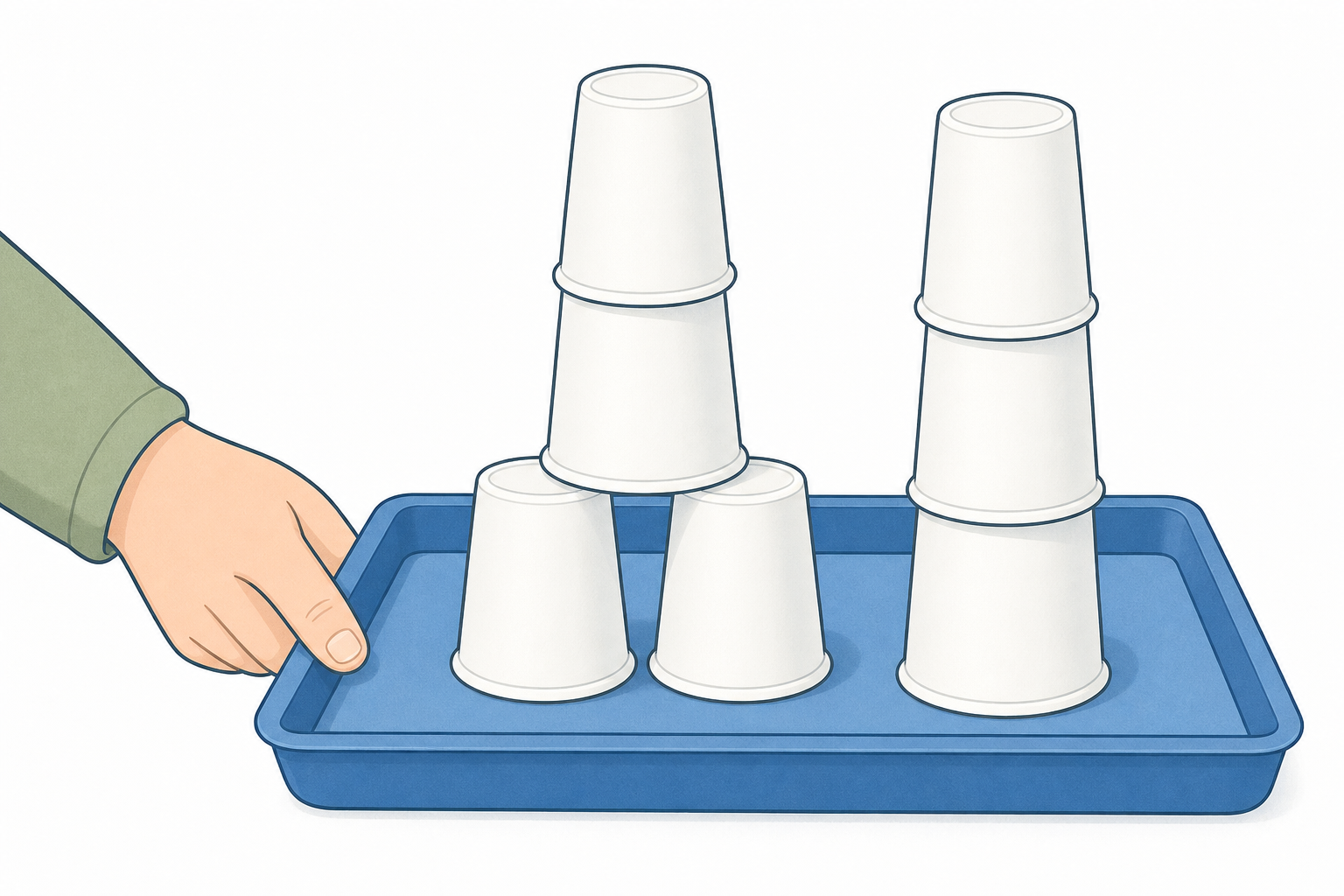
Which tower will stay up when we wobble the tray: wide feet or thin feet?
Keep the board short. Say the meaning aloud and show it with your body before any building starts.
Body demo first: plant both feet wide apart and rock gently (steady). Then stand on tiptoe on one foot and wobble (not steady). Say: Wide feet mean a big, spread-out bottom. Thin feet mean a small bottom. Wide feet and wide base are the same idea.
Now show the empty tray once and name it as the surface the towers will stand on later, so the compare question on the board has a picture in their heads.
| Concept | Why it matters | Example |
|---|---|---|
| Wide feet (wide base) — a big, spread-out bottom so something does not tip easily | Things that must not fall over often have wide feet to keep them steady | A classroom easel stands on wide feet so it stays upright when you paint |
| Thin feet (narrow base) — a small bottom that does not spread out much | A thin bottom tips more easily when something wobbles | A tower balanced on one cup tips over when the tray is nudged |
| Stand steady — stay upright without falling when something wobbles or is nudged | Builders want towers, signs and ladders to stand steady so people stay safe | The wide-feet tower stays standing after a gentle nudge; the thin-feet one falls over |
Misconception to head off: children may say taller things always fall first. Height matters later; today the big idea is the feet. Keep both towers the same height so the only difference is the base.
Use wide feet and thin feet with the children all lesson. If you say base, link it straight away: base means the feet at the bottom.
1. Build a tower with wide feet (three pieces spread out at the bottom).
2. Build a tower with thin feet (one piece at the bottom).
3. Make the tops the same height.
Model one full cycle out loud at the front bench so every pair sees the pattern before they try. Leave your worked model standing beside the board for the whole build so non-readers can check wide bottom versus thin bottom without rereading the words. Pairs then have about 7 minutes to build.
Worked model (say the beats, do not rush):
Pieces per pair: plan on about 12 cups or blocks so there are enough for a 3-cup wide base, a matching-height thin tower, and a spare or two. Most pairs manage 3–5 cups high. Same height matters more than how tall. If a pair makes one much taller, help them match the heights before moving on.
Pairs share one set of about 12 cups or blocks and one flat tray. Circulate and ask: Show me the wide feet. Show me the thin feet. Are they the same height? Point back to your front model if a pair has built two plain stacks with no clear feet difference.
Differentiation: less confident pairs may use fewer pieces and stop at three high. Confident pairs may use more pieces but still match heights. No glue or tape — freestanding only so the nudge test is fair.
Safety: build below shoulder height. Mind fingers between cups. If a tower starts to lean, stand back and let it fall safely onto the tray.
Give your tray a gentle nudge.
Which tower stays up? Which one falls over?
At the front, use your model towers only to show the technique:
Save I noticed and I think until after pairs have tried, so the discovery stays with the children.
One gentle nudge per pair. Whole class watches one or two pairs if space is tight — fold watchers in with questions: Which one do you think will fall? Were you right?
Each pair says one thing they noticed to their partner before the whole-class share.
Whole-class oral share: Which tower stayed up? Why do you think that happened? Revoice their words into the big idea: wide feet help a tower stand steady.
What to expect: almost every thin-feet tower falls first. If both fall, the nudge was too hard — model a softer finger push. If neither falls, the wide base may be too wide and the thin not thin enough; help the pair make the thin base a single cup or block.
Optional early finisher only (not the main path): if a pair has finished the compare and still has time, they may add one layer to the wide-feet tower and try one more gentle nudge. Do not run this as a whole-class beat; the core finding is already wide feet = stand steady.
Safety: stand back as towers fall. Nudge the tray, not the tower itself. Keep builds below shoulder height. Clear feet from under the tray edge.
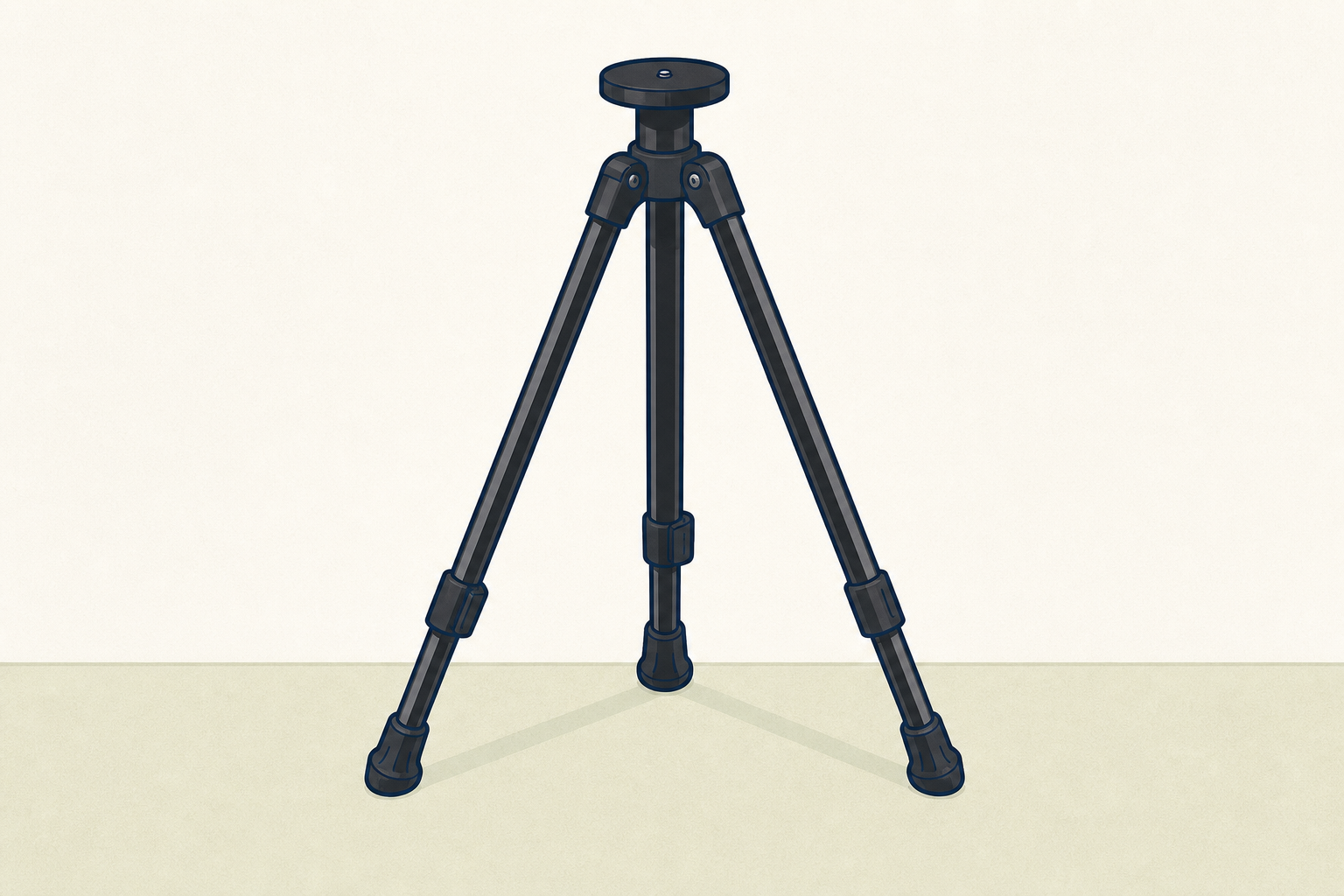
Look at the wide feet on this stand.
Say with a partner: Wide feet help because…
Display-only talk on the carpet. Keep it short after the hands-on work.
Anchor first on one real freestanding object everyone can see: point to whatever is in the room (classroom easel, coat stand, or another freestanding stand). Children look at its wide feet together. The board says “this stand” so it stays true if there is no easel. Only then invite a quick look around the room for one more wide-feet object they can actually see.
Outdoor examples only if children already know them and can picture the splayed feet: a freestanding A-frame road sign or a stepladder. Skip slim poles fixed deep in the ground (many lamp posts) and skip goal posts (many are fixed in sockets). Only mention a portable goal if a child clearly notices splayed freestanding feet.
Model the stem first with child-level endings so partners have words to borrow:
Then pairs use the stem themselves.
Draw out (briefly):
Who helps us: builders, road workers and people who put up signs choose wide feet so their work stands steady in Irish wind and rain.
Stay oral. Partner share with the stem is enough; no drawing sheet needed.
You're previewing this lesson. Get full access to this lesson and hundreds more — each one ready to teach, with interactive activities, printable resources and pupil progress tracking built in.