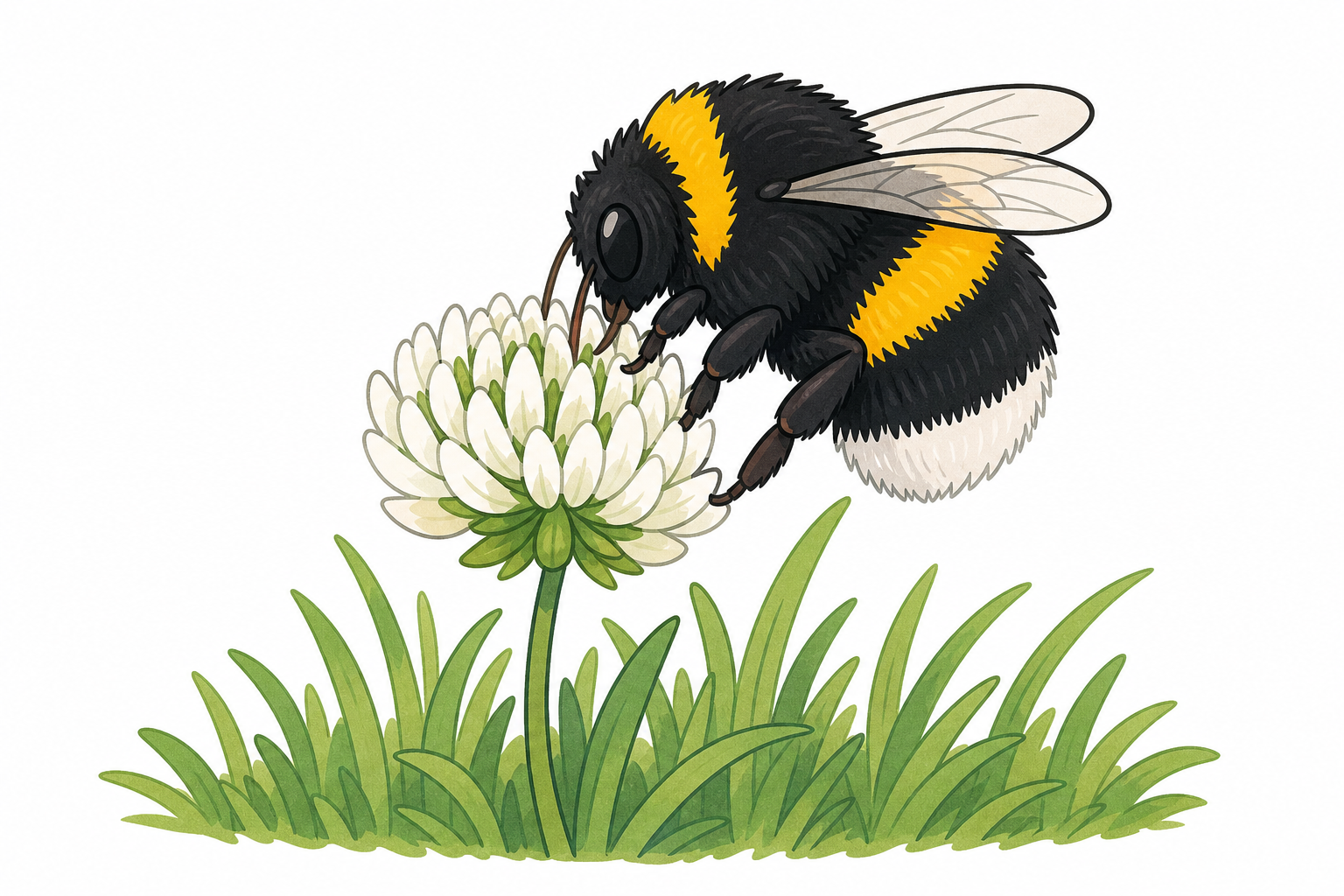
Look back at your biodiversity audit from earlier in this project. Which living things did you find, and which spots felt richest?
Today we dig deeper: why does that variety matter, what is going wrong for pollinators in Ireland, and how could our grounds help?
Have each group's audit sheets from earlier in this project ready to hand back. Hold up one completed audit (or a blank if needed) and ask two quick hands-up questions: Where did we find the most kinds of living things? and Where did we find almost none?
Keep this beat light. Do not hand out research cards or start defining terms yet. The hook is curiosity about their own data.
If some groups lost their audit: pair them with another group or use a class summary list of what was found (jot living things and spots on the board in one minute before groups start research). Keep that board list visible for the whole lesson as a fallback.
With a partner, talk for one minute: what did our audit show about living things in our grounds, and why might that matter?
Be ready to share one idea with the class.
Run as think-pair-share. Pupils use their own audit sheets as evidence, not guesses.
Listen for and draw out:
Misconception to head off: biodiversity is not only about rare or exotic animals. Everyday worms, spiders, daisies and bees count, and they matter to how the grounds work.
Key question: If we only counted how many animals we saw, would we miss something important about variety? Link back to kinds versus totals if their audit captured both.
Capture three strong pupil phrases on the board to reuse in the research step (for example: "more kinds under the hedge", "almost nothing on the tarmac").
Your audit already showed variety in our grounds. Scientists call that biodiversity: the different living things in a place.
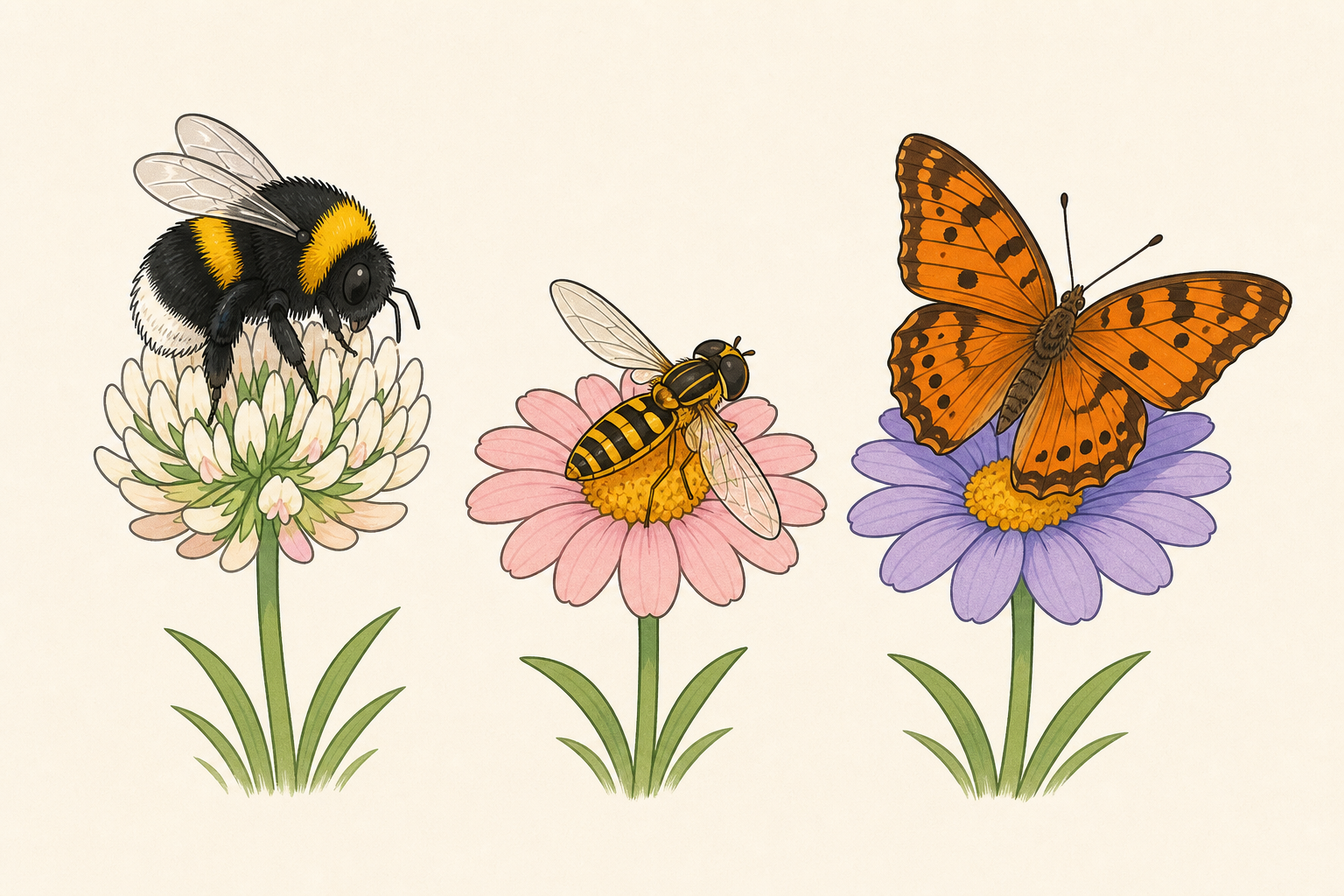
A pollinator is an animal that moves pollen so plants can make seeds and fruit. Bees, hoverflies and butterflies do this job.
A food web shows who eats whom, and how living things in a habitat depend on each other.
People who study living things work in a field called Biology. Ecologists use evidence the way we used our audit. You only need the name for now.
Think quietly, or whisper one idea to your partner: if fewer pollinators visited our grounds, what might change in a food web here? We will meet the evidence next.
Teach three core terms on the board with the short pupil-facing lines, one idea at a time. Mark Biology clearly as a light name only linked to ecologists and evidence, not a fourth definition to memorise. Use the full table yourself; do not project it.
Signal the final line as think-only or a 20-second partner whisper. Do not cold-call for a correct answer; pupils will meet the evidence on the research cards next.
| Concept | Why it matters | Example |
|---|---|---|
| Biodiversity — the variety of living things in a place (plants, animals and other organisms) | A place with many kinds of living things is usually more stable; if one species struggles, others can still keep the system going | A hedgerow with oak, hawthorn, robins, woodlice and bees is richer than bare tarmac |
| Pollinator — an animal that carries pollen from flower to flower so plants can make seeds and fruit | Many Irish wildflowers and some crops need pollinators; when pollinators decline, plants and the animals that eat them feel the effect | Bumblebees and hoverflies on dandelions and clover on the school lawn |
| Food web — a network of feeding links showing how living things depend on each other in a habitat | Energy starts at the sun, flows through plants, then to plant-eaters and predators; remove a link and knock-on effects follow | Sun → grass / dandelion → caterpillar or snail → robin (school grounds). In the wider countryside a separate path can run grass → rabbit → fox |
| Biology (light name only) — the science of living things; ecologists study how organisms and habitats work together | Names the field that gathers evidence (like our audit) before people plan how to help | Your audit is the same kind of first step an ecologist takes before helping a site |
Nature of STEM: name that ecologists and conservation scientists gather evidence first (like the audit), then use research to plan action. The All-Ireland Pollinator Plan is a real island-wide example of science informing everyday choices.
Save the live research-cycle model for the start of the next step so this beat stays on vocabulary and wonder only.
In your group, read Cards B and C together (pollinators in Ireland and the All-Ireland Pollinator Plan). For each, agree one important fact, one link to your audit, and one idea for helping our grounds.
Then choose one more card from A, D or E. From that card, star one strong line and write one audit link only (no full three-note set). Use any leftover minutes to rank your facts and agree which starred fact the class should remember.
Print one full set of the five research cards per group from the ready-to-print set below. Hand back each group's audit from earlier in this project. Put a visible class fallback list on the board (living things and spots from Part 1) before groups start, so thin or missing audits still have evidence to link to. No devices are required. If you prefer stations, place cards at tables and let groups visit B and C plus one chosen card.
Hold up Card C. Think aloud:
That is the deep pattern for Cards B and C: fact, link to audit, action idea.
Every group must deep-work Cards B and C (Irish pollinator core) with the full three notes each. Then each group chooses one of Cards A, D or E for a light pass only: one starred line and one audit link. Do not require a third action note on the choice card. Groups use leftover minutes to rank their starred facts and justify which one should drive the class action.
One pupil reads the card aloud; the group agrees notes on scrap paper or sticky notes. You circulate and push for audit links, not copied sentences.
Prompt while circulating: Point to the line on your audit (or the class list) that matches that fact. Would this action help a rich spot or a poor spot we found?
Timing cue: about 2 minutes model, 5 on B, 5 on C, 3 on the light choice card, 2 minutes to star and rank (17 minutes total).
Card A — Why biodiversity matters
Card B — Pollinators in Ireland
Card C — The All-Ireland Pollinator Plan
Card D — Biology and ecosystems
Card E — From facts to action
Offer a highlighter and the sentence stem One fact is… It links to our audit because… It suggests we could… for Cards B and C. For the choice card, offer One strong line is… It links to our audit because… Confident groups spend leftover time justifying why their starred fact should lead the class action.

Using living things from your audit, sketch a simple food web of our school grounds on plain paper. Start with the sun and at least two plants, then add animals that eat plants and animals that eat other animals. Draw arrows to show the direction energy flows (from the food toward the eater).
Keep this sketch. You will use it when you record on your Investigation Journal page.
Model one tiny web on the board first (about 2 minutes) using Irish school-grounds examples only: sun → grass / dandelion → caterpillar or snail → robin or spider. Say aloud: The arrow points to the eater because that is where the energy goes. Protect the remaining time for pupil sketching so every child finishes a simple multi-link web.
If you want a decomposer path, model it separately: sun → plants → leaf litter → woodlouse → robin or blackbird. Do not show woodlice eating living grass or dandelion leaves; woodlice mainly feed on dead plant material.
Pupils sketch on plain paper. They should use organisms they actually recorded where possible. If the audit was thin on animals, allow common Irish grounds species they know are present (robin, blackbird, snail, ant, ladybird) but mark guesses with a question mark.
Look-fors:
Misconception: arrows showing "who hunts toward the prey". Correct gently: energy flows from the plant or prey into the animal that eats it.
Pupils keep the plain-paper sketch with their journal; they do not need to redraw the whole web unless they want a tiny version on the journal page. Do not rush straight into journal writing until most webs have at least three linked steps.
You're previewing this lesson. Get full access to this lesson and hundreds more — each one ready to teach, with interactive activities, printable resources and pupil progress tracking built in.