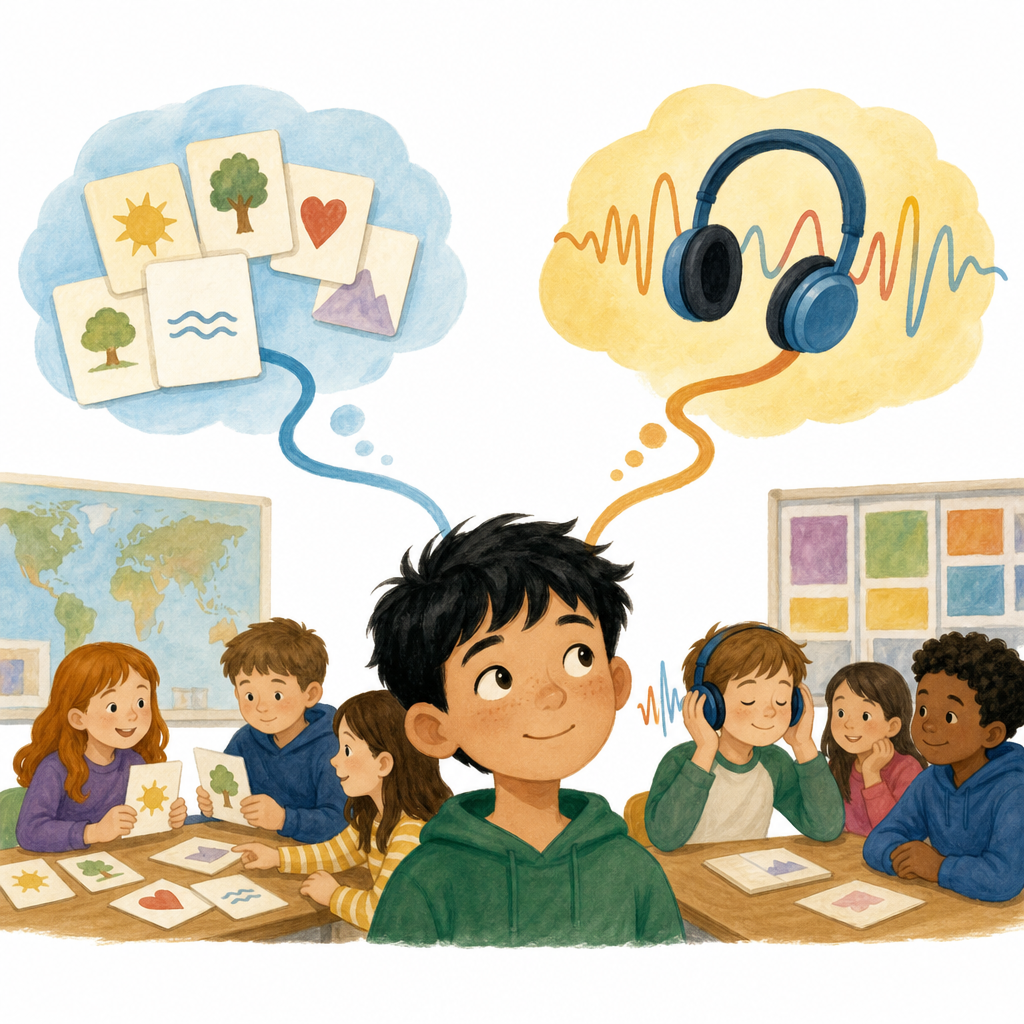
 How do you remember a new word: picture it, say it aloud, write it down, or listen for the sound?
Quiet think first: pick one way that works for you. Earlier this stage you met false friends and practised checking your guesses. Today we ask a harder question: does that same way work for every kind of word?
Some words look like cousins of words you already know. Others are just sounds you have to hear and hold. Two kinds of word. Two different jobs for your brain.
By the end of this lesson, you will be able to:
- Match tricks to word types
- Tell looking words from listening ones
- Say if guessing is a skill, a cheat, or both
These technology words look like cousins across languages. Look at the spelling, take a careful guess, then check. Notice which pairs you could work out from the letters, and which ones tricked you.
Now the other kind. Short clips play. You cannot reason from the letters because you cannot see them. Listen, choose the language, and notice what your ear holds onto: rhythm, a sound that repeats, a word you half-know.
Open your copy. Write two sentences.
- One about a looking word: a word you can work out because it looks like one you already know.
- One about a listening word: a word you can only learn by hearing it.
In each sentence, say how you will remember that word.
Pick a trick from the list if you like: picture it, say it aloud, write it, listen for the beat. Do not write a vague goal like "I will try harder." Name the kind of word and the way that fits it, in your own words.
💬 Discussion time
Imagine two people in a glass booth, listening to one language and saying it in another. They work in pairs and swap the headphones every half hour, because even their brains get too tired to keep going one way. That is a real language job.
- Is guessing from shape clever checking, a quick cheat, or both? (thumbs up = skill, thumbs sideways = both, thumbs down = only a cheat)
- When would looking fail you? When would listening fail you?
- Who wants to share one sentence they wrote about which way works for which kind of word?
Unlock the full learning experience
You're previewing this lesson. Get full access to this lesson and hundreds more — each one ready to teach, with interactive activities, printable resources and pupil progress tracking built in.
This lesson is copyright of Coding Ireland 2017 - 2026. Unauthorised use, copying or distribution is not allowed.