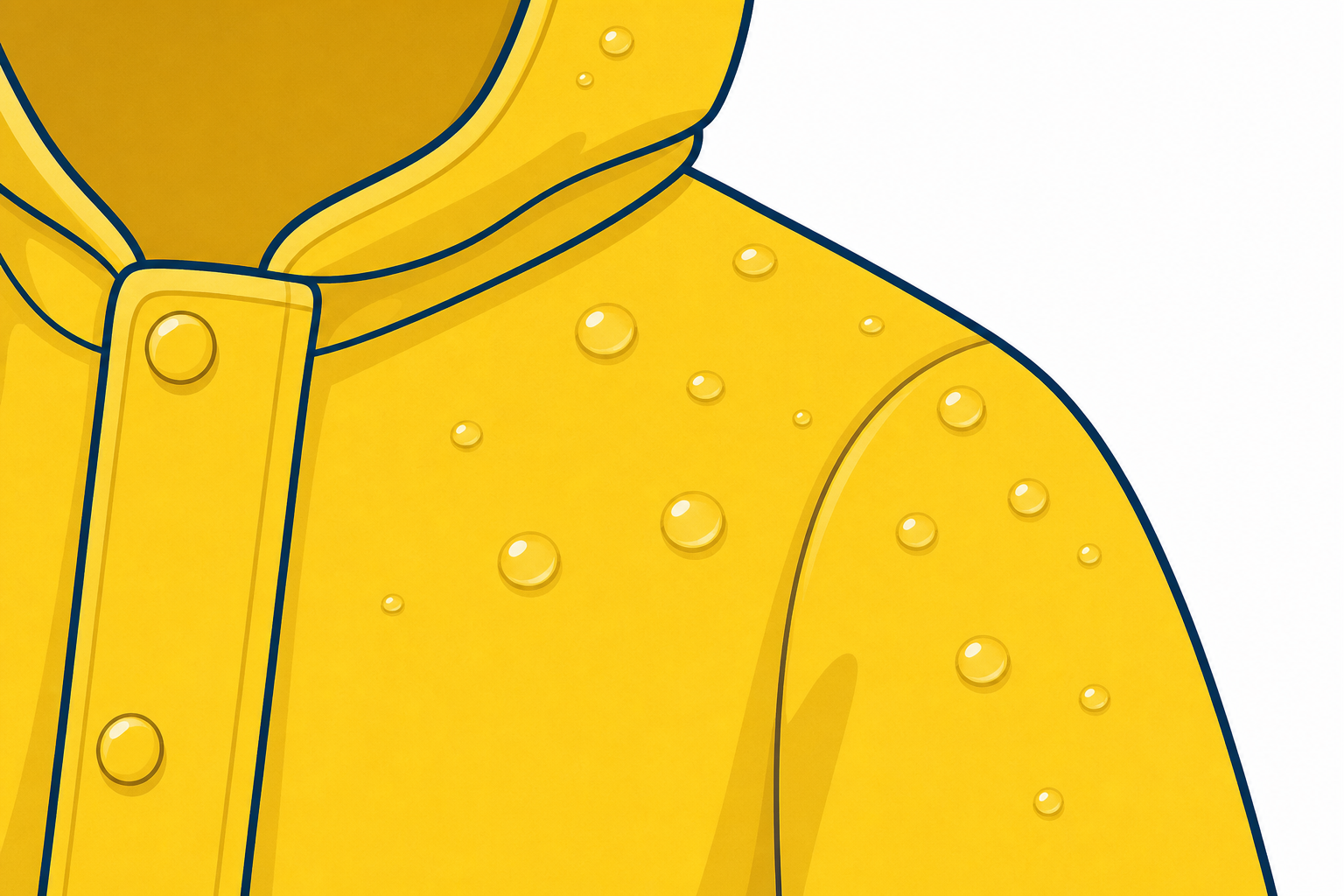
It is raining hard on the way to school. Which would keep you drier: a paper bag over your head, or a raincoat?
Hands up for the paper bag. Hands up for the raincoat. What do you notice about the material of a real raincoat?
Keep this light: one curiosity question and a quick hands-up. Do not set out the drip trays or name the test materials yet.
Hold up a real raincoat or waterproof jacket if you have one, or point to a coat on a peg. Ask what the coat material feels like compared with a paper bag or tissue. If children say "fabric", gently note that raincoat material is often coated so water cannot soak in the way ordinary cloth does.
STEM eyes: link to Irish weather and why outdoor coats, wellies and school-bag covers are made of certain materials.
Have the material squares and trays ready off to the side for the next steps, not laid out as the investigation yet.
Today's big words: waterproof — water stays out and does not go through. Absorb — the material soaks the water up.
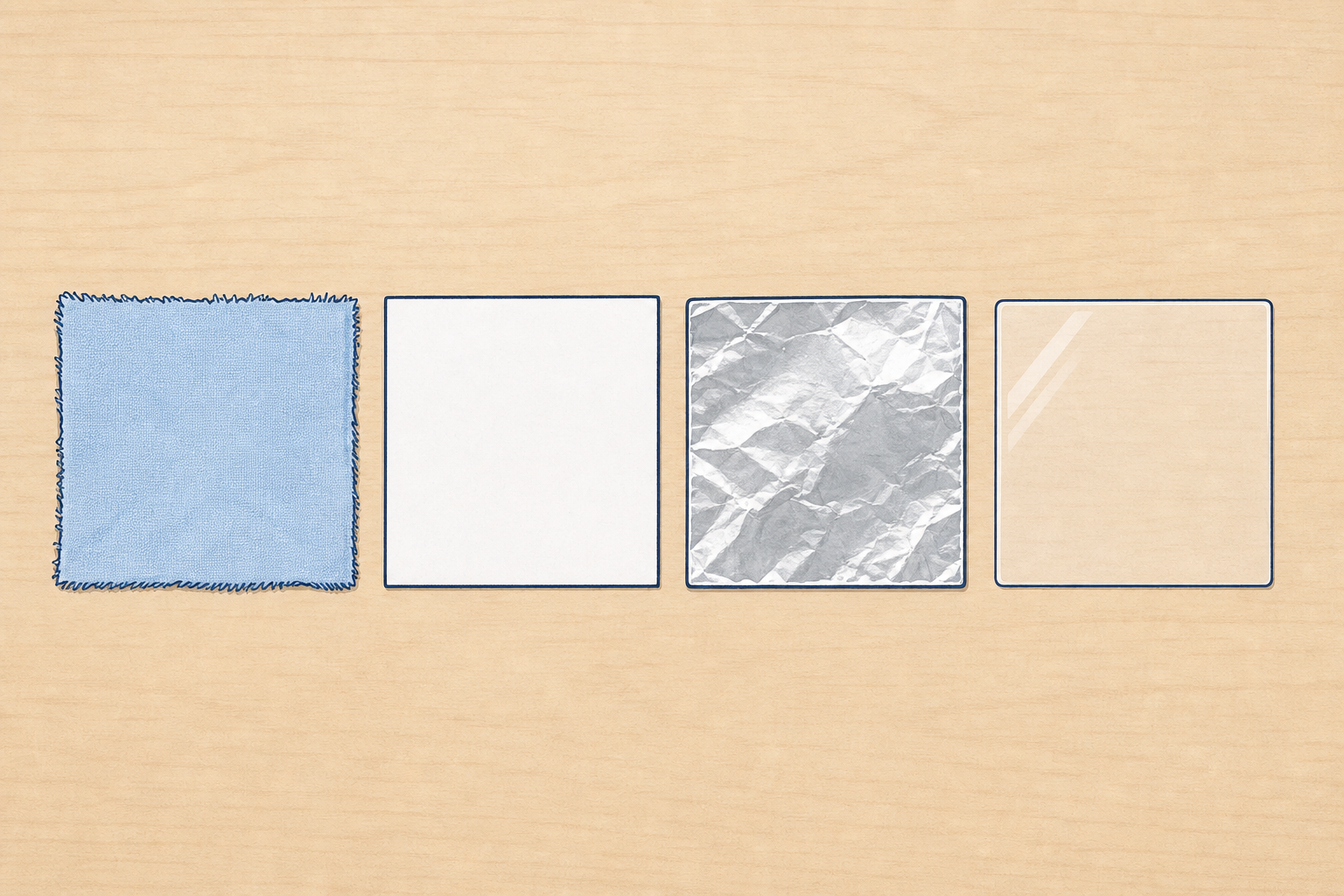
We will test four squares: our soft fabric square, paper, foil and plastic. Our question: which will keep water out, and which will let water through?
Board version only above: two load-bearing words with one short line each. Do not project the full table.
Treat material as an oral label only. Hold up each of the four dry squares briefly as you name them (soft fabric square, paper, foil, plastic) so the objects and the words link. Say: Material means what something is made of while you show them. Keep trays and water off the tables still.
| Concept | Why it matters | Example |
|---|---|---|
| Waterproof — a material that keeps water out so drops sit on top or run off instead of going through | Choosing a waterproof material keeps us dry in Irish rain and keeps bags and books safe | Rain beads on a plastic lunchbox lid and runs off instead of soaking in |
| Absorb — when a material soaks water up so the water goes into it | Absorbent materials are useful for wiping spills, but a poor choice for a coat | A paper towel soaks up water from the tray; our soft fabric square and paper often do the same |
| Material — what an object is made of (fabric, paper, foil, plastic) | Different materials behave differently with water, so we pick the right one for the job | Foil wrap, a cotton scrap, copy paper and a clear plastic wallet square |
Misconception to head off: children may say thick things are always waterproof. Thickness is not the rule; some thin plastics keep water out and some thick fabrics let it through. Stick to what they see in the drip test. Also keep raincoat material separate from our soft fabric test square: ordinary cloth is not the same as coated raincoat material.
Ask: why might a window be glass or plastic, not paper?
Look at our four squares: soft fabric, paper, foil and plastic. For each one, will the water stay on top, or go through?
Whisper your best guess to your partner. Then, as we do a quick class hands-up for each square, mark your own prediction on your Investigation Journal page. Predictions are the start of the science; they are not a test to get right.
Hold up each dry square in turn so the class can see and gently feel the edges (keep them dry for now).
Do not run four full partner discussions plus four separate tallies plus four slow journal writes. Keep one tight sequence:
If time is tight, drop the partner whisper and go straight from looking to hands-up-and-mark. The board tally is the shared class story; the journal marks are each child's own prediction record.
Optional reason stem only if a child offers one unprompted, or for one material at the end: I think the plastic will keep water out because…
What to expect: most children pick plastic and foil as waterproof and paper as not. The soft fabric square is often split; that is useful for the later talk.
Do not drip water yet. Observation recording comes after the drip test; predictions must already be on the page before water appears.
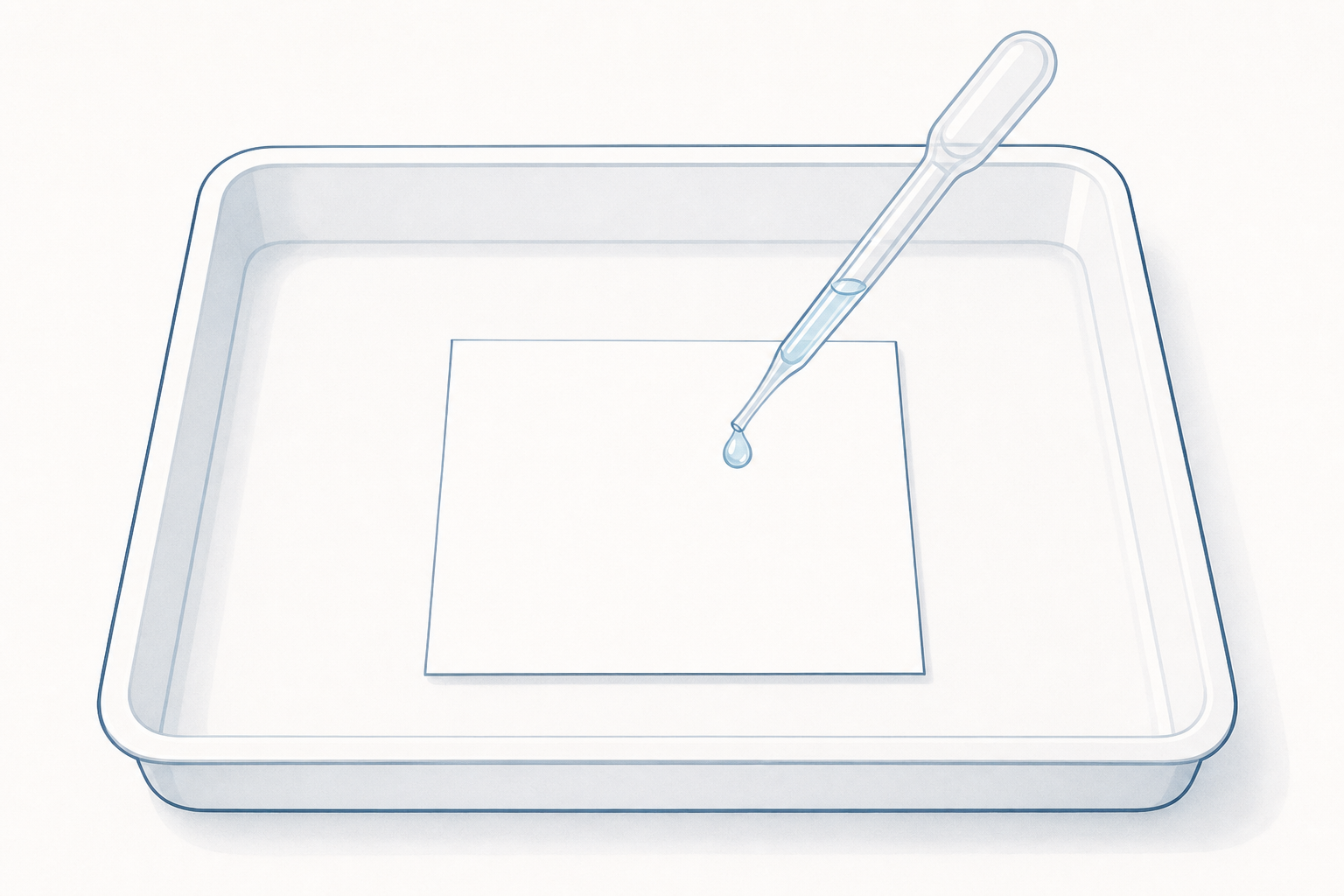
First I will show you how we drip water on one square. Then each group will take turns at your tray. Watch closely every time: does the water stay on top, soak in, or drip through onto the tray?
We drip the same small amount of water the same way on each square so we can notice how the materials are different.
If a group is slow after two materials, you drip the last two while they watch and agree the observation. Every group must still have comparable evidence for all four squares before recording.
I wonder: I wonder what will happen when I drip water on this paper square.
I predict: I think the water will soak in and maybe drip through, because paper soaks up spills.
I test: Hold the paper square flat over the tray with two hands (or rest opposite edges on the tray rim so the middle is free above the base). Use a dropper or spoon to drip about the same small amount each time (agree three drips or one small spoonful). Wait a few seconds.
I observed: The paper went dark and wet. Water came through onto the tray.
I think: So I think paper is not waterproof; it absorbs water and lets it through.
Name foil or plastic as the contrast they will see next at their trays. Do not declare results for materials the groups have not tested yet.
Groups of about four. One tray and one set of four dry squares per group. Same drip amount each time. Look from the same height; wipe the tray between materials if needed. Roles rotate each material: one holds the square, one drips, two watch and say what they see, then swap so everyone gets a turn across the four squares.
What to expect: paper usually soaks and may drip through; many soft fabric squares darken and let some water through; foil and plastic usually hold beads on top. If a square has a hole or crease, water may sneak through — name that as a clue about joins and damaged coats, not a failed test. Record what actually happened, even if it surprises you.
Safety: wipe floor spills straight away; sleeves rolled; no tasting water from trays.
Your predictions are already on your Investigation Journal page. Now record what you observed for each material while the trays are still in front of you.
You can use words like stay on top, soak in, or go through, or simple marks your teacher shows you. Keep what you thought would happen separate from what you actually saw.
Pupils use the paper Investigation Journal page. Do not describe page layout, columns or boxes; say only what to record.
Focus this step on observations from watching the water. Predictions should already be marked from the predict step; if a child missed a mark, add a quick one from the board tally before they write what they saw, so prediction and observation stay distinct.
Support writers with oral rehearsal first: I observed… Accept drawings of a dry top versus a wet tray, or simple codes (e.g. dry face / wet face). One clear observation mark or short phrase per material is enough for 1st Class.
Circulate and check they record evidence from the drip test, not only their first guess. If a group's foil leaked through a tear, help them note what they saw honestly.
Differentiation: scribes or paired recording for children who need it; challenge early finishers to add one everyday object that matches a waterproof material they tested (spoken or a quick extra sketch on spare paper, not a second journal task).
You're previewing this lesson. Get full access to this lesson and hundreds more — each one ready to teach, with interactive activities, printable resources and pupil progress tracking built in.