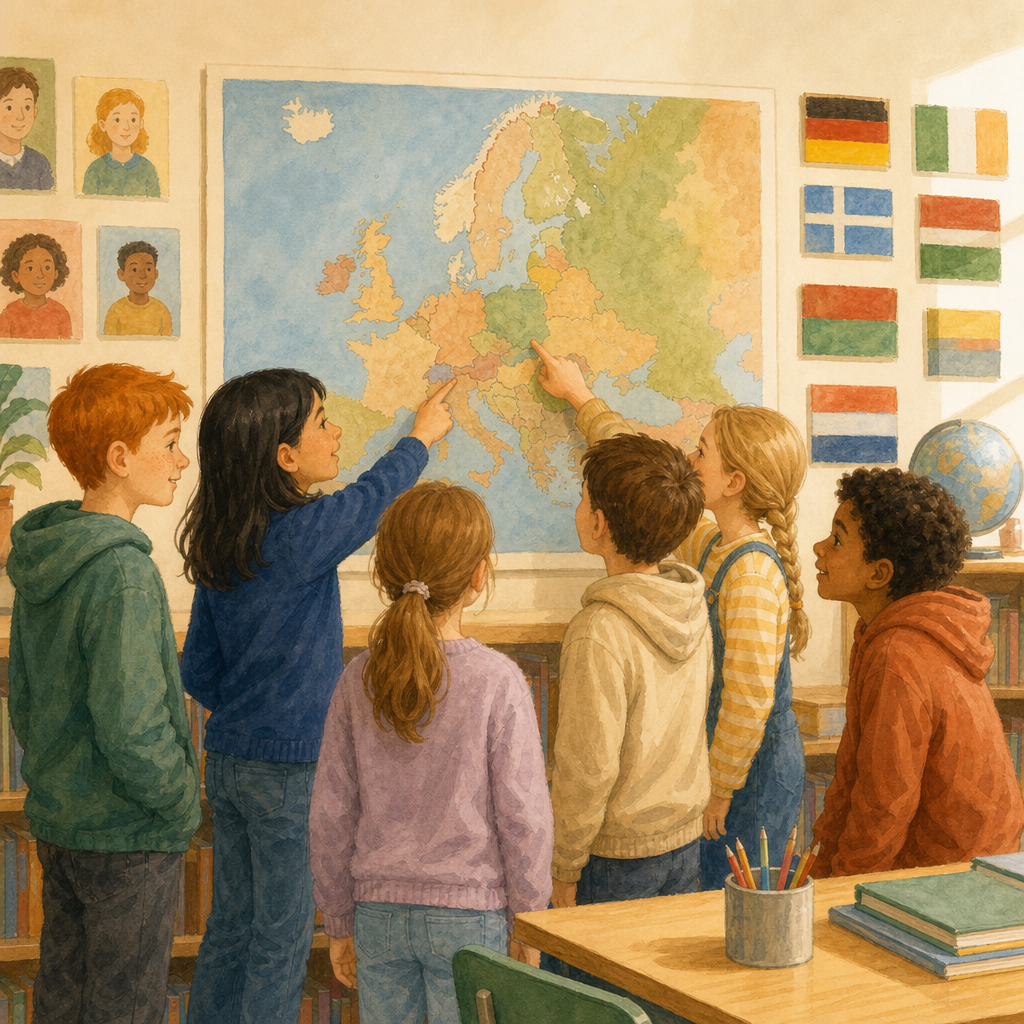
 Many languages around the world are losing their last fluent speakers. Somewhere, a last fluent speaker stops speaking, and with them goes a whole way of naming the world.
Here is the hard question first: if everyone left can already understand each other in a bigger language, does it matter?
By the end of this lesson, you will be able to:
- Say what can be lost when a language stops
- Find European languages with very few speakers on a map
- Take a position you can defend on who should decide whether a language is worth keeping
Open the map of Europe. Click a country and look for regional or minority languages. If the map shows a speaker number or size band next to a language, compare it with your own town: is it smaller?
You might land on a language such as Sorbian in Germany, spoken by fewer people than live in many Irish towns. Which names on the map have you never heard of?
Listen to each clip and guess the language. Some of these languages have millions of speakers. Some have very few. You cannot tell which is which just by listening. That is the point.
Open your copy. Write what you think is lost when a language stops, in your own words. If you think nothing is lost, write that and say why.
This is your position. There is no single right answer, but there should be a reason.
💬 Discussion time
A number of languages worldwide are losing their last fluent speakers. That is not a far-off story. It is happening now.
Share one line from what you wrote. Listen for the reasons people give, not only the side they chose.
Use a sentence frame if it helps:
- I think what is lost is ___ because ___.
- I think ___ should decide whether a language is kept, because ___.
- If only a few people still want a language, I think ___.
Unlock the full learning experience
You're previewing this lesson. Get full access to this lesson and hundreds more — each one ready to teach, with interactive activities, printable resources and pupil progress tracking built in.
This lesson is copyright of Coding Ireland 2017 - 2026. Unauthorised use, copying or distribution is not allowed.