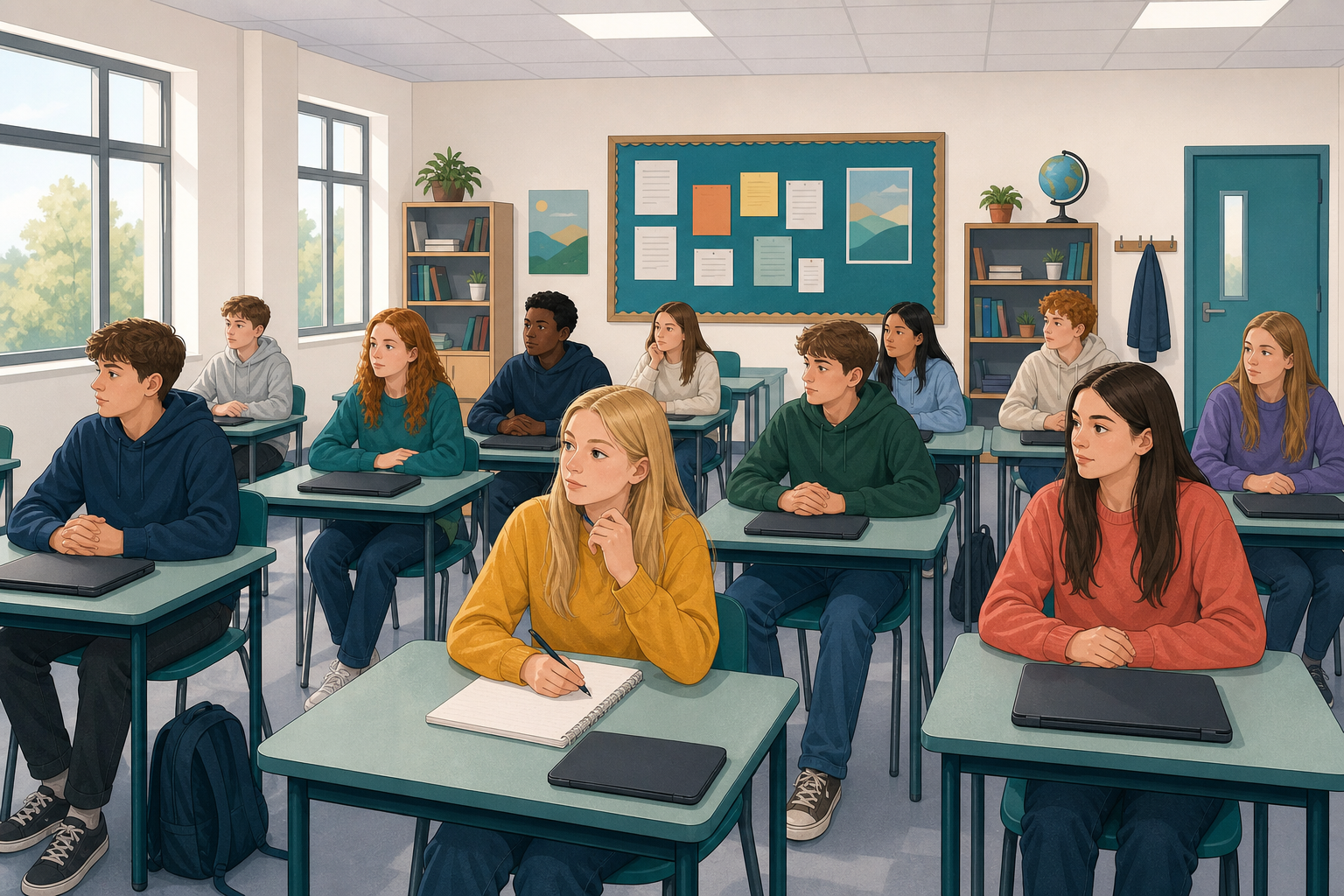
 Last time, you published your piece or chose to keep it back. Today you will think about how publishing felt, what a viewer should have taken from your piece, and what you would do differently. By the end, you will choose one habit to keep for everything you publish.
Now take thirty seconds in silence. Pick one word for how publishing felt, or how nearly publishing felt, and remember it for later.
 Making is mostly about you. Publishing adds other people, because someone else can now read your piece, share it, misunderstand it or act on it.
Keep these three questions in mind for the rest of the lesson. There is no single right answer to any of them.
- What felt different about publishing rather than making?
- What should a viewer have understood from your piece, or from all the class's pieces taken together?
- What would you change if you published again tomorrow?
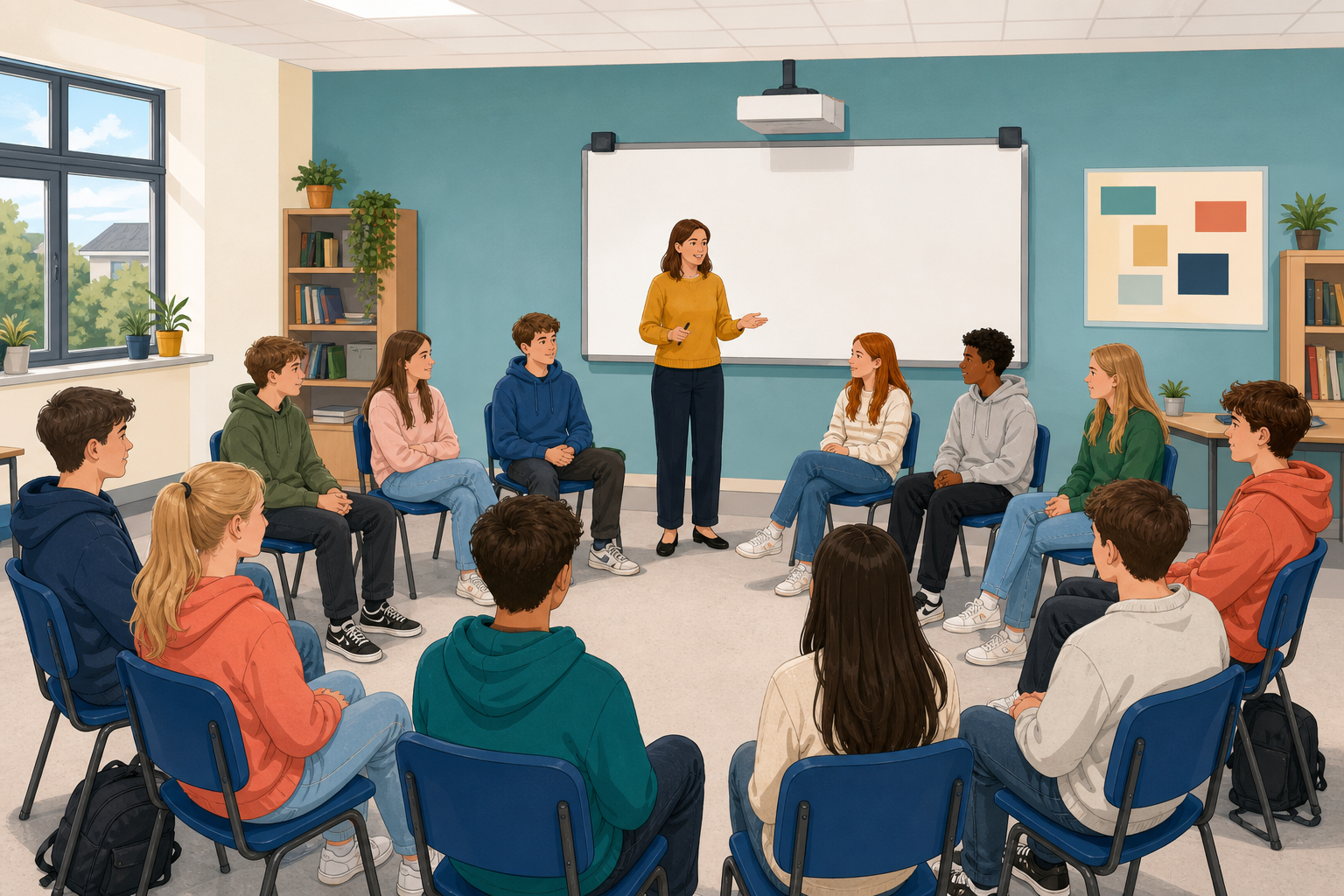
Work with a partner and talk about your own piece if you can. If you did not publish, use a draft you nearly shared, or a classmate's piece they are happy to talk about, without sharing personal details.
Talk about the choices you made and your responsibility to others. Do not rate each other's pieces, and do not push anyone to share something they kept private on purpose.
Round 1: what felt different (about 10 minutes)
- Tell your partner your one word, and one sentence explaining it.
- Then finish this sentence out loud: "Publishing felt different from making because..."
- If you get stuck, pick one of the ideas in the box below to talk about. One of them mentions consent, which means permission from the people in your piece.
- Then two or three pairs write a short phrase on the board, so the class builds a list of differences.
- A real person might read it.
- You thought about who could see it.
- You did a last check on consent.
- You checked a credit or a fact.
- You felt proud, exposed or relieved.
- You realised you could not quietly keep changing it forever.
Between rounds (about 3 minutes, in silence)
- Silent write (about 90 seconds). On paper or in a private note, finish this sentence: "Publishing felt different from making because..." You can read from it in Round 2, when you work in a small group.
- Short task (about 90 seconds). Look back at your piece, or think back to it. Write down one line you would add or cut to make it clearer for a viewer. Keep the note for Round 2, but do not change the piece itself.
Now work in a small group, with the same piece and ground rule as before.
Round 2: takeaway and one gap (about 12 minutes)
1. "If a viewer only remembered one thing from my piece, I would want it to be..."
2. "The piece made X clear, but left Y fuzzy."
Examples of gaps: the viewpoint was clear but the sources were fuzzy; the topic was clear but what to do next was fuzzy; the credits were careful but the opening was weak.
- First, on your own, write the first sentence on paper. You can look at your piece but not edit it. If you did not publish, use your draft or a classmate's topic.
- Then, as a group, use the second sentence to name one gap.
- Pick one person to report to the class. They say only the type of gap, never whose piece it was, and your teacher adds it to the list below.
- Then the class picks the three gap types that come up most, and your teacher ticks them.
Gap types on the board
Unlock the full learning experience
You're previewing this lesson. Get full access to this lesson and hundreds more — each one ready to teach, with interactive activities, printable resources and pupil progress tracking built in.
This lesson is copyright of Coding Ireland 2017 - 2026. Unauthorised use, copying or distribution is not allowed.