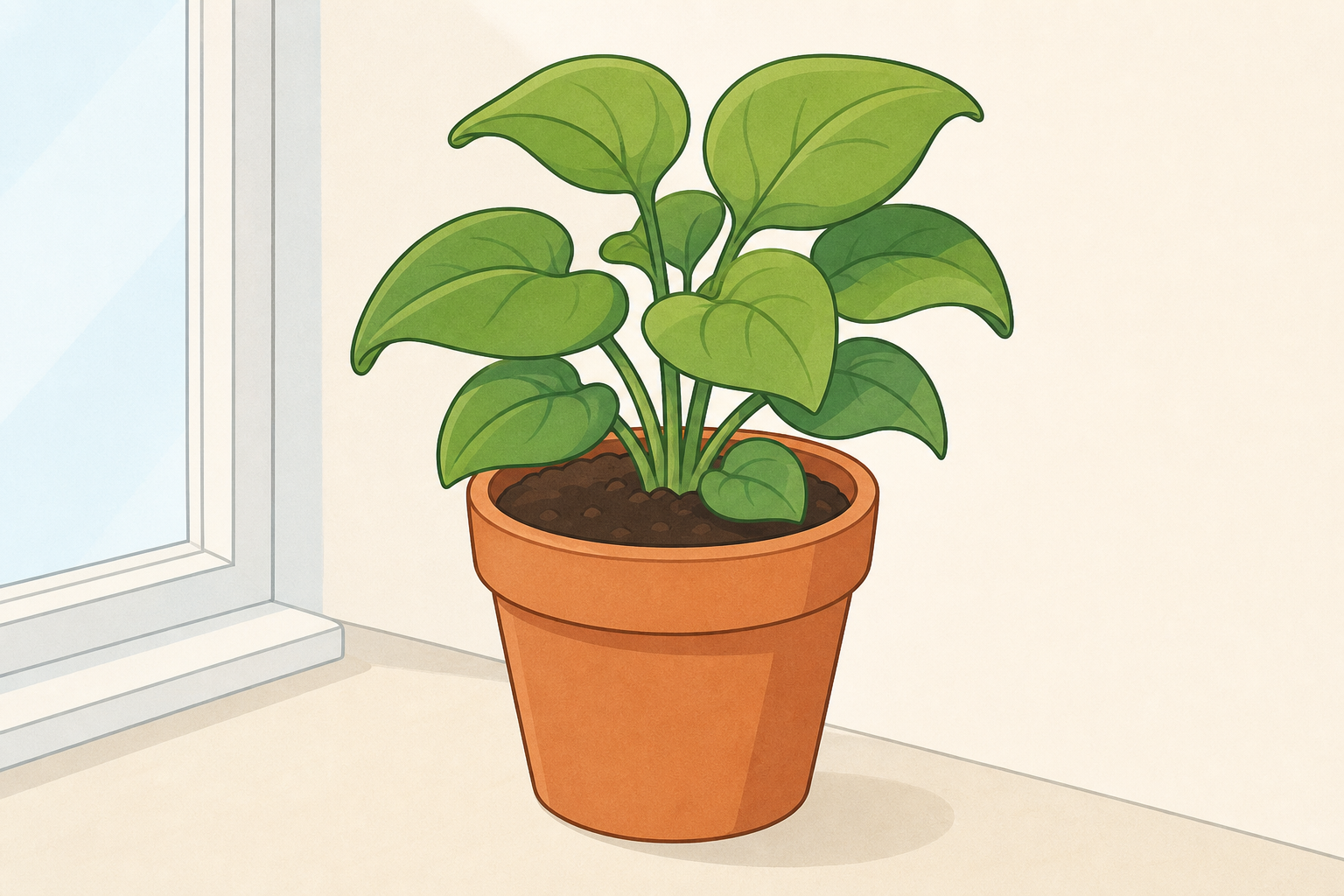
Look at our plant. What do you think it needs so it can keep growing? What might a little bird or a snail need outdoors too?
Keep this beat light and curious. Hold up the potted plant so everyone can see it. Invite two or three quick guesses. Do not name water, food and a safe place yet. Guesses are never wrong at this age; they start the fun.
Key question: What does a living thing outdoors need so it can live and grow?
Before the lesson: place the potted plant where children can see it; print the provided garden-animal photo cards, three full sets of needs picture cards (water, food, safe place), and heading pictures; clear a small strip of noticeboard or wall space for the class needs chart (no large sheet to prepare).
Look at our plant together. Down in the soil, the roots drink water. The green leaves help the plant make its food using light from the window. The pot of soil is its safe place to stand and grow.
Which part drinks the water?
| Concept | Why it matters | Example |
|---|---|---|
| Roots drink water — the part under the soil that takes in water | Gives children one concrete part to point at when we say plants need water | Point to the soil in our pot and say the roots are drinking down there |
| Leaves and light — green leaves help the plant make food using light | Lets us talk about plant "food" without sounding like the plant munches lunch | Hold a leaf gently toward the window light |
| Safe place in soil — the pot or bed where the plant stands and grows | Links straight to the safe-place need on our chart | Pat the side of the pot gently and say this is where it lives |
No interactive on this step. Use the real pot plant only. Kneel so children can see. Point to the soil for roots drinking, to a leaf toward the light, and to the pot as its home. Do not run a four-part naming drill (roots, stem, leaf, flower). Stem and flower may be noticed in passing if a child points, but they are not the load of this beat.
Ask only: Which part drinks the water? (roots, down in the soil). Say aloud: plants drink water with their roots; leaves help them make food in the light; the soil in the pot is a safe place to grow.
Misconception to head off: children may say plants "eat" soil or munch lunch. Gently revoice: plants do not eat the way we do. They drink water with their roots and make food in their leaves with light.
Who helps us (preview only, one line): a gardener waters plants and finds them a good sunny spot. Save the fuller helper talk for the chart step with mime.
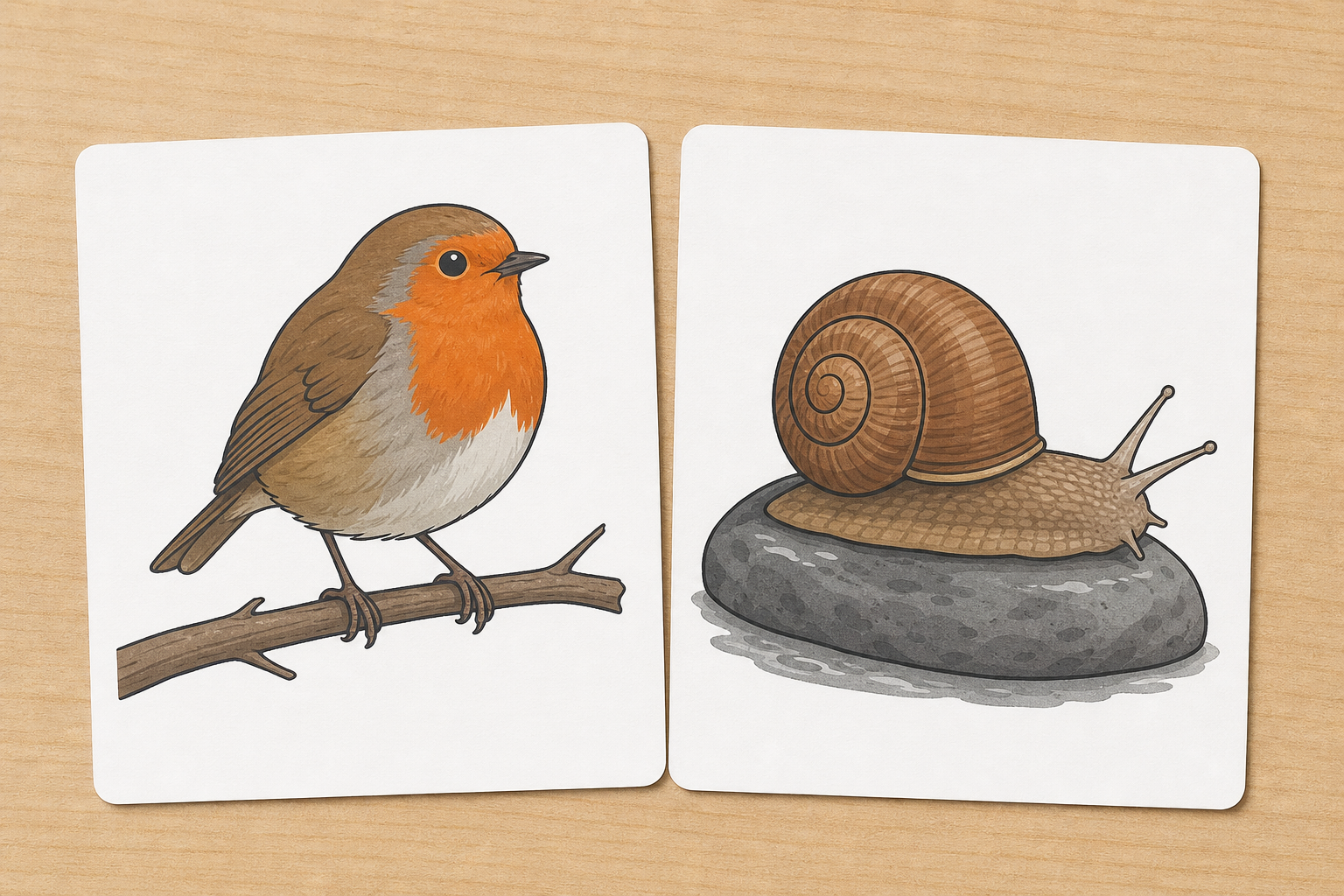
Look closely at our plant. Now look at the robin card and the snail card. What do you notice? What do you think each one needs outdoors?
Hold up the real potted plant, then the robin photo card, then the snail photo card. Keep the talk short. Children point and say one thing they notice. Accept every idea. You are priming the next carpet talk, not teaching the full chart yet.
Prompts:
Print the provided garden-animal photo cards (full card texts below). One teacher set is enough for whole-class showing.
Card A — Robin: A small bird with a red front. Robins hop in Irish gardens and school yards. They look for tiny bugs and worms to eat, and they drink from puddles. A robin needs a safe nest spot in a hedge or bush.
Card B — Snail: A soft little animal with a hard shell on its back. Snails slide slowly on leaves and damp soil. They munch soft green leaves and like a cool, damp hiding place under a stone or leaf.
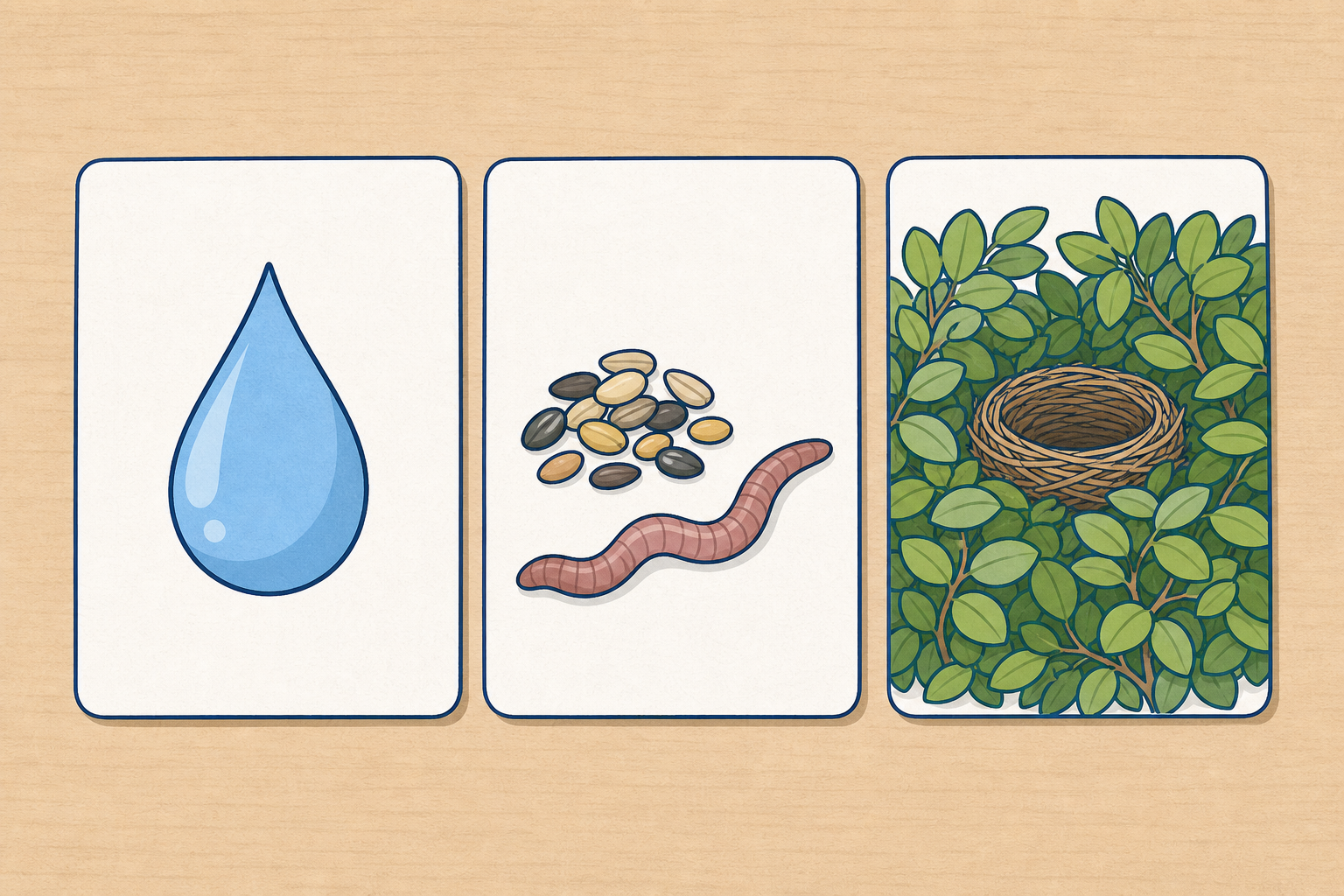
Here are three picture cards. This one is water. This one is food. This one is a safe place.
We will look at our plant, then the robin, then the snail. For each one we ask: Does it need water? What about food? Where is its safe place? Point to a card when you have an idea.
Everyone stays on the carpet or gathers at one low table. There are no parallel stations and no group rotations. You show one living thing at a time with one shared set of three needs cards. Keep each living-thing burst short (about three minutes), with a breath between.
You need within arm's reach: the potted plant, robin photo card, snail photo card, and one set of three needs picture cards (water, food, safe place). Extra sets stay aside for the wall chart in the next step.
Card W — Water: A picture of a raindrop or a small puddle. Living things need water to drink.
Card F — Food: A picture of a leaf and a tiny worm. Living things need food for energy to grow and move.
Card S — Safe place: A picture of a nest in a hedge and soil in a pot. Living things need a safe spot to rest and stay well.
1. Show the three needs cards first (about 2 minutes). Hold up water, food and safe place one at a time. Children chorally name each card and point. Do not move on until the three words feel familiar.
2. Plant (about 3 minutes). Place the pot in the middle. Ask the three questions, pausing for pointing and talk:
Modelled think-aloud at the plant (once, short):
3. Robin (about 3 minutes). Swap plant for robin card. Same three questions. Expect: water from puddles; food bugs and worms (munching food); safe place nest in a hedge.
4. Snail (about 3 minutes). Same three questions. Expect: damp places for water; soft leaves for food; under a stone or leaf for a safe place.
What to expect: children often name food and water first; prompt safe place with Where does it sleep or hide? For the plant, keep "food" tied to leaves and light so it does not sound like animal eating.
Differentiation: less confident children point to a card while you voice the sentence. Confident talkers add one extra idea ("the robin might hide in the hedge when it rains").
Safety: do not taste the plant; gentle hands on the pot; wash hands after any touch of soil.
Timing honesty: roughly 2 minutes introducing the three cards + about 3 minutes each for plant, robin and snail, including tiny transition breaths. Stay whole-class; do not try to split into trays.
Let's build our class chart on the wall. What does the plant need? What does the robin need? What does the snail need? We will pin a water card, a food card and a safe-place card under each one.
Who helps living things get what they need? Watch: a gardener waters plants and finds them a sunny spot. People can help look after animals too. A vet helps when a pet is sick. Outdoors, hedges and damp stones give robins and snails a safe place.
Whole-class gathering on the carpet facing a clear strip of noticeboard or wall (or use the IWB if wall space is tight). Place three heading pictures already pinned: Plant, Robin, Snail. Children help you pin or place needs cards under each. There is no large chart sheet to prepare; the pinned cards on the wall are the chart.
Cards needed for a lasting chart: use the three printed sets (nine cards in total) so water, food and safe place can sit under Plant, under Robin and under Snail at the same time and stay displayed. Do not try to build three columns with only one set of three cards.
Draw out:
Who helps us (concrete anchor, keep short):
Display-only: children talk, point and help pin. Nothing is typed. There is no Investigation Journal page for this lesson.
You're previewing this lesson. Get full access to this lesson and hundreds more — each one ready to teach, with interactive activities, printable resources and pupil progress tracking built in.