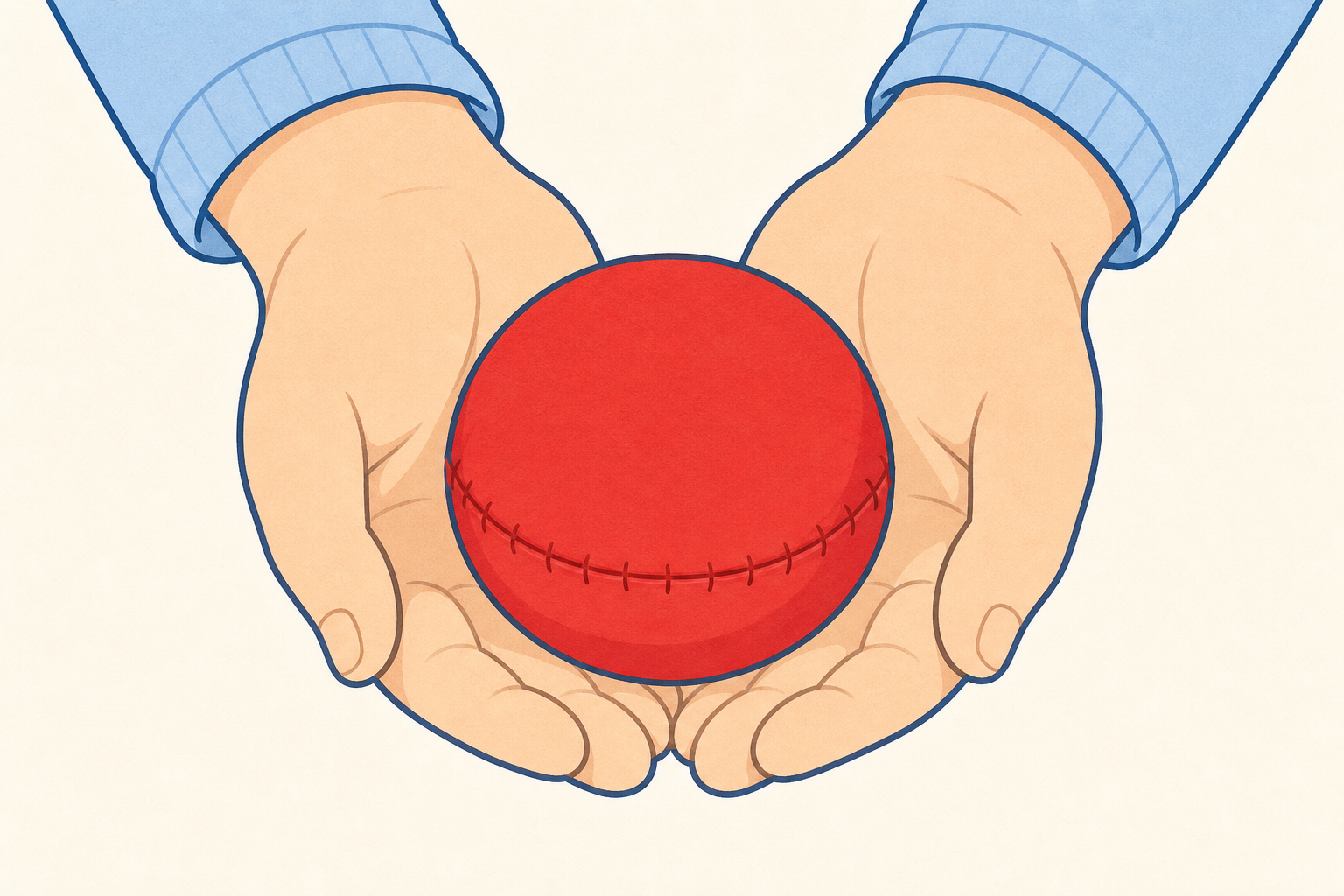
Watch my hands. What are they doing? What are they helping me do?
What else can our body parts help us do?
Stand where everyone can see you. Hold a soft ball, then clap once, then hop on the spot. Keep it playful and short. Do not use the word job yet; that comes in the next step.
Ask: What were my hands doing? What were my feet doing? Accept every idea. Guesses are never wrong; they start the fun.
Before the lesson: clear a small open floor space for hopping; print the provided action picture cards; set out soft balls and beanbags at station spots around the room.
Have one soft ball ready in your hand for the hook only. Do not lay out the full carousel yet.
Here is our special word for today. Job means what a part of our body helps us do.
Our hands can hold a ball. Our feet can hop on the spot. Our eyes can look across the room. What can your hands help you do?
| Concept | Why it matters | Example |
|---|---|---|
| Job — what a body part helps us do | When we know each part's job, we can use our bodies safely and well for play, learning and sport | Hands hold a beanbag; feet hop on the spot; eyes look at a friend across the room |
Modelled notice cycle (do this live, thinking aloud):
Then invite the class to wiggle fingers, stamp feet gently, and blink eyes. Keep vocabulary simple: job, hands, feet, eyes, hold, hop, look, clap.
Misconception to head off: some children may think only big sports moves count as jobs. Everyday jobs count too: holding a cup, looking at a picture, hopping to the door.
Nature of STEM weave (light touch): a sportsperson trains body parts so each one can do its job well. We will meet that idea again at the end.
Look at the child on the board. We will put the labels on together: head, eyes, arms, hands, legs and feet.
Which part helps us hold things? Point to it on your own body first, then help us place the label on the board.
Open the interactive activity on the IWB in explore mode. Labels start off the figure. Nothing is pre-answered. You (or a confident volunteer) place each label only after the class has decided.
Run each job as a short decide-then-place beat:
Job sequence:
Fold the whole class in: Are you pointing to the same part as your friend?
Keep this brisk. The carousel is next.
Visit the short stations with your group. At each stop, try the action on the card.
You might hold a soft ball, hop on the spot, clap your hands, or look carefully for something red. Which body part is doing the work?
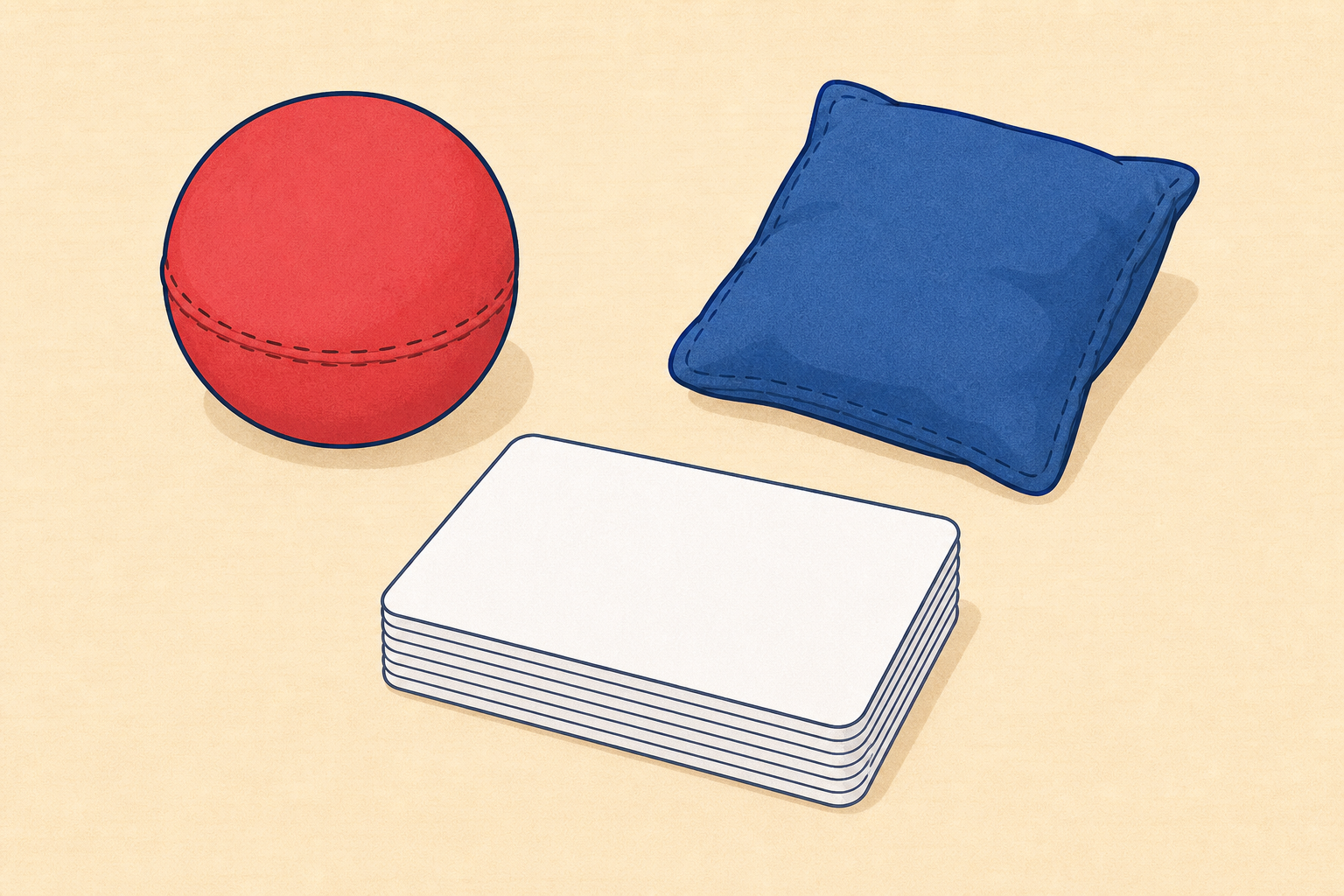
Print the provided action picture cards (one class set). Place station spots around a clear floor space. Put soft balls and beanbags at the Holding station. Keep pathways clear.
Split into about four small groups (roughly 4–6 children each, depending on class size). One adult leads the whole room; you stay mobile rather than staffing every station.
Card A — Holding: Hands holding a soft ball. Teacher prompt: Can your hands hold the ball or beanbag?
Card B — Hopping: A child hopping on two feet. Teacher prompt: Can your feet hop on the spot?
Card C — Clapping: Two hands clapping. Teacher prompt: Can your hands clap a steady beat?
Card D — Looking: Eyes looking carefully. Teacher prompt: Can your eyes look for something red in the room?
Four stations. Rotate with a quick freeze-and-listen signal so bursts stay short (about three minutes per station, including the move). At each stop, read the card prompt, let children try the action, then ask: Which body part did the work?
Use this planned skip order so hold, hop and look still happen:
You stay mobile. Model once at the first station if a group is unsure. Celebrate effort, not perfection. Hopping can be a gentle bounce on two feet for children who find one-foot hops hard.
Safety: soft balls only; hop on the spot in the marked space; no throwing toward faces; stop the group if the floor gets crowded.
Differentiation: less confident children copy your action first; confident children add a second job at the same station (for example hold, then pass the beanbag to a partner gently).
Show us one job you tried. Use your body only. No talking first.
Now tell us which body part did the work.
Gather on the carpet. Invite a few volunteers (or whole-class simultaneous action) to show one station job: hold, hop, clap or look.
Pattern for each share:
Listen for the link between action and body part. If a child shows the action well but cannot name the part, offer a choice: Hands or feet?
Look-fors: child can show at least one tried job with their body; child names hands, feet or eyes (or head for looking) with support if needed.
There is no Investigation Journal page this lesson. Keep the record oral and physical only — no writing.
What job did your hands do today? What job did your feet do? What job did your eyes do?
A county footballer uses feet to kick and eyes to watch the ball — just like our body parts practised their jobs today.
Whole-class oral make-sense talk. Revoice children's words so the science idea is clear: each body part has a job.
Stay on the jobs they just tried first:
Nature of STEM weave (one breath only): A county footballer trains feet to kick and eyes to watch the ball; a dancer trains arms and legs to move safely. Keep it warm and real — no biography, no abstract talk about "training".
Ask one closing question: Which body part's job do you want to practise at playtime?
Display-only discussion. Nothing is typed or saved on screen.
Soft balls and beanbags go back in the tub. Cards in a neat pile.
Well done, body helpers!
Assign quick jobs: two children collect balls, two collect beanbags, one gathers cards. Check the floor is clear so no one trips.
End with a class stretch: wiggle fingers, stamp feet gently, blink eyes. Affirm: Today we found out that each body part has a job.
You're previewing this lesson. Get full access to this lesson and hundreds more — each one ready to teach, with interactive activities, printable resources and pupil progress tracking built in.