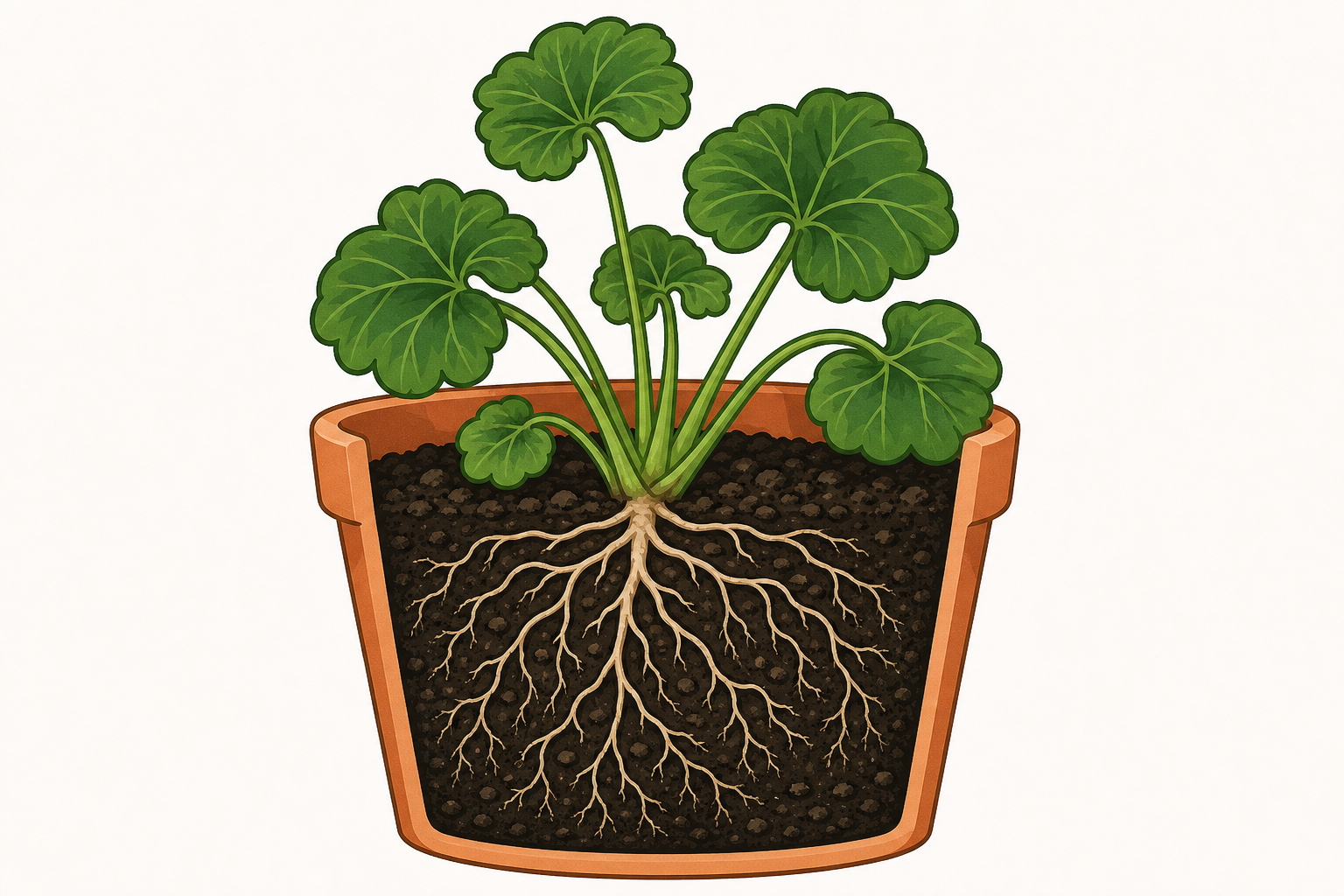
Look at these two plants. One looks strong and green. One looks floppy and dry. What do you notice that is different? What do you wonder about the floppy one?
Must prepare 2–3 days ahead: leave one plant without water for two or three days so it looks thirsty (droopy leaves, dry soil). Water the other as usual. Without this lead time the healthy-versus-thirsty contrast will not show.
Same-day fallback if the thirsty plant was not prepared: use two clearly different plants or cuttings side by side (one firm and green in moist soil; one wilted, pale, or in dry soil from a dry spell), or show a clear photo pair of a healthy plant and a wilted plant next to one real healthy plant. Still invite children to notice colour, leaves and soil.
Have the two plants ready side by side on a tray at the front. Do not name the helpers yet. Let children call out what they see: colour, leaves standing up or drooping, dry soil. Ask: What do you wonder about the floppy one? Keep this beat light. The full look comes next.
Also before the lesson: print the provided helper picture cards and garden-animal picture cards (full card texts are in steps 2 and 3). Clear a stretch of wall or noticeboard for the class flourish chart. Print the Investigation Journal page for each child.
Look at our two real plants. What is different about the strong green one and the floppy dry one?
Plants drink water through their roots in the soil. That is one thing that helps them.
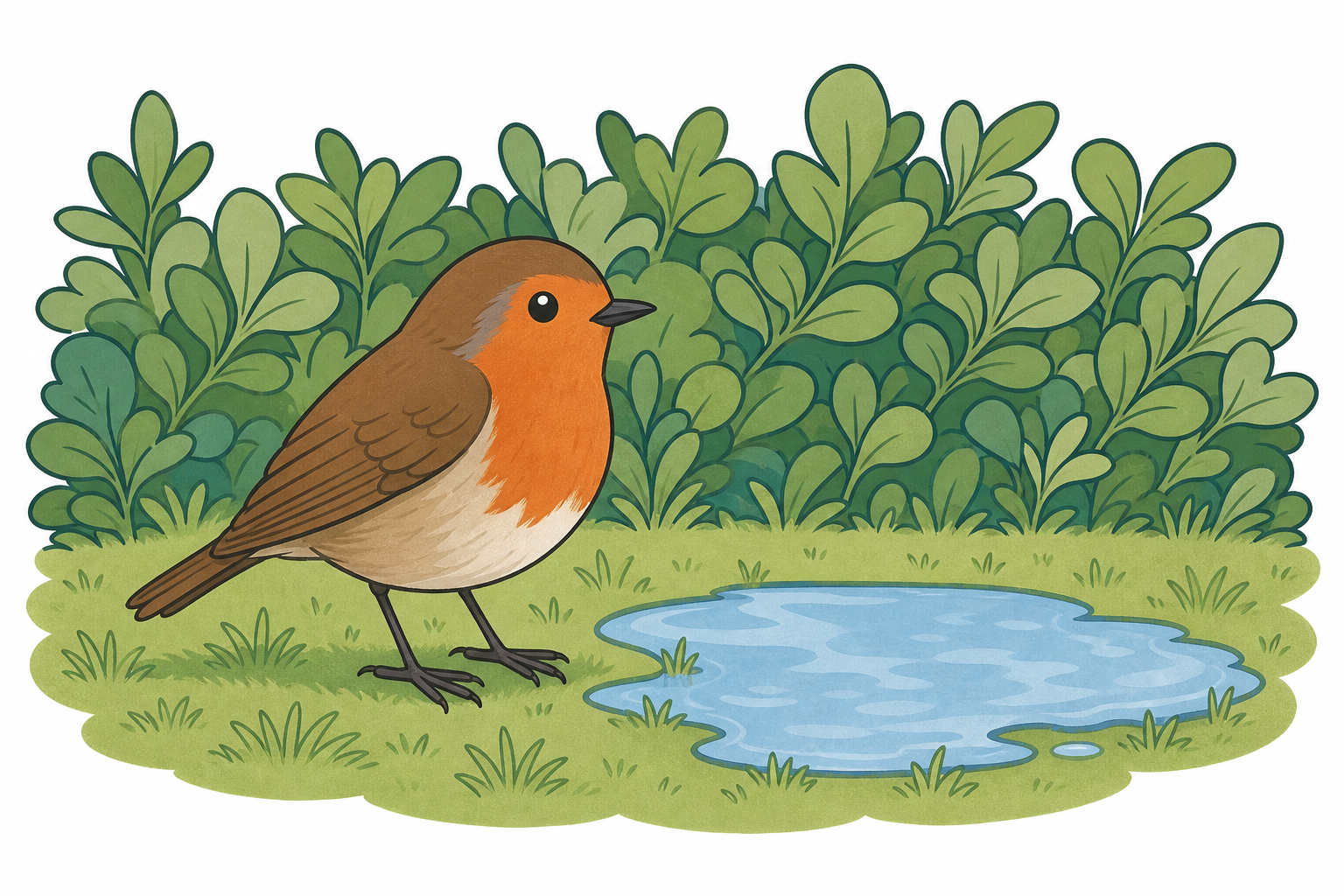
Here is a robin. What might this robin need outside so it can stay well?
Keep this step light. The big new idea today is flourish (grow strong and stay healthy). Spend most of the time on the real-plant contrast. Plant parts are one quick line only, tied to water and roots, with no board diagram and no full part list to learn.
Hold up the two real plants. Invite short observations: healthy plant has firm green leaves; thirsty plant is floppy with dry soil. Spend unhurried whole-class time here so every child notices the contrast. This comparison carries learning objective 1 and the later water link.
Then point once to the soil and roots of the healthy plant and say: Plants drink water through their roots. Class can echo the word roots. Do not name stem, leaf or flower as new vocabulary in this lesson.
Show two or three garden-animal picture cards (start with the robin; add hedgehog or frog if time). Hold one at a time and ask with a concrete name: What might this robin need outside so it can stay well? Accept food, water, a nest, a burrow, sunshine for warmth. Do not sort yet. Tease only; the helper cards come next.
| Concept | Why it matters | Example |
|---|---|---|
| Flourish — to grow well and stay healthy because you have what you need | Living things outdoors only do well when they get the right help | A well-watered plant in the school garden stands tall and green |
Water, food, sunshine and shelter are the helper-card set. Name them as cards appear in the sort and again in the make-sense talk; do not teach all four need-words as equal new concepts here.
Misconception to head off lightly if it arises: children may say plants "eat" the same way animals do. Gently say plants use sunshine, water and air to make their own food in their leaves; animals eat food they find. Save gardener and farmer for the make-sense talk.
Card 1 — Robin: A small robin with a red breast on a garden branch. Picture brief: side view of a robin on a bare winter twig, soft daylight. On-card text: Robin. Lives in Irish gardens and hedges.
Card 2 — Hedgehog: A hedgehog curled among dry leaves. Picture brief: hedgehog half-hidden under brown autumn leaves on soil. On-card text: Hedgehog. Rests under leaves and in quiet corners.
Card 3 — Frog: A green frog near a puddle or pond edge. Picture brief: small green frog at the edge of shallow water with grass. On-card text: Frog. Needs damp places and water nearby.
Card 4 — Worm: An earthworm on damp dark soil. Picture brief: brown earthworm on moist soil with a few leaf scraps. On-card text: Worm. Lives in damp soil under the ground.
To flourish means to grow strong and stay healthy. Here is our first helper card. Look at the picture.
Call out: does this help living things do well, or does it not help? Say one short reason. We will put the card on our wall chart.
Pin or stick two headings on existing wall or noticeboard space. Pair the grown-up word with the plain phrase children can say:
That pinned collection is the class chart. Keep the plain phrase visible beside the headings for the whole sort. Work as a whole class at the front. Hold up the first card before you finish the instruction so children act on a picture. Then hold one card at a time. Children's job is to look, call out which side, and say a short reason. Place the card under the heading. Watching children are still taking part when they call out.
Observation link: after a few cards, glance back at the two plants. Ask: Which plant had water? Which did not? Link the thirsty plant to the water card.
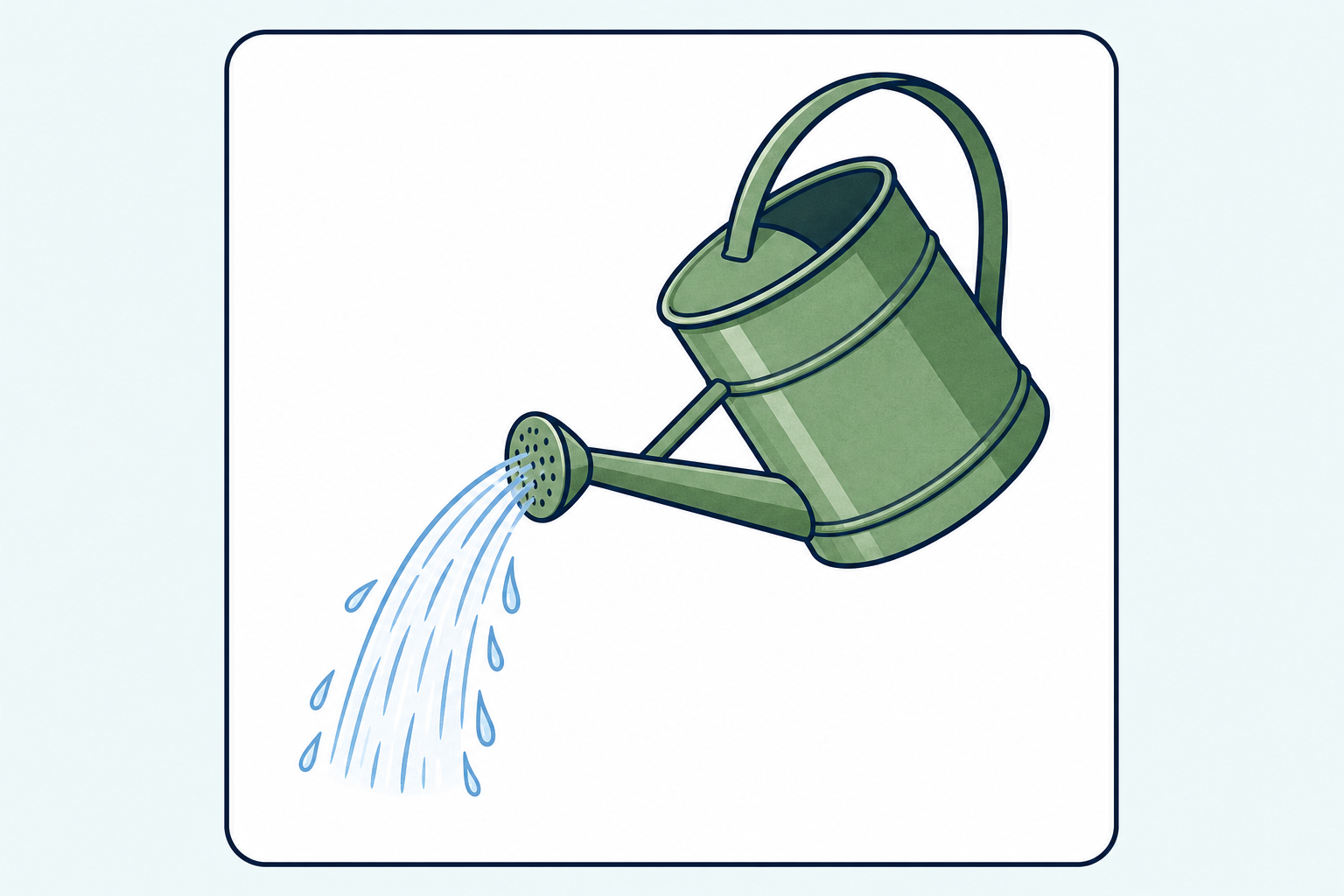
Card A — Water: A watering can pouring onto soil. Water helps plants drink through their roots. Animals need water to drink too.
Card B — Sunshine: A bright sun over a green plant. Sunshine gives plants light so they can grow strong and green.
Card C — Food: A robin with a worm and some berries. Animals need food to eat so they can move and grow.
Card D — Shelter: A bird nest in a hedge and a hedgehog under leaves. Shelter is a safe place to rest, hide and stay dry.
Card E — Dry dusty soil with no water: Cracked dry earth and a droopy plant. This does not help a plant flourish.
Card F — A dark cupboard: A plant shut away with no light. Plants need sunshine, so a dark cupboard does not help them flourish.
Card G — Nowhere safe to rest: An animal out in cold wind and rain with no nest or burrow. Nowhere safe to rest. This does not help the animal flourish because there is no shelter.
Card H — Rubbish left on the ground: Litter on grass near a flowerbed. Rubbish does not help plants or animals flourish.
Expected sort: A–D under Helps; E–H under Does not help. If a child places one wrongly, ask the class: Does this help the plant or animal grow strong and stay healthy? Why? Move it together.
If children put Card G under Helps because "rain is water": reply gently: Water to drink helps; being stuck outside with nowhere to hide does not. Point to the missing nest or burrow on the card.
Differentiation: less confident children point and say one word (water, sun, food, nest). Ready children add a short reason: It helps because…
Look at our finished wall chart. First, draw one thing from the side that helps living things do well.
Next, draw one thing from the does-not-help side.
Pencils down. Tell your partner one thing a plant or animal needs.
Hand out the Investigation Journal page. The wall chart is the shared answer key: children draw from what the class already sorted, not invent a private sort. Recording is mostly by drawing. Keep the demand small so every child can finish: one drawing from the helps side, then one from the does-not-help side. Emergent labels (water, sun, food, nest) are welcome where children are ready.
Sequence the room: draw helps first while the chart is in view; then does-not-help; only when most pencils are down, name partners (turn to the person beside you) and run a brief partner share. Circulate and ask each child to name one helper aloud. Keep the wall chart visible so they can look back.
This is the paper record for the lesson and must stay in class. Do not set it as homework. Do not invent extra columns or boxes; the journal page is generated from the lesson.
What helps plants and animals do well outdoors? Share one idea from our chart with the class.
A gardener waters plants. A farmer feeds animals. Who else helps living things get what they need?
Display-only oral talk in three short beats so children know whether to name a need or a person.
Beat 1 — needs only: Ask for one idea from the chart (water, food, sunshine or shelter). Revoice children's ideas. Point back at the healthy plant and the thirsty plant. Do not ask about people yet.
Beat 2 — people examples: Give the concrete lead-in yourself: A gardener waters plants and gives them light. A farmer feeds animals and gives them shelter.
Beat 3 — who helps: Only after those examples ask: Who else helps plants and animals get what they need? Draw out families who care for pets or the school garden.
Sunshine aside (keep light): sunshine helps plants make food and grow green; it can warm animals too, but animals also need food they find and a safe place to rest.
End with one shared sentence the class can say together: Living things need water, food, sunshine and shelter to flourish (grow strong and stay healthy).
Wash hands after anyone has touched the plants. Wipe the tray. Leave helpers pinned on the wall if you wish for a later look.
You're previewing this lesson. Get full access to this lesson and hundreds more — each one ready to teach, with interactive activities, printable resources and pupil progress tracking built in.