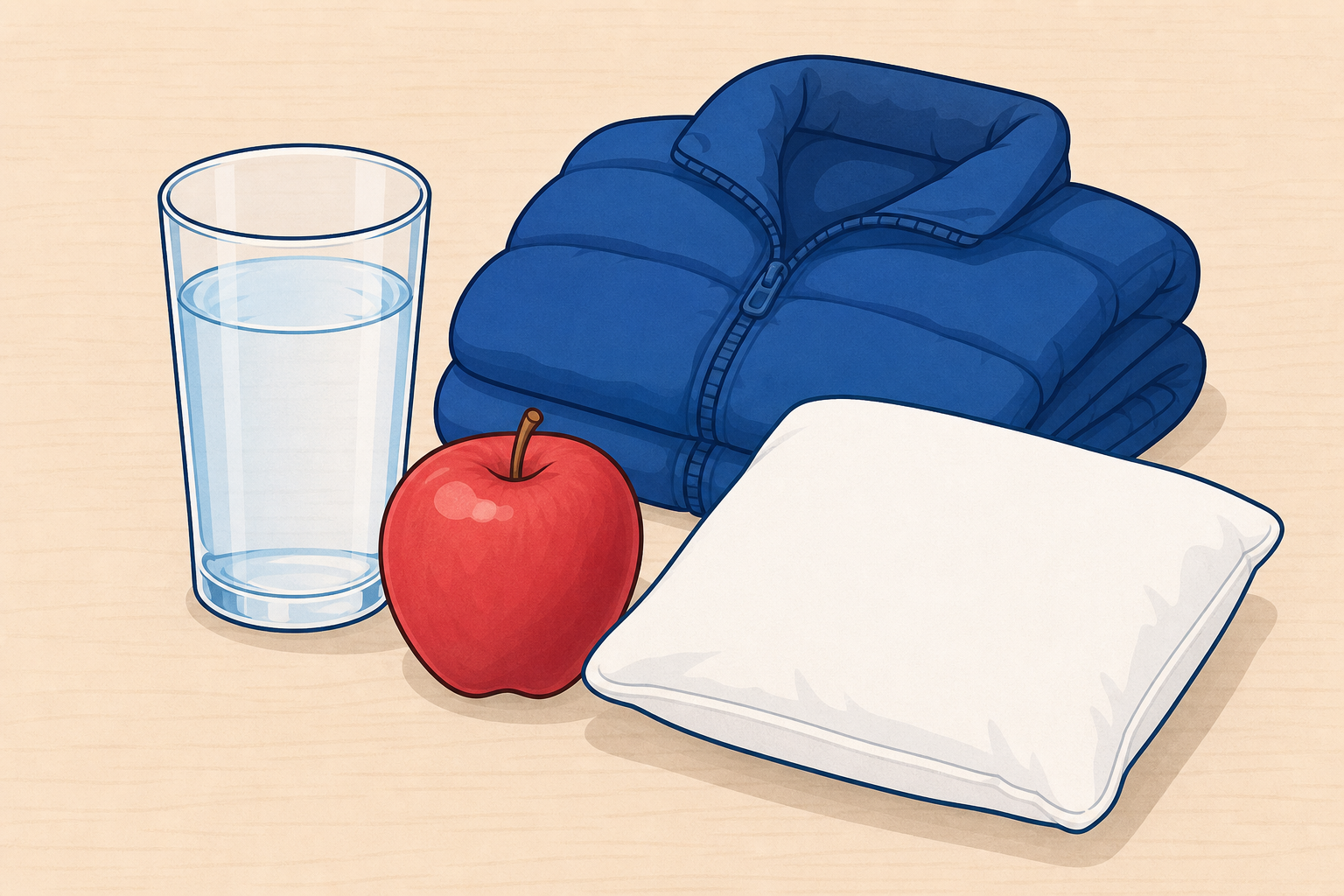
Your body has been busy since you woke up, even before the school bell.
Think about this morning. What did your body already need before you came to school?
Hands up: water, food, sleep, a warm coat, or a hug from someone who cares for you?
Keep this light. Do not hand out cards or start the sort yet. Surface a few everyday ideas from home and school so the class is ready to sort needs from wants.
Key questions: What helps your body grow? What is nice but not needed every day?
STEM eyes: link to things at home that meet our needs (a bed, a coat, dinner, clean water from the tap).
A need is something we must have to grow well. A want is something nice we can grow without.
Is a warm coat a need or a want on a cold Irish morning?
We can ask: does this help a body grow well, or is it just nice to have?
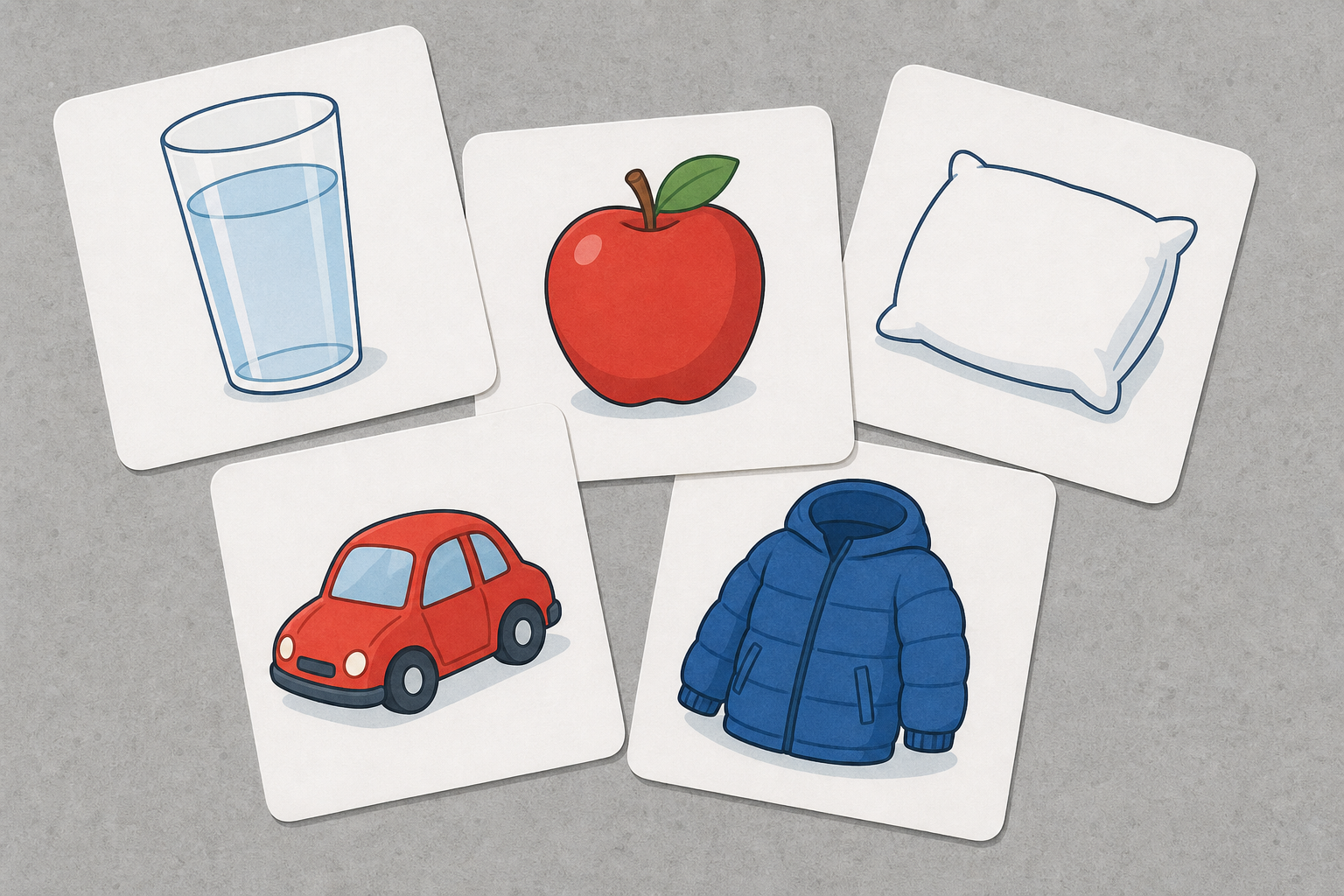
Project only the short board version above. Use the full table yourself. Keep the board to need and want only; save talk about food giving energy for the group sort (when dinner appears) and the later partner talk.
| Concept | Why it matters | Example |
|---|---|---|
| Need — something a person must have to grow well and stay healthy | Knowing our needs helps us look after our bodies every day | Water, food, air, sleep, warmth and care from people who look after us |
| Want — something nice to have that is not needed to grow well | Wants can be fun, but they are different from what keeps us well | Sweets, a toy, or an extra screen game after homework |
Misconception to head off: children may say every favourite thing is a need. Gently revoice: needs keep us growing and well; wants are extras we like.
Modelled cycle (say aloud before the sort): I wonder whether a teddy is a need or a want. I predict it is a want because we can grow without it. I check: does a teddy give food, water, air, sleep, warmth or care? No. I think a teddy is a want, and a warm jumper is a need on a cold day.
In your group, sort the picture cards into two hoops: things we need and things we want.
For each card, ask: does this help a person grow well, or is it just nice to have?
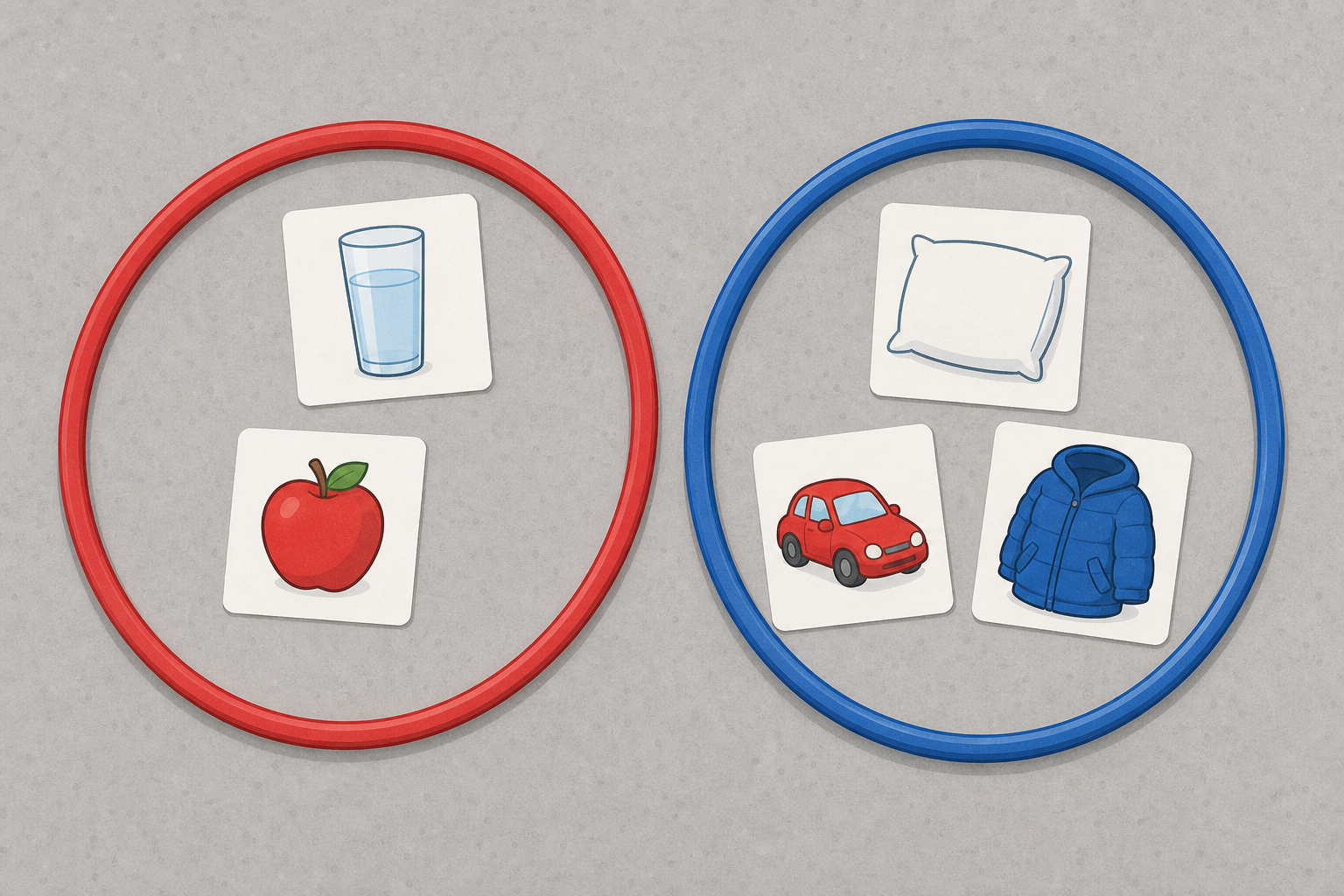
Print the provided needs and wants picture cards (one set per group). Place two hoops or two labelled sorting mats per group.
Card A — Water: A glass of water. People need water every day to stay well.
Card B — Dinner: A simple plate of food. Food gives energy to play and grow. When a group places this card, ask: What does food give your body energy to do at school?
Card C — Sleep: A child asleep in bed. Sleep helps bodies rest and grow.
Card D — Warm coat: A coat for cold weather. Warmth helps us stay comfortable and well.
Card E — A hug / care: An adult caring for a child. Care helps people feel safe and grow well.
Card F — Fresh air: Children playing outside. Air is something our bodies need all the time — we take it in when we breathe.
Card G — Sweets: A bag of sweets. Nice to have sometimes, not needed to grow well.
Card H — Toy: A toy car or doll. Fun to play with, not a basic need.
Card I — Extra screen game: A tablet game. Enjoyable, but not needed to grow.
Teaching tips: circulate and ask why each card went where. If a group puts food with wants, ask what their body uses food for and name that food helps legs run and brains think. Keep talk gentle; never rank anyone's lunch or home.
Differentiation: some groups start with four clear cards (water, sleep, sweets, toy). Confident groups take all nine and explain one tricky card to the class.
Help us sort a few school-day cards on the board. Is each one a need or a want?
Then we will build our class chart of things that help us grow.
Drive the sorting-tree interactive on the IWB with four new school-day cards (not the same nine as the hoop sort). Read the question aloud: Does a person need this to grow well? Pupils call out yes (need) or no (want). Drag each item into the matching group.
Hard cut-off: keep the four-card sort to about 4 minutes so the chart build is protected. The finished six-needs chart is load-bearing for the journal step; do not open journals until all six words are pinned or listed.
Expected groups and one-line why:
Fold the whole class in: if one pair answers, ask another pair whether they agree and why. Do not score or grade the interactive.
Protected chart build (do this before journals open): on existing wall or noticeboard space (or the IWB), pin or list things that help us grow as a complete set of six. Invite brief pupil suggestions from the hoop sort and write or pin each word only as the class names it: food, water, air, sleep, warmth, care. Do not display the finished six-item list on the board before the class has suggested the words. The finished chart must be visible before step 5.
Do not pre-display a finished needs chart before the lesson; the class builds it here.
Look at our class chart of things that help us grow.
On your Investigation Journal page, draw or write 2 things you need and 2 things you want.
Use the class chart to choose your needs. Wants are nice extras from home or school that are not on the chart — like a toy or sweets.
This is the in-lesson observation and recording beat. Do not set it as homework. Pupils use the finished class chart as the reference for needs and complete the Investigation Journal page on paper.
Chart vs wants: the chart only lists needs. Tell the class clearly that wants come from home or school examples that are not on the chart. Quick oral starters if a child freezes: water (need) and a toy (want); sleep (need) and sweets (want).
What good recording looks like: at least two needs and two wants placed correctly, with a simple picture or word in each part.
Prompt while they work: Which things on the chart do you use at home every day? Where does food give you energy — running, playing, learning?
No typing into the platform. Keep comments free of calorie language; talk about food as energy for play and growth only.
You're previewing this lesson. Get full access to this lesson and hundreds more — each one ready to teach, with interactive activities, printable resources and pupil progress tracking built in.