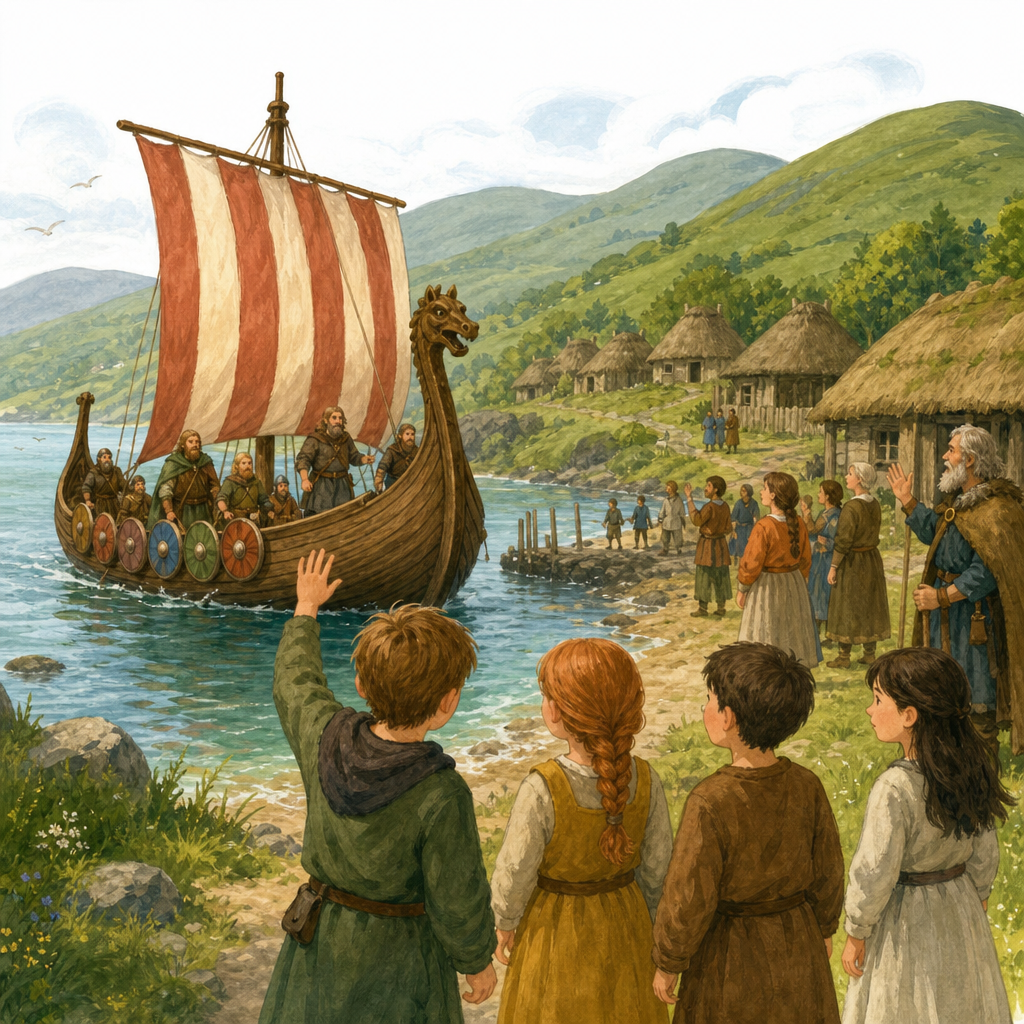
 Look at these three names: Waterford, Wexford and Carlingford. Say them slowly together. Something is the same in all three. It looks like an English word, but in these names it came from somewhere older.
Who named these towns, and what were they looking at when they chose the names? They were named by the Norse — the Viking settlers who sailed here from Norway and Denmark more than a thousand years ago — and a piece of their language is still sitting inside all three names.
By the end of this lesson, you will be able to:
- Spot the Norse piece hiding inside Irish harbour names
- Trace the sea road that brought those names to Ireland
- Talk carefully about people who arrived, stayed, and left their words behind
Watch as we tap a town on the map and the name comes apart. Listen for the piece that means an inlet where a ship could land. The ending that looks like English ford is actually something older.
Then look at Waterford's Irish name, Port Láirge. Its first word is our second word today: port, a landing place.
On the Europe map we start in Norway and follow the sea west towards Ireland. Nothing is dragged and nothing is scored here: you click a country and read which languages live there today. Pause at each coast we meet along the way, then link the journey back to the harbour names we opened a moment ago.
Open your copy. Write three town names we opened today. Beside each one, write what the hidden Norse piece means in plain English (for example: inlet for ships).
Look at fjörðr on the board: that is the Old Norse word those -ford endings come from. You only need to notice it; you do not have to spell the special marks from memory.
💬 Discussion time
Waterford, Wexford and Carlingford were named by Norse settlers over a thousand years ago. The people who gave those names arrived by sea, first as raiders and later as traders who built towns and stayed.
- Why might people have kept these names instead of changing them?
- Say one harbour name we opened and what the Norse piece meant.
- Is it surprising that a word from another language is still on Irish road signs?
Unlock the full learning experience
You're previewing this lesson. Get full access to this lesson and hundreds more — each one ready to teach, with interactive activities, printable resources and pupil progress tracking built in.
This lesson is copyright of Coding Ireland 2017 - 2026. Unauthorised use, copying or distribution is not allowed.