Look at this object. What job does it do? Why do you think it is made of this material and not paper?
Today we will choose materials for different jobs and say why they suit.
Hold up a real raincoat, school bag or umbrella (or a clear photo). Keep the hook light: one object and one question. Do not name all the jobs or lay out the full tray yet. The board says "this object" so it still works whichever item you hold up.
Key question: What job does this do, and what is special about the material?
STEM eyes: invite one or two quick notices of materials already in the room (the window, a jumper, a lunch box) without turning this into the full hunt.
A job is what an object needs to do.
If a teddy's job is to be soft to cuddle, what must the material feel like?
How a material feels, looks or acts is a property. Soft is a property.
Project only the short board version above. Start with job, then the teddy feel question, then the one-line property bridge (soft as the example). Keep suitable as your talk for now; children will meet that word again once they have handled samples.
Use the table yourself while you talk.
| Concept | Why it matters | Example |
|---|---|---|
| Property — a way a material feels, looks or behaves (hard, soft, bendy, see-through, waterproof, rough, smooth) | Properties help us decide which material will work well | Foil keeps water sitting on top; paper soaks it up |
| Suitable material — a material chosen because its properties help it do the job | The right choice makes everyday things safer and more useful | Glass suits a window because we can see through it; wood would block the view |
| Job — what we need the object to do | We match the job to the property before we pick a material | An umbrella's job is to keep rain off; a school bag's job is to hold books and stay strong |
Default oral model (use this in the 5 minutes): one short sentence only. Point to the hook object or a teddy: This job is to keep us dry / to be soft to cuddle. I chose this material because it is waterproof / soft. Leave the stem on the board: I chose … because it is …
Optional worked example (only if you still have time after the short model):
I wonder which material would be best for a window. I predict clear plastic or glass, because we need to see through it. I handle card, fabric and a clear plastic sheet. Card blocks the view; fabric does too; the clear plastic lets me see the board. I notice that only the see-through sample worked. I think a window needs a see-through material, so glass or clear plastic suits that job.
Misconception to head off: children may pick a material because they like its colour. Gently revoice: What does the job need the material to do?
Link back to properties they have already handled (bendy, see-through, waterproof).
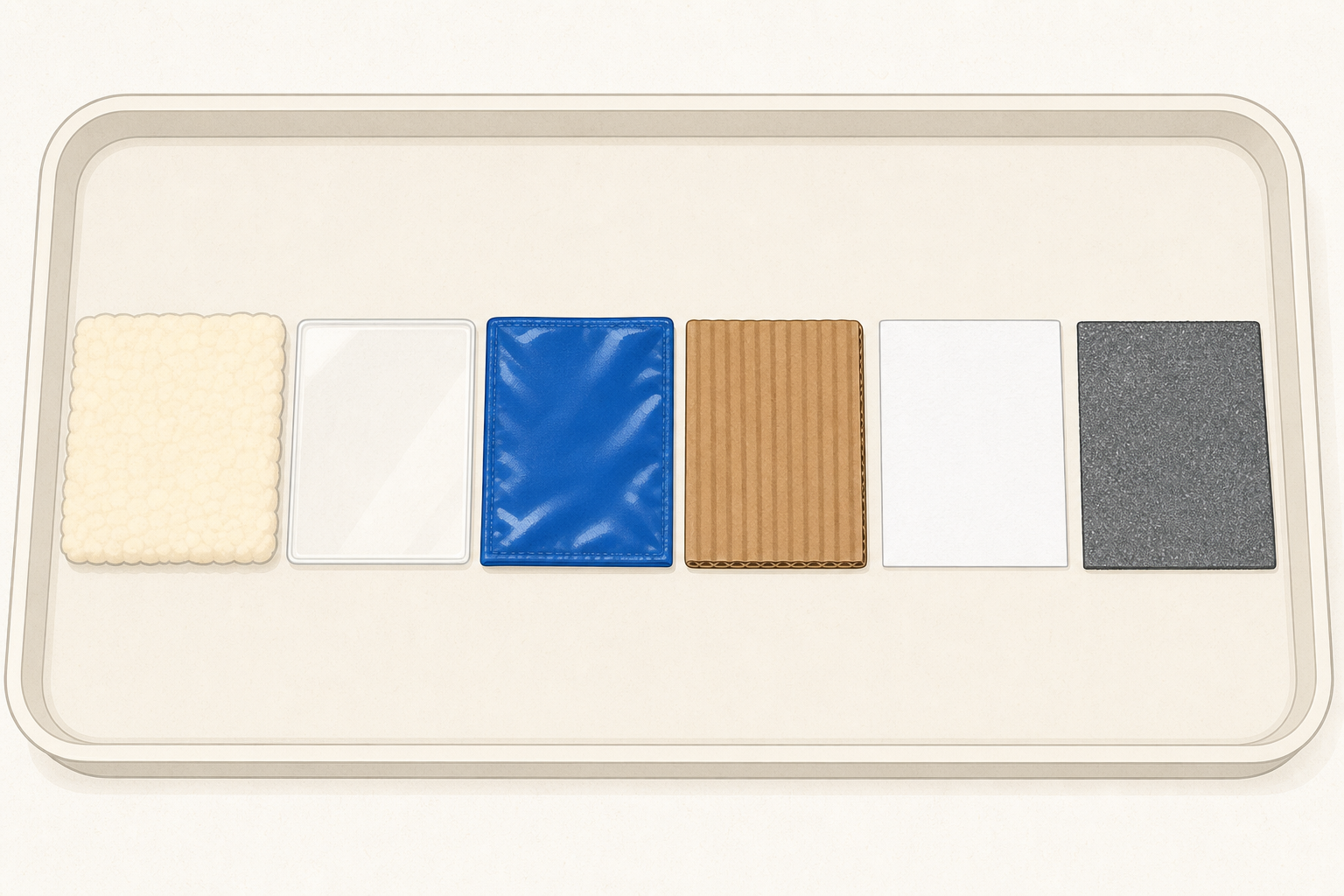
Look at each job picture with your group. Put one material sample on each job picture.
Say: I chose … because it is … (for example: I chose fleece because it is soft).
Card A — Umbrella: Keeps rain off someone's head on a wet Irish day.
Card B — Teddy: Soft for a child to cuddle and squeeze.
Card C — Window: Lets people see outside while staying indoors.
Card D — School bag: Holds books and stays strong when carried.
This step is a quick first match by feel and look only. Groups place one material sample on each job card. They will test and may keep or change that match in the next step. Leave the matches on the cards so Step 4 builds on them.
Circulate and ask: What does this job need? How does your material feel or look?
Keep the sentence stem on the board: I chose … because it is … Model one example aloud and leave it visible.
There can be more than one good match (e.g. foil or plastic for keeping water out). Value the property reason more than a single "correct" sample.
Differentiation: offer the stem aloud for emerging speakers. Confident groups may suggest a second material and say why it would be worse.
Now we check. Your group will check two jobs, then we will share.
Keep your first match on the card, or change it if the try tells you something new.
For each of your jobs, try two or three materials with your hands:
For each job you checked, agree on one material. Say: I chose this because it is …
This step is the evidence check after the first sort. Groups may keep or change their Step 3 match. Talk and try only here; the Investigation Journal page comes in the next step.
Time lever (needed for 40 minutes): assign two jobs per group, then share findings so the class still covers all four. Only run all four per group if you are clearly ahead of time. The board already tells pupils they will check two jobs.
How to "test" at Stage 2 (gentle handling, not a fair test):
Keep water drips small; wipe spills at once. One shared drip tray per group is enough. Do not tape books or fold samples around books; the gentle tug uses tray samples only.
Key questions: What must this job do? What did your hands tell you? Would paper make a good window? Why not? Will you keep your first match or change it?
What to expect: waterproof samples for the umbrella; soft samples for the teddy; clear plastic (standing in for glass) for the window; strong woven fabric or denim for the bag (real bags need flexible strength). If a group picks card for the bag, treat it as better than paper but still not ideal, and name why real bags use tough fabric. If a group picks an odd match, ask them to restate the job and try again rather than simply correcting them.
On your Investigation Journal page, record the two jobs you tried.
For each one, show three ideas: job · material · why.
A drawing plus one why-word is fine. Use the word bank: soft, strong, see-through, waterproof, hard, bendy, smooth, rough.
This is the only journal recording moment. Pupils record on the paper Investigation Journal page. Do not describe layout columns to them beyond the three ideas: the job, the material, and why.
Done for this 6-minute slot means: the two jobs the group tried, each with a material name or drawing and one property word from the bank. That is enough before the share. Do not expect full sentences from every pupil.
Support emerging writers with drawings plus a dictated property word. Keep the word bank visible on the board: soft, hard, bendy, strong, see-through, waterproof, smooth, rough.
Fast finishers draw one everyday object in the room and label the material and its job, still on the journal page or a spare scrap, not on a device.
You're previewing this lesson. Get full access to this lesson and hundreds more — each one ready to teach, with interactive activities, printable resources and pupil progress tracking built in.