Imagine you are outside and the Irish rain starts. Would a paper umbrella keep you dry?
Today we will choose materials that are right for real jobs, and say why.
Keep this light. Hold up one sheet of paper and pretend it is an umbrella, then smile and ask the class if it would work in the rain. Take two or three quick answers only.
Do not tip out the materials tray yet. That comes in the next play beat. The only prop you need in hand is one sheet of ordinary paper.
Nature of STEM thread: makers and builders pick the material that suits each job best. You will name that later when children share their choices.
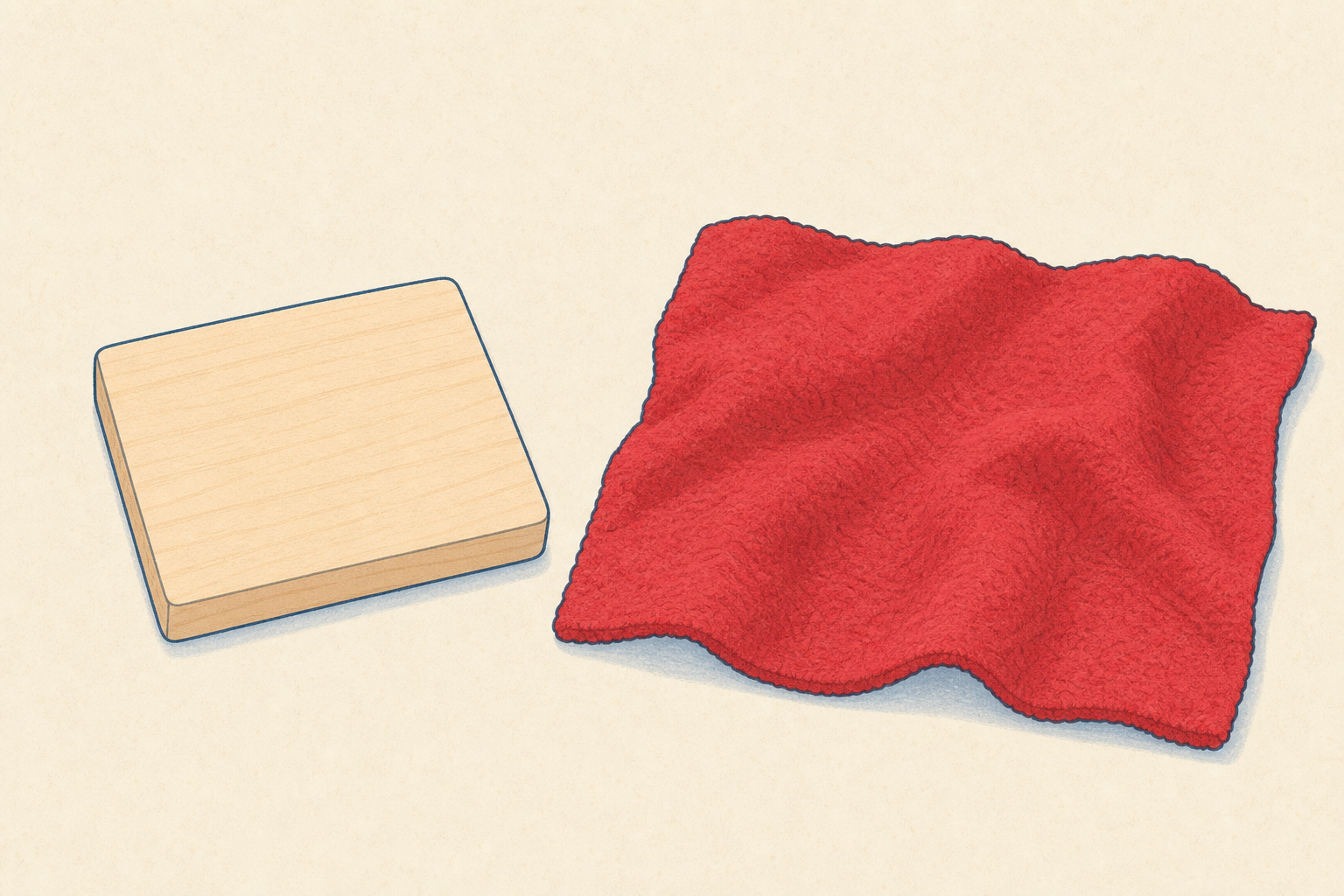
Which material would you pick for a soft teddy: hard wood or soft fabric?
When we choose, we say our short why.
Hold up a soft fabric scrap and a wooden block so the class can see and feel the contrast first. Ask the teddy question and let children point or call out their why in their own words.
Only after they have chosen and said a short why, you may put two tiny board labels: suits and why (reason). Keep the board short; do not ask infants to use the adult word suit out loud. The table below is for you only.
| Concept | Why it matters | Example |
|---|---|---|
| Best material for the job — we pick a material because it is good at doing a particular job | The wrong material makes the job hard or messy, like paper for an umbrella in the rain | A coat-maker chooses fabric that keeps the rain out so an Irish rainy day stays dry |
| Suit — a material suits a job when it has the right property for that job | Matching the property to the job helps things work well for us | Clear plastic suits a classroom window because we can see through it and the weather stays out |
| Reason (our short why) — the short why we give when we choose a material | Saying the why shows we noticed a real property, not just a favourite colour | "I chose soft fabric for the teddy because it feels nice to cuddle" |
Modelled choice (say this out loud once before play): "I wonder which material is best for a teddy. I feel the wood — it is hard. I feel the fabric — it is soft. I choose the fabric. My why is: a teddy needs to be soft to cuddle. That material suits the job."
Misconception to head off: children may pick the prettiest or favourite colour. Gently steer them back to the job: "Does that help the umbrella keep us dry?"
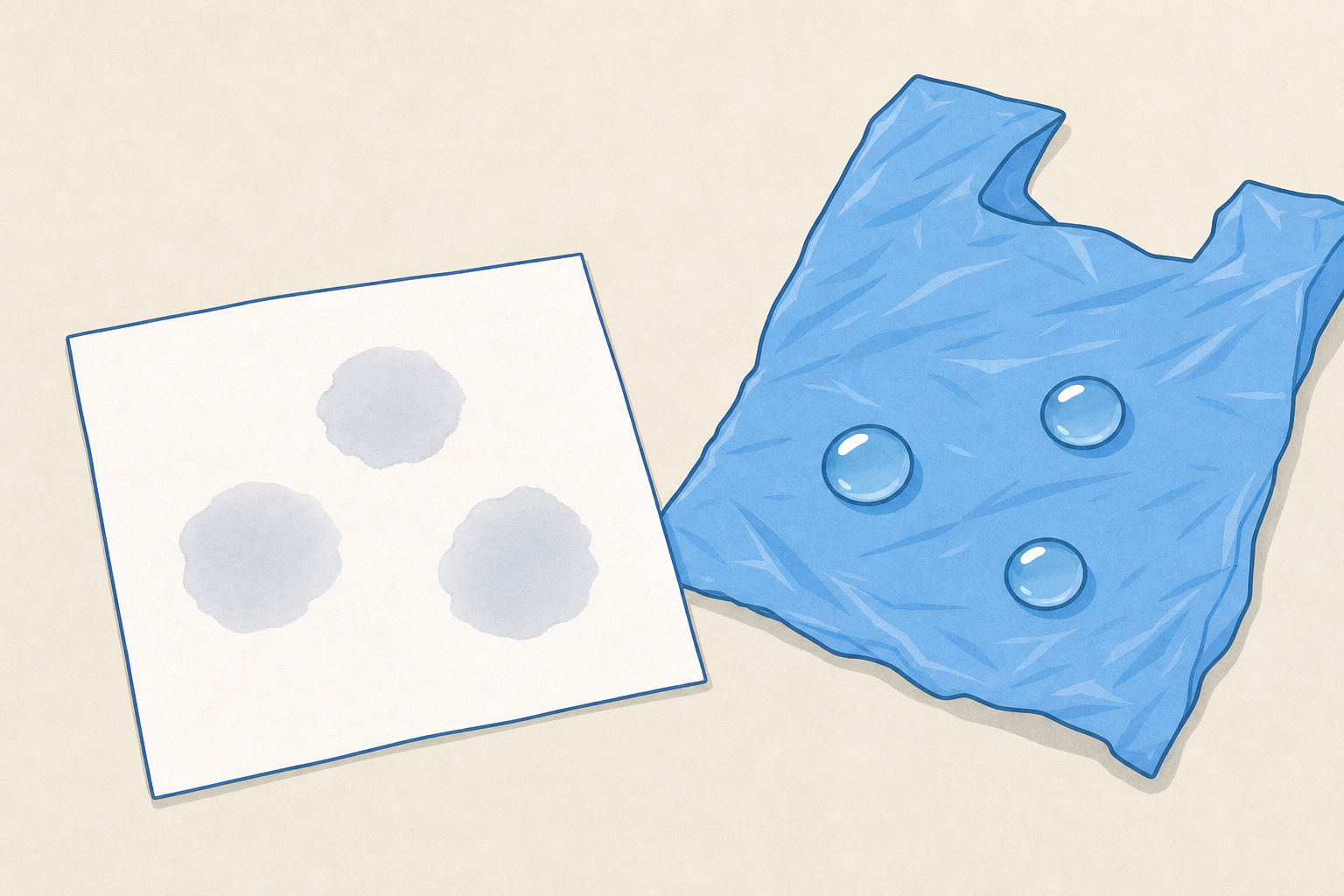
Come and watch our water check. What happens on the paper? What happens on this bag bit?
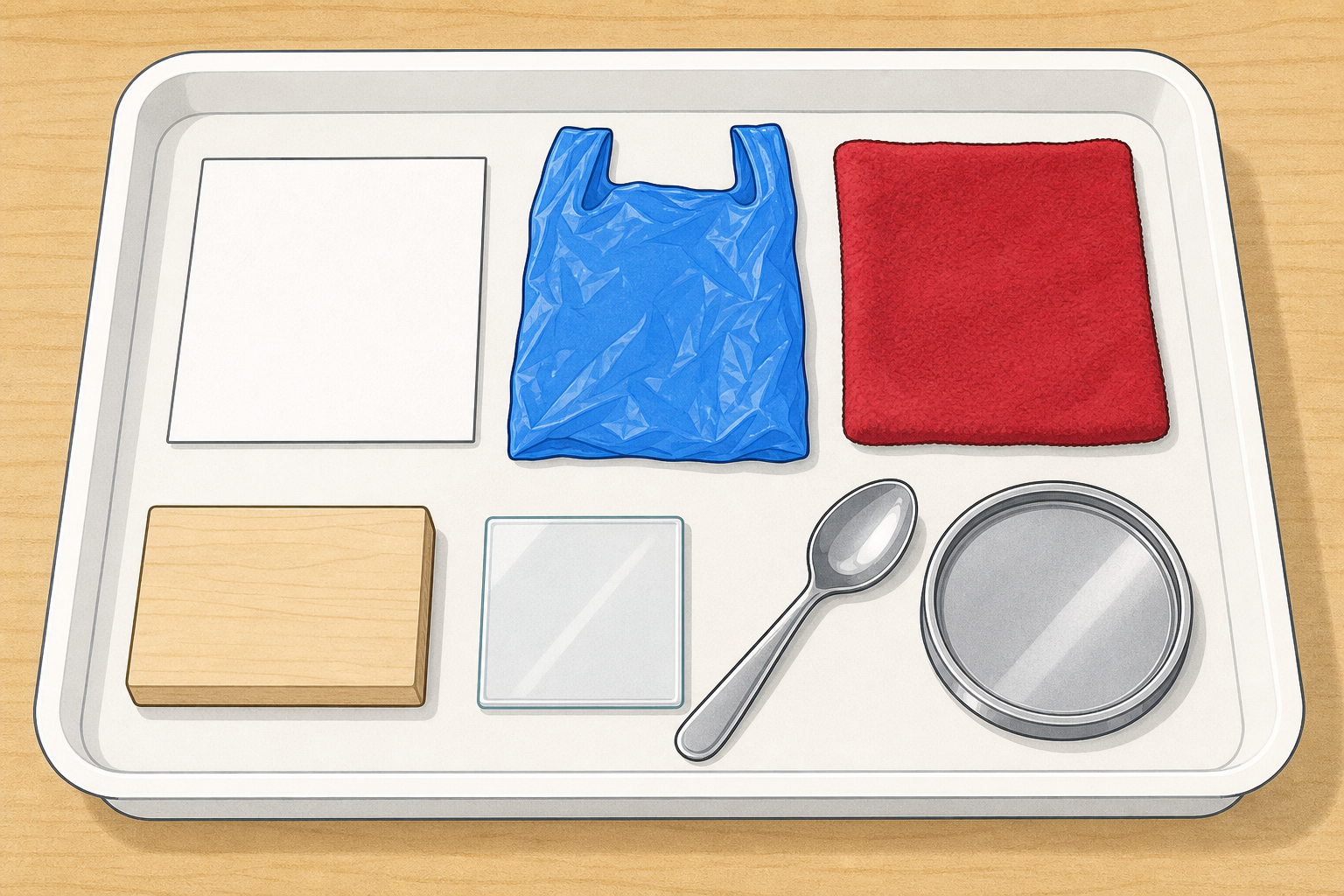
Now feel the materials on your tray. Talk with your group about what each one feels like.
Whole-class gather first (about 1–2 minutes on the carpet or clustered at the front): Bring everyone close so every child can see your hands. Hold up ordinary paper and the opaque bag plastic (name them by showing: this paper / this bag bit). Put one drop of water on each, high enough and slow enough that the back row sees the contrast. Children watch: paper soaks or darkens; bag plastic keeps the water sitting on top (keeps water out). Wipe straight away. Name what they saw in child words: keeps water out / lets water in. If needed, walk the two wet samples slowly past the front row so the soak versus water-sitting-on-top is unmistakable.
Then send children to the pre-set trays for free handling in short bursts. Circulate and prompt one property at a time: Is it soft or hard? Can you see through it? Would it keep rain out? Hold up the clear wallet bit when you ask about seeing through so non-readers link the feel-word to the scrap. Give metal and wood a quick spoken role so they are not stranded samples later: Metal is strong and smooth — good for spoons and lids. Wood is hard and strong — good for blocks and furniture. No sorting yet — this is noticing time.
Look-fors:
If a group only names colours, model one property yourself: This fabric feels soft on my hand.
Safety: nothing in mouths; keep small scraps on the tray; teacher holds the water cup; one drop only; wipe spills straight away.
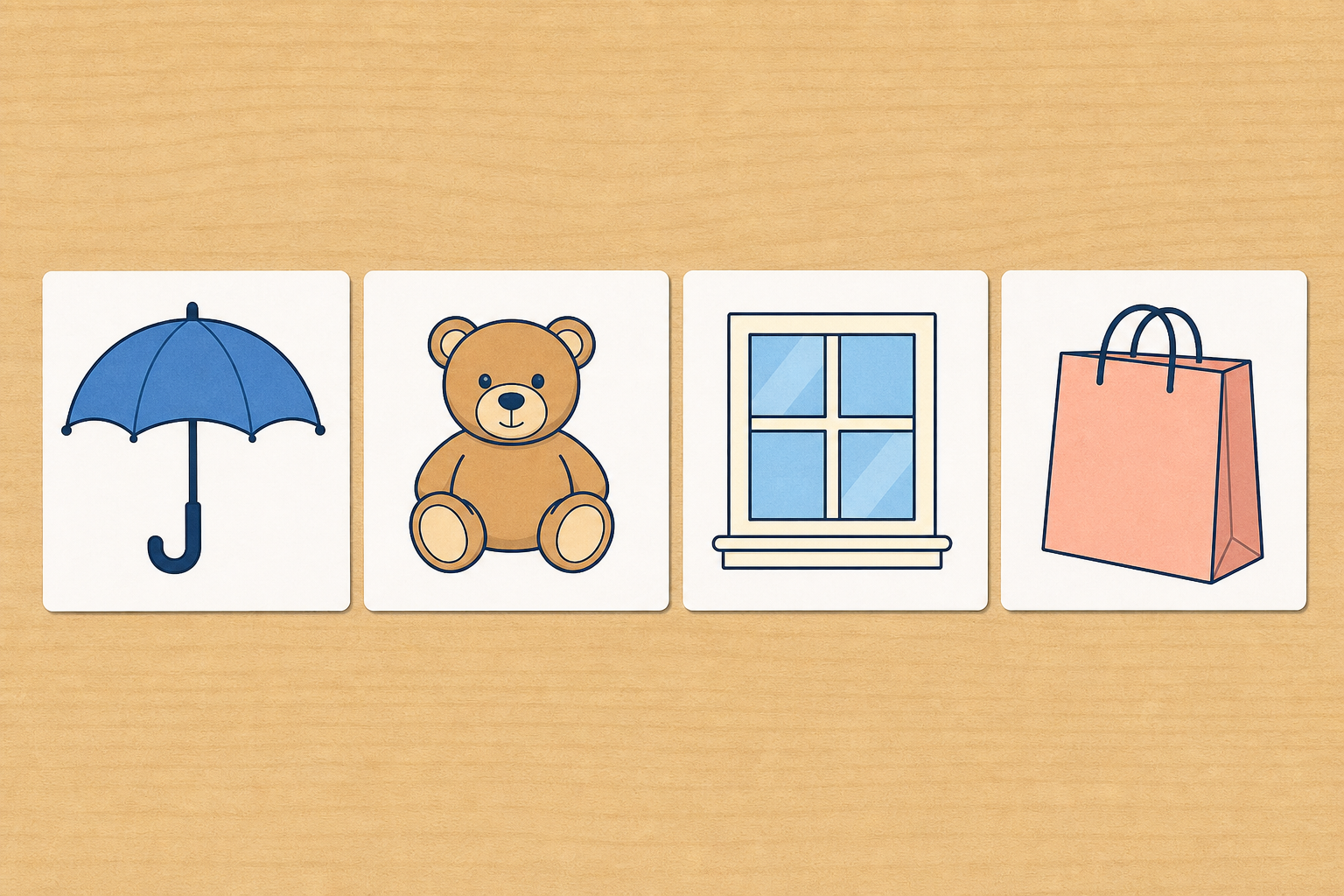
Your group has four job picture cards: umbrella, teddy, window and bag.
For each job, choose the material that suits it best. Put that material beside the card and tell your group your why.
Some materials may stay on the tray on purpose — including the spoon or lid. You do not need to use every sample.
Each card needs a large clear picture of the job plus the short job line below. Pictures carry the meaning for non-readers. No answers on the pupil cards. If you use the low-cost sticky-note substitute, draw a big simple picture on each note and write the job line underneath for you to read aloud.
Card 1 — Umbrella: We need something that keeps the rain off us.
Card 2 — Teddy: We need something soft to cuddle.
Card 3 — Window: We need something we can see through that keeps the weather out.
Card 4 — Bag: We need something strong that can hold our books and lunch.
Hold up each card in turn and read the job line aloud so every child hears the need. Then say once: Pick the best fit for each job. Some materials stay on the tray on purpose — the spoon or lid can stay. The umbrella wants the bag plastic that keeps water out. The bag can use cardboard so we do not fight over one scrap.
For less confident groups, stage the cards one at a time: match umbrella first, then teddy, then window, then bag.
Metal and wood have no job card on purpose. Both may stay on the tray. If a group wants to use metal, ask for a real reason (strong and smooth for spoons and lids). If a group wants wood, ask for a real reason (hard and strong for blocks and furniture) or leave it on the tray. More than one sensible choice is fine if the child gives a real reason. Paper for an umbrella is a chance to talk, not a scolding.
Give each group the four job cards. Children place one material sample beside each card and say a short why out loud. Visit groups and ask: Why that one? Revoice strong reasons for the whole class to hear.
Differentiation: less confident children point and use a stem you say for them — I chose this because it is…. Confident groups can say one material that would be a poor fit and why.
Which material did your group choose for the umbrella? What was your why?
Which match are you most proud of, and why?
Whole-class, oral only. Invite two or three groups to hold up one match and say their reason. Celebrate different good reasons when they fit the job. Keep the share on the cards and materials they just used.
Draw out:
Nature of STEM weave (one short teacher sentence, tied to a card they hold — do not turn this into a class quiz): Makers pick the material that suits each job best — just like you did for the teddy and the umbrella. You may add, still as teacher talk: a coat-maker chooses material that keeps Irish rain out; a toy-maker chooses soft fabric for a teddy.
Misconception: if someone says "heavy things are always best", point back to the teddy — soft matters more than heavy.
You're previewing this lesson. Get full access to this lesson and hundreds more — each one ready to teach, with interactive activities, printable resources and pupil progress tracking built in.