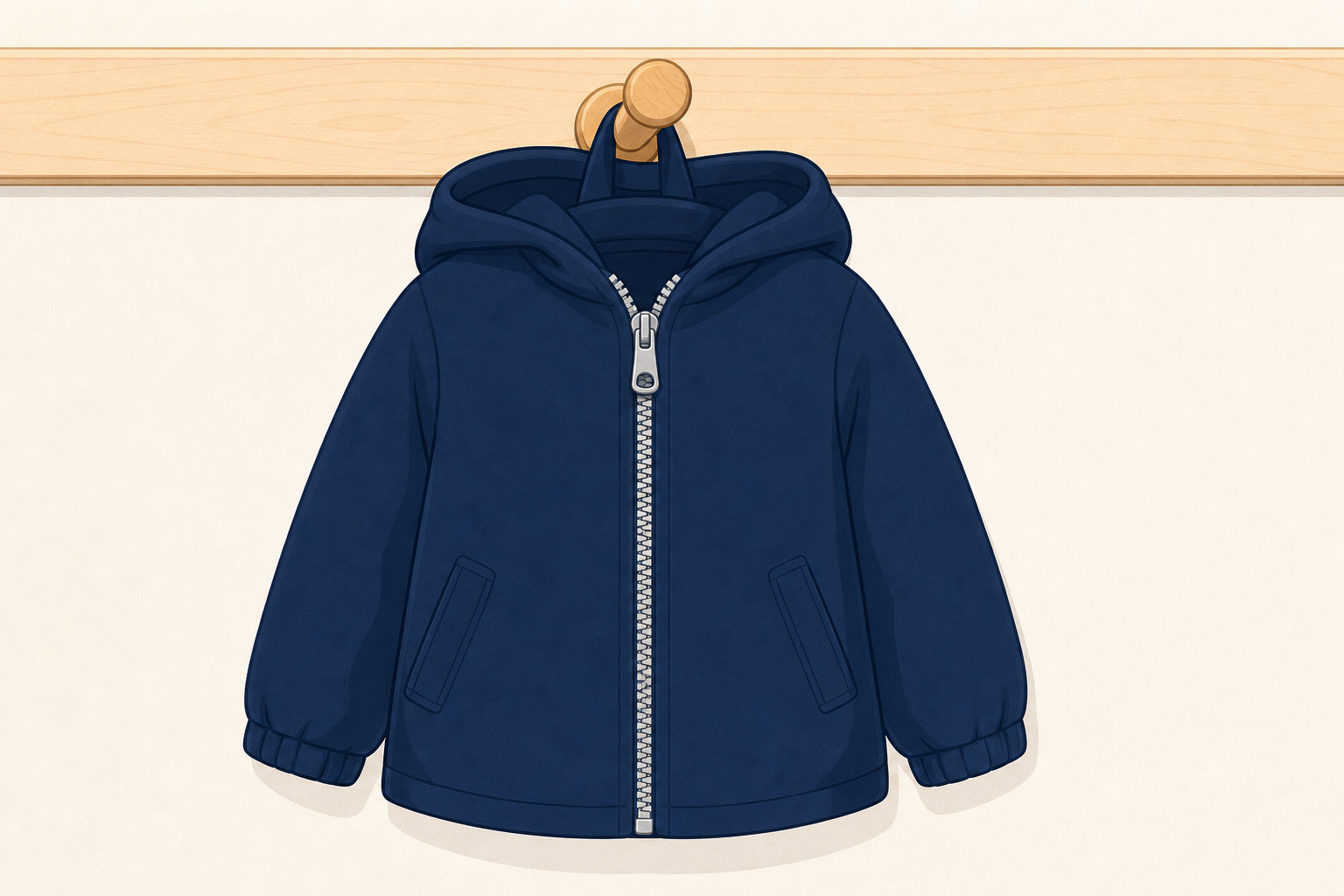
It is nearly home time. Your coat is on the peg. What do you do first? What do you do next? Hands up your ideas.
Keep this light: one curiosity question only. Do not lay out the step cards yet. Stand near the coat pegs or hold up one real coat if that helps the question land. Accept any sensible first step the children offer. Say that today we will put getting-ready jobs into the right order, just like people who follow steps to help us.
Getting-ready jobs need steps in order. We will practise with washing hands first, then we will do coats.
Watch carefully while I get ready to wash my hands. Which order do you think will work?
Card 1 — Wet hands: Hold hands under the tap to get them wet.
Card 2 — Soap: Put soap on your hands.
Card 3 — Rub: Rub your hands together.
Card 4 — Rinse: Wash the soap off with water.
Card 5 — Dry: Dry your hands on a towel.
Name the bridge once: we practise order with washing hands, then coats.
Wrong order (one short moment): Mime soap on dry hands, then pretend to wet them. Ask what looked silly or stuck.
Right order: Mime the five steps in order, laying each card in a floor or board line as you go: wet, soap, rub, rinse, dry. Say first, next, next, next, last as you place them.
Close: The mixed-up order felt silly. The right order felt smooth. Getting-ready jobs need steps in the right order.
Misconception to head off: Children may think any order is fine if all the steps happen. Gently show that order changes how well the job works.
| Concept | Why it matters | Example |
|---|---|---|
| Steps in order — doing the parts of a job one after another, from first to last | Jobs like washing hands or putting on a coat only work well when each part comes at the right time | Wet hands before soap, or the soap will not wash cleanly away |
Board words for the next beat: first, next, last.
Play robot is the game method later, not a second key term to define.
We are going to be the robots together. Keep the cards in a neat line. I will point to the next card, and you do only that step. Are you ready to go first, then next, then last?
Stand the five washing-hands cards in the correct order where all can see. The whole class stands in their places and mimes each step as you point. Go slowly. Count aloud: first, next, next, next, last. Then mix two cards on purpose (for example rinse before soap) and ask: What feels wrong? Put them right together. Keep it joyful; wrong order is funny, not a failure. Fold watchers in with questions: Are we ready for soap yet? What comes after rub?
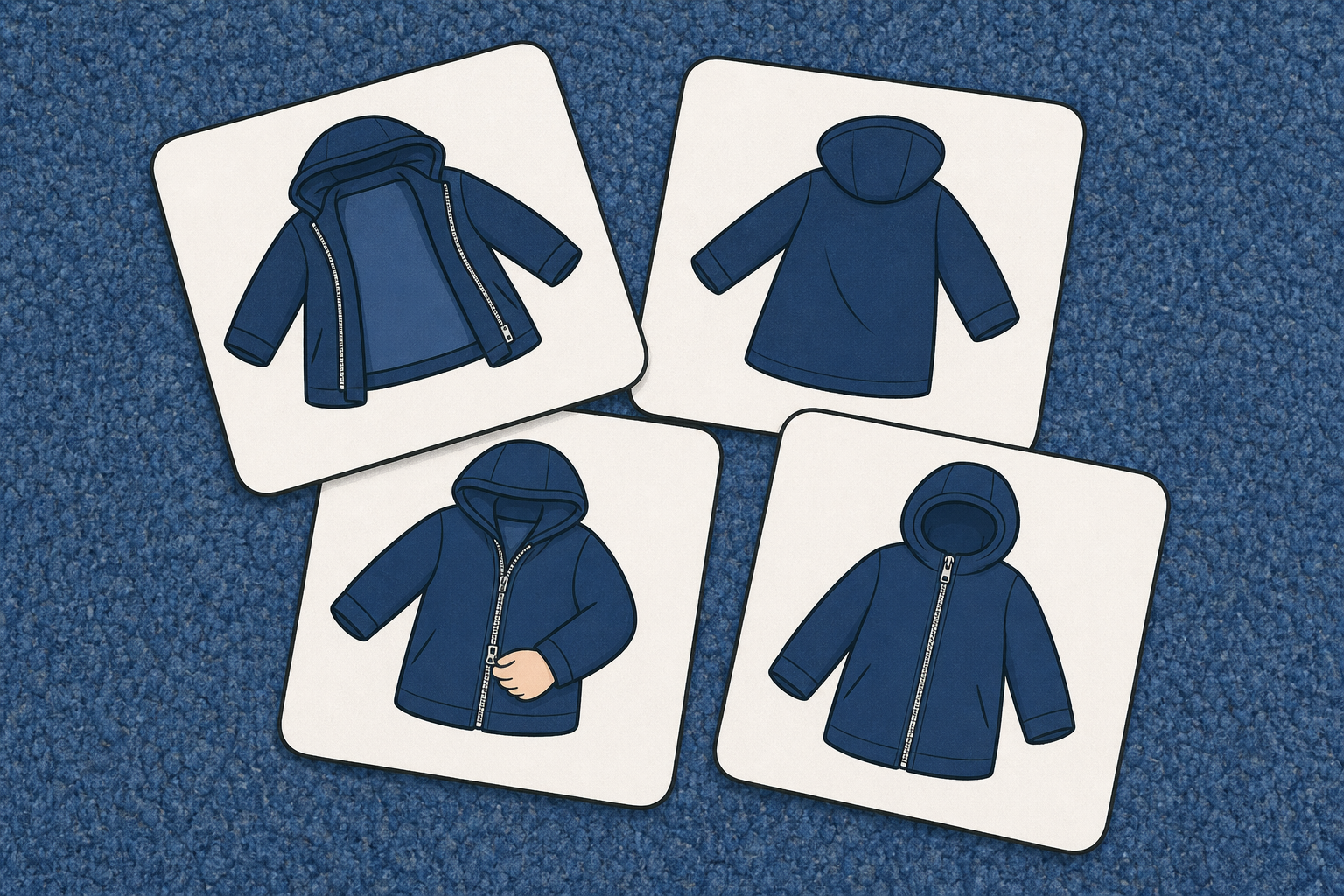
With your group, put the coat cards in a line on the floor. What is first? What is last?
Now play robot. One friend points to a card. The other friend does only that step. You can swap jobs if there is time.
Clear floor spaces for small groups. Give each group one set of coat step cards (mixed up in a pile). One real coat or jumper per group helps if you have them; otherwise children mime with imaginary coats.
Card 1 — Find the coat: Take the coat from the peg or chair.
Card 2 — One arm in: Put one arm into a sleeve.
Card 3 — Other arm in: Put the other arm into the other sleeve.
Card 4 — Fasten: Pull the coat closed and zip or fasten it.
Before groups start, pick two children at the front. Show pupil pointer and pupil robot: pointer points to card 1; robot does only that step and freezes; continue through the line. The rest of the class watches. Name the jobs: one points, one acts, others watch and check the line. Then send groups off.
Burst 1 (about 5 minutes): Groups lay the four cards in a line. Visit groups and ask: What is first? What is last? If the order is wrong, ask them to try acting it and notice the snag, then fix the line.
Quick regroup (about 1 minute): One group shows their line. Class says first, next, next, last together.
Burst 2 (about 4 minutes): Play robot. In each group, one pointer, one robot, and any extra children watch and check the order. Pointer points to card 1; robot does only that step and freezes. Continue through the line. Role-swap is desirable but optional: one careful robot pass per pair counts as success if time is tight. Cheer careful robots who wait for the next point.
Look-fors: children move cards into a line; they use first/next/last talk; the robot waits and does one step at a time.
Differentiation: Offer a second set (washing hands) only if a group finishes early and wants another go. For children who need more support, lay two cards correctly and let them place the last two. For a stretch, ask: What if we fasten before both arms are in?
Safety: Gentle movement only; leave space between groups; no running; mind fingers if using a real zip.
Look at our coat line. What goes wrong if fasten comes first? Putting on shoes needs steps in order too, so both feet end up snug and ready.
Gather on the carpet. Invite one or two groups to show their coat line and say the steps aloud. Revoice with first, next and last.
Keep the talk concrete: hold or point to the coat line and ask what goes wrong if fasten is first (arms stuck, coat twisted). Then add one plain everyday link only: putting on shoes, or making toast (bread in before it cooks). Ask: Who else does jobs step by step? Accept ideas such as a nurse, a builder, or a parent at home.
If time: hold up two washing-hands cards swapped and let the class call out how to fix them.
Do not introduce the word algorithm unless a child offers a similar idea; at this age steps in order is enough. Skip abstract recipe talk; stay with jobs children already know.
You're previewing this lesson. Get full access to this lesson and hundreds more — each one ready to teach, with interactive activities, printable resources and pupil progress tracking built in.