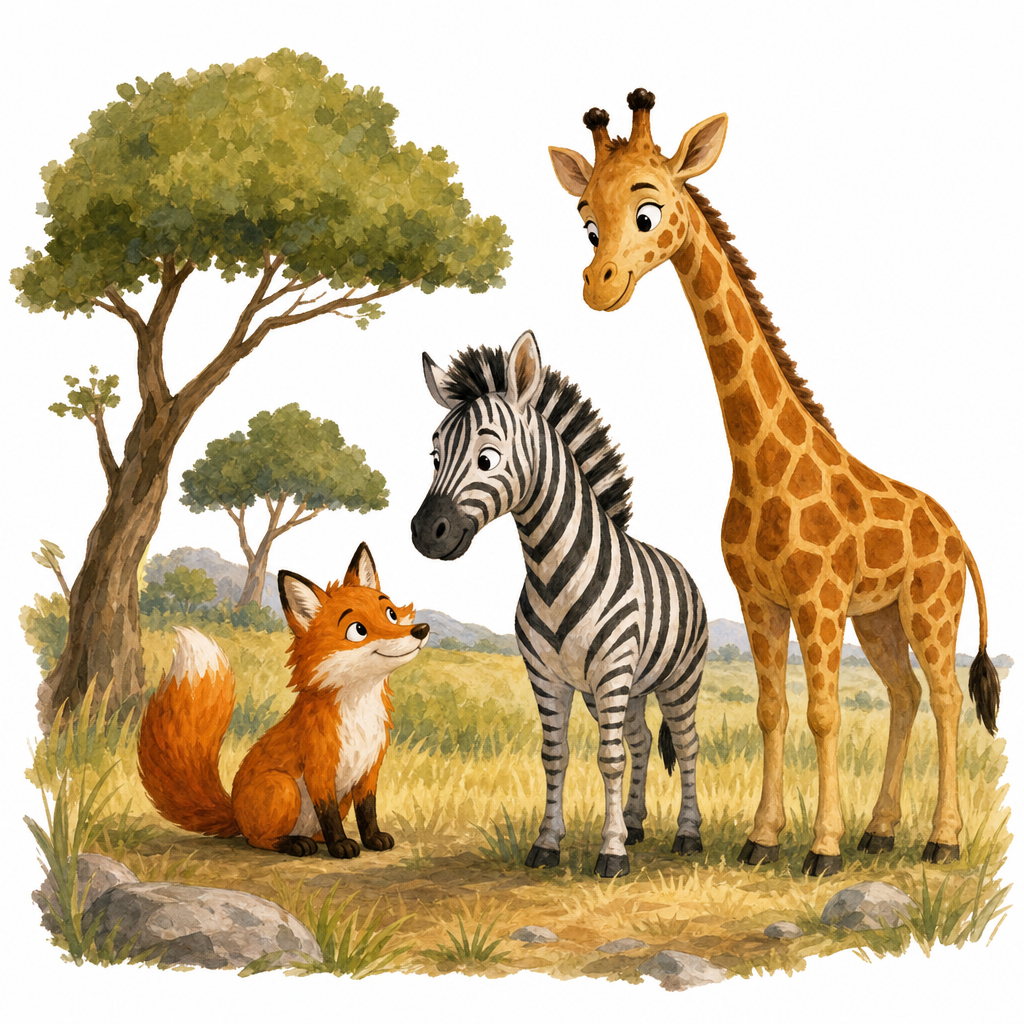
 Which wild animals do you already know from books, zoos or nature films? Take a moment and name a few — big cats, farm-edge visitors, safari favourites, anything that springs to mind.
By the end of this lesson, you will be able to:
- Name eight wild animals in Spanish, each with el or la
- Match Spanish animal words to a wild-animal scene
- Talk about animals that disappeared and whether they should come back
Here are today's eight wild animals. We will hear each one on the board. Listen, then say it back together. Watch which ones take el and which take la, and listen for the soft j sound in jirafa, like a gentle h.
A wild-animal scene is waiting with empty labels. Volunteers will help label the scene on the board. When a classmate picks a word, say it quietly with el or la. When it is your turn, choose the Spanish word for that animal and say the full phrase before you place it.
Look at the list on the board. Open your copy and write four wild animals with their articles (el or la). Tick any that can still live wild in Europe (hint: fox and bear).
- el oso — Bear
- el zorro — Fox
- el león — Lion
- el tigre — Tiger
- el elefante — Elephant
- el mono — Monkey
- la jirafa — Giraffe
- la cebra — Zebra
Mark the animals on your printed bingo card as your teacher calls them. When every animal on your card is marked, call Bingo! Say the word under your breath as you mark it so the sound sticks.
Unlock the full learning experience
You're previewing this lesson. Get full access to this lesson and hundreds more — each one ready to teach, with interactive activities, printable resources and pupil progress tracking built in.
This lesson is copyright of Coding Ireland 2017 - 2025. Unauthorised use, copying or distribution is not allowed.