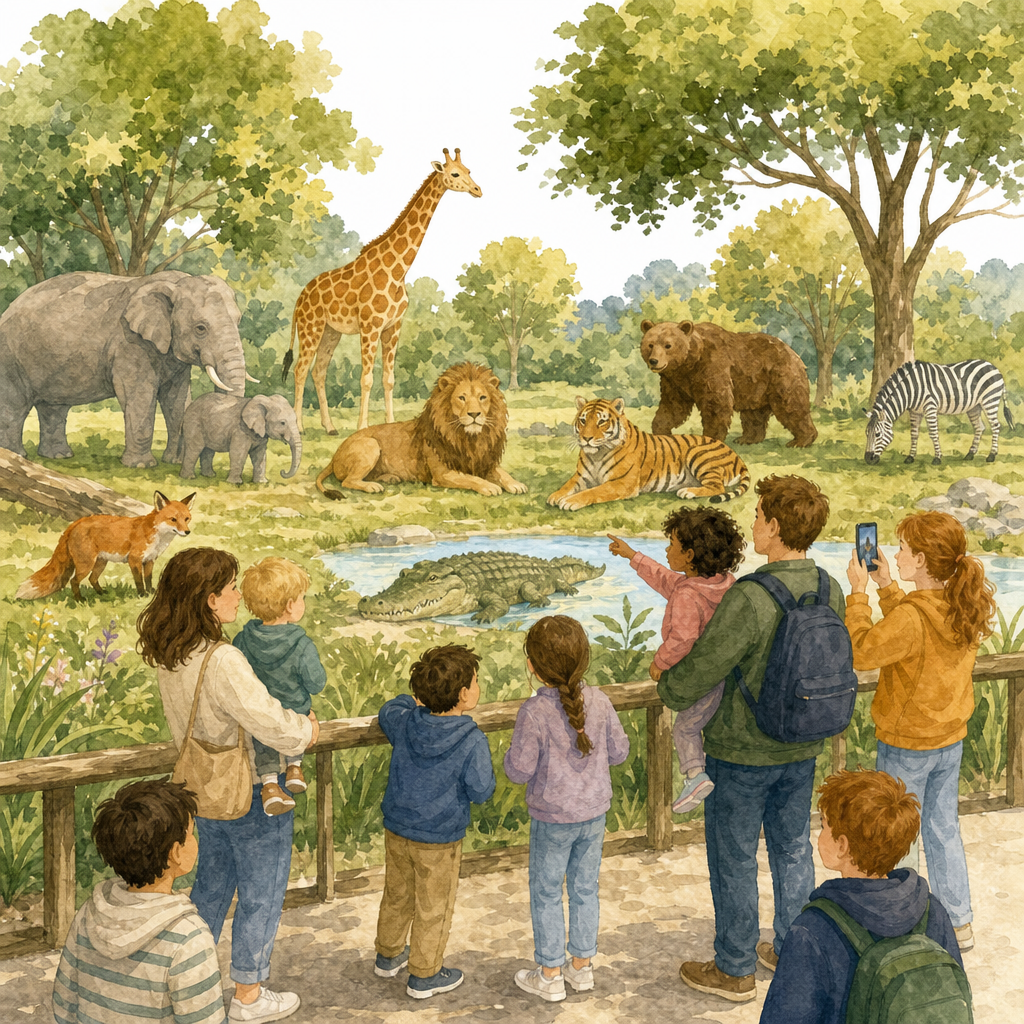
 Which wild animals do you already know in English? Take a moment: can you name four before we meet their German names?
By the end of this lesson, you will be able to:
- Name eight wild animals in German
- Label animals on a wildlife-park picture
- Spot the German words when you hear them called out
Watch each animal on the board, listen, then say it back together as a class.
You will meet them in two groups of four. Listen for the little word in front of each animal, because it is not the same every time — most of them share one, one of them is different, and two more share another. Say the whole phrase, not just the animal.
These animals are hiding in a wildlife-park scene — can you name them all?
One of you comes up to click a label on the board. While that happens, everyone else points at the animal and whispers the whole phrase (der / die / das + the name) before the answer appears. The animal's name on its own is not enough.
Open your copy and write four wild animals with their articles. Star your favourite two.
- der Fuchs — fox
- der Bär — bear
- der Löwe — lion
- der Tiger — tiger
- der Elefant — elephant
- die Giraffe — giraffe
- das Krokodil — crocodile
- das Zebra — zebra
You will get a bingo card (on paper, or on screen if you are using devices). When you hear a German animal with its article, mark it if it is on your card. When every animal on your card is marked, shout Bingo!
Unlock the full learning experience
You're previewing this lesson. Get full access to this lesson and hundreds more — each one ready to teach, with interactive activities, printable resources and pupil progress tracking built in.
This lesson is copyright of Coding Ireland 2017 - 2025. Unauthorised use, copying or distribution is not allowed.