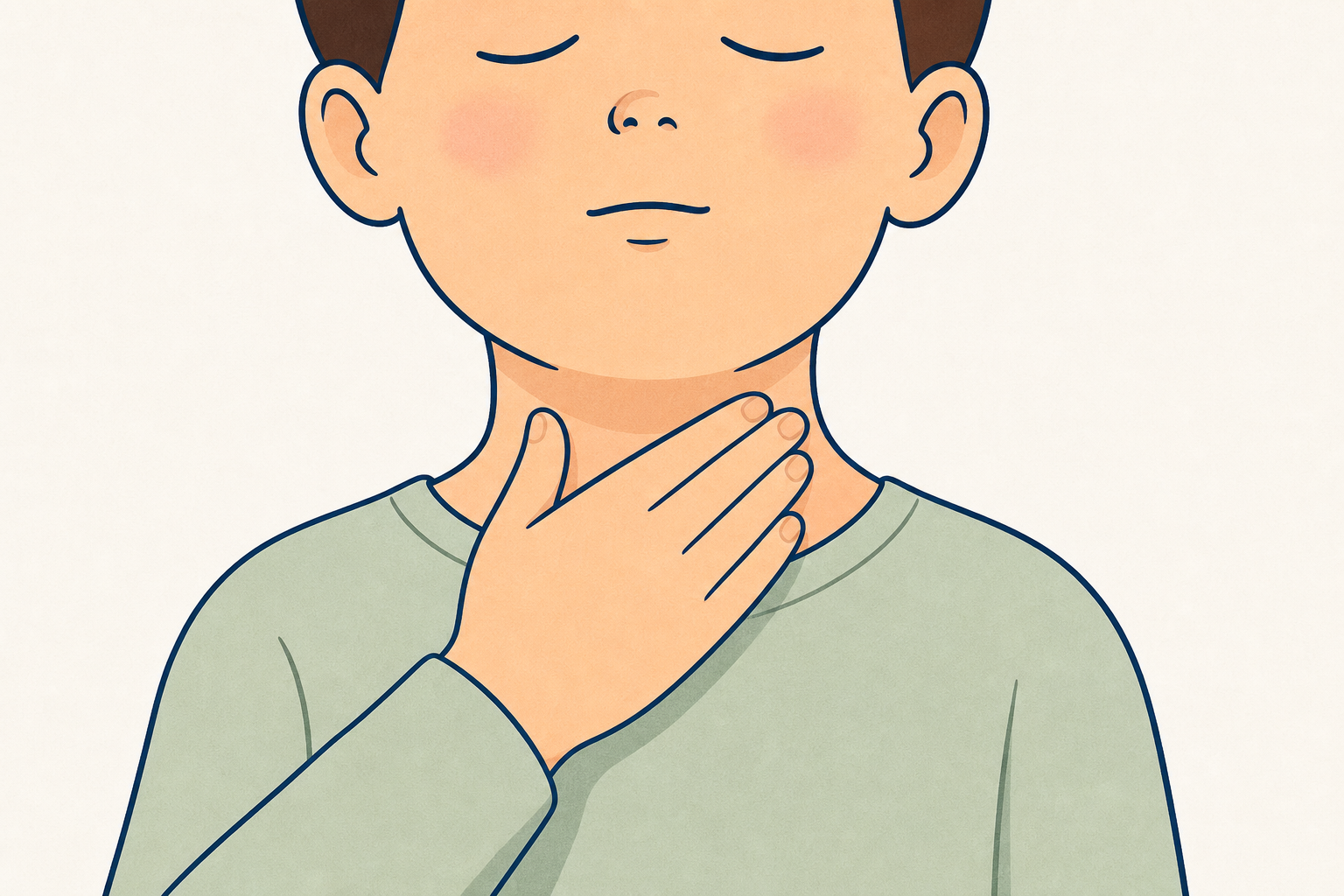
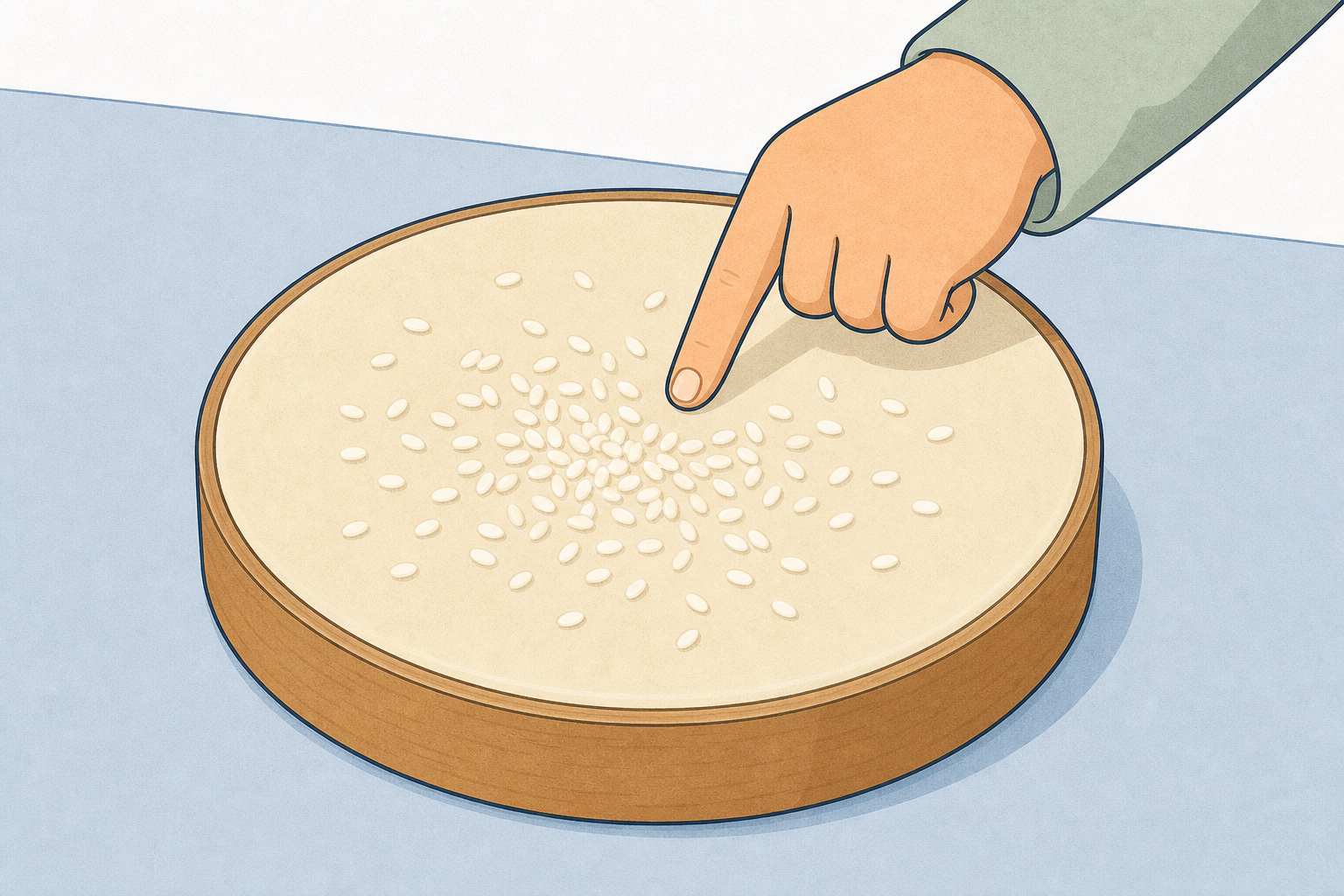
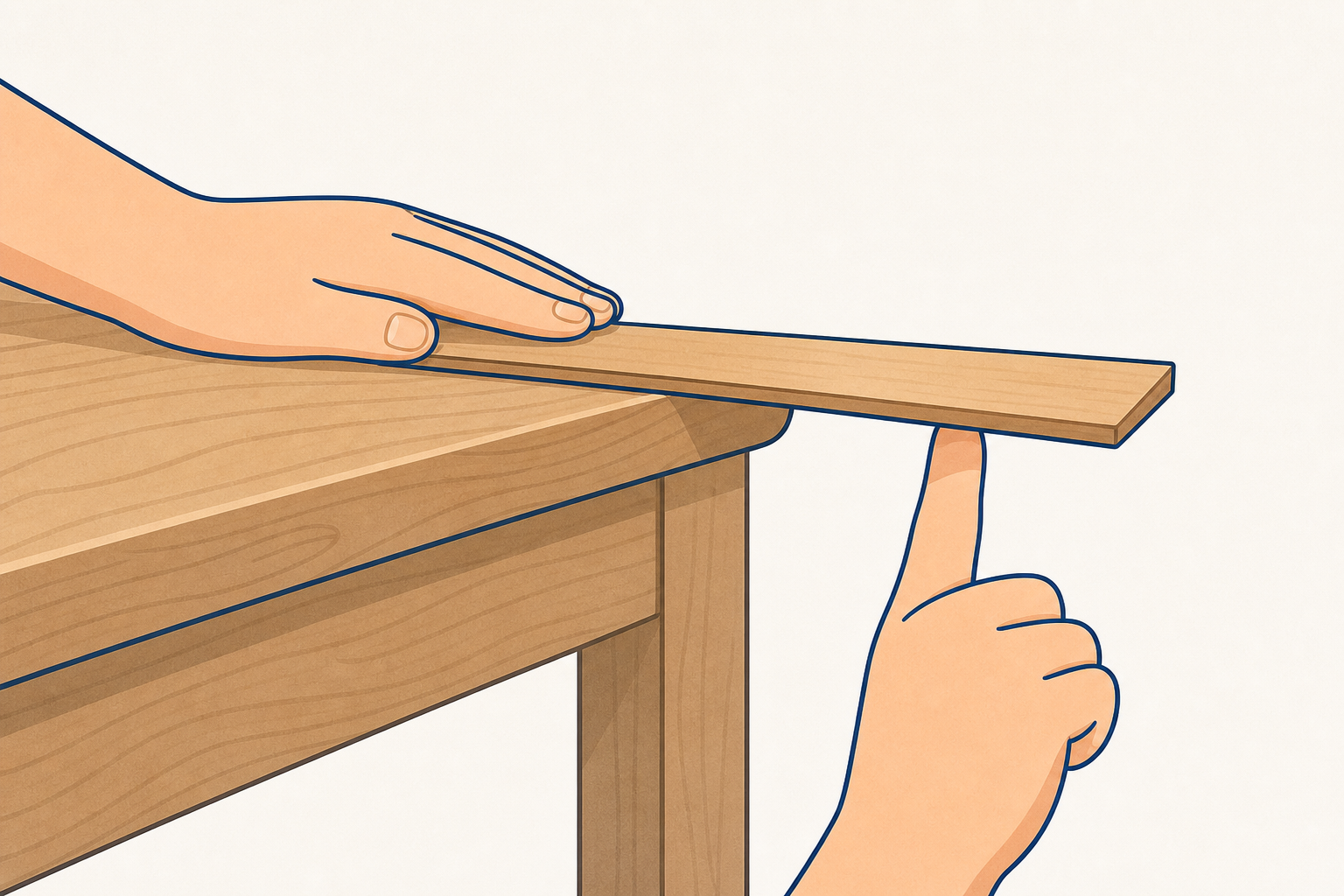
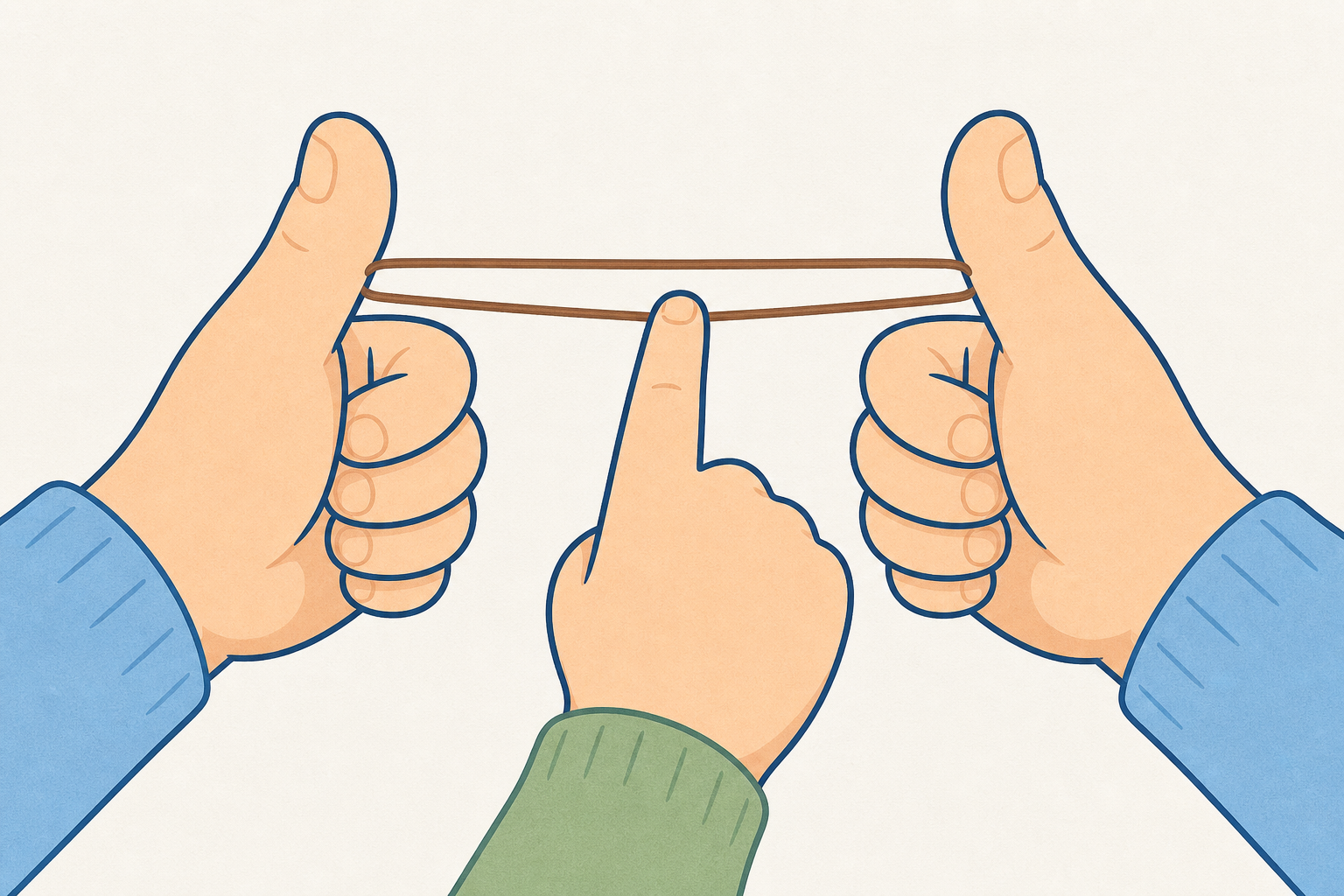
Put a gentle hand on your throat and hum a quiet tune. What can you feel?
Keep humming. Does the feeling stop when the sound stops?
This is a light curiosity beat only. Do not hand out rulers, bands or the drum yet.
Hum yourself with your hand on your throat so the class can copy. Ask two or three children what they feel. Accept any honest answer: a buzz, a tickle, a shake.
STEM eyes: link to everyday sounds later, not in the hook. Keep this moment short and surprising.
Have the drum with cling film and a pinch of rice ready out of sight for the exploration step, but do not show it yet.
Our big question today: what is happening when something makes a sound?
Tell a partner what you think. Then we will try some things and find out.
Use think-pair-share. Predictions are never wrong; they are the start of the science.
Collect three or four ideas on the board in the children's words (for example: air comes out, it shakes, magic, the thing hits something). Leave them up to revisit at the end.
Misconception to note, not correct yet: some children think sound is only air leaving the mouth, or only loud bangs. The hands-on will challenge both.
Do not name vibration yet. Let them meet the feeling first.
We will make sounds and notice what is moving. When the sound stops, notice that too.
Watch together — drum and rice: watch the rice when the drum is tapped gently.
Then at your desks with a partner:
Run the shared drum first, then the desk tries. Do not treat all four as equal simultaneous stations. On the IWB, keep only the beat you are on in view (cover or scroll so children see watch-together first, then the desk list).
Twang rulers and bands gently and away from faces. No aiming bands. Keep drum taps class-friendly. Rice is not for eating. Wipe any spills.
Differentiation: less confident children stay with you at the drum station and only use one word for what they feel (jump, shake, buzz). Confident pairs can try a soft tap and a slightly stronger tap on the drum and say which wobble looked bigger.
Extension only (if time later): longer and shorter ruler overhangs and any pitch difference can wait for a fast-finisher or a later challenge. Keep this lesson on the core wobble link.
Eyes this way. What did you feel? What did you see?
Tell us about one try: the ruler, the band, your throat, or the rice on the drum.
Whole-class oral share only. No drawing or journal work in this step; the single draw moment is in the Investigation Journal step later.
Revoice children's words toward movement language: shake, buzz, jump, wiggle, still.
Look-fors:
Keep this short. Do not introduce the board interactive yet.
Look at the drum on the board. Watch the skin shake. What is the same as the real drum we just used?
The shaking we felt has a name: a wobble. Scientists also say vibration.
Sound is what we hear when that wobble reaches our ears.
| Concept | Why it matters | Example |
|---|---|---|
| Wobble (vibration) — when something shakes quickly back and forth | Every sound we hear starts with something wobbling, even if the wobble is too small to see | Rice jumping on a drum skin shows the skin is wobbling after a tap |
| Sound — what we hear when a wobble travels through the air to our ears | Knowing this helps us explain everyday noises, from a hum to a school bell | A twanged ruler makes a sound only while the free end is still wobbling |
Drive the interactive on the IWB in display mode. Lead with the picture first: ask children to watch the skin, then name the words after they have looked. The drum scene is already set with a strong wobble. Nothing is dragged or tapped by the children; you narrate what they see.
Point out: the skin moves a lot (a big wobble), rings spread toward the ear, and that matches the rice jumping on our real drum. Teacher aside on the rings: we cannot see the air wobble. The rings are a picture of the idea. The sound starts at the skin; the air carries the wobble to our ears. Keep child-facing wording simple.
If you use the Hear it button, keep the volume class-friendly; turn enableTone off if the room needs quiet — the picture still teaches.
Misconception to head off: children may say the eye or the ear makes the sound. The sound starts at the wobbling thing; the ear receives it.
Ask: What is the drum skin doing when we hear the sound?
Spoken naming beats (after looking): first say, "The shaking we felt has a name: a wobble. Scientists also say vibration." Pause. Then: "Sound is what we hear when that wobble reaches our ears."
You're previewing this lesson. Get full access to this lesson and hundreds more — each one ready to teach, with interactive activities, printable resources and pupil progress tracking built in.