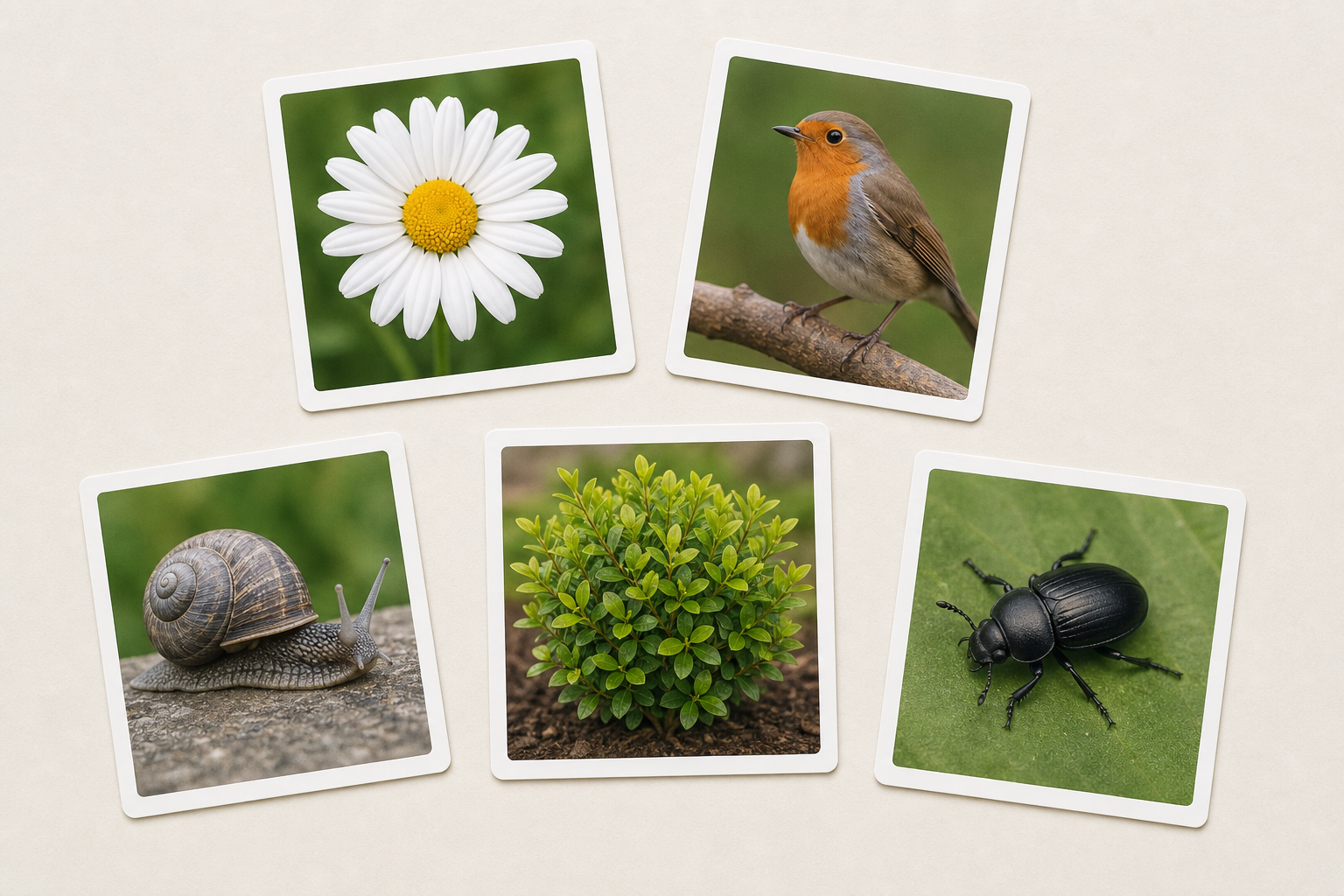
Look at the picture cards your teacher is holding: a daisy, a robin, and more from our garden and yard. Some are plants and some are animals. I wonder if we can put the ones that belong together into groups?
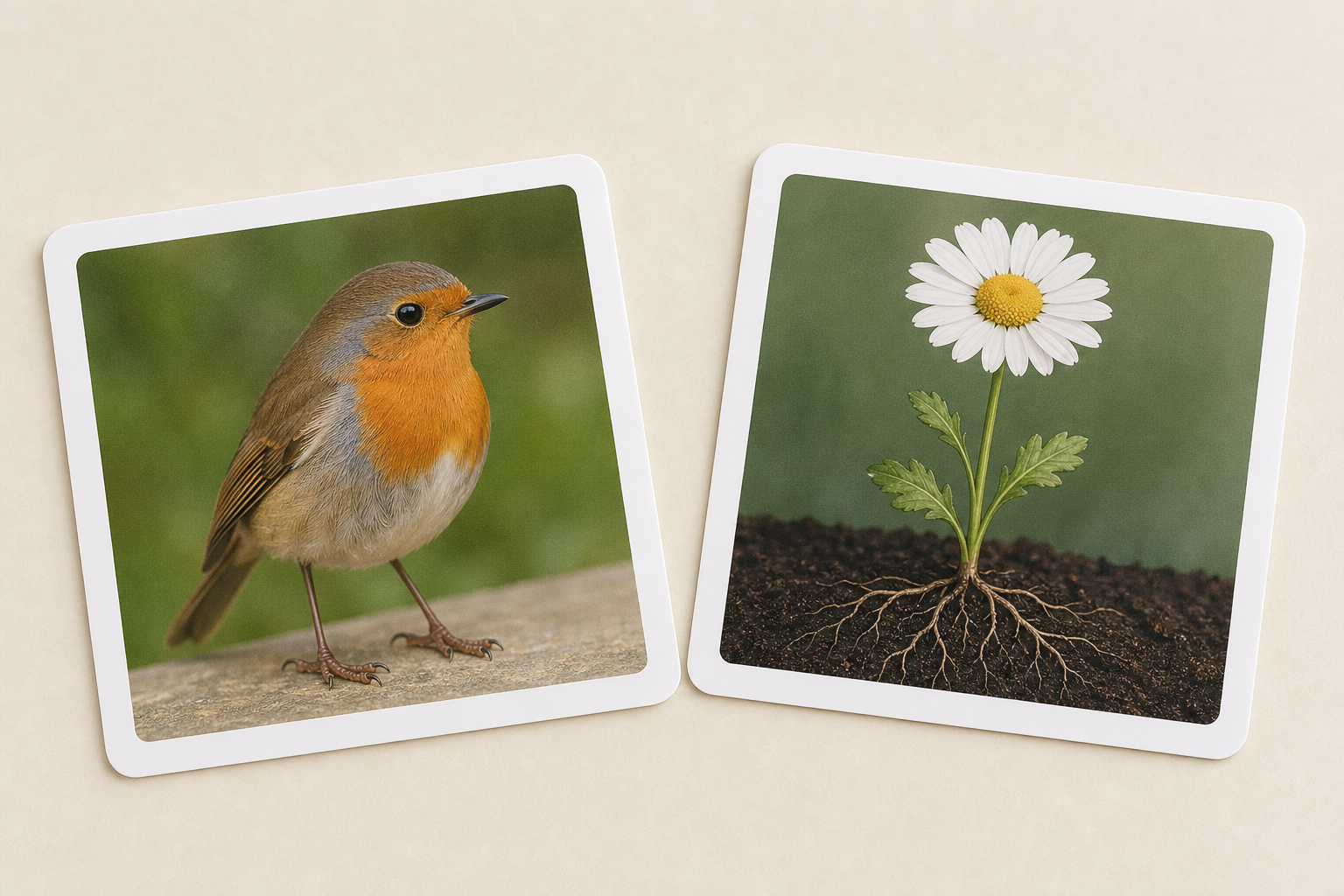
Hold up two contrasting nature photo cards (for example a daisy and a robin) so the class can see them clearly. The pictures are the printed cards in your hands, not on the board. Ask: What is the same? What is different? Keep this beat light. Do not name the sorting rules yet. Guesses are never wrong.
Nature of STEM weave: later we will say that scientists sort plants and animals into groups so they can study them. Leave that for the make-sense talk.
Today's words:
sort — make groups
plant — grows from the ground
animal — can move
When we sort, we always say why.
| Concept | Why it matters | Example |
|---|---|---|
| Sort with a reason — putting living things into groups and saying why they belong together | Saying the reason helps us check our groups and helps other people understand them | "These go together because they are plants — they grow from the ground" |
Group words we use today (say aloud while pointing to a real card):
Plant and animal are the labels for today's sort, not extra concepts to memorise. Keep the board to the three short lines above. Read each word, point to a real card, and stress: we always say why.
Misconception to head off: some children say a snail is not an animal because it is slow or has a shell. A snail is an animal. It moves and is not a plant.
Look at each nature photo card. What do you notice? Does it grow from the ground? Can it move? Can you see legs?
Spread one set of nature photo cards face up on the carpet or a low table so every child can see. Name each card together before any sorting begins: daisy, oak tree, grass, bluebell, robin, frog, spider, ladybird, snail, worm.
Key questions:
Keep this to noticing only. Do not start the hoop sort yet.
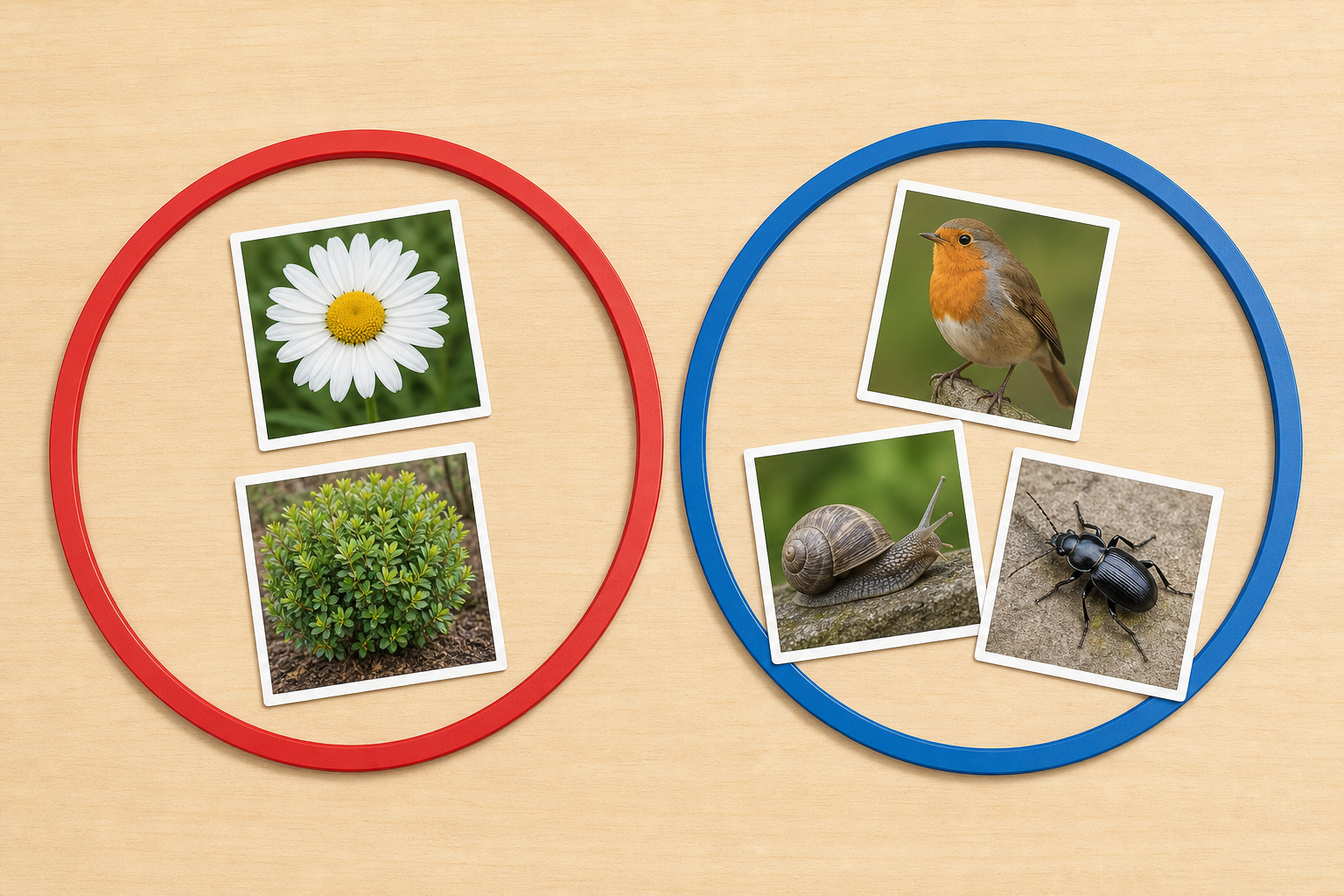
We sort together on the board first. The question is: Is it a plant or an animal? Look at each picture. Call out which hoop it belongs in and say why.
Open the picture-sort interactive on the IWB in explore mode. This is the model before the hands-on hoop sort, so children hear the reason language once as a class.
Read the question aloud: Is it a plant or an animal?
What appears on screen: two hoops labelled plant (🌱) and animal (🐾), and the full set of ten picture cards in the tray: daisy, oak tree, grass, bluebell, robin, frog, spider, ladybird, snail, worm (same living things as the printed card set).
Invite children to call out where each card goes. Drag on their behalf. Move at a steady pace so all ten are placed. A card in the wrong hoop is a conversation, not a mistake. Ask: Why does it go there?
Look-fors: the oak tree is a plant (a tree grows from the ground); the snail is an animal even though it is slow and has a shell.
Your turn with real cards and hoops. First sort: is it a plant or an animal? Put each card in a hoop and say why.
Before the lesson: print the provided nature photo cards (one set per group). Lay out two hoops per group with picture labels for the first sort (plant · animal). Keep a second pair of labels ready (has legs · no legs).
Card set (ten cards): daisy, oak tree, grass, bluebell, robin, frog, spider, ladybird, snail, worm.
How to run it (one action live at a time):
What to expect: snail and worm are the common mix-ups. A snail moves but has no legs. A spider has eight legs and is still an animal. Also watch for: the oak tree counts as a plant (trees grow from the ground); the robin goes in has legs (birds have two legs as well as wings).
Differentiation: less confident children can point and the adult voices the reason. Confident children can try a third idea aloud ("What else could we sort by?") without needing a new hoop set.
Do not run a second board sort after this. The hoops are the main practice; the earlier board sort was the model.
You're previewing this lesson. Get full access to this lesson and hundreds more — each one ready to teach, with interactive activities, printable resources and pupil progress tracking built in.