Mathematics
Advanced
50 mins
Teacher/Student led
+65 XP
What you need:
IWB/Projector/Large Screen

Solving Real Measurement Problems

Solve real measurement problems by choosing the right tool, reading the scale, and calculating your answer. Work through length, mass and capacity problems step by step.
Teacher Class Feed

Load previous activity

    1 - Getting Started ~4 mins

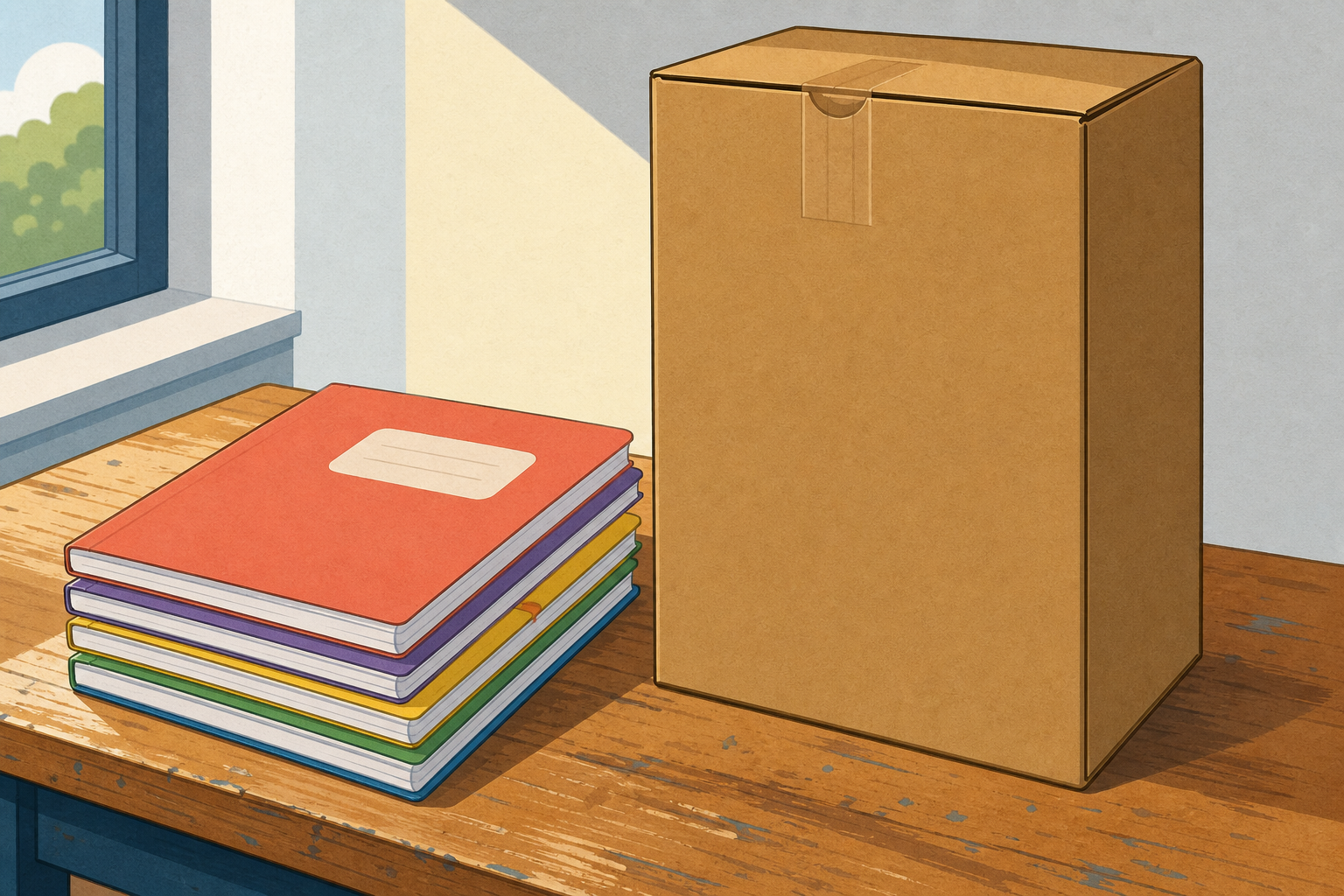
    Illustration for Getting StartedHere is a real job: we have 12 Maths books to pack, each one 24 cm tall, and a box that is 60 cm tall. Before we work anything out, the first skill today is choosing the right measuring instrument. Ask yourself: are we finding a length or height, a mass, or how much liquid? Length or height means a ruler, mass means a weighing scale, and liquid means a measuring jug. For these books and this box we need heights, so the instrument is the ruler. We read both heights off the ruler first, then we can think about the calculation. What is the very first thing we need to know?

    2 - Watch and Notice ~9 mins

    Your teacher works three real problems on the board. Each one works the same way: read the two measurements first, then do one calculation. When two measurements are in different units, we change one first so they match. There are 1,000 grams in every kilogram (1 kg = 1,000 g) and 1,000 millilitres in every litre (1 l = 1,000 ml). Look for what the calculation tells you, and watch the unit stay on the answer.

    3 - Try It Together ~11 mins

    Key point

    Today we work through three problems together. Only the shelf is on the board for you to read — the pasta weight and the bottle amount are given to you in the words. First, a length problem: read the shelf length off the ruler, and each folder is 3 cm wide, so how many fit? Next, a mass problem: a pasta pack weighs 750 g, shared into 250 g portions. Last, a capacity problem: a 1.5 l bottle (that is 1,500 ml) poured into 300 ml cups. Read or use the number, say what the calculation tells us, and keep the unit on the answer.

    Read the scale, then solve

    4 - Set It Out in Your Copy ~3 mins

    COPYBOOK MOMENT

    In your maths copy, set up each measurement problem as a labelled calculation with the units shown, and work each step with the class. Write the answer with its unit at the bottom of each one.

    5 - Class Challenge ~8 mins

    Key point

    Today we work through these four in order, reading the scale before we calculate each time. First: a ribbon cut into 8 cm lengths. Then: a bag of rice shared into 300 g bowls. Then: a carton poured into 400 ml glasses. Last: a shelf holding books that are each 4 cm thick, work out how many fit, and check whether any space is left over. Read the tool, then solve, then check.

    Read, solve, check

    Pupil practice
    Module 4 · Measures: Length, Mass, Capacity, Area, Volume Measures
    Lesson 57 · Solving Real Measurement Problems
    Download Activity Book page (PDF)
    123learn · Online learning platform

    Unlock the full learning experience

    You're previewing this lesson. Get full access to this lesson and hundreds more — each one ready to teach, with interactive activities, printable resources and pupil progress tracking built in.

    Hundreds of curriculum-aligned lessons
    Interactive activities in every lesson
    Printable resources & progress tracking
    Copyright Notice
    This lesson is copyright of Coding Ireland 2017 - 2025. Unauthorised use, copying or distribution is not allowed.
    🍪 Our website uses cookies to make your browsing experience better. By using our website you agree to our use of cookies. Learn more
