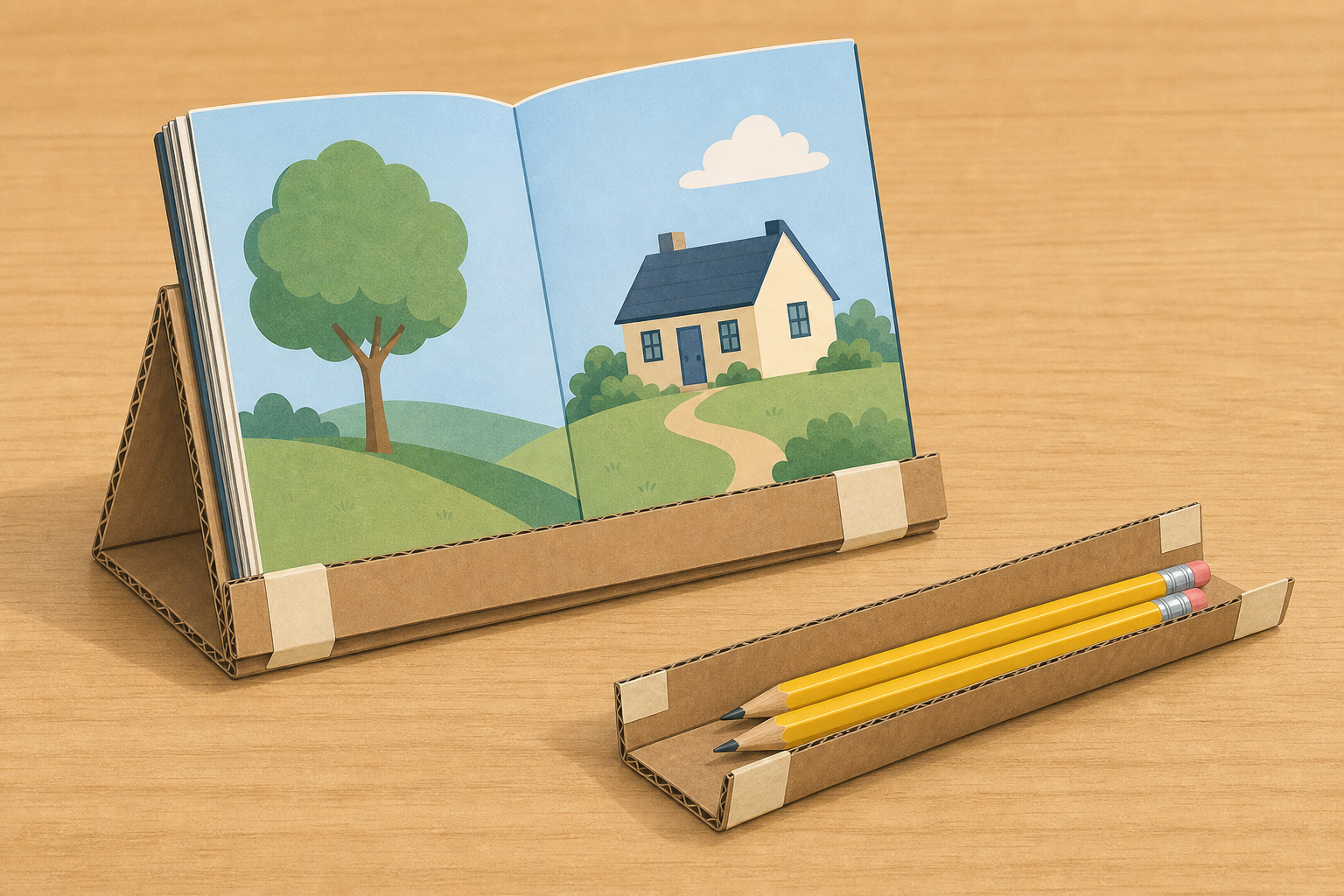
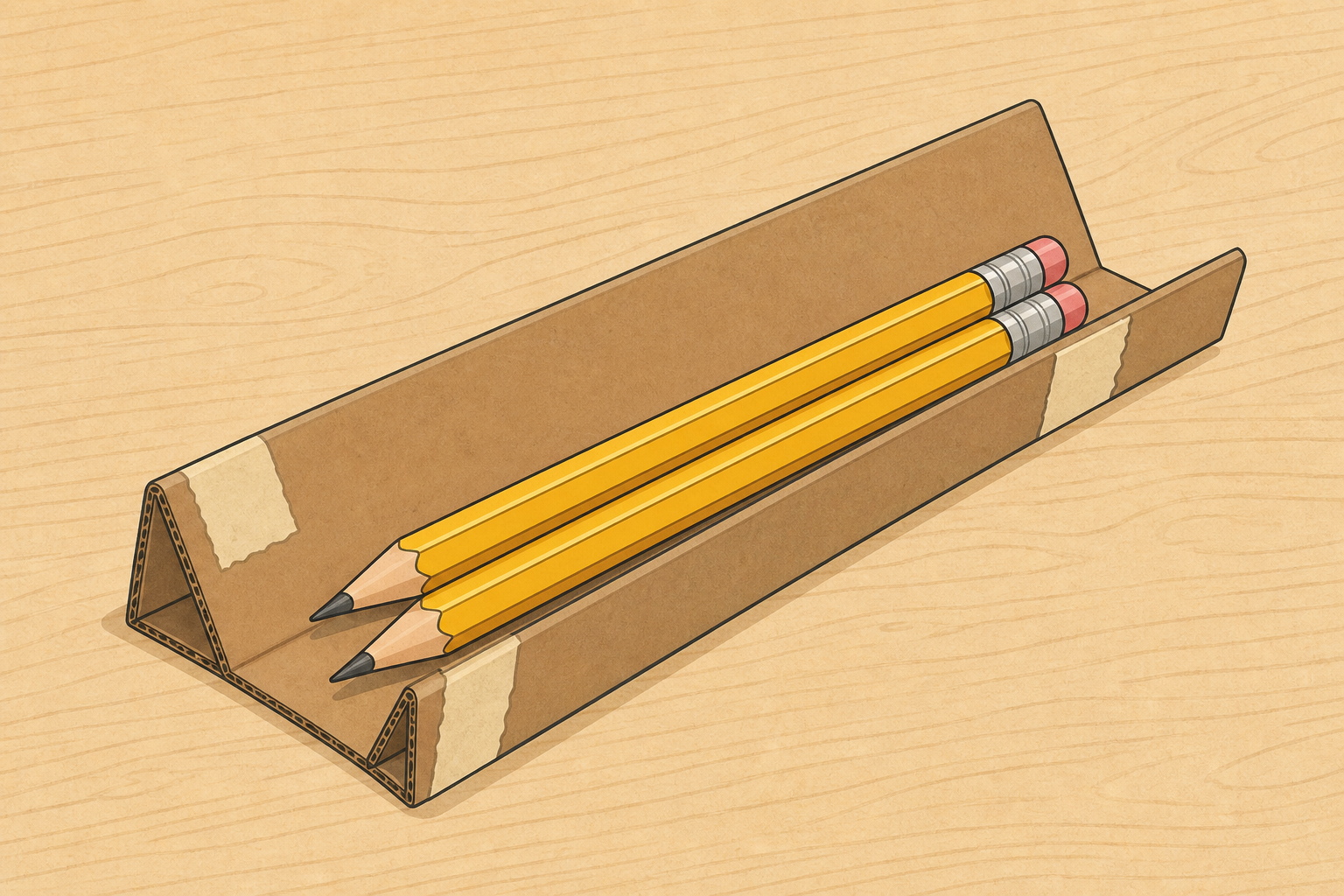
Our classroom helpers are ready. Today we get to show them off, hear kind words from friends, and think of one way to make them even better.
Have the helpers ready from the earlier session in this project (one per child or pair). Sit the class in a circle or horseshoe so everyone can see. Keep this beat light: hold up one helper as a reminder of the work, then name today's three jobs in plain talk (show, listen, think of a change).
Key question: Who can remember the little classroom problem their helper was made for?
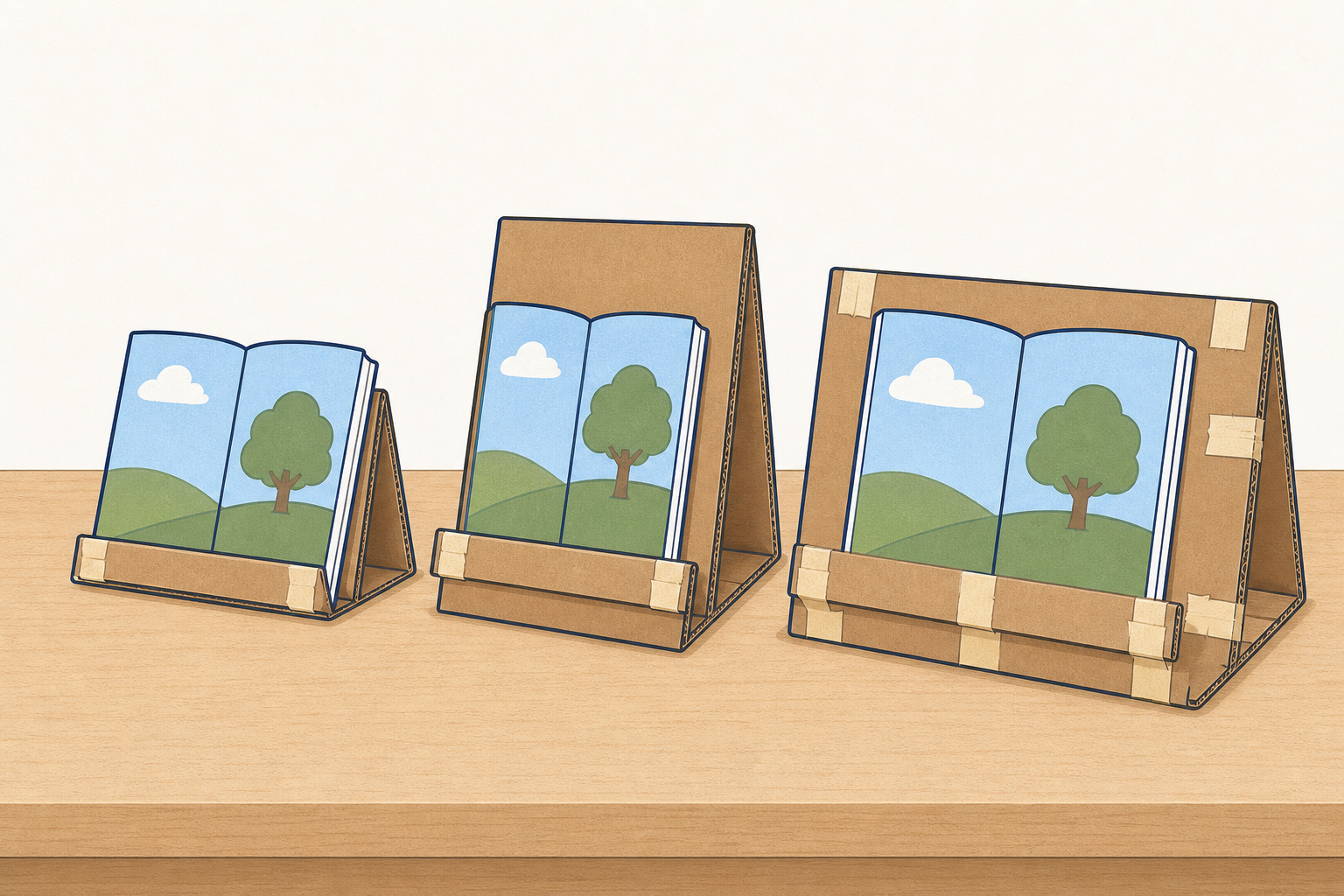
Before the lesson: gather the helpers kept safe from the earlier project session; clear a sharing circle on the carpet or floor; push chairs back if needed; sketch or write three simple board picture choices for the change beat (taller / wider / stronger tape).
Makers share their helpers and make them better. What kind thing could you say about a friend's helper? Use: I like how…
Board stays short: one idea and one stem only. Say the other ideas aloud with a real helper in hand. Use the table below for yourself, then model one kind comment out loud on a real helper (or on your own simple demo piece if a spare is handy).
| Concept | Why it matters | Example |
|---|---|---|
| Makers share and improve — show your helper, hear a kind comment, and think of one tiny change next time | Makers share so other people understand the problem and the idea, and they always look for a next small try | A child holds up a book stand, a friend says the bottom is wide so it stands steady, and the maker says next time they would tape the lid |
Oral stems to model (say them; write only the kind-comment stem on the board):
Misconception to head off: children may think a kind comment is only "I like it" or "it's nice". Push gently for something they can see: colour, shape, how it stands, what it holds. Also head off the idea that saying a change means the helper is "wrong". Makers always look for the next small improvement.
Nature of STEM weave: makers, designers and builders share their work and listen to other people's ideas so the next version can be even more helpful.
Let's practise a kind comment together. Look at one helper. What can you notice? Use: I like how…
Choose one finished helper (with the maker's permission) or use a spare junk model as the class example so no child feels put on the spot first.
Hold the helper where all can see. Invite three or four children to finish the stem I like how… with something they can point to (wide base, tall sides, a handle, bright colour). Revoice weak comments into specific ones: if a child says "it's nice", ask what part looks strong or helpful?
Look-fors:
Differentiation: offer a choice of two spoken stems for quieter children (I like the colour / I like how it stands). Confident speakers can add because….
First, your teacher will name your partner. Show your helper to your partner. Say: My helper is for… Your partner says: I like how… Then swap so you both get a turn.
Next, hold your helper up for the class. Say in one sentence: My helper is for…
Do not try a long speech from every child. Run three short beats so Learning Objective 2 is real for the whole class:
Each child or pair needs the helper made earlier in this project. Have a safe place on the floor or a low table for helpers waiting their turn so they are not crushed.
Safety: sit so pathways stay clear; remind children that small parts on junk models can come loose — hold with two hands; no throwing or swinging helpers.
If a helper was unfinished or went missing: the child may share their drawing or plan from earlier and still say the problem and hear a kind comment. Celebrate the idea, not only the finished build.
Facilitation from the circle: stay seated with the class. Use the chime to move on, revoice vague comments into specific ones, and fold watchers in with short notice questions. Do not leave the circle to "circulate".
Look at your helper. Makers always spot one tiny change to try next time. That does not mean your helper is wrong. Say one thing you would change. Use: Next time I would… You can point at the pictures on the board: taller, wider, or stronger tape.
This is oral only. Children do not write or type. Stay in the circle with helpers on laps. Nothing is printed for this beat.
Model first with a think-aloud on one helper: Next time I would make the base wider so it does not tip. Point to the three simple picture choices already on the board (taller / wider / stronger tape) so stuck children can point instead of inventing words. Then go round quickly, or take a hands-up sample and invite partners to whisper their change to each other so every voice is used.
Prompts if stuck:
Misconception: "change" does not mean "my helper is bad". Praise the maker mindset: real makers always spot a next step. If a child says they would change nothing, accept it once, then ask gently what they might try if they made a helper for a different classroom job.
Differentiation: picture choices on the board for children who need a scaffold; confident speakers can say why the change would help.
Listen for (oral checklist): Next time I would… / a real part or job named / calm, proud voice.
You're previewing this lesson. Get full access to this lesson and hundreds more — each one ready to teach, with interactive activities, printable resources and pupil progress tracking built in.