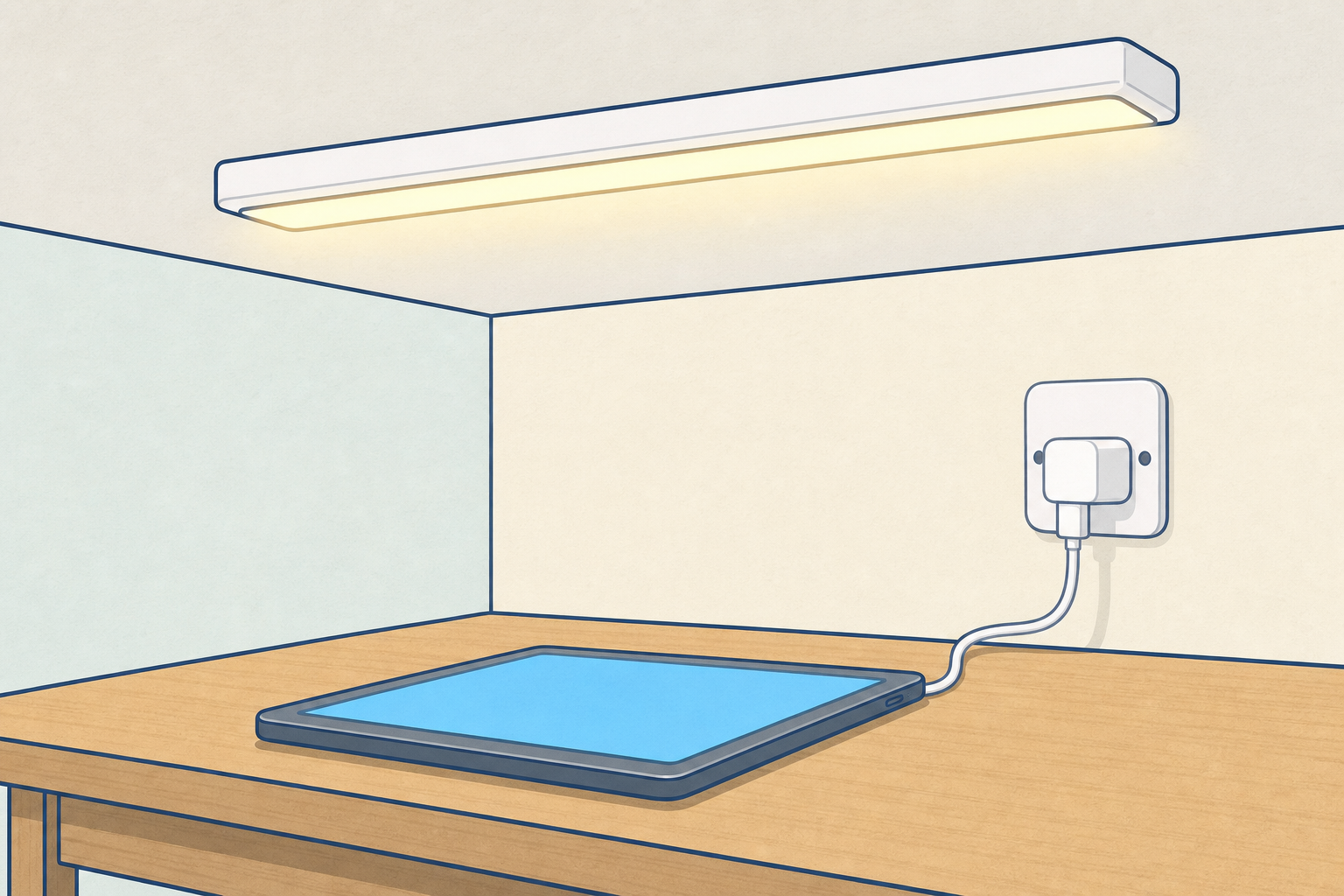
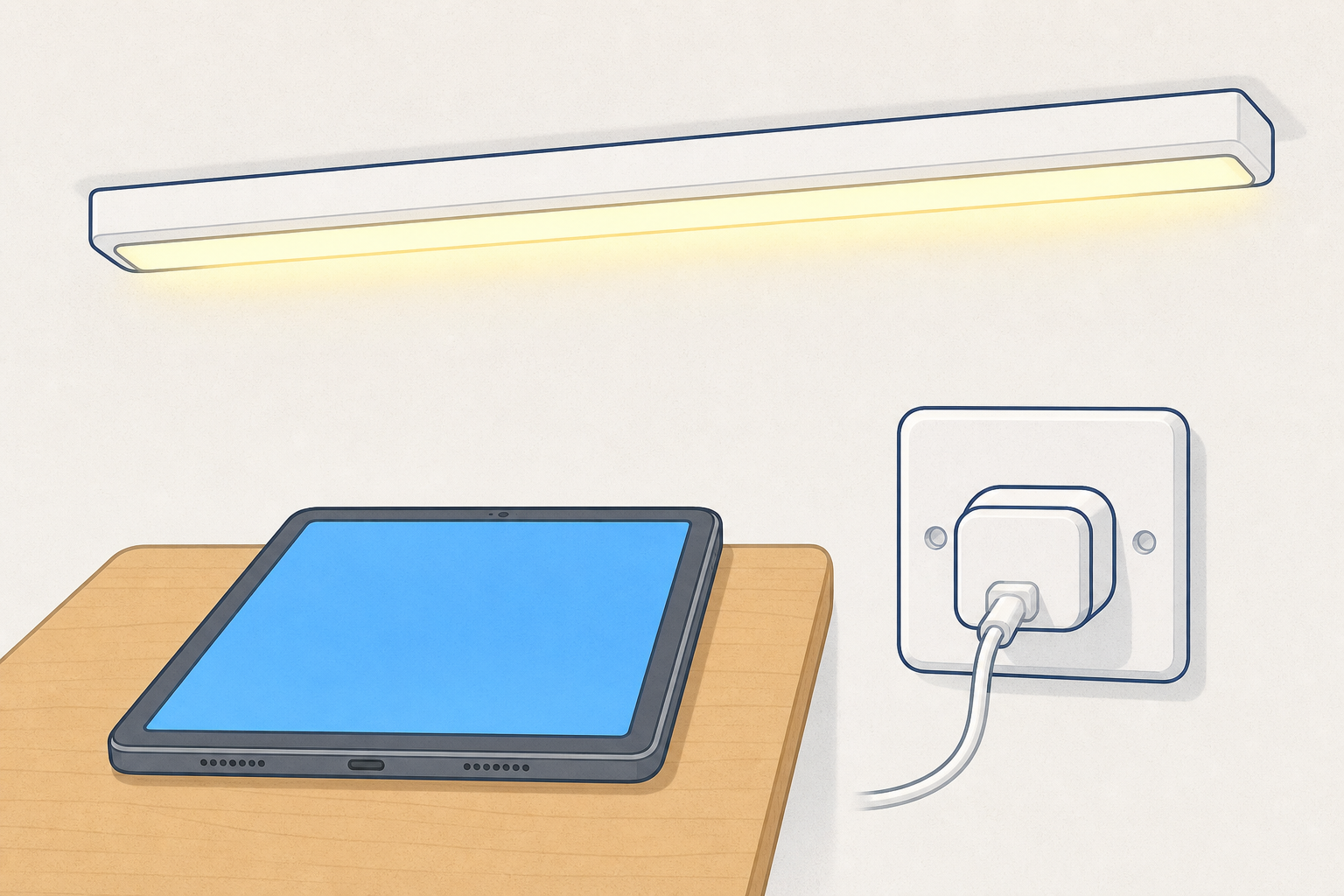
Look around our classroom. Is anything using energy right now that we do not need?
Today we are energy detectives. We will hunt for wasted energy at school and help everyone save it.
Keep this hook light. Do not hand out clipboards or start the walk yet. Ask one or two pupils to point at something they notice (a light, a screen, a charger brick) and say whether it needs to be on.
STEM eyes: link back to noticing energy in everyday places. Energy is all around our school and homes; today we notice when it is being wasted.
Have the reminder-card materials ready for later, but do not set them out yet. Pair pupils now so partners are ready before the walk.
You already know that energy makes things light up, move, warm up or make sound.
Today's two detective words:
Wasting energy means using energy when nobody needs it.
Saving energy means switching things off when we are finished.
Our detective question: where is energy being wasted in our school?
Board version only above. Say the meanings in tiny chunks with one classroom example each. Treat energy as already known; foreground only wasting versus saving as the two working words pupils must use on the walk and on their card.
Use the full table yourself:
| Concept | Why it matters | Example |
|---|---|---|
| Energy — what makes things move, light up, warm up or make sound | Almost everything we use at school needs energy, so noticing it helps us look after it | The interactive whiteboard lights up and shows pictures because it is using energy |
| Wasting energy — using energy when nobody needs it | Wasted energy means the school pays for power nobody is using, and it uses up resources the planet gives us | A light left on in the empty cloakroom all morning |
| Saving energy — using only what we need and switching off when we finish | Small everyday actions add up and help our school and the planet | Turning off the classroom lamp when we leave |
Misconception to head off: some children think saving energy means never using lights or screens. Saving energy means using them when we need them and switching them off when we do not.
Worked model (say aloud before the walk): I wonder if energy is being wasted near the door. I predict the corridor light might still be on. I check — yes, the light is on and nobody is there. I think that light is wasting energy, so we should switch it off and put a reminder nearby.
Sit with your partner. Put your energy detective page on the clipboard and take a pencil.
We are going on a short energy detective walk. At each stop, look for lights, screens, or chargers (the plug brick that fills a tablet) that are on when nobody needs them.
Whisper to your partner: is energy being wasted here? Sketch or tick one find on your page.
Lead the class. Stay together. Line up calmly, walk to stop one, pause for partner talk and a quick sketch or tick, move to stop two, then return straight to class. At each stop ask: What do you notice? Is anything using energy that we do not need right now?
Primary finds: lights in empty rooms or corridors, and idle screens left on. If you notice a charger brick plugged in with nothing attached, frame it as a good habit to check rather than a guaranteed visible waste: We often unplug or switch off chargers when nothing is charging — it is a careful habit. You may also notice a dripping tap from a doorway: say plainly, A dripping hot tap wastes the energy used to heat the water; a cold tap wastes water we all need. Keep the main detective focus on lights and screens.
If the school is already careful and little is left on, celebrate that and still practise the noticing skill: What would waste energy if we left it on?
Key questions: This light needs energy from electricity in the wires — is anyone using that light right now? Who could switch this off? What reminder would help next time? (If a pupil wonders where energy comes from more widely, keep that as a brief extension wonder rather than a required question.)
Differentiation: less confident pairs can point and name one thing (light / screen / charger) and make a simple mark on the page. Confident pairs can sketch the place and whisper one fix.
Safety: pupils must not touch switches, plugs or taps unless an adult says so. View toilets and wet areas from the doorway only.
Now a new job on your energy detective page.
Draw one clear picture of a way you can save energy at school or at home. Add a short label, for example: switch off the light, or switch off the tablet.
Pupils already have their Investigation Journal page from the walk. Treat step 3 and step 4 as two separate jobs on the same page, not one unfinished drawing:
Model both jobs on the board if needed so nobody tries to turn the walk tick into the saving drawing. Keep pupil examples on lights, screens and tablets. Water noticing stays on the walk with your hot-tap / cold-tap line only; do not use water as a journal saving example here.
Support writers with word cards on the board: light, screen, switch off, save energy.
Circulate and ask each pair to say their idea in a full sentence: I can save energy by…
This journal beat stays in the lesson. Any home noticing is optional only and comes later.
In pairs, make one bright reminder card for our school.
Draw one bold picture of a light, a screen or a charger. Copy a short message from the board, such as Switch it off!
We will place these cards where they can help people remember.
Give each pair one piece of card, markers or crayons, and optionally a sticky tack blob for later placement. Write two or three ready stems on the board so pairs do not invent long wording: Please switch me off, Save energy: lights off, Screens off when you leave. Keep card subjects on clear electrical examples only (light, screen, charger). Do not offer a water-tap stem on the energy card; water noticing stays on the walk.
Model one finished card in under a minute first: one bold picture plus a short stem. Protect finishing time — the goal is a usable reminder, not open-ended design talk. If time is tight, pairs draw only and stick on a short printed strip of wording.
Collect finished cards for the share step. After the lesson (or with permission during tidy), place a few cards near real switches with staff agreement.
You're previewing this lesson. Get full access to this lesson and hundreds more — each one ready to teach, with interactive activities, printable resources and pupil progress tracking built in.