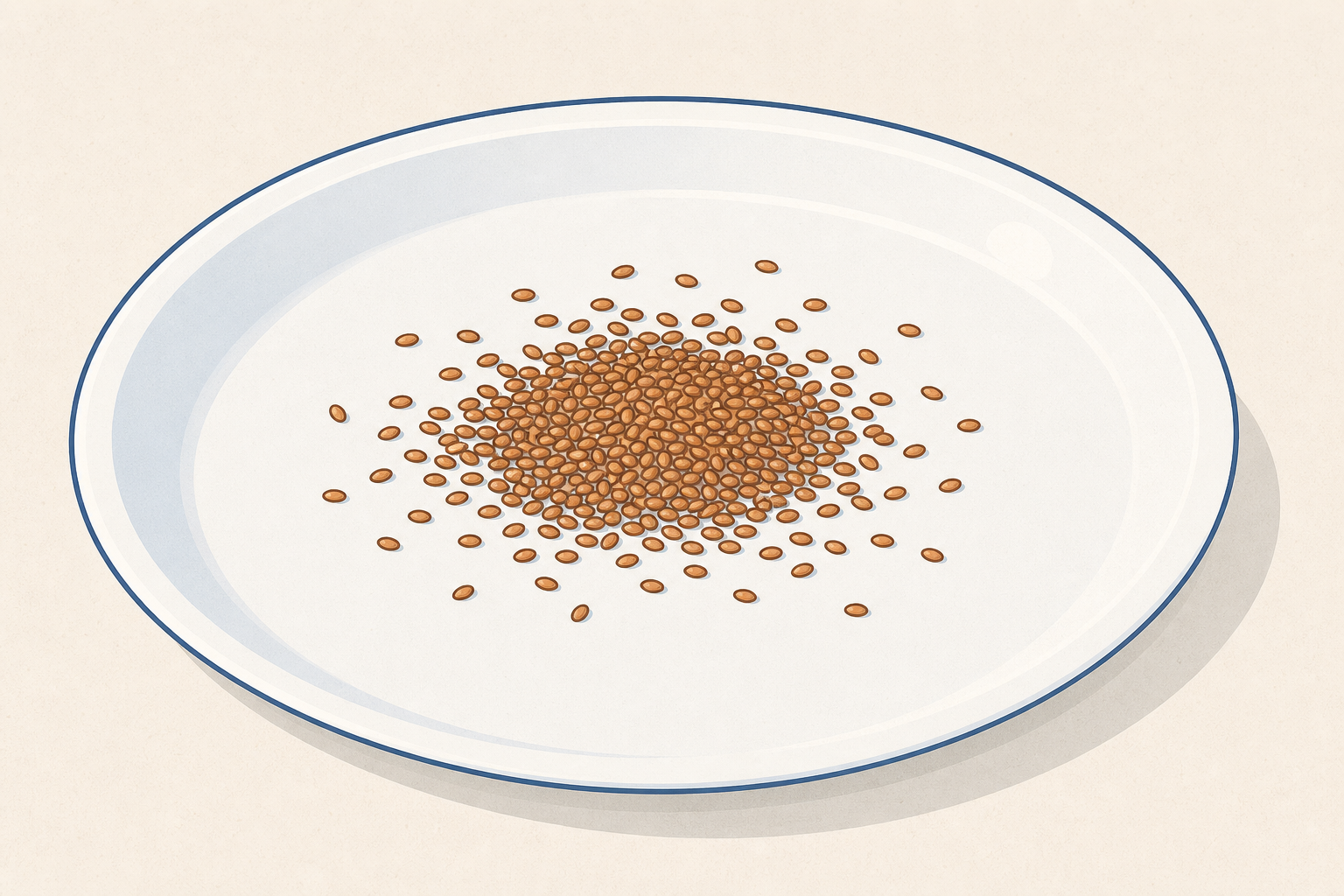
Look at these dry seeds. What do you think they need before they can grow into healthy plants?
Hands up one idea. We will turn one of your ideas into a real test today.
Have a small handful of dry cress seeds ready to show on your palm or in a dish. Keep the full planting kit out of sight until the investigate step.
Key questions: What do plants need? Which of those could we test fairly in our classroom?
Accept light, water, soil, warmth, air. Do not correct every idea yet. The hook is curiosity only.
Misconception to note for later: some children say seeds need soil more than light or water, or that plants "eat" soil. Soil or cotton wool holds water and roots; the test will focus on light or water.
We are going to run a fair test: change one thing, measure one thing, and keep the rest the same.
Soil and warmth matter too, but today every group will test either light or water so the class can compare fair results.
Listen to this short model. I wonder whether cress grows better in light or in the dark. I predict the windowsill cup will look greener and healthier because plants use light to make food. The dark cup may look pale or yellow.
I change only the light. I keep the same seeds, cotton wool, cup and water. I check over the coming days, because plant tests are watched over time, not finished in one afternoon.
The thing we change is called the factor. Which factor will your group test: light, or water?
Board stays short. Teach from the table below, then the brief spoken model. Keep the IWB to the fair-test rule and the factor choice; speak the worked model rather than leaving a long block for pupils to read.
| Concept | Why it matters | Example |
|---|---|---|
| Fair test — change only one thing, measure one result, keep everything else the same | If two things change at once, you cannot tell which one caused the result | Same seeds, same cotton wool, same cup and same starting day; only light (or only water) differs |
| Factor — one condition that might affect growth, such as light or water | Plants need several things, but a fair test checks one idea at a time | Group A tests light (windowsill vs dark cover). Group B tests water (full measure vs a few drops) |
| Observation over time — a result that unfolds across days, not in one sitting | Growth is slow. A careful set-up today is what makes later measurements trustworthy | Cress often shows a clear difference within a few school days on an Irish classroom windowsill |
Bridge from the hook: honour ideas such as soil, warmth and air. Say clearly that those matter too, but today's class test is light or water so every group can compare fair results later.
Spoken model (keep tight, about one minute):
I wonder whether cress grows better in light or in the dark. I predict the windowsill cup will look greener and healthier because plants use light to make food; the dark cup may look pale or yellow. I change only light. I keep the same seed type, number of seeds, cotton wool, cup size and water. I measure how green, sturdy and healthy the seedlings look over a few days (height is optional only). That is an observation-over-time fair test.
Teacher note on height: dark-grown seedlings can grow taller and spindlier (etiolation). Prefer colour, sturdiness and overall health as the headline measures so results do not contradict the model.
Nature of STEM: plant scientists and growers set careful conditions and return to the plants over days.
Agency: the class agrees what makes any plant test fair. Each group then chooses light or water as its factor.
In your group, choose one factor to test: light or water.
Say your testable question out loud, then your prediction and why. Predictions are the start of the science, not a guess to get right.
Form groups of three or four (or confirm existing table groups) before the factor choice begins, so pupils are already seated with partners when you say "in your group".
Write two sentence stems on the board: Our question: Does … change how well our seeds grow? and We predict … because …
Give groups about two minutes to choose, then take three or four predictions aloud. Fold the listening groups in: Do you agree? What would you predict for their factor?
For light groups, steer predictions toward greener, sturdier, healthier growth (not "taller" alone). For water groups, steer toward healthier growth with enough water versus little water.
Look-fors:
Differentiation: if a group is stuck, offer the two ready questions: Does the amount of light change how well cress grows? or Does the amount of water change how well cress grows?
Remind them the answer will not appear today. They are setting up a test the class will watch over the coming days.
Five cards appear on the board: amount of light, amount of water, how healthy the seedlings look, type of seed, and amount of soil or cotton wool.
First we sort them for a light test. What do we change? What do we measure? What must we keep the same?
Then we flip the cards for a water test so every group sees its own path.
After both models, complete your fair test plan on your Investigation Journal page for the factor your group chose.
Drive the fair-test-planner on the board in explore mode. The five cards are exactly: amount of light, amount of water, how healthy the seedlings look, type of seed, amount of soil or cotton wool.
Path 1: light model (say it as you drag):
Path 2: water flip (do this before journal writing so water groups are not left copying the light plan):
Leave both paths visible in your talk: "Light groups keep water the same. Water groups keep light the same."
Pacing lever: keep each board path to about 90 seconds of drag-and-say. If time is tight, the water flip is a quick swap of the two cards into Change and Keep the same, not a second full monologue. Protect at least four minutes for every pupil to record change, measure and keep-the-same for their own factor on the Investigation Journal page.
Group design choice: each group decides which factor it changes and how it will judge health (green-or-pale scale the class agrees, sturdiness, number of green shoots; height only as an optional extra note). That choice is where the investigation is open-ended.
Misconception: children may want to put both light and water in Change. Stop and ask: if both change, how will we know which one mattered?
Pupils write the plan on the Investigation Journal page. Tell them what to record: their question, prediction, what they change, what they measure, what they keep the same. Do not invent extra layout for them.
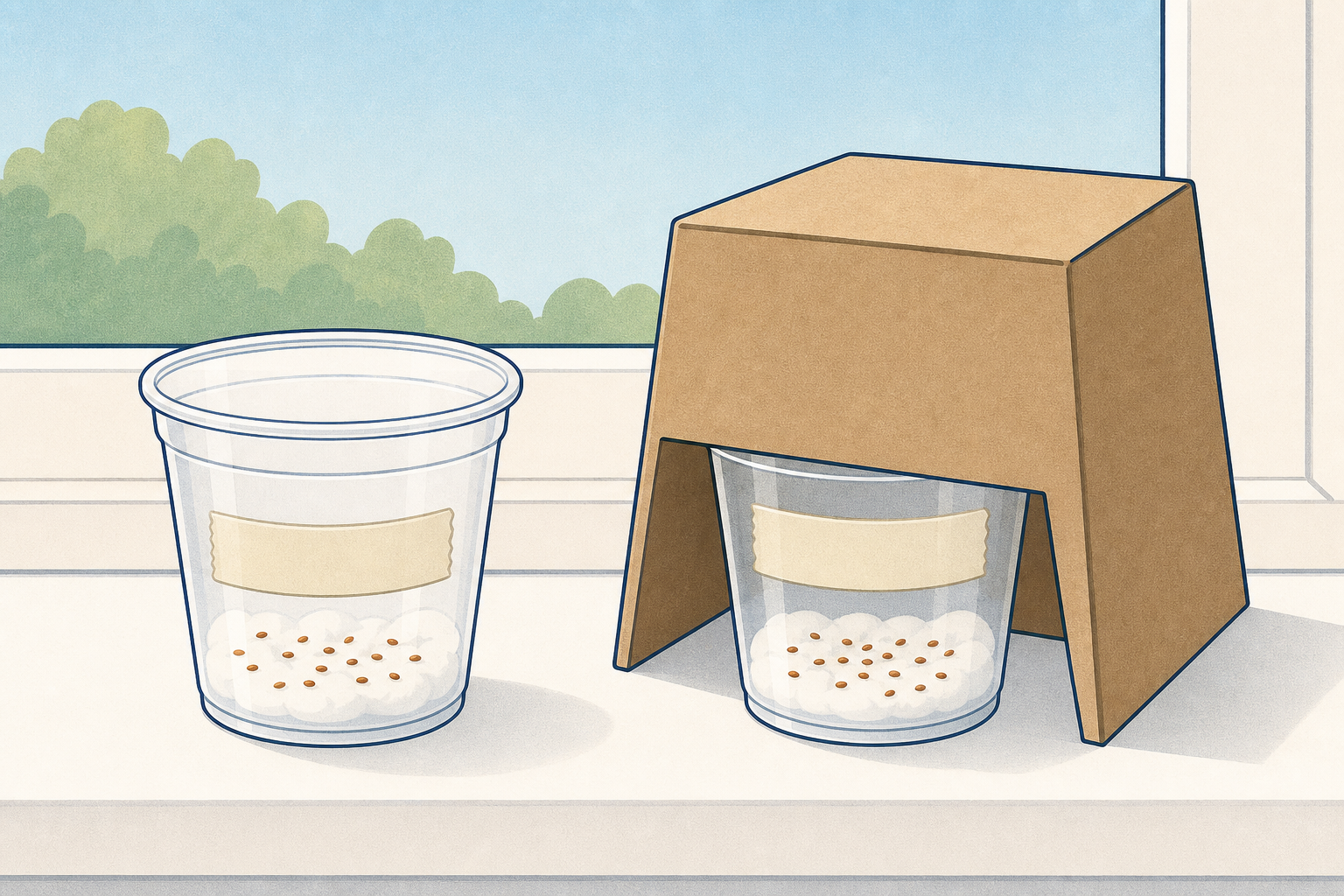
Before anyone moves, we agree the places together: bright windowsill for light cups, dark cover or cupboard for dark cups, and one shared sill for all water-test cups.
Watch one labelled pair set up at the front first, so everyone sees matching amounts and a clear single-factor change.
Now set up the test your group planned.
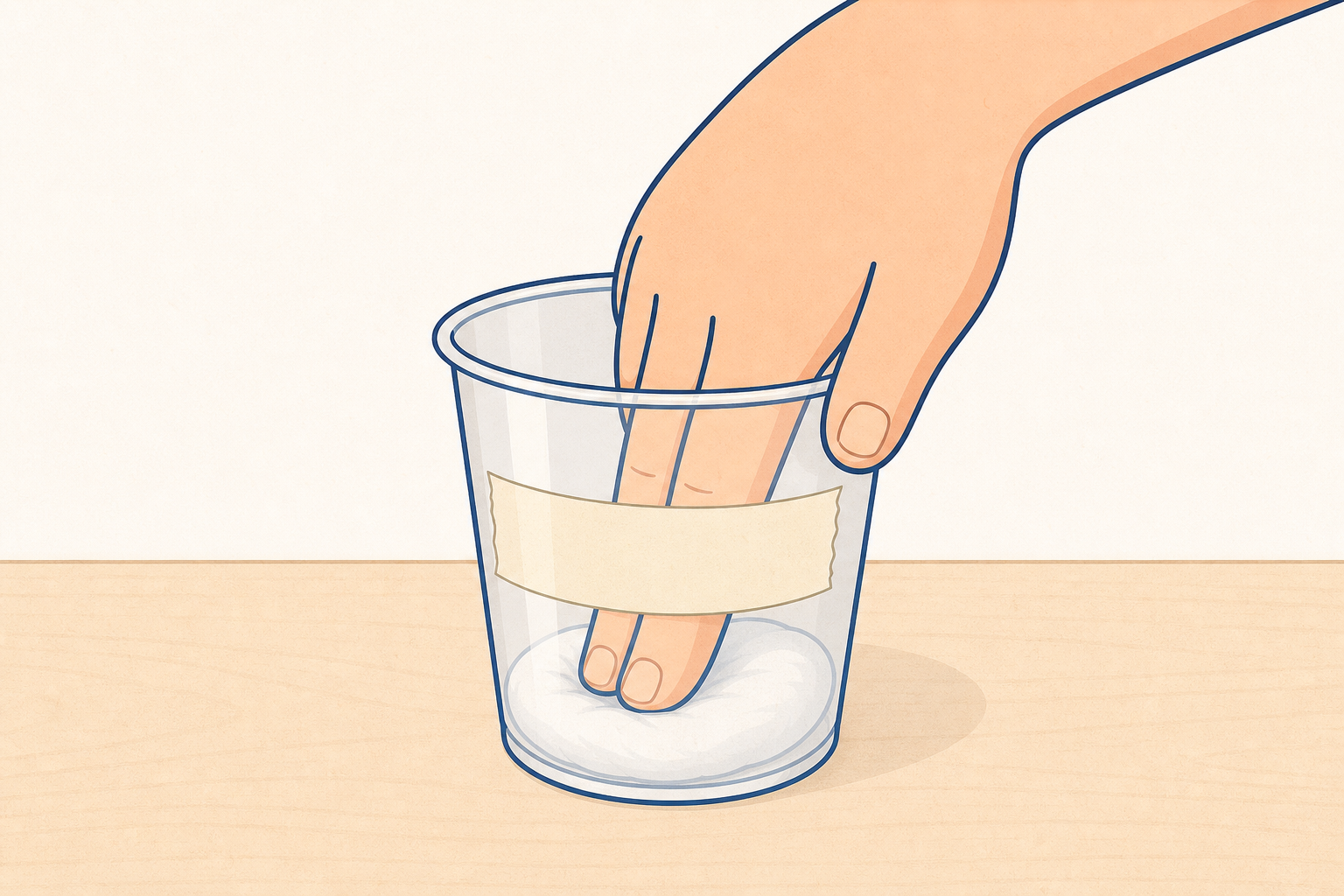
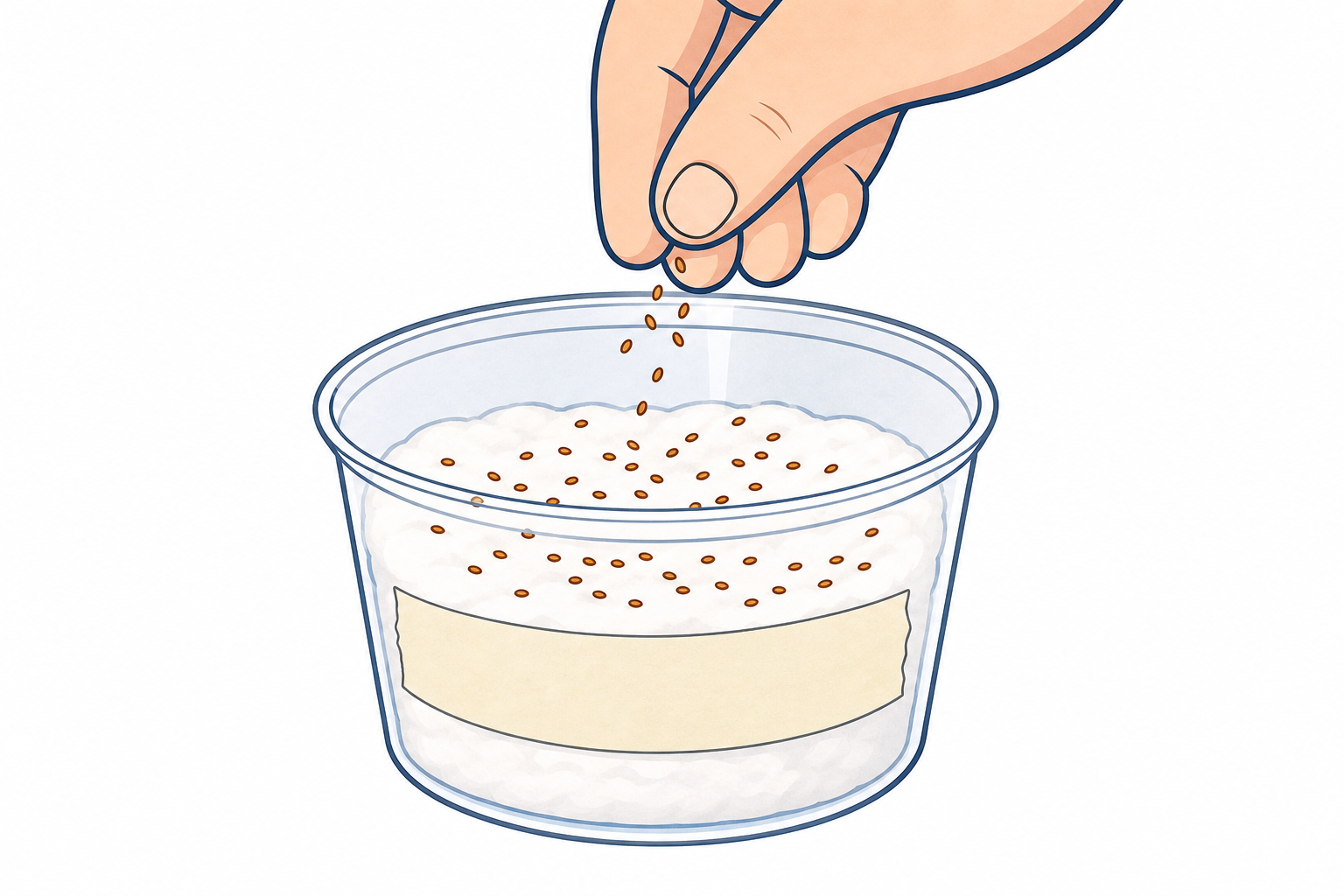
Use the same number of seeds and the same amount of cotton wool in each cup. Change only the one factor you chose. Label every cup clearly with your group name, the factor, and the condition (for example light or dark, full water or few drops).
Place your cups only in the places we just agreed.
Point and name: bright sill, dark cover or cupboard, shared sill for water tests. Groups do not invent their own spots.
At the front, set up one matching pair quickly: same seed count, same cotton wool, clear labels, then place them in the agreed spots. Narrate the matching rule out loud so fairness is seen, not only read.
Light groups: two matching cups, same seed count, same damp cotton wool, same water. One on the bright windowsill; one covered with dark card or placed in the dark cupboard.
Water groups: two matching cups, same seed count, same cotton wool, same light on the shared sill. One gets one tablespoon of water; the other gets only a few drops (damp vs barely damp). Prefer this graded contrast over a fully dry cup unless the class question is specifically "Do seeds need water to start growing?" A bone-dry cup often gives grow-versus-nothing rather than a growth-quality comparison.
After the front model, circulate. Check labels before cups move. If a group accidentally changes two things, help them reset rather than start a new design mid-lesson.
Safety: wash hands after handling soil or seeds. No tasting seeds. Mop water spills at once. Adult places cups in high cupboards if needed.
What good looks like: two cups that truly match except for one factor; clear labels; cups already in their final agreed places before the end of the step.
Over the coming days (moisture fairness for light groups): bright-sill and dark cups can dry at different rates, which would add water as a second factor. At each check, for light groups only, quickly compare the cotton wool. If both cups are drying, add the same small top-up to both. Do not rescue only the dry-looking cup.
You're previewing this lesson. Get full access to this lesson and hundreds more — each one ready to teach, with interactive activities, printable resources and pupil progress tracking built in.