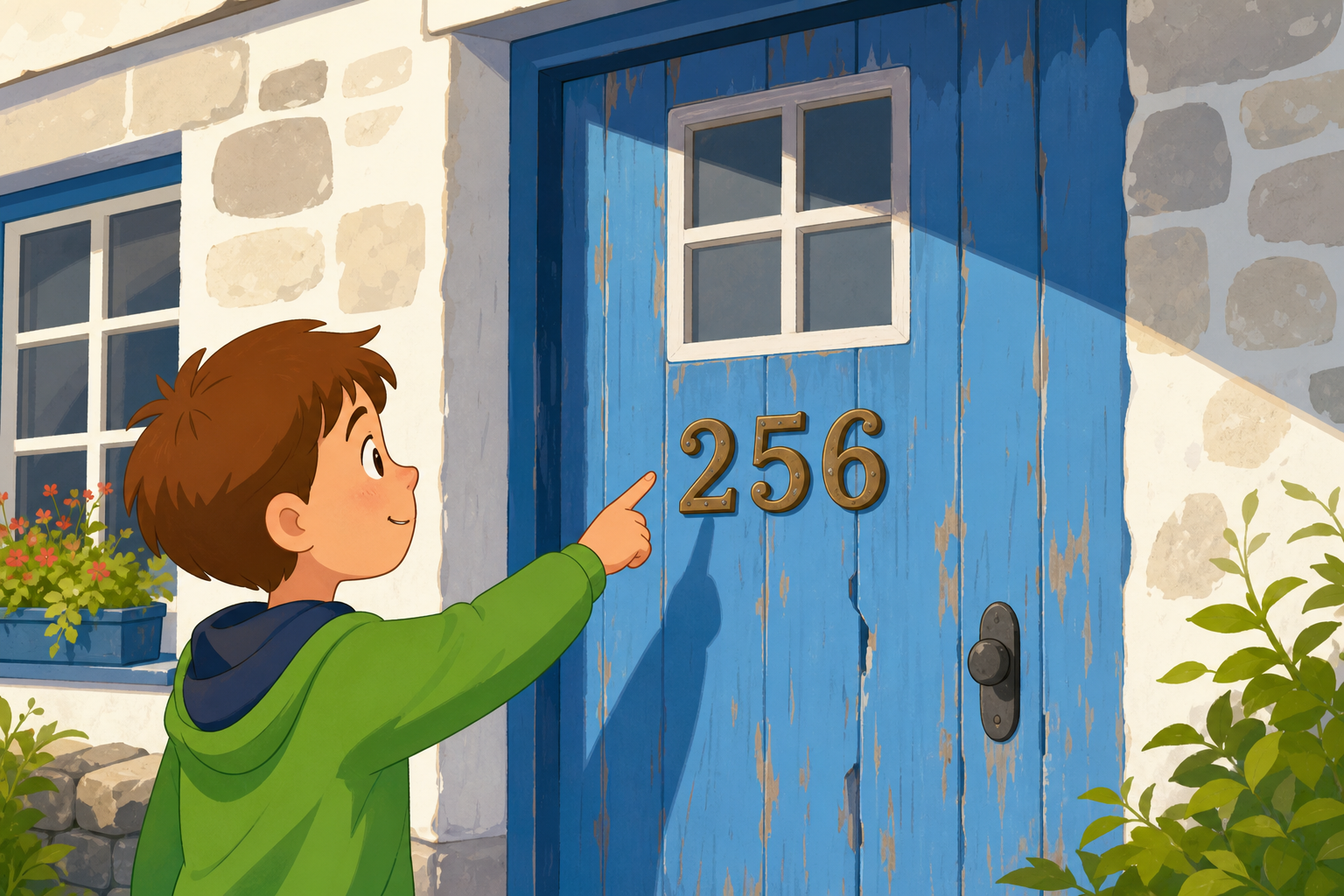
Here is a number: 256. What is it really made of? How many hundreds are hiding in it? How many tens? How many units? Hands up and tell me one part you can see.
Write 256 large on the board. Take three hands-up answers, not open call-outs. Pull the number apart with the class into 200 + 50 + 6 as pupils name each part — leave that split on the board, it seeds the whole lesson.
Look at the blocks for each number, shown as hundreds, tens and units. Each number is shown two ways. Look carefully at how many tens each one really holds.
256: split into 200 + 50 + 6, then push the parts back together. Stress the value never changed.
403: four flats, no rods, three units. The zero holds the tens place. Ask what goes in the middle before revealing.
Before 250, ask them to predict how many tens it holds.
250: the make-or-break beat. Each hundred is ten tens, so 200 is 20 tens, plus the 5 tens showing, 25 tens altogether. Same blocks, two ways to say it.
700: same idea with no tens or units showing. Seven hundreds is seven lots of ten tens, 70 tens in all.
Today we work through these numbers together on the board: 138, then 305, then 260, then 490. For each one you will build it, then split the blocks into hundreds, tens and units and read the parts aloud. The zero in 305 catches people out, so we will say each part slowly before we check it.
This round is for talking it through together — pupils take turns at the board and the class agrees or corrects out loud.
Call one number, send a pupil up to build it on the place-value-blocks mat, then have them separate the blocks and read the parts as a sum (one hundred, and thirty, and eight). For 305 listen for pupils skipping the tens — press 'is there a tens part? what do we write?'. Rotate four pupils across the four numbers.
In your maths copy, write each of these numbers as a sum of its hundreds, tens and units, one under the other. Then add the parts back to check you get the number you started with.
Walk the room, glancing for a written zero in the 305 line and neat plus signs — this is whole-class copybook practice, not marking. No individual correction; nudge anyone who leaves the tens part out of 305.
Now for our challenge on the board. We will partition 138, then partition 305, then build 40 tens, then build 62 tens. The last two are the tricky ones: think about how many hundreds hide inside all those tens before you start building.
These are the practice questions — pupils take turns at the board, check each answer, and the class confirms before moving on. Keep the board work brisk rather than over-explaining.
The 40-tens and 62-tens targets are the hardest ones: 40 tens is 400, and 62 tens is 620 (six hundreds plus two more tens). Ask the class to predict the hundreds count before the pupil builds, then use the Check ✓ to confirm. Watch for pupils treating '40 tens' as the number 40.
You're previewing this lesson. Get full access to this lesson and hundreds more — each one ready to teach, with interactive activities, printable resources and pupil progress tracking built in.