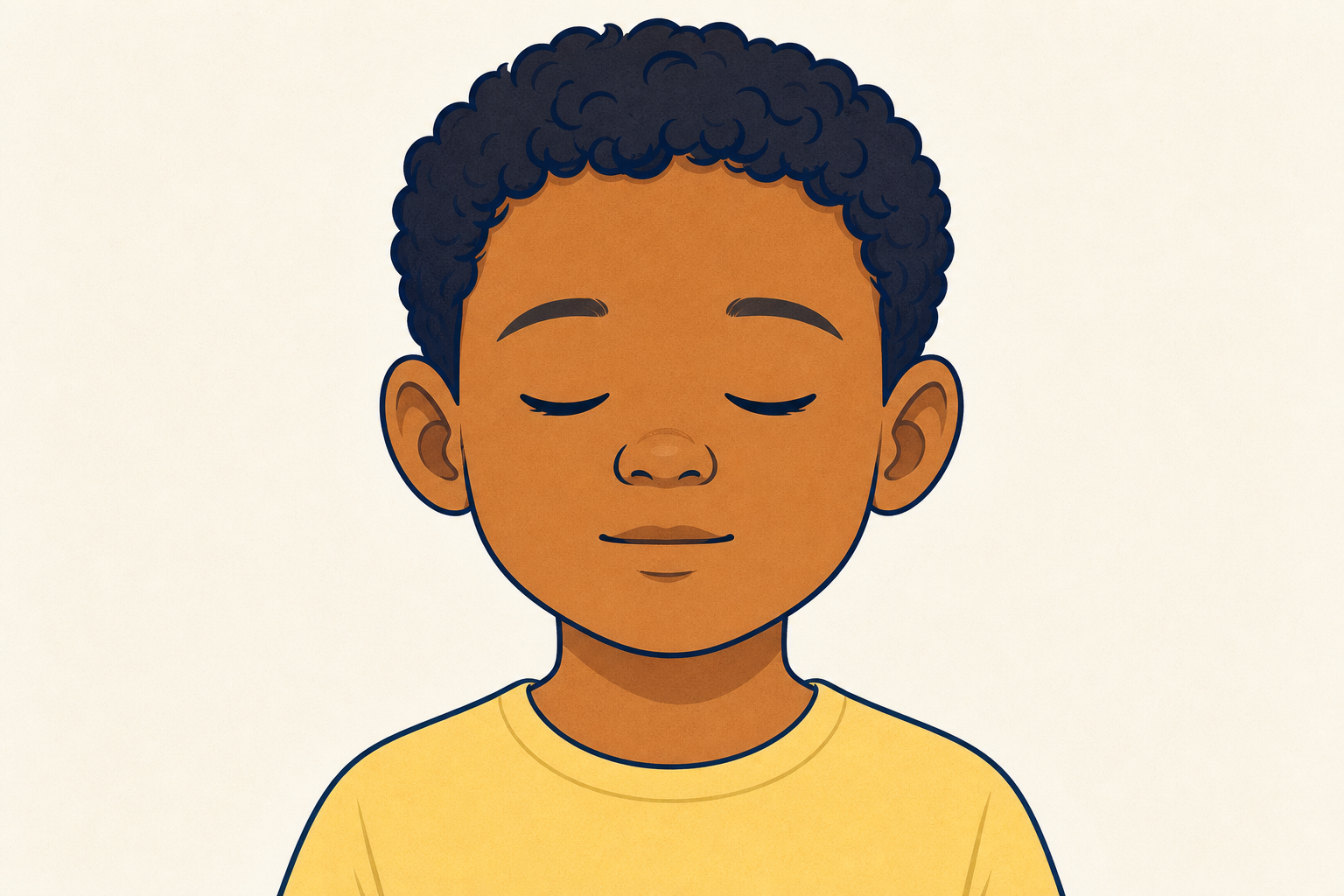
Close your eyes for a moment. What can you still hear? What can you still feel?
How do we find out about the world around us?
Keep this beat light and curious. Ask the class to close their eyes for a few seconds, then open them. Invite two or three children to say what they could still hear or feel (a chair scrape, the radiator, their jumper).
Key question: How do we find out about the world around us? Accept any answer that points to looking, listening, smelling, tasting or touching. Do not name all five senses yet.
Before the lesson: check the class allergy list for fruit and strong scents. Set up the four circuit stations plus the teacher-controlled taste offer (see Explore step). Have the diagram-labeller ready on the IWB. Print the Investigation Journal page for each child.
Today's word: senses. Senses are the ways our body finds out about the world.
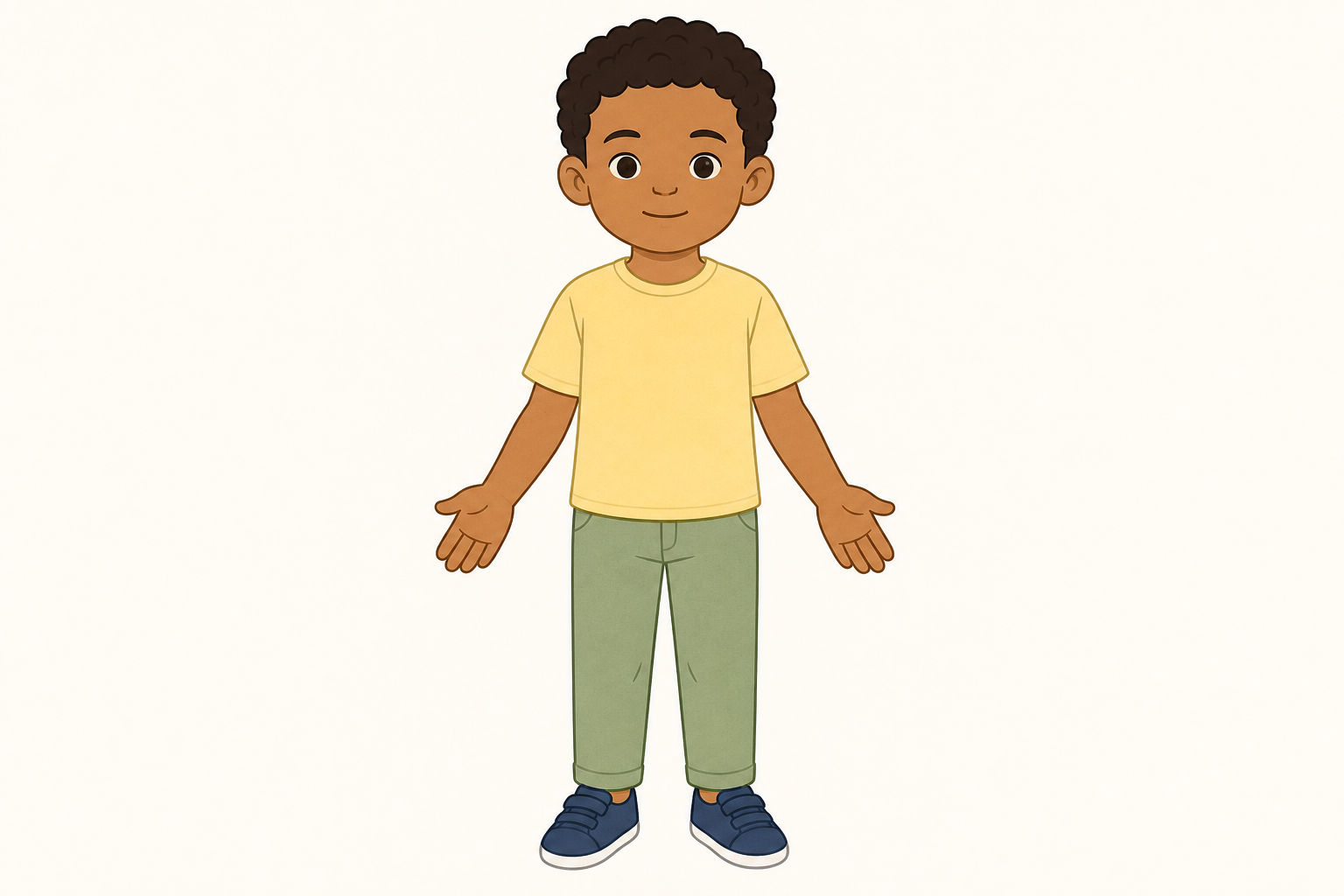
Help match each body part on the child on the board. We will name one sense at a time.
Which part do we use to smell? Show me on your body.
Drive the diagram-labeller on the IWB in explore mode so labels are not pre-placed. Work with the class to place one label at a time. After each match, children point to the same part on their own bodies and chorus the pair before you move on.
Reveal order (one pair at a time):
Use the word tongue every time for taste (on the board label, in your talk, and when children answer). If a child says mouth, affirm: Yes, the tongue inside our mouth does the tasting.
| Concept | Why it matters | Example |
|---|---|---|
| Senses — the ways our body finds out about the world around us | Senses help us stay safe, enjoy food, and notice nature in the yard | Closing your eyes, you can still hear the bell and feel your jumper |
| Eyes — the body part we use to see | Seeing helps us notice colours, shapes and people | Looking closely at a leaf on the tray |
| Ears — the body part we use to hear | Hearing helps us listen to friends, music and sounds outdoors | Shaking a pot and hearing rice rattle |
| Nose — the body part we use to smell | Smelling helps us notice food, flowers and when something is off | Sniffing a sealed smell pot of orange peel |
| Tongue — the body part we use to taste | Tasting helps us enjoy food and notice if it is sweet or sour | A tiny piece of washed apple (allergy checks first) |
| Hands — the body parts we use to feel and touch | Feeling tells us if something is soft, hard, bumpy or smooth | Reaching into the feely-bag without looking |
Model one beat aloud before the circuit: hold up the feely-bag. Say: I wonder what is inside. I think it might feel soft. I put my hand in… I noticed it is soft and squashy. I think it is a sponge. I used my hands to feel.
Misconception to head off: some children say we only have eyes for finding things out. Gently show that ears, nose, tongue and hands find things out too.
Ask after each label: Which part do we use to ___? Show me on your body.
We will visit the sense stations together.
Use your eyes, ears, nose, tongue or hands to find things out.
What do you notice?
Do not open five stations at once. Lead a whole-class circuit: the class moves with you from station to station. You supervise every stop. Aim for about two minutes of exploring at each stop, then call the move. Every child should reach at least three stations, and every child should visit smell or the teacher-controlled taste offer, plus at least one other.
Suggested route (about 11 minutes including short moves):
At each stop, ask: Which body part are you using? What did you find out? Revoice answers: You used your nose to smell the orange.
Safety: sleeves up at the taste offer; wipe spills; no sharing cups; magnets and small loose parts are not used today. Keep smell pots sealed when not in use. Wash hands after the circuit.
Differentiation: quieter children can show by pointing to eyes, ears, nose, tongue or hands. Confident talkers can say one describing word (soft, loud, sweet).
Think about one station you visited.
Which body part did you use? What did that sense find out?
Whole-class oral observation beat. Children stay seated or gather on the carpet. Call on a few children, one station at a time, so the class hears all five senses named.
Prompts to use:
Revoice every answer with the sense and body part: Aoife used her ears to hear the rice shake.
Look-for: children can point to or name the body part and say one thing they noticed. Guessing the exact object in the bag is a bonus, not required.
On your Investigation Journal page, draw one sense you used and what you found out.
You might draw your nose and the smell pot, or your hand in the feely-bag.
This beat stays in class before Make-sense talk. Hand out the Investigation Journal page and crayons. Children draw one sense body part and something they noticed at a station. They do not need to write words; if a child wants a label, you or an SNA may scribe a single word they say (soft, rice, apple).
Sentence starter to say aloud (not for writing): I used my ___ to ___.
Circulate and ask each child to point to their drawing and tell you the sense. Praise noticing, not neatness.
Fast finishers: add one more detail to the same drawing (the pot, the tray, a friend at the station). No second sheet and no device task.
You're previewing this lesson. Get full access to this lesson and hundreds more — each one ready to teach, with interactive activities, printable resources and pupil progress tracking built in.