Mathematics
Beginner
50 mins
Teacher/Student led
+65 XP

What you need:
IWB/Projector/Large Screen

Ordering a Set of Numbers to 1,000

Teacher Class Feed

Load previous activity

    1 - Getting Started ~4 mins

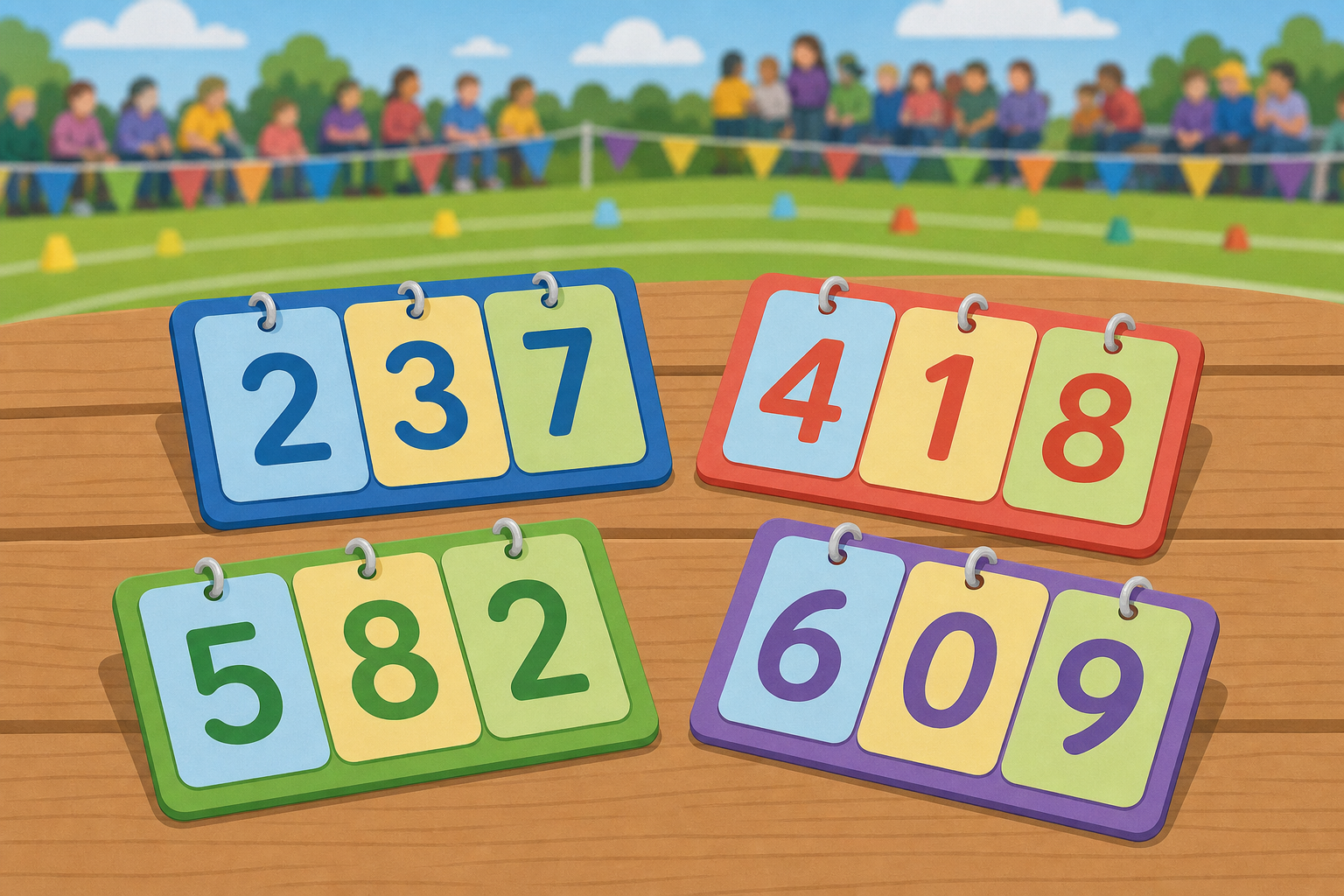
    Illustration for Getting StartedHere are four scores from a school sports day, all jumbled up: 120, 210, 102 and 201. We will line them up from lowest to highest by comparing one column at a time.
    Start with the hundreds. 102 and 120 both have 1 hundred, while 201 and 210 both have 2 hundreds. The scores with fewer hundreds come first, so the 1-hundred pair goes before the 2-hundred pair.

    When hundreds tie, move to the tens. For 102 and 120: 102 has 0 tens and 120 has 2 tens, so 102 is smaller. Order so far: 102, then 120.

    Now the two with 2 hundreds. Tens again: 201 has 0 tens and 210 has 1 ten, so 201 comes next, then 210.

    Full order from lowest to highest: 102, 120, 201, 210. Always start at the hundreds, and only move right when a column ties.

    2 - Watch and Notice ~8 mins

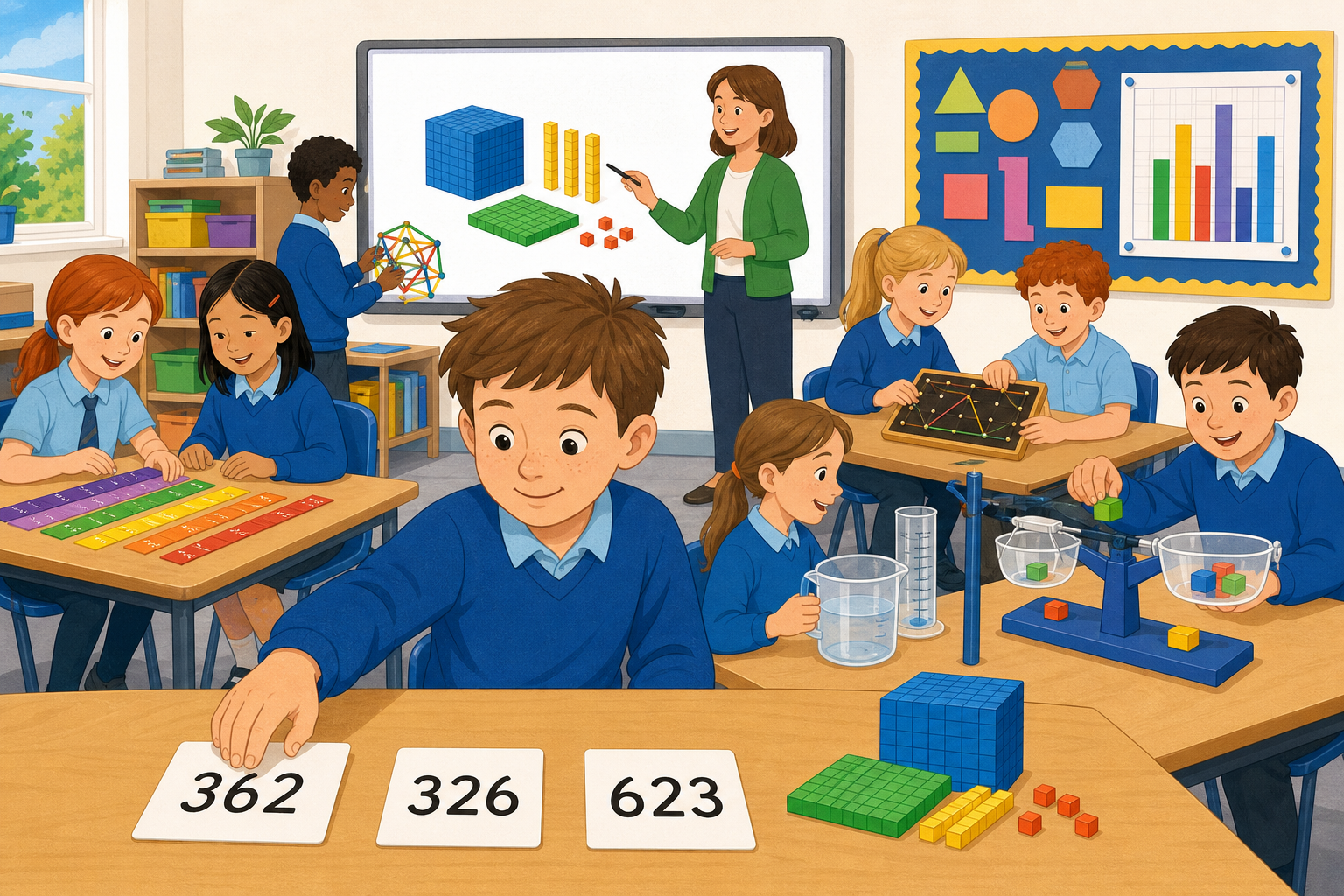
    Illustration for Watch and NoticeLook at these three numbers. We order them by comparing column by column. Watch where we look first when the hundreds match, and where we go next when the tens match too.

    3 - Try It Together ~11 mins

    Today we work through these sets together, dragging each number into a line from smallest to largest. We'll start with 130, 103, 113 — three numbers that look alike, so we'll say each one aloud first. Which number are you sure goes first each time?

    Order smallest to largest

    4 - Order Them in Your Copy ~3 mins

    COPYBOOK MOMENT

    In your maths copy, copy this set of numbers, then rewrite them in order from smallest to largest:

    • 506
    • 560
    • 56
    • 605

    When you have your line, read it aloud quietly to yourself to check it climbs — each number should be a little bigger than the one before it.

    5 - Class Challenge ~8 mins

    Now for two full sets of four, hardest last. First we'll order 506, 560, 56, 605 — the two-digit 56 catches people out, so we'll check the digit count first. Then 711, 717, 171, 177, where every number shares the same digits and only the columns tell them apart. Which two are easiest to mix up?

    Order the set smallest to largest

    Pupil practice
    Module 1 · Place Value: Whole Numbers to 1,000 and Rounding Number
    Lesson 6 · Ordering a Set of Numbers to 1,000
    Download Activity Book page (PDF)
    123learn · Online learning platform

    Unlock the full learning experience

    You're previewing this lesson. Get full access to this lesson and hundreds more — each one ready to teach, with interactive activities, printable resources and pupil progress tracking built in.

    Hundreds of curriculum-aligned lessons
    Interactive activities in every lesson
    Printable resources & progress tracking
    Copyright Notice
    This lesson is copyright of Coding Ireland 2017 - 2025. Unauthorised use, copying or distribution is not allowed.
    🍪 Our website uses cookies to make your browsing experience better. By using our website you agree to our use of cookies. Learn more