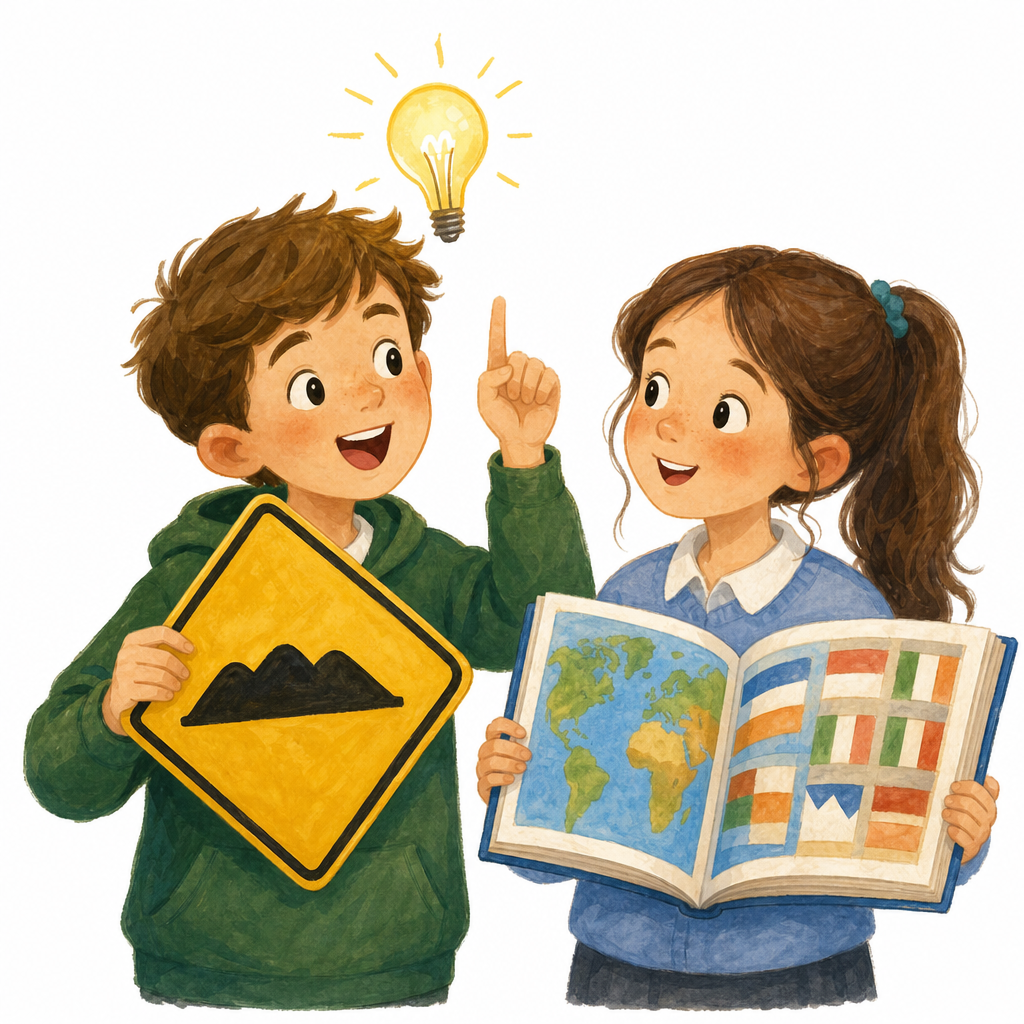
 You already speak two languages: English and Irish. Today those two do the hard work for you, on words and names nobody has taught you.
You will not learn a new list. You will use what you already know to open doors into a third language, and into whole Irish placenames.
By the end of this lesson, you will be able to:
- Spot school words that look familiar across languages
- Read a whole Munster placename using everything you know
- Say how Irish helped you work something out today
We are looking at school words in different languages on the board. For each pair, decide what kind of match it is:
- Cognate: the two words are really related, and they mean the same kind of thing
- False friend: looks the same but means something else
- Look-alike trap: only looks similar; there is no real link
Do these school words really match, only look like they match, or mean something different? Vote with the class, then listen to the short note about the words.
Ask yourself: which of these could I have guessed using English or Irish alone?
Now put the same idea to work on real Munster county names. Watch the name on the board. Together we will break it into parts and read the whole name, not just one piece.
Use every clue you have: Irish you already know (for example roots such as baile or cill), plus English sense.
Open your copybook and write one thing Irish helped you work out today, and how it helped.
Be specific if you can: name the word or placename, and say whether Irish gave you the sound, the meaning, or the courage to try.
On the board you will see a few class examples you may borrow or adapt if you need a starter.
💬 Discussion time
On flights between countries, airline pilots and the people in the control towers who guide them talk to each other in English, wherever in the world they are. Countries agreed on that one shared language together, so that everyone in the sky understands the same words and nobody is guessing. It helps keep people safe.
- Looking at what you wrote: does knowing two languages make a third easier, or mainly less frightening?
- When might one shared language help everyone in a busy place? When might it matter that people can still use Irish or their home language?
- Whose answer in the room surprised you, and why?
Unlock the full learning experience
You're previewing this lesson. Get full access to this lesson and hundreds more — each one ready to teach, with interactive activities, printable resources and pupil progress tracking built in.
This lesson is copyright of Coding Ireland 2017 - 2026. Unauthorised use, copying or distribution is not allowed.