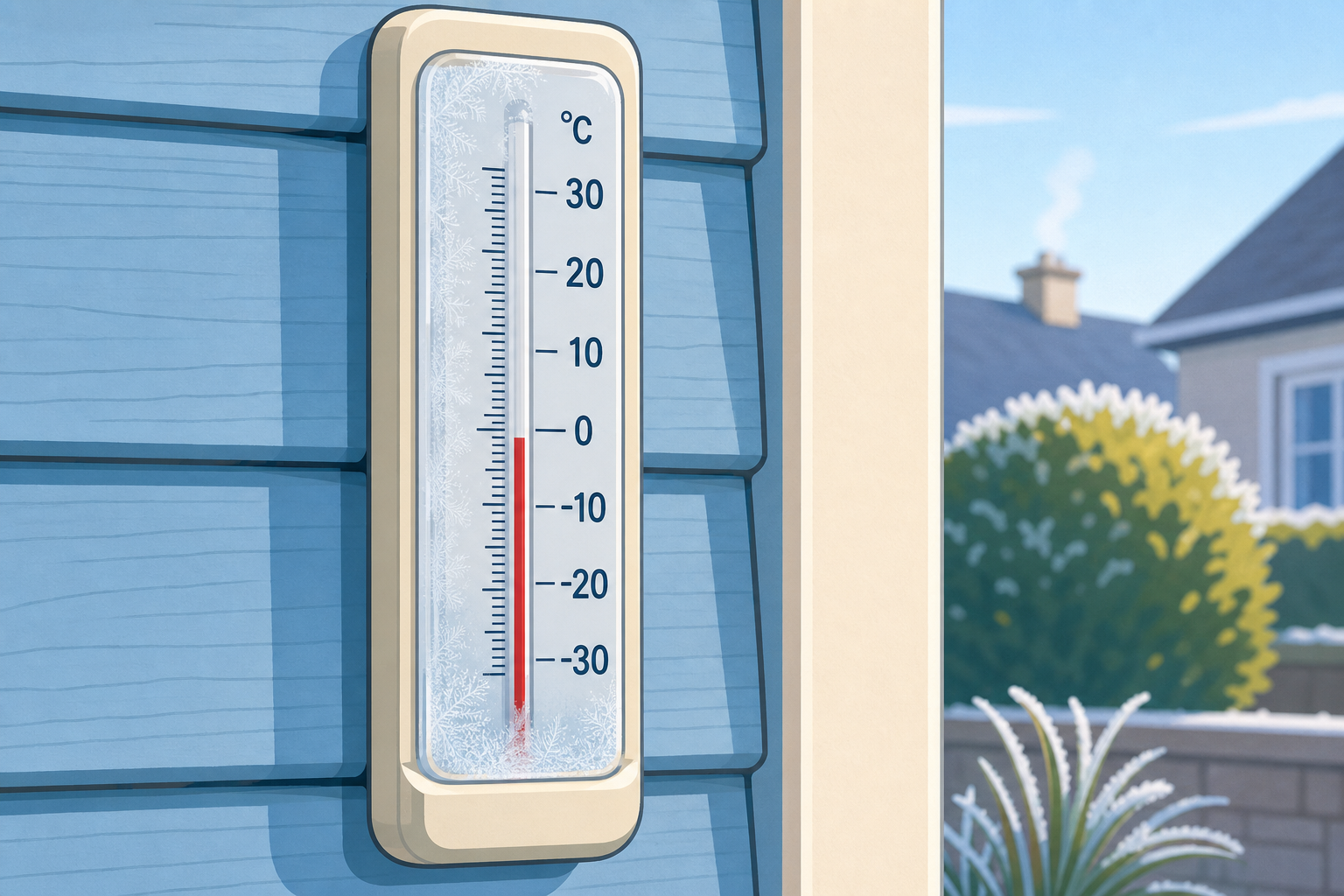
Look at this thermometer. The red line has dropped below the zero mark and it reads −3 °C.
What is that little minus sign in front of the 3 telling us? Is −3 °C warmer or colder than a frosty 0 °C morning?
Display the thermometer reading −3 °C as pupils settle. Take two or three hands-up answers, not open call-outs. Listen for the word below — that is the idea the whole lesson hangs on. Don't correct or explain yet; the minus-sign meaning is built in the next step.
Here is a number line that runs from −10 all the way up to +10, with zero right in the middle. Watch where −7 sits: seven steps to the left of zero. The further left we go, the colder, the deeper, the more below-zero we are.
Now look at zero itself. Everything to the right of it is positive; everything to the left is negative. Zero is the dividing line — like the ground floor of a building, with upstairs floors above and basement floors below.
And here is +5, five steps to the right of zero. Notice how +5 sits five steps to the right of zero, while −7 sits seven steps to the left — the same idea of stepping out from zero, just in opposite directions.
Here is a real question. One night in Galway the temperature was +4 °C, then it dropped to −2 °C. How many degrees did it fall? Have a first guess — there is no wrong answer yet, because we are about to count it out together.
Watch the line. First we count from +4 down to zero: that is 4 steps. But we are not there yet — the temperature kept falling below zero, so we count on from 0 down to −2: that is 2 more steps. Add them: 4 steps and then 2 more steps makes 6 degrees. That is the trick with negative numbers — when a change crosses zero, count down to zero first, then keep counting below.
Walk each snapshot aloud, one at a time. Between snapshots, drop in a quick turn-and-name ("tell the person you can see where the next marker will land") to keep the watch beat live.
Count down to zero first, then keep counting below.
Now we count some changes across zero together on the −10 to +10 line, using the trick we just saw: count down to zero first, then keep counting below. We will work through two changes in order. First, the temperature falls from +3 °C to −1 °C — place a marker on +3, another on −1, then count the steps out loud. Next, a bigger fall from +2 °C to −5 °C. Predict how many steps each change is before we count it, then we'll check together.
This round rehearses the change-counting method built in Watch and Notice, before pupils meet it in the Class Challenge.
Call the first change (+3 to −1). A pupil comes up and places a marker on +3 and another on −1, then the class counts the steps together: 'three down to zero, then one more below, that's four.' The rest predict the count with a pointed finger showing how many steps before it is placed. Repeat for the bigger change (+2 to −5): 'two down to zero, then five more below, that's seven.' Keep drawing attention to the count carrying on through zero — pupils who stop at zero are the ones to catch. Keep it brisk; this is guided counting practice, not a discussion.
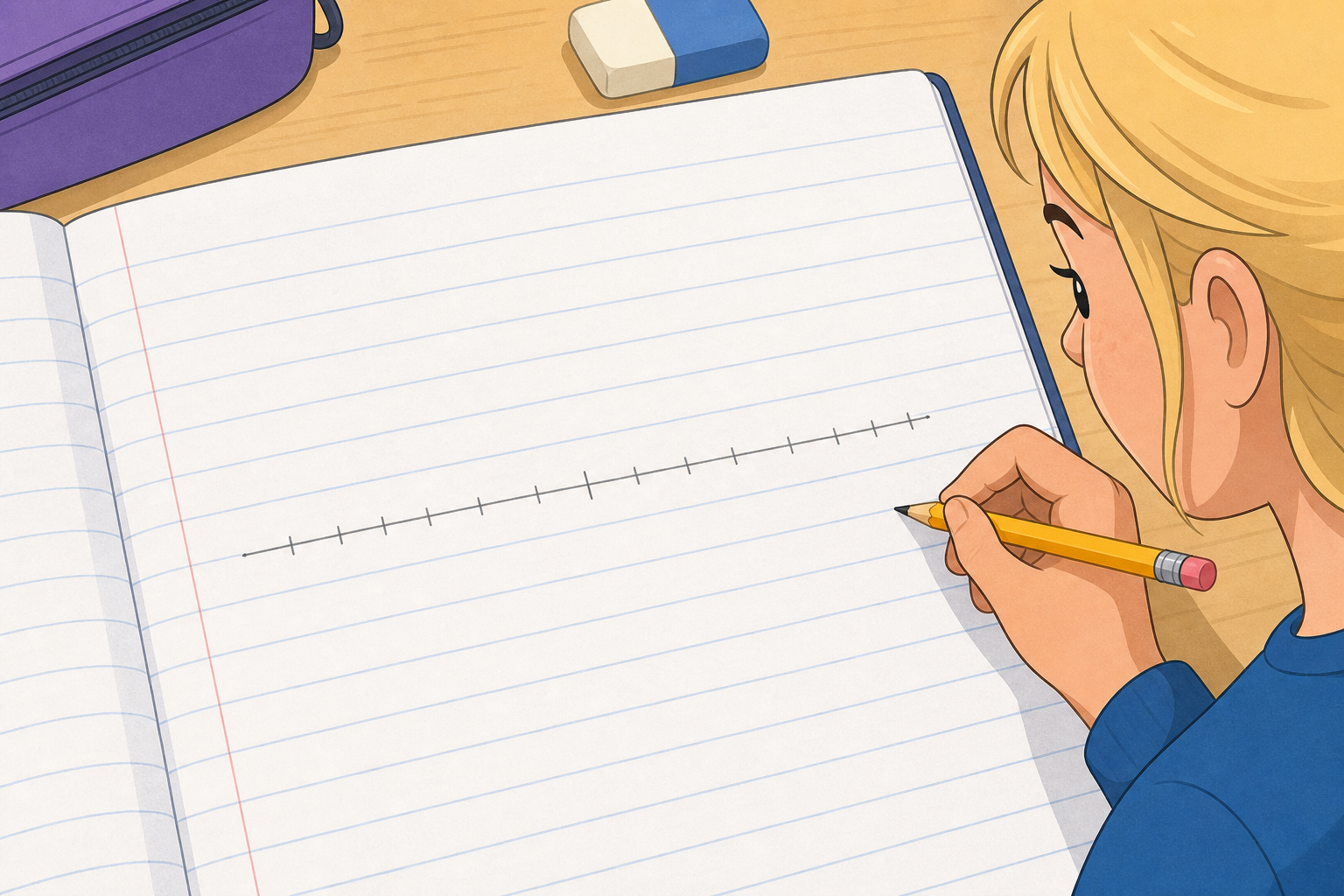
In your maths copy, sketch a number line from −10 to +10 with zero marked in the middle. Then place each of these markers on it and label each one with its value:
Walk the room glancing at whether zero is drawn in the middle and whether the negative markers sit to the left of zero — that is the slip to catch. No marking; this is whole-class copybook practice, not assessment.
Today we work through these temperature-change problems together, each one a little trickier than the last. Every one asks the same question — by how many degrees did it change? — so we spot the action words and count the size of the fall: the freezer that fell a few degrees, the basement carpark that dipped below zero, the Mullingar cold snap that crossed zero, and finally a deep fall that goes right down below −5.
These are the practice questions — pupils take turns at the board, check each answer, and the class confirms before moving on. Every problem asks for the size of the change (a count of degrees), the same task built in Watch and Notice and rehearsed in Try It Together. Keep the board work brisk rather than over-explaining.
You're previewing this lesson. Get full access to this lesson and hundreds more — each one ready to teach, with interactive activities, printable resources and pupil progress tracking built in.