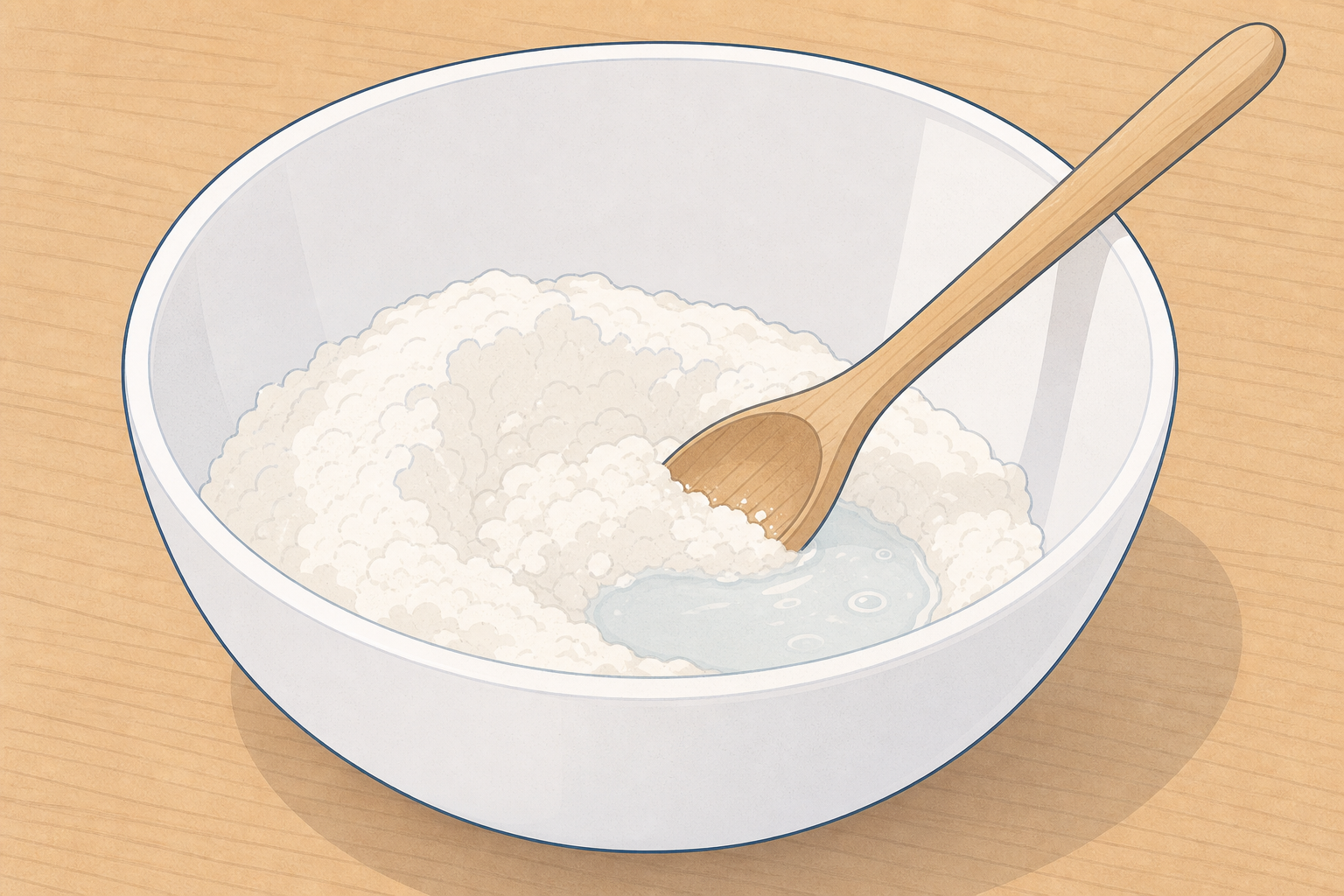
A baker tips flour and water into the same bowl and stirs. What do you think happens to the flour and water when they go in together?
Keep this beat light and curious. Hold up an empty mixing bowl or show the baker picture on the board. Point to flour and water if you have small samples, or just name them while pointing at the picture. Ask: What is the baker putting into the bowl? Take two or three quick answers. Do not name the three stations or hand out materials yet.
Who helps us: a baker mixes materials on purpose to make dough and cake for people to eat.
The baker mixed flour and water. Today we will mix too. Mixing means stirring two things together. We get to feel what the baker feels. Will our mix run off the spoon, or stay in a lump?
| Concept | Why it matters | Example |
|---|---|---|
| Mixing — putting two materials together so they make a mix that can look or feel different | Mixing is how people make dough, paint, cement and lots of useful things | A baker stirs flour and water until it becomes sticky dough |
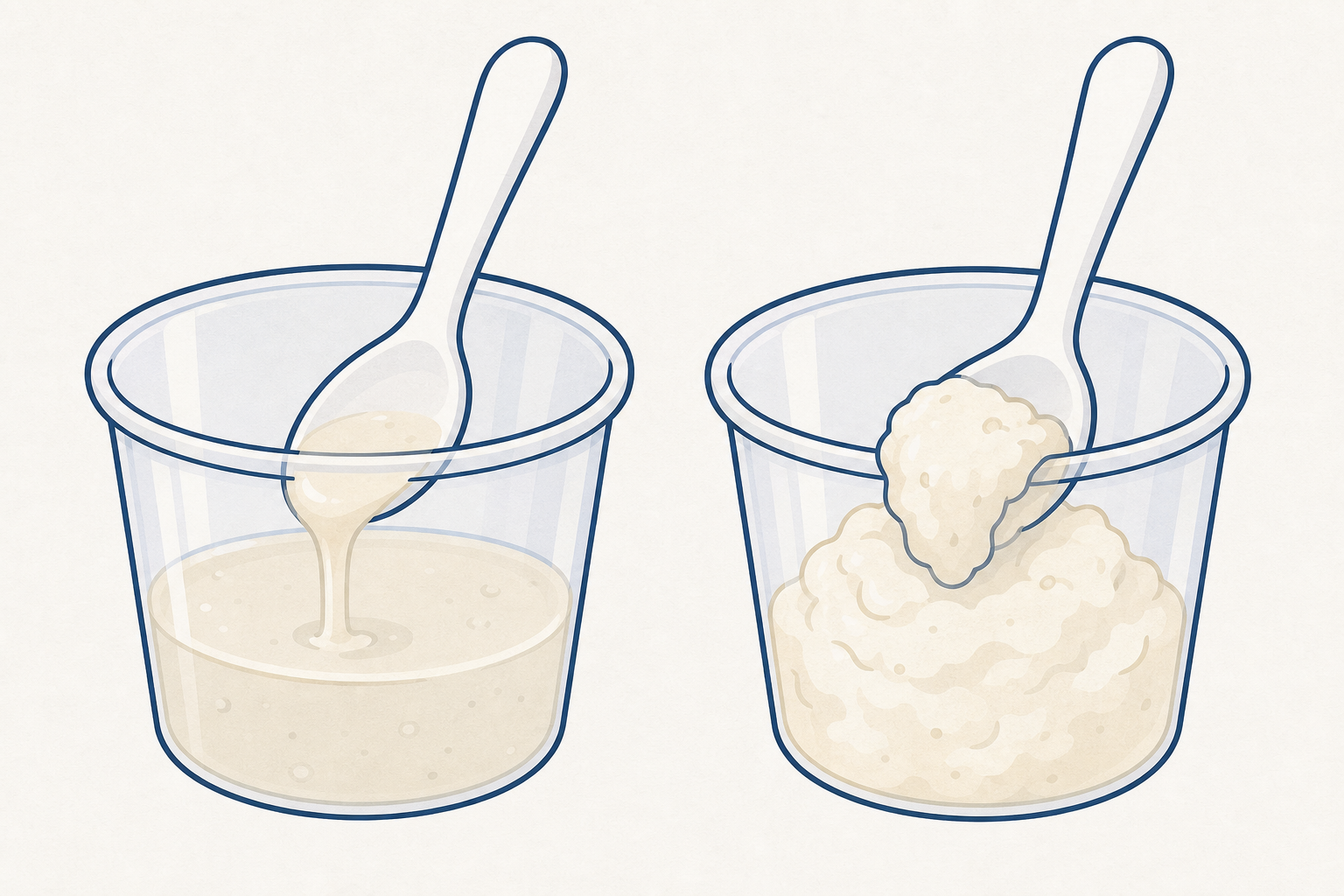
| Pours — a mix that runs and spills when you tip the cup | Knowing if something pours helps us choose a cup, jug or bowl for it | Sand mixed with lots of water runs off a spoon like a drink |
| Holds its shape — a mix that keeps its shape and does not run away | Some mixes can be shaped or scooped as a lump | Cornflour gloop can sit in your hand as a soft ball, then go runny again |
One main idea for the board: mixing is the new word. Keep pours and holds its shape as the simple choice children make with their hands once they have felt a mix. On the board and in children's first talk, use the friendly pair run off the spoon / stay in a lump. Name holds its shape live at the tray only after children have tipped a real spoon, so the phrase is anchored to something they just felt.
Modelled cycle (do this live before stations open): At the flour-and-water tray, think aloud. I wonder what happens if I stir flour into this water. I think it will go sticky. Stir slowly so the class can see. I can see it is thicker now. When I tip the spoon, it stays in a lump more than the plain water did — it does not run off like a drink. We can say it holds its shape. I think mixing changed how it feels.
Misconception to head off: children may say mixing means the materials disappear. Name both starting materials still being in the mix: flour and water made the paste together.
Visit the mixing stations with your group. Stir two materials together. Feel the mix. Does it run off the spoon, or stay in a lump?
Split the class into three groups and send one group to each station to start. Two short, complete mix-and-judge visits are enough within this slot — a third station is only a bonus if time is left after two clean visits. Plan about three minutes of hands-on time at a station, then a clear move cue (a chime, clap pattern or call of swap). Build the swap into the 11 minutes; do not treat transition as free time outside the budget. Stay close to the cornflour tray: children love squeezing the mix once water is stirred in.
Turn-taking at each tray: only two or three children stir at once (one spoon each). The rest of the group stand in a small arc around the tray — they are still in the science. On every tip of the spoon, ask the watchers as well as the stirrers: Does it run off the spoon, or stay in a lump? Halfway through the station time, swap who holds the spoons so a second set of hands gets to mix. Waiting is not sitting out; it is watching, feeling with a finger if you invite a quick touch, and joining the pour-or-lump judgement.
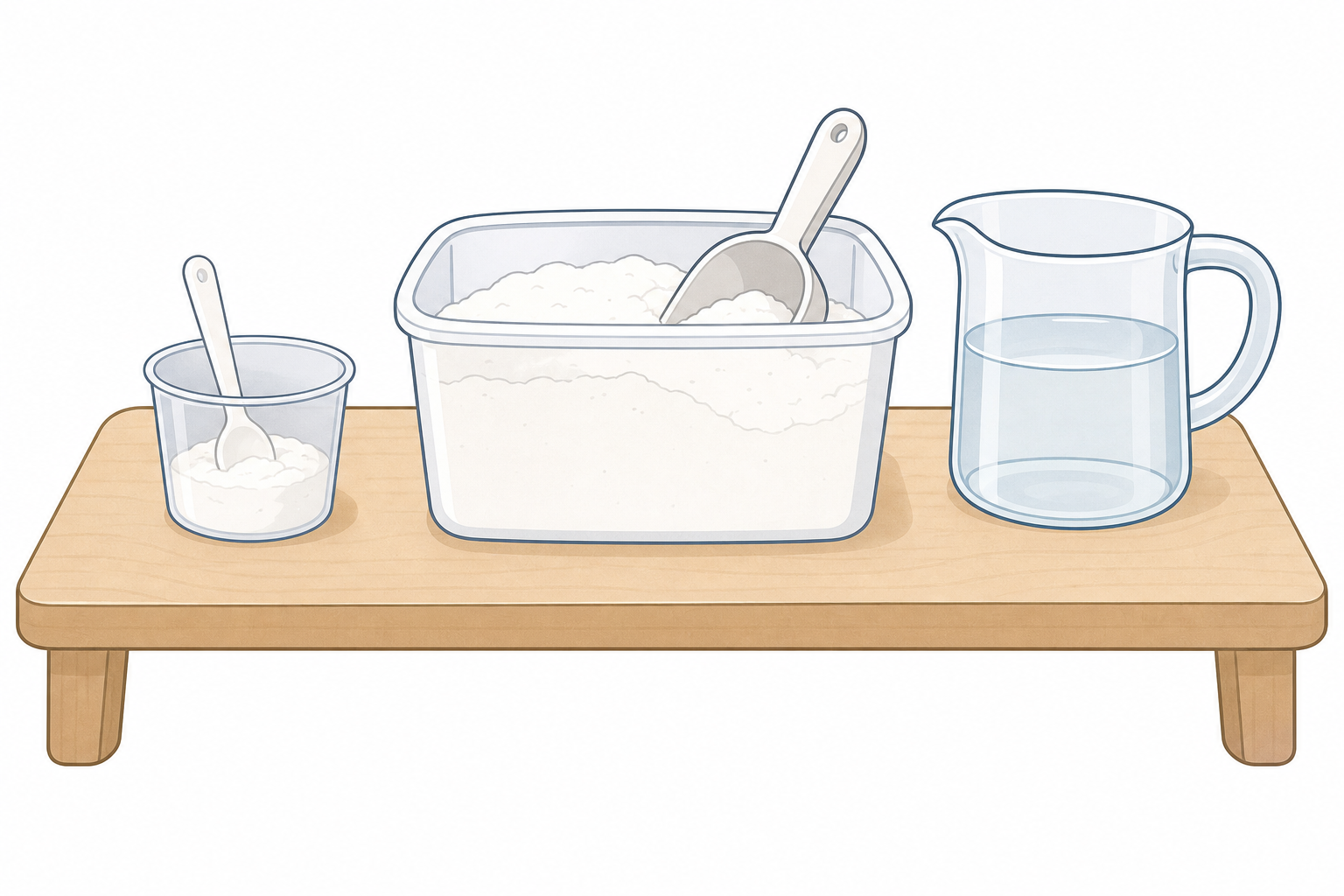
At each tray the mix action is the same: children scoop a fresh portion of damp powder from the reserve, add a little water from the cup, and stir. They are combining two materials with their own hands, not only exploring the previous group's paste.
Prompt with the friendly pair first: What does it look like? What does it feel like? Tip the spoon gently. Does it run off the spoon, or stay in a lump? After they have tipped and chosen, you may revoice: Yes — it holds its shape or Yes — it pours.
What to expect: sandy water usually pours; flour paste often stays in a sticky lump; cornflour mix can feel hard when squeezed and runny when left alone. Cornflour may earn both labels — that is a good noticing, not a wrong answer. Any of those observations is useful.
Safety: mixes stay off faces; no tasting; wipe spills at once; sleeves up.
Come back to the carpet. Look at the mixes at the front. Tell us how one looks and feels. Does it pour, or does it stay in a lump?
Bring the class back to the carpet with one spoonful sample from each station still on the trays at the front (or hold the spoon up). This is whole-class carpet time, not a return to station groups. Go station by station. Ask two children per mix to say one thing they noticed. Children who only reached two stations join in on every mix by looking and listening — they do not need to have visited all three trays.
Sentence stems to offer aloud: It looks… It feels… It pours. It stays in a lump. After a child chooses, you may gently name the science phrase: Yes — it holds its shape.
Look-fors: children use touch and sight words; they choose pour or stay-in-a-lump for at least one mix; they notice that the mix feels different from the dry materials alone.
If a child only says "yucky" or "nice", gently push for one more detail: Does it run off the spoon, or sit there?
Look back at our baker. Mixing flour and water changed how they felt. What changed when we mixed at our stations?
Show the baker picture from the hook again (or hold up the mixing bowl) so every child has a visible anchor. Lead a short whole-class talk. Revoice children's words so the science idea is clear: mixing two materials can make something that feels new.
Draw out one surprise if you heard one (often the cornflour mix). Ask: Did any mix pour and stay in a lump at different times? If a child notices both on cornflour, celebrate it — both labels can be right for that mix.
If talk is flowing, add one linked helper line while still pointing at the baker: Who else mixes materials to help us, like our baker? Keep the baker as the main example so the thread stays simple. A builder mixing sand, water and cement is an optional extra if a child offers it.
Do not ask children to write. Hands up and talk only.
You're previewing this lesson. Get full access to this lesson and hundreds more — each one ready to teach, with interactive activities, printable resources and pupil progress tracking built in.