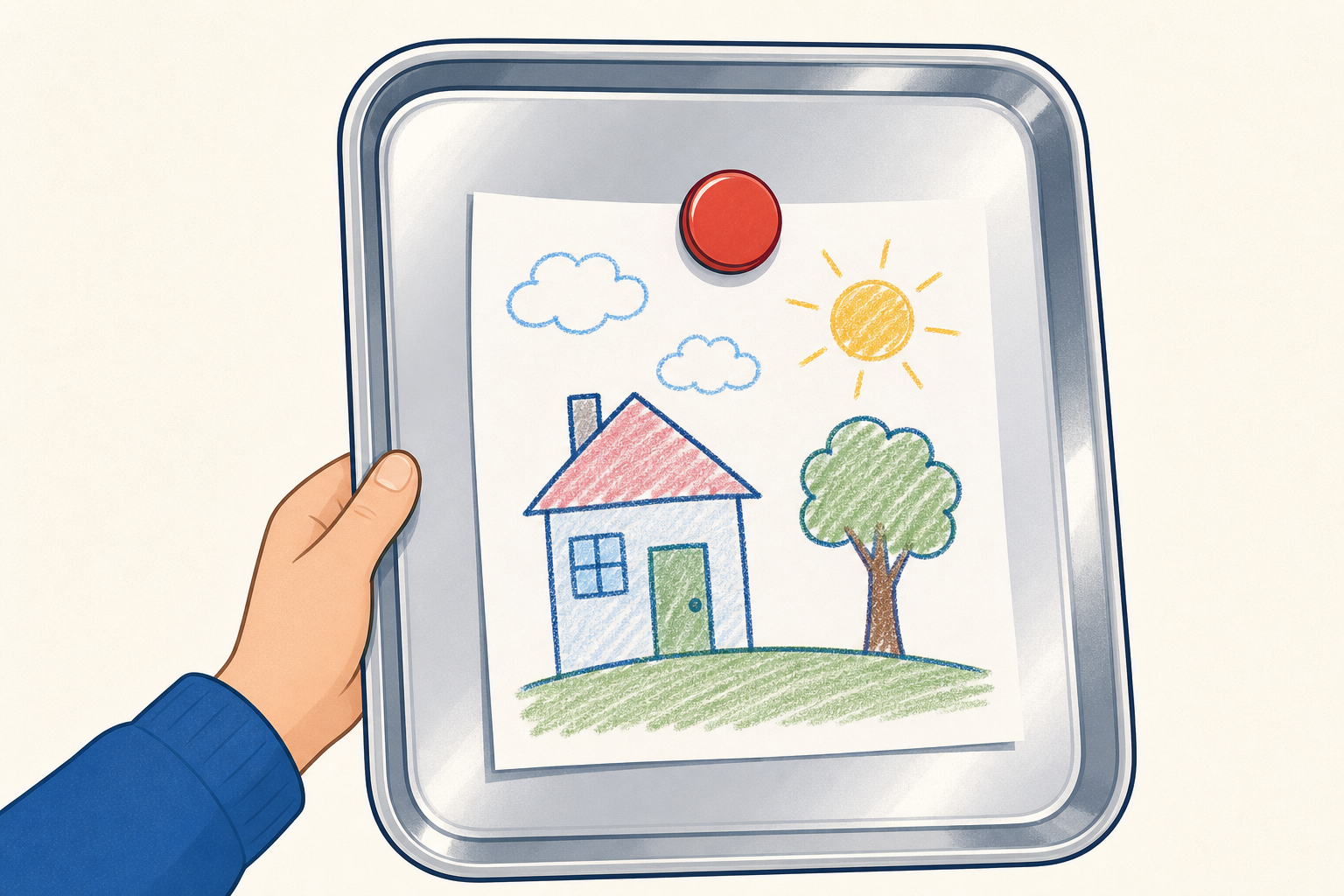
Your teacher is holding up a tray. A picture is staying on it. Nothing sticky is there. What do you think is keeping it up?
Before the children sit, stick one picture or note to a steel (magnetic) baking tray with a chunky fridge magnet. Test the tray first: if the magnet will not hold, use a metal filing-cabinet side or a magnetic whiteboard strip instead. Hold the tray up so the whole class can see the picture stay put. The talk is about the real tray in your hands, not anything on the board.
Ask: What is keeping the picture up? Take two or three ideas. Do not name the magnet yet if they have not said it. Smile at every guess.
Have ready to show: one fridge magnet and the steel (magnetic) tray with a picture already held on.
Keep this beat light. The stations come out in the explore step.
Today's big idea: a magnet job.
A magnet job is a helpful thing a magnet is doing.
This magnet's job is holding the picture up. What other helpful jobs might magnets do?
Point to the fridge magnet still holding the picture. Say magnet job clearly and have the class repeat it once. Keep this as the one named idea on the board. Do not write holding, closing or catching as a list on the board yet.
As you demo, use the word pull in speech only (do not put a second definition on the board): children will feel the pull at the stations. Example: Feel how the magnet pulls toward the tray.
| Concept | Why it matters | Example |
|---|---|---|
| Magnet job — a helpful thing a magnet is doing | Magnets are not only toys; they hide in everyday things to help us | A fridge magnet holds a picture on the door so it does not fall |
Worked model (do this live before stations): Hold up the fridge magnet and picture. Think aloud: I wonder what job this magnet is doing. I think it is holding the picture up. I try it… the picture stays. I notice the magnet is pulling toward the metal tray, and that holds the picture so it does not fall. I think this magnet's job is holding.
Then give a light spoken preview only (no board list): At our stations you will try holding and catching. Later we will also see a magnet that helps something stay shut.
Misconception to head off: children may think magnets are sticky like glue. Name the difference gently: glue sticks and stays messy; a magnet pulls and you can lift it off clean.
Quick hands-up guesses for other magnet jobs. Accept all ideas. Optional one-line weave only if it fits naturally (not a term to learn): Someone put that magnet there on purpose to help us.
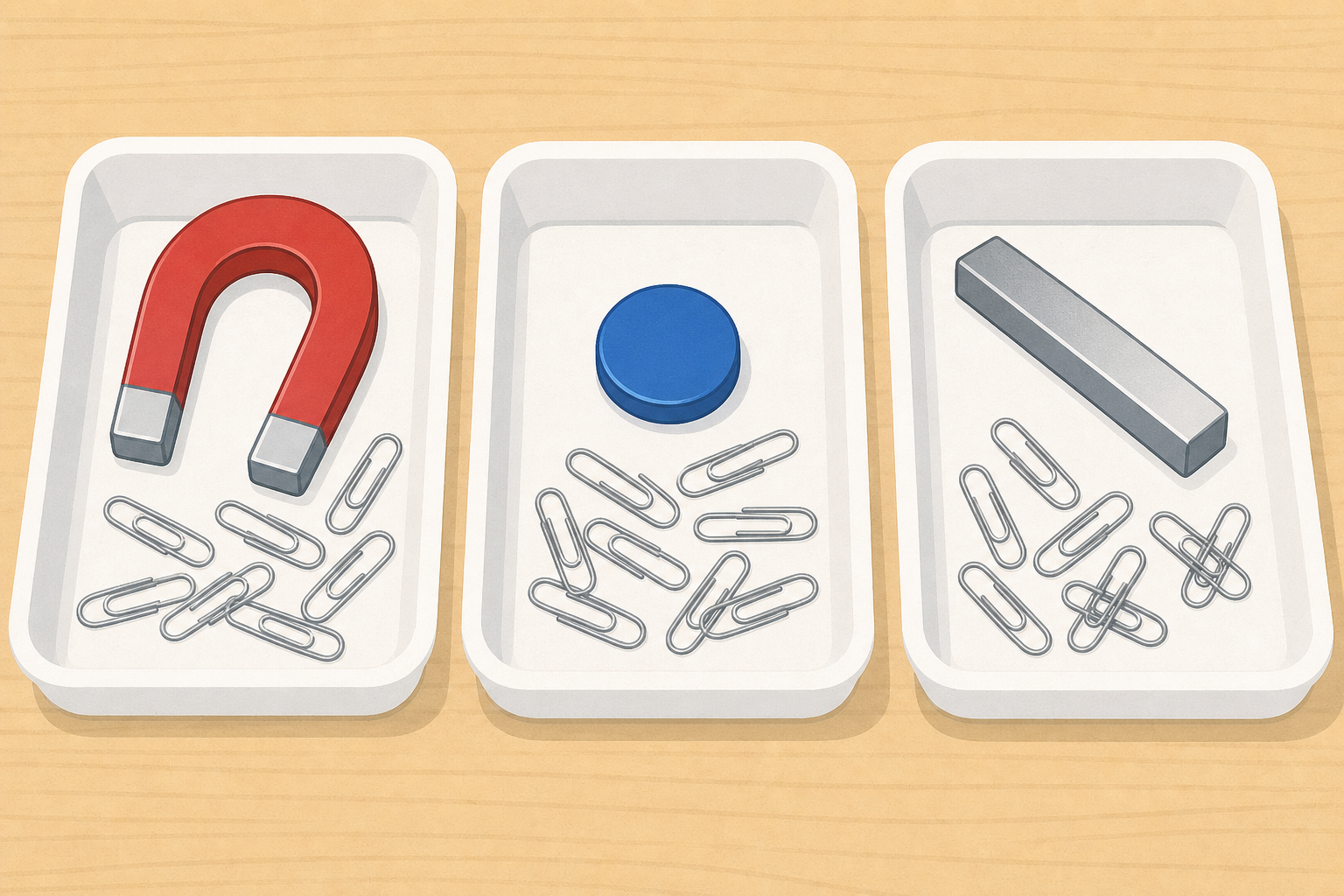
Visit the magnet stations with your group. Try each magnet. What job is it doing: holding or catching?
Default plan for one teacher and a typical Senior Infants class (about 20–28 children). Divide into four groups of about 5–7. Open two stations for the main rotate so every child is guaranteed two hands-on magnet jobs. Keep the fishing tray under your eyes the whole time.
Do not put a whole group of 5–7 on the apparatus together.
If a second adult or SNA is free, you may also open a side table with the magnetic catch box (job: closing) and/or the optional letter board (job: holding letters). Send one free pair at a time for a short third visit only when Station B is calm. If you are alone, leave catch and letter board packed until the carpet talk; bring the magnetic catch box to the carpet for Step 5. Do not put closing on the station job menu for the default rotate.
At each station ask: What is the magnet doing? How is that helping? Revoice with the two station words: holding and catching. Save closing for the catch-box carpet demo.
Support on the spot (no cue cards needed): point to the real object and offer the two station job words orally: Is it holding or catching? Pair a less confident child with a partner who can model the try-and-say pattern.
If a pair finishes early at Station A while waiting their next turn, ask them to name one thing on the table the magnet will not pull, still using chunky magnets only and still only two magnets in hands at a time.
Safety: chunky magnets only; keep magnets and small metal pieces away from mouths; count magnets and wands back in before tidy; never leave the fishing tray unsupervised.
Tell us about one magnet you tried. What job was it doing?
Bring the class to the carpet. Hold up one object from each station the children visited (fridge magnet on the tray; magnet wand) as a prompt. Keep the magnetic catch box ready beside you for the next step, but do not open the closing talk yet unless a child names it.
Invite pairs to turn and tell each other first (think-pair-share), then take four or five voices to the whole class. Sentence starter to offer aloud: My magnet was… and its job was…
Look-fors:
If a child only says "it stuck", revoice: Yes — the magnet was pulling, and its job was holding the picture up.
No writing and no Investigation Journal page today. Keep it oral and short.
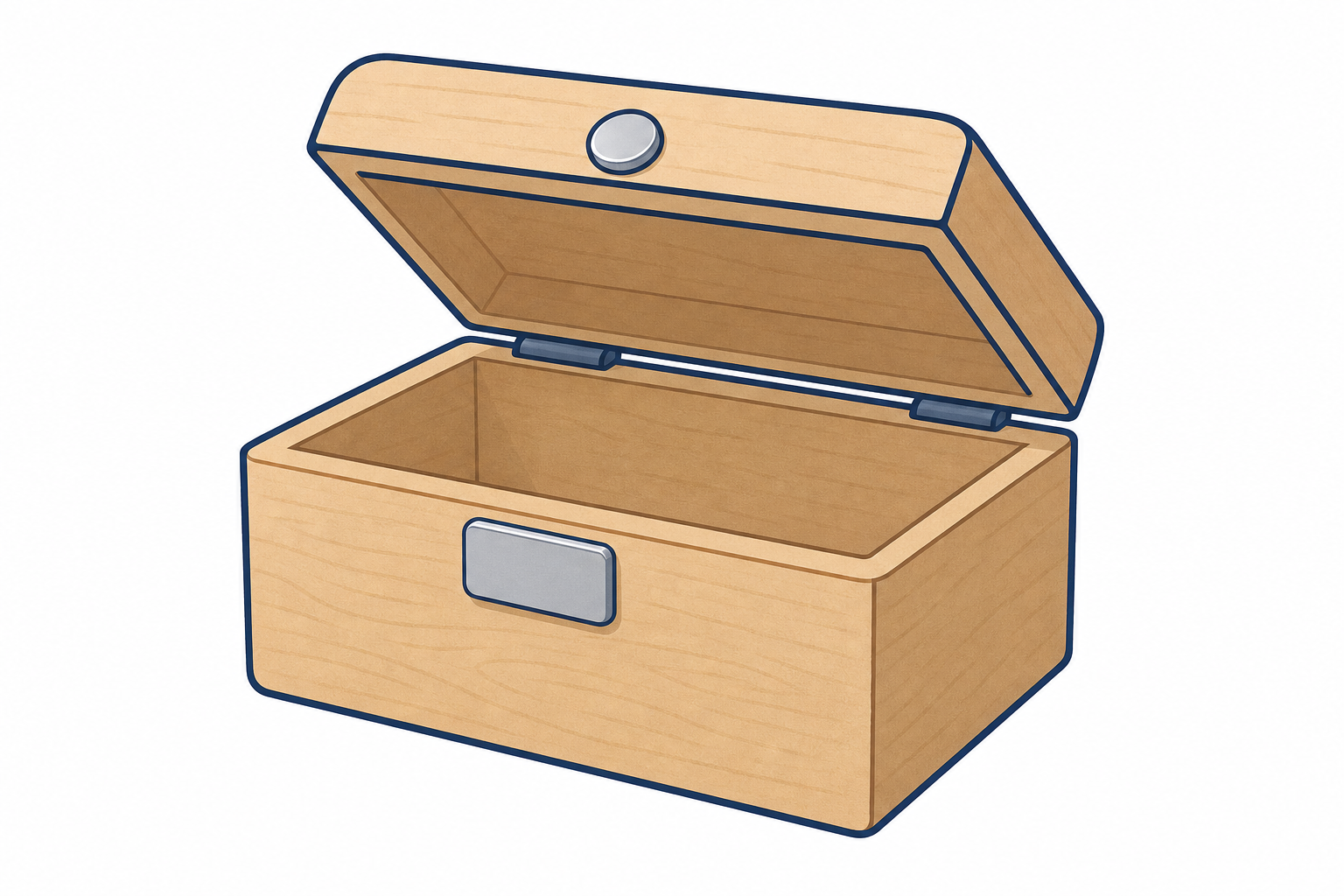
Look at this box your teacher is showing. A magnet helps it stay shut. That job is closing. Where else might a magnet help us, like in a bag, a door or a toy?
Display-only whole-class talk. No typing and no scores. This step needs the full five minutes: do the catch-box demo with several children first, then open the everyday talk only if time remains.
Concrete anchor first (required, about 2–3 minutes): Hold up the small box or tin with the magnetic catch from your materials list. Let two or three children open and shut it on the carpet so everyone sees and hears the click. Name the new job word now, on a real object: closing / keeping shut. This is the first time closing is taught as a class job word.
Then everyday helpers (about 2 minutes): How do magnets help us in everyday life? If you also have a school-bag flap with a magnetic snap or a pencil tin that clicks shut, show one of those next. If not, stay with the catch box and talk about bags, doors and toys from that solid example. Do not depend on props that are not in the materials list.
Optional one short Nature of STEM line (speech only, not a term to learn): Someone put the magnet there on purpose to help us.
Prompts:
Common mix-up: some children think every metal thing is a magnet. Remind them: a magnet does the pulling; many metal things only get pulled.
If time is tight, stop after the catch-box click demo and one bag/door/toy idea. The demo is the priority.
You're previewing this lesson. Get full access to this lesson and hundreds more — each one ready to teach, with interactive activities, printable resources and pupil progress tracking built in.