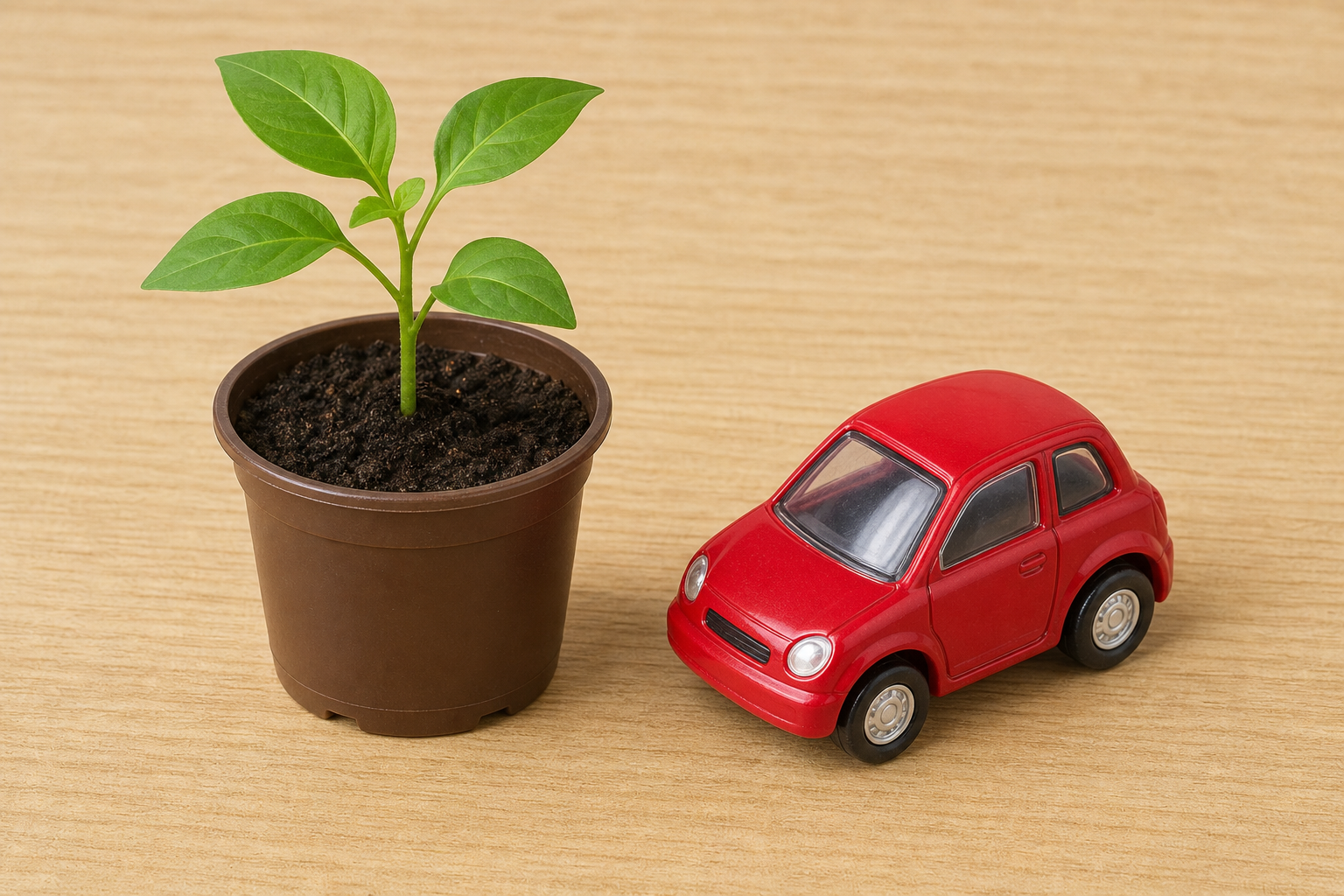
Look at these two things on the table: a little plant and a toy car. Which one is alive? How do you know?
Have a small potted plant and a toy car ready to show side by side. Do not hand out the sorting trays yet. Take a few quick guesses from the class. Accept every idea kindly. The goal is curiosity, not the full answer yet.
Key question: Which one is alive, and what makes you think that?
Living means it is alive: it can grow and needs food and water.
Non-living means it is not alive: it does not grow and never needs a drink.
What clues could help us tell which is which?
Use the short board lines above only. Keep the full table for your own reference. Keep this beat light: board definitions plus one short modelled sort. Do not read the full multi-sentence worked example unless the class needs extra support.
| Concept | Why it matters | Example |
|---|---|---|
| Living — something that is alive. It can grow, needs food and water, and may move or change over time | Knowing what is living helps us care for plants, pets and minibeasts kindly | A daisy in the yard grows, needs water and light, and can make seeds |
| Non-living — something that is not alive. It does not grow and does not need food or water | Many useful things around us are non-living, and that is fine: they still have jobs to do | A stone, a pencil and a teddy stay the same size and never need a drink |
| Clue — a simple sign we use to decide, such as growing or needing food and water | Clues help us sort fairly instead of only guessing by looks | A snail moves and needs food and water; a plastic snail toy does neither |
Plant aside (teacher only): pupils keep the simple phrase "needs food and water". If a child asks about plants, say that plants make their own food using light, air and water. We still water them and they still grow. You may quietly treat "needs light" as an extra plant clue; do not add it to the pupil board list yet.
Short model (required, about 1 minute): Hold up the same plant and toy car from the hook. I think the plant is living because it grows and needs water. I think the toy car is non-living because it never grows and never needs a drink.
Optional fuller script (only if the class needs another pass later): I wonder whether this plant is living or non-living. I predict it is living because it grew and needs water. I look and check: it has green leaves and a stem, and we water it. I observed that it is growing and needs care. I think the plant is living, and the toy car beside it is non-living because the car never grows or needs water.
Misconception to head off: children may say a toy animal is living because it looks like a real animal, or that a seed is non-living because it is still. Gently revoice: we look for clues such as growing, needing food and water, or moving by itself, not only how something looks.
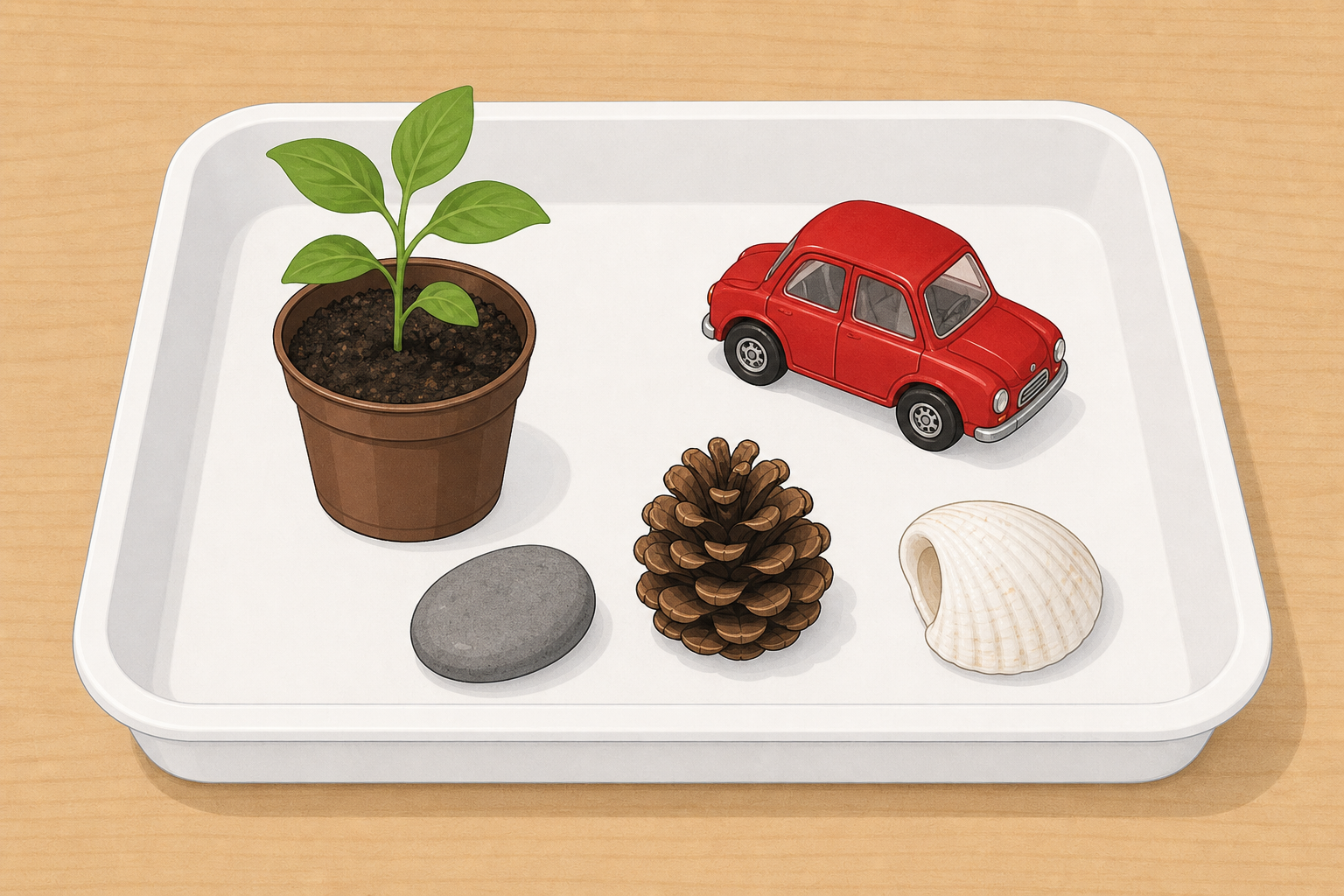
At your table, look at and gently handle each thing on the tray. What do you notice? Does it look like it can grow? Does it need food or water?
Real objects per group (no matching photo cards for these): small potted plant, stone, toy car, teddy or soft toy, pencil.
Photo cards per group (items without a real object on the tray): snail, daisy, woodlouse, plastic leaf, wooden block.
Class shared (optional): one live snail or woodlouse in a ventilated tub, passed carefully between groups or kept at one supervised station.
If real objects are scarce, use the full photo-card set (add plant, stone, toy car, teddy, pencil cards) plus one shared class plant and one shared stone.
Each thing appears once only. Sort the real objects first. Use photo cards for the living and non-living things you do not have as reals. Do not put a plant photo in the hoop if the real plant is already there.
Pupils handle a core set only: real plant, stone, toy car or teddy, plastic leaf card, and snail or woodlouse card (or the live minibeast if used). Leave daisy, pencil and wooden block on the tray for the sort step. This keeps the notice beat gentle and finishable in the time.
Model gentle hands first. Pupils observe and handle one item at a time from the core handle set. They do not sort into hoops yet and they do not record on paper yet. Circulate and ask: What do you notice? Does it grow? Does it need water?
Safety: handle any minibeast gently; no poking. Hands will be washed after the tray sort, before journal work.
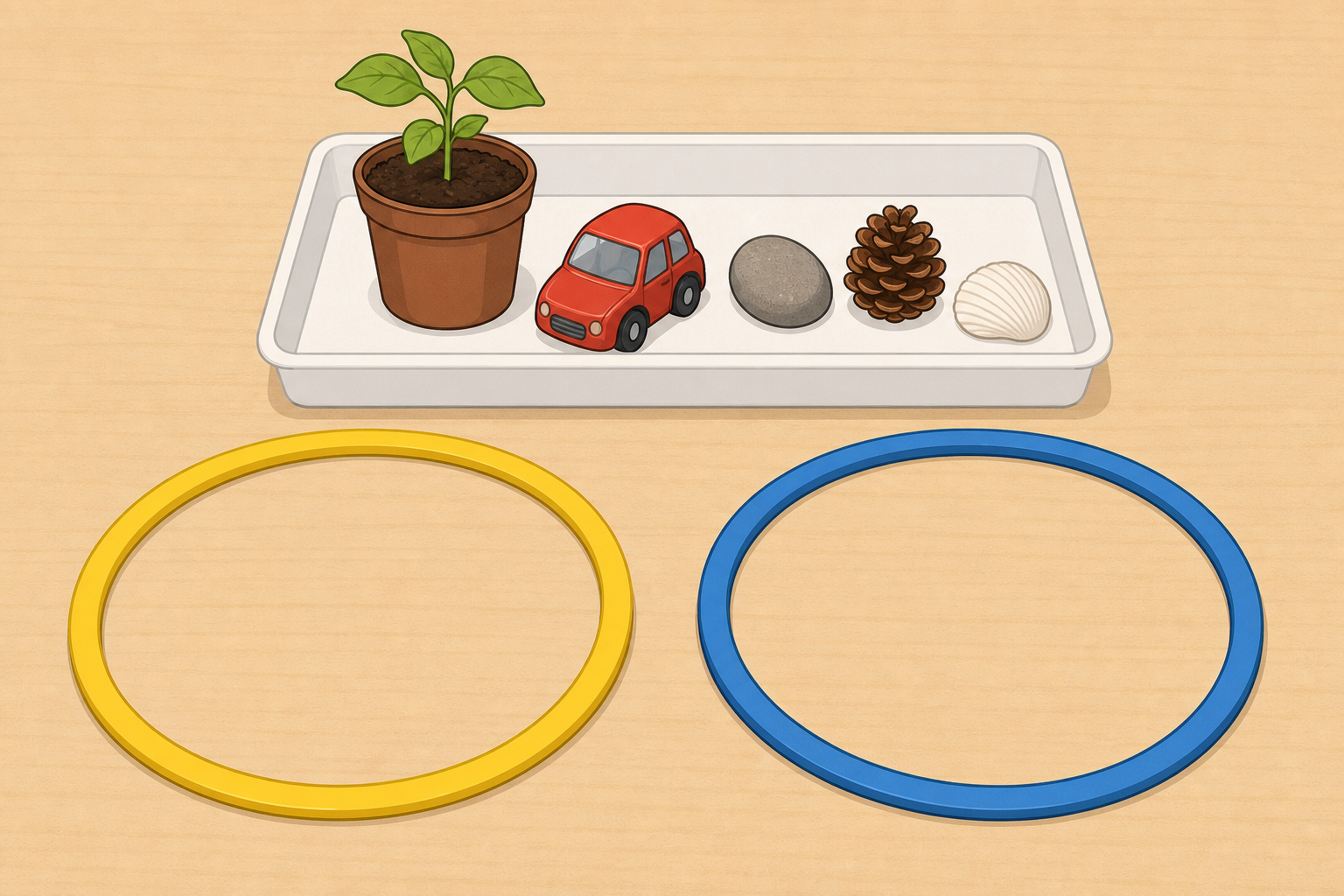
Now sort your tray. Put living things in one hoop and non-living things in the other. For each one, say a reason: how can you tell?
Give each group two hoops or two clear floor/table spaces labelled living and non-living. Pupils sort the full canonical set: real objects (plant, stone, toy car, teddy, pencil) plus photo cards (snail, daisy, woodlouse, plastic leaf, wooden block). Remind the inventory rule: each thing once only; reals first, cards fill the gaps. They place each object or card and say a simple reason aloud (grows, needs water, never grows, does not need food).
This slot is for placing and justifying only. Do not run the class handwash inside these minutes.
If groups disagree, pause the class and model one tricky item together (for example the plastic leaf, wooden block, or teddy). Fold watchers in with questions: Do you agree? What clue are they using?
Moves by itself: if pupils say a toy car or wind-up toy is living because it moves, revoice: If it only moves when we push, wind, or switch it, that is not the same as a snail or woodlouse moving on its own.
Once-living materials: if pupils say a pencil or wooden block is living because it came from a tree, revoice: It was part of a living tree once, but now it does not grow or need food or water, so we sort it as non-living.
Look-fors:
Differentiation: offer sentence stems — I think it is living because… / I think it is non-living because…. Confident groups can hunt one extra classroom example for each hoop at the end of the sort.
Let's check a few together on the board. Look at each card. Is it living or non-living? Tell us which group it belongs in and why.
Transition first (about 2 minutes): put trays and live minibeasts aside. Run a quick handwash or wipe station so clean hands meet the next steps. Return the minibeast to its tub for later outdoor release if not already done. Leave one clear class model in view if you can (for example the two labelled hoops with a few sorted examples still showing, or the word-and-picture bank you will write next) so pupils can see living and non-living groups after trays are cleared.
Then drive the sorting-tree interactive on the IWB in explore mode (about 5 minutes). Cards on screen are a selection chosen to include the trickier look-alikes: plant, snail, woodlouse, stone, toy car, teddy, plastic leaf, wooden block. Groups are living and non-living. The guide questions are: Is it alive? and Does it grow or need food and water?
Invite pupils to call out where each card goes. Place the card only after a reason is offered. Use one disputed card as a whole-class think-pair-share. If movement comes up for the toy car, remind them: moving only when we push it is not the same as a snail moving on its own. If pencil or wood comes up from the tray talk, use the once-living revoice from the sort step.
While the class sorts cards, write the journal word bank on the board ready for the next step: living, non-living, plant, snail, stone, toy, grows, water. Keep that bank and the finished board sort visible for recording.
This interactive supports the tray sort; it does not replace it.
On your Investigation Journal page, show your living group and your non-living group. Use the board sort and what you remember from your tray. Draw or write at least two things in each group.
Before this step starts: hands should already be washed after the tray tidy. Issue one Investigation Journal page per pupil now (or have them ready on desks). Keep the board sort and the word bank in clear view: living, non-living, plant, snail, stone, toy, grows, water. If you left a few sorted examples on the class model hoops, leave those up too so pupils are not reconstructing cleared trays from memory alone.
Pupils record on the paper Investigation Journal page. They draw or label familiar items from the board sort, the word bank, and what they remember from the tray. They do not type into the platform.
Support writers with the word bank. If time allows, pupils may add one classroom find of their own to each side (for example a book as non-living, a class plant as living).
Talk with the class. What clues helped us tell living from non-living? Can you name one living thing and one non-living thing still in our classroom?
Display-only science talk. Revoice pupil ideas using the lesson words living and non-living. Draw out clues: grows, needs food or water, moves by itself, stays the same, never needs a drink.
Prompts:
Finish by scanning the room together — plant on the sill (living), chair and clock (non-living).
Return any minibeast outdoors if not already returned. Check hands were washed after biological handling earlier; offer a top-up wash if needed before the close.
Today we:
Next time you notice something at school or home, ask: is it living or non-living, and how can I tell?
Keep the close short and hopeful. Praise gentle handling and clear reasons. Optional home noticing task (journal or chat with an adult): find one living thing and one non-living thing at home and say how you can tell. No digital homework.
Pack trays, wipe tables if needed, and check hands are washed after biological material.
You're previewing this lesson. Get full access to this lesson and hundreds more — each one ready to teach, with interactive activities, printable resources and pupil progress tracking built in.